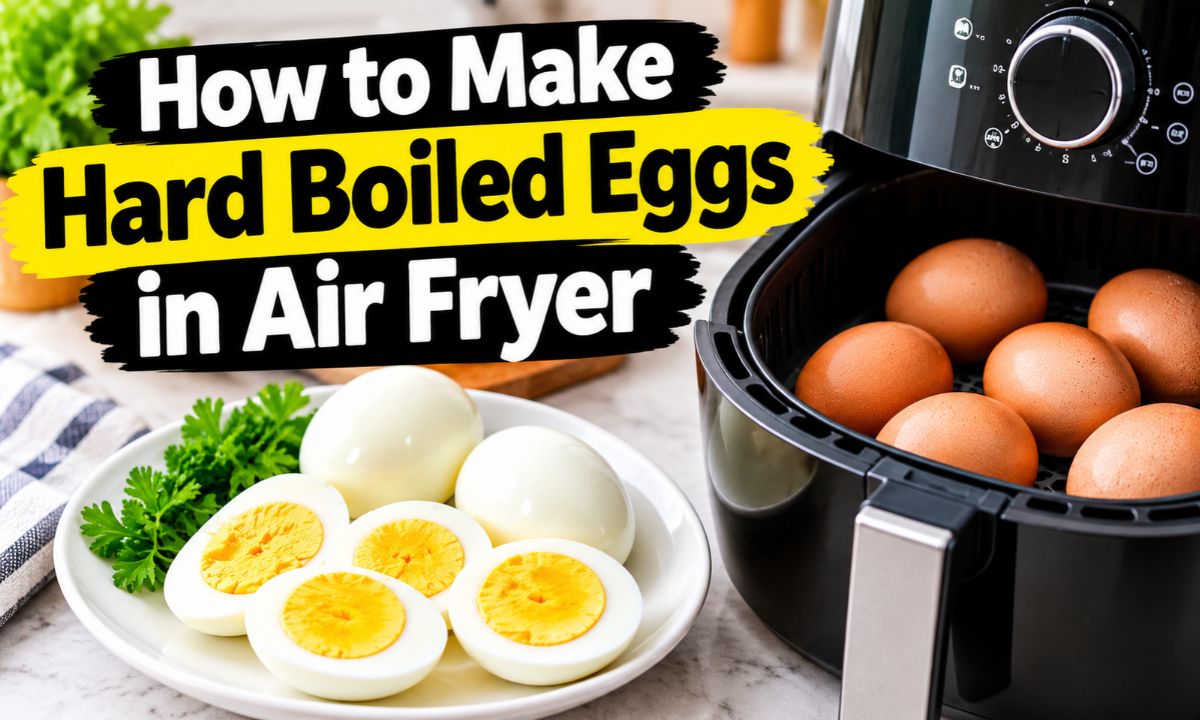
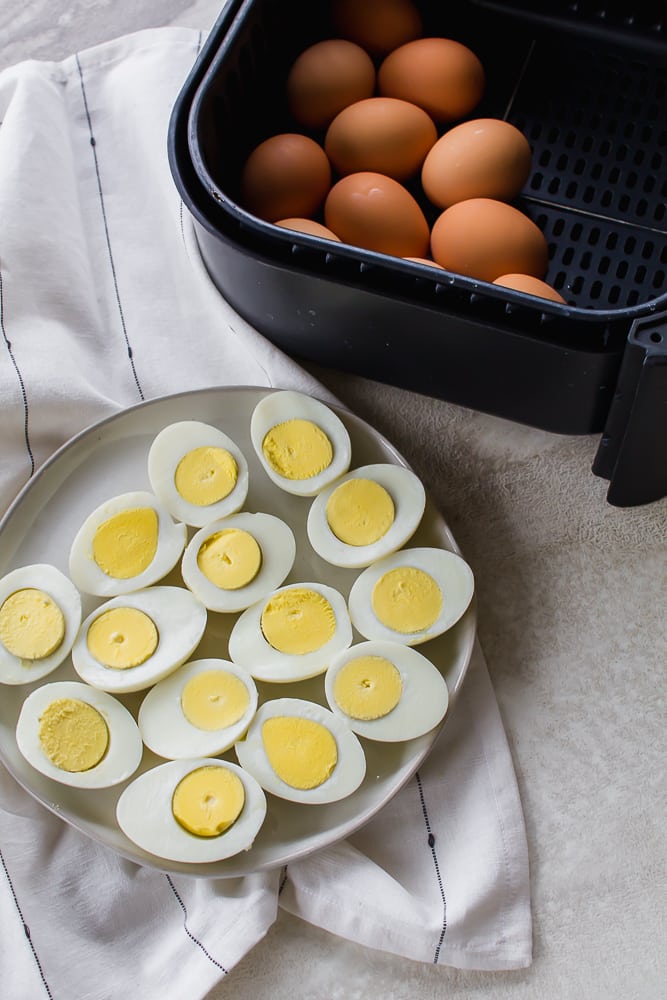
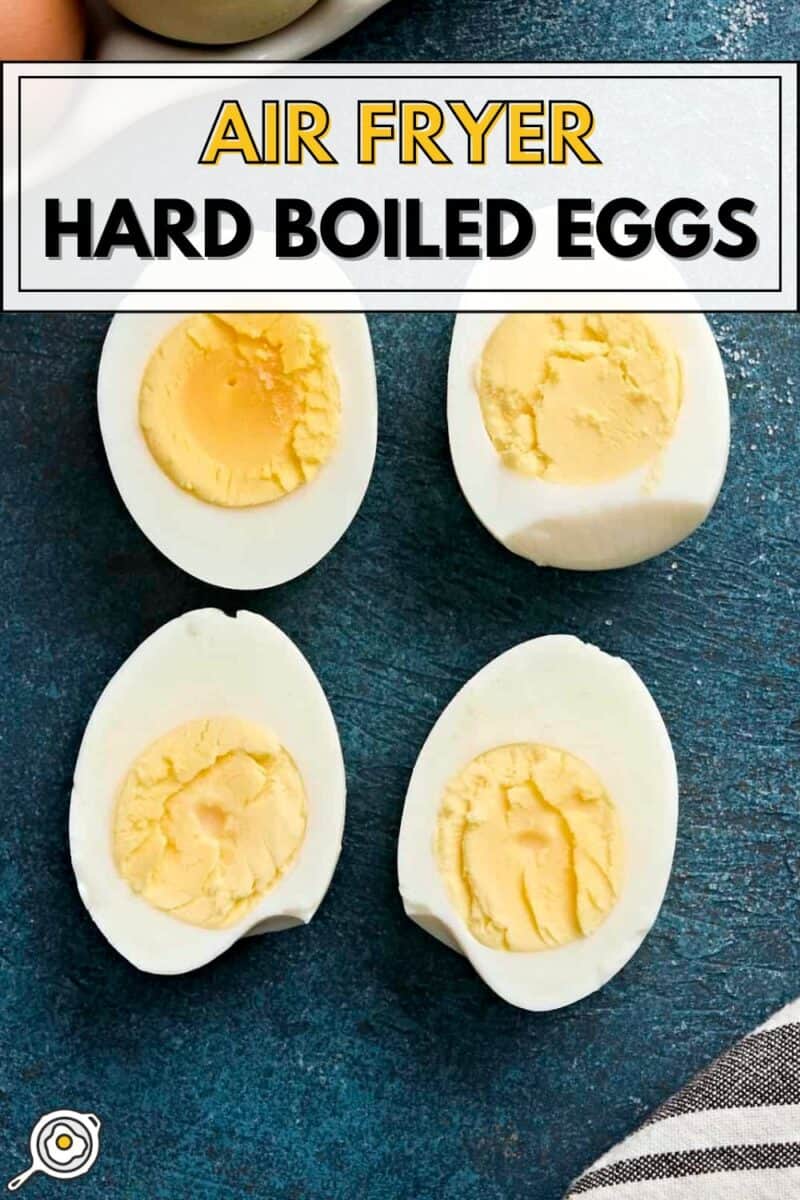
Cook large eggs in a preheated air fryer at 270°F for about 15 to 17 minutes, then chill them in ice water for 5 to 10 minutes. Adjust the time for your air fryer and egg size.
In American homes, hard boiled eggs are a handy choice for busy mornings, packed lunches, road trips, and quick snacks after work. They can go into a lunchbox, sit beside toast at breakfast, or become the base for classic deviled eggs. An air fryer offers another way to cook them without bringing a pot of water to a boil.
The method is simple, but the best cooking time depends on your appliance. An air fryer uses hot moving air, so eggs may cook at different rates in a compact basket model and a larger oven-style unit. Start with a sensible time, check the result, and adjust the next batch to suit your machine.
There is one key detail to understand before you begin: eggs cooked in an air fryer are not boiled in water. They are heated in their shells, so the phrase hard boiled describes the finished texture rather than the cooking method. With careful timing and a cold-water bath, you can make firm eggs that are easier to peel and ready for several meals.
For a basic batch, place large eggs in the air fryer basket, cook them at 270°F for 15 to 17 minutes, and cool them in ice water. This is a starting method, not a universal setting. Air fryer design, actual cooking temperature, egg size, and starting temperature can all change the result.
You do not need a pot of water or cooking oil. The eggs stay in their shells throughout the process. Use eggs that are clean and free from cracks, and leave enough room for air to circulate around them.
If your machine does not offer a 270°F setting, use the nearest lower available setting and check the result carefully. A different temperature may need a different cooking time. Follow your appliance manual if it gives specific advice about cooking eggs in their shells.
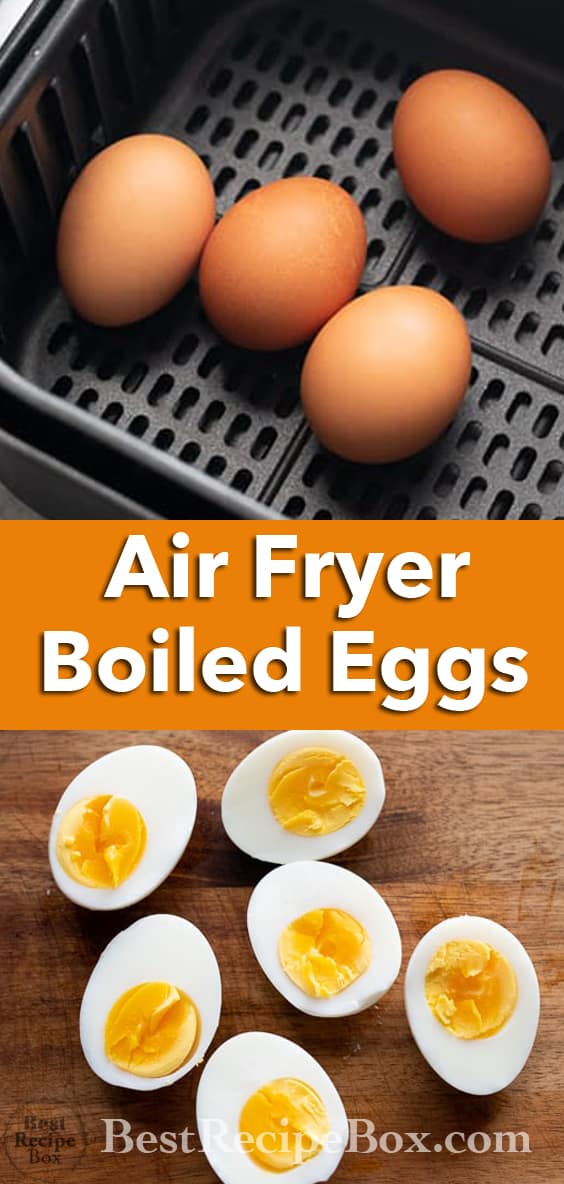
Source: bestrecipebox.com
Preparation
Gather large eggs, an air fryer, a bowl, cold water, and enough ice to make a cold-water bath.
Cooking
Preheat to 270°F if your model calls for preheating, then arrange the eggs in one layer and cook for 15 to 17 minutes as a first trial.
Cooling
Use tongs to move the hot eggs into ice water. Let them cool for 5 to 10 minutes before peeling or storing.
Checking
Peel one cooled egg and cut it open. The white should be firm, and the yolk should have reached a fully cooked texture.
Step 1: Choose the Right Eggs
Large chicken eggs are a useful starting point because many American recipes use this size. If you use medium, extra-large, or jumbo eggs, the timing may change. Begin with one size for each test batch so you can compare results fairly.
Check each shell before cooking. A cracked egg may leak as it heats, and an already damaged shell can make the result less predictable. Eggs straight from the refrigerator may cook differently from eggs that have been sitting at room temperature, so keep that detail consistent when you test your preferred setting.
Use intact shells
Set aside eggs with visible cracks or damaged shells.
Keep the size consistent
Cook eggs of a similar size together to make timing easier to repeat.
Step 2: Preheat and Arrange the Eggs
Preheat the air fryer if the manufacturer recommends it. If your model does not require preheating, follow its normal operating instructions. Starting each batch under the same conditions makes it easier to learn how your appliance cooks.
Place the eggs gently in the basket. They should sit in a single layer, with a little space between them when possible. Do not stack them or pack the basket so tightly that air cannot circulate. A crowded basket can create uneven results.
Keep the basket stable
Arrange eggs where they will not roll into one another when the basket is moved.
Skip the oil
Whole eggs in their shells do not need oil or cooking spray.
Step 3: Set the Temperature and Timer
Set the air fryer to 270°F and begin with 15 to 17 minutes for large eggs. If your model has a different temperature range, use a suitable setting allowed by the manual and treat the first batch as a test. Do not assume every air fryer delivers the same heat at the same setting.
Avoid opening the basket repeatedly during cooking. Each opening can release heat and change the cooking conditions. When the timer ends, carefully remove one egg or the full batch with suitable tongs.
For a firm yolk
Start near the upper end of the suggested time range if previous batches from your appliance have had soft centers.
For a new air fryer
Test one or two eggs first rather than risking a large batch before you know the timing.
Step 4: Cool the Eggs in Ice Water
Prepare a bowl of cold water and ice before the cooking cycle ends. Transfer the eggs into the bowl with tongs, then let them cool for 5 to 10 minutes. This stops much of the carryover cooking and makes the shells easier to handle.
The ice bath also helps prevent the hot yolks from continuing to cook while the eggs sit on the counter. If the water becomes warm, add more ice. Do not leave the eggs in the hot air fryer basket while you prepare the cooling bowl.
Handle carefully
The shells and eggs may be very hot immediately after cooking.
Cool before peeling
Wait until the eggs are cool enough to handle safely before cracking the shells.
Step 5: Peel and Check the Result
Tap the cooled egg gently on a clean surface to crack the shell. Roll it lightly to make more small cracks, then peel it under a thin stream of running water if needed. Water can slip between the shell and the egg white and help loosen small shell pieces.
Cut the first egg in half to check the center. The white should be firm, and the yolk should be fully set for a hard cooked result. If the center is still too soft, return the remaining eggs to the air fryer for a short additional period, then cool them again. Make small adjustments rather than adding a large amount of time at once.
If the yolk is soft
Increase the next batch by a few minutes, keeping the temperature and egg size the same.
If the yolk is dry or chalky
Reduce the cooking time slightly on the next batch and cool the eggs promptly.
Air Fryer Hard Boiled Egg Cooking Time and Temperature
The right cooking time is the main variable in this method. A useful first trial for large eggs is 270°F for 15 to 17 minutes, followed by an ice bath. Some machines may need a longer cycle, while others may cook the eggs sooner. Treat published times as starting points instead of guaranteed results.
Egg size, refrigerator temperature, basket design, airflow, preheating, and thermostat accuracy can all affect the outcome. A small basket air fryer may behave differently from a large oven-style model. Even two units from the same brand may not produce identical results.
Keep notes for your first few batches. Record the egg size, temperature, cooking time, and whether the eggs began cold or at room temperature. This simple record can help you find a repeatable method without changing several variables at once.
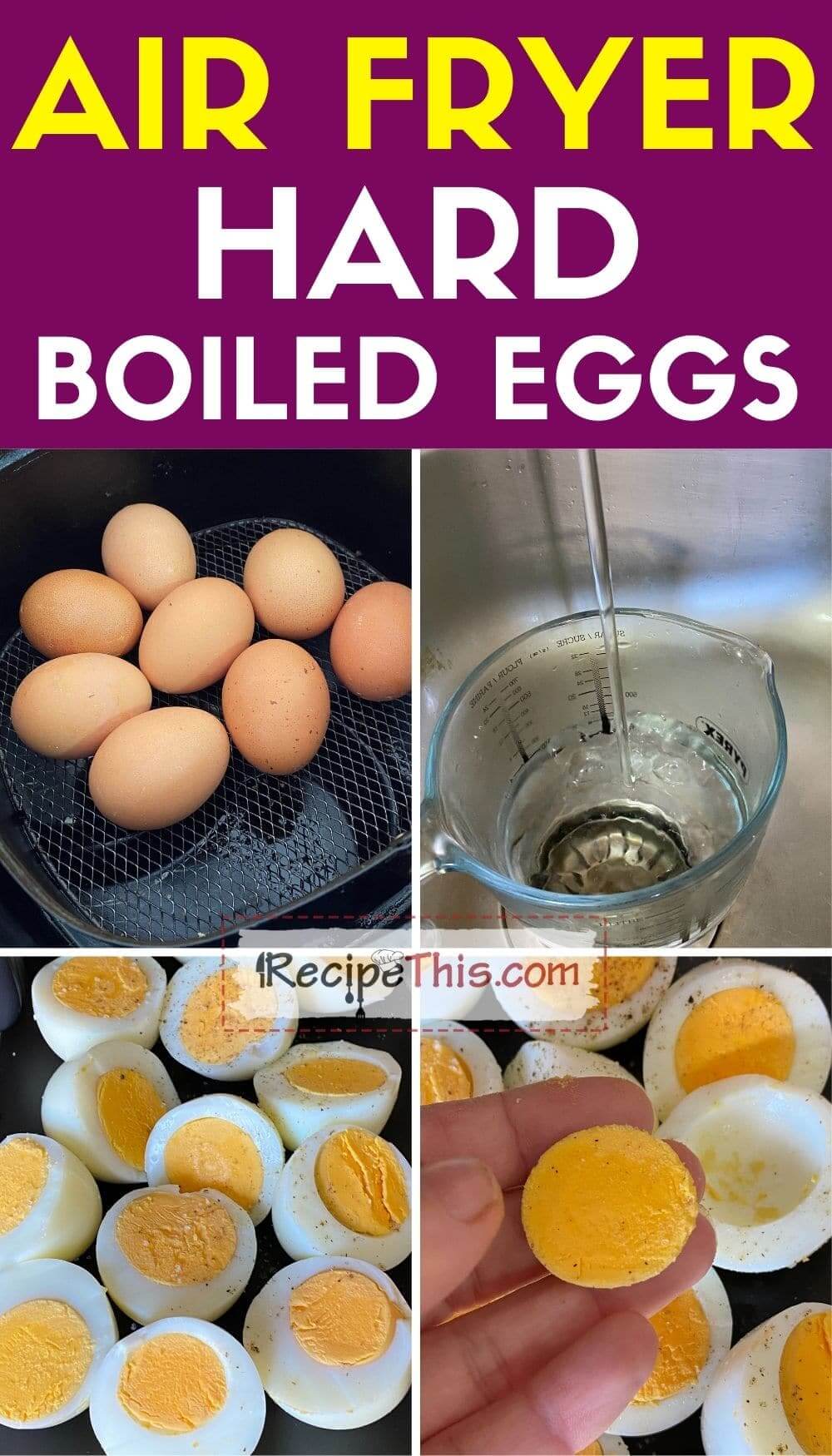
Source: recipethis.com
Lower cooking time
May produce a softer center, depending on the appliance and egg size. Check the result rather than relying on the timer alone.
Longer cooking time
Can help set a soft yolk, but excessive heat or time may cause a dry texture and a green-gray ring around the yolk.
Cold eggs
Eggs taken straight from the refrigerator may need a different time from eggs that start warmer.
A Practical Timing Guide
The table below offers a starting point for testing large eggs at 270°F. These ranges are practical trial settings, not laboratory-verified results for every air fryer. Check the first egg before using the same setting for a large batch.
About 12 to 14 minutes
Try this range only if you want to test a shorter cycle. The yolk may remain soft or partly set, depending on the appliance.
About 15 to 17 minutes
A reasonable starting range for a firm, hard cooked egg in many air fryers.
About 18 to 20 minutes
A possible adjustment if the first batch is undercooked, but check the texture and avoid assuming that every machine needs this long.
How to Adjust the Time Safely
Change one variable at a time. If the egg is undercooked, keep the temperature steady and add a few minutes to the next batch. If the egg is overcooked, shorten the cycle while keeping the egg size and starting temperature consistent.
If your air fryer manual warns against cooking whole eggs in their shells, follow that guidance and use a different method. Do not place eggs in a sealed container or use an improvised cover that blocks airflow.
Undercooked center
Add a small amount of time to the next batch and check one egg before serving.
Uneven results
Use eggs of similar size and make sure they sit in one layer with room for air to circulate.
Cracked shells
Inspect the eggs before cooking and avoid rough handling when placing them in the basket.
Why Cook Eggs in an Air Fryer?
An air fryer can be useful when you want to cook a few eggs without heating a pot of water. It also leaves the stovetop free for oatmeal, toast, or other breakfast foods. Once you learn the right settings for your model, you can repeat the process with little hands-on work.
The method does not require oil, seasoning, or a special egg cooker. You simply use the air fryer basket and a bowl for cooling. That makes it convenient for a small kitchen, a shared cooking space, or a morning when you want to keep the number of dishes low.
However, an air fryer is not automatically faster or more energy-efficient than every other egg-cooking method. Preheating time, appliance size, and batch size affect the total time and power used. If you need a large number of eggs, a pot of water or another batch-cooking method may be more practical.
Source: thewoodenskillet.com
Less water to handle
The eggs cook in their shells without sitting in a pot of boiling water.
Simple setup
You need the air fryer, eggs, and a cold-water bowl rather than a special accessory.
Useful for small batches
A few eggs can cook together as long as they fit in a single layer.
Results need testing
Different air fryers can produce different textures at the same temperature and time.
Air Fryer Eggs Compared With Stovetop Eggs
Stovetop eggs cook in hot water, while air fryer eggs heat in moving hot air. Both methods can produce firm whites and yolks, but their timing systems differ. A stovetop recipe may begin timing after the water boils or after the pan is removed from the heat, while an air fryer recipe usually counts the heating cycle itself.
Choose the method that suits your kitchen and the number of eggs you need. If you already have a reliable stovetop routine, there is no need to replace it. If you prefer to use the air fryer, test a small batch and keep the settings that give you a safe, consistent result.
Choose the stovetop
It may suit larger batches and cooks who already know their preferred timing.
Choose the air fryer
It may suit small batches when the appliance is available and its manual permits this use.
How to Make Eggs Easier to Peel
For easier peeling, cool the eggs promptly and crack the shell all around before removing it. The shell may come away in larger pieces when the egg is fully cool, but results vary. Egg freshness, cooking conditions, and the structure of the shell membranes can all affect how cleanly an egg peels.
Older eggs are often easier to peel than very fresh eggs, but you do not need to buy eggs specifically for this purpose. If the shell sticks, try peeling the egg under a gentle stream of water. Work slowly to avoid removing chunks of egg white with the shell.
An ice bath helps cool the egg, but it cannot guarantee a perfect peel. If you plan to make deviled eggs or another dish where appearance matters, cook a test egg before preparing the full batch.
Source: airfryereats.com
Cool the eggs fully
Place them in ice water for 5 to 10 minutes before peeling.
Crack the whole shell
Tap and gently roll the egg so the shell breaks into many small sections.
Use running water
Let a little water work under the shell and membrane when they stick.
Peel with care
Start near the wider end if a small air pocket makes the shell easier to lift.
What If the Shell Keeps Sticking?
First, check whether the egg has cooled all the way through. A warm egg may be harder to handle and can tear more easily while peeling. Give it a little more time in cold water before trying again.
Next, loosen the shell with small cracks instead of trying to remove it in one large piece. If the white still tears, use the egg in egg salad, a sandwich filling, or a chopped salad. A rough peel affects appearance, not necessarily the usefulness of the egg, provided it was cooked and stored safely.
For neat halves
Use a sharp knife and wipe the blade between cuts to keep the yolk and white tidy.
For egg salad
Chop the eggs after peeling, so small marks on the whites matter less.
Common Air Fryer Egg Problems and Fixes
Most problems come from cooking time, heat, egg size, or differences between air fryers. Check the cooked egg before changing the recipe. One small adjustment is usually more useful than changing both the temperature and cooking time at once.
A firm white does not always mean the yolk is fully set. Cut one egg open after cooling, especially when using a new appliance or changing egg size. If the center is not cooked to your preference, make a small adjustment for the next batch.
Source: i.pinimg.com
The yolk is still soft
Cook the next batch for a few minutes longer at the same temperature, then check the center.
The yolk is dry or crumbly
Reduce the cooking time slightly and cool the eggs promptly.
A green-gray ring appears
This can occur when eggs are overcooked. It is usually a reaction between sulfur in the white and iron in the yolk, and it can be reduced by avoiding excessive cooking and cooling the eggs promptly.
The shell cracks
Check for existing damage, handle the eggs gently, and avoid abrupt handling changes. If an egg leaks, clean the basket according to the appliance manual after it cools.
The eggs cook unevenly
Use eggs of similar size and place them in one layer. Test a smaller batch if the basket is crowded.
The outside has brown spots
Some air fryers may cause shell discoloration from direct heat or contact with hot surfaces. Check the inside after cooking and adjust the method if the result is inconsistent.
Can Eggs Explode in an Air Fryer?
Whole eggs in their shells can crack during heating, and the behavior may vary by appliance and cooking conditions. Do not assume that a shell will remain intact simply because the eggs are not sitting in boiling water. Follow the appliance manual and avoid cooking eggs in sealed containers.
Never pierce an egg or alter its shell based on an unverified tip. If your manual advises against cooking eggs in their shells, use another method. After cooking, let the basket cool before cleaning and follow the manufacturer’s instructions for removing any residue.
Read the manual
Use only cooking methods that the manufacturer permits for your model.
Avoid sealed containers
Do not trap steam or pressure around an egg in a closed vessel.
How to Store Air Fryer Hard Boiled Eggs
Cooked eggs need prompt, safe storage. After cooking and cooling, refrigerate them in a clean, covered container. Keep the refrigerator at 40°F or below, and do not leave cooked eggs at room temperature for more than two hours. If the surrounding temperature is above 90°F, such as during a hot outdoor meal, the limit is one hour.
Hard cooked eggs can generally be kept in the refrigerator for up to one week, whether they are stored in the shell or peeled. Labeling the container with the cooking date can help you use them within that period. For the best quality, keep peeled eggs covered so they do not dry out or pick up odors from other foods.
Do not rely on smell or appearance alone to judge whether an egg is safe. If cooked eggs have been left out too long or you are unsure how they were handled, discard them. A cold-water bath is useful for cooling, but it is not a substitute for refrigeration.
Source: i.pinimg.com
Refrigerate promptly
Move cooled eggs to the refrigerator within two hours, or within one hour when the temperature is above 90°F.
Use within one week
Keep hard cooked eggs refrigerated for no more than seven days.
Use a covered container
Protect peeled eggs from drying and contact with other foods.
Avoid long periods at room temperature
Do not leave cooked eggs out on a kitchen counter or buffet beyond the recommended time limit.
Should You Store Them Peeled or Unpeeled?
Both options can work when the eggs are handled and refrigerated correctly. Leaving the shell on can protect the egg from drying, while peeling the eggs first can make meal prep faster. Choose the approach that best fits how you plan to use them.
If you peel the eggs in advance, use clean hands and utensils and place them in a covered container. Keep them separate from raw foods and their juices. Wash the bowl and tools used for raw eggs or other foods before using them for cooked eggs.
Unpeeled eggs
Useful for storage when you want to peel each egg just before eating.
Peeled eggs
Convenient for lunchboxes and quick snacks when stored in a covered container in the refrigerator.
Easy Ways to Use Air Fryer Hard Boiled Eggs
Hard cooked eggs are easy to work into everyday meals. Once the eggs are cool and stored safely, you can serve them whole, slice them, or chop them for other dishes. Their mild flavor works well with simple seasonings and a range of foods commonly served in American homes.
For a quick breakfast, pair a peeled egg with whole-grain toast and fruit. At lunch, add sliced eggs to a green salad or place them in a sandwich with lettuce and tomato. For a snack, season the egg with black pepper, paprika, or a small pinch of salt.
Source: i.pinimg.com
Classic deviled eggs
Halve the eggs, mash the yolks with mayonnaise and mustard, and spoon the filling back into the whites. Keep the finished dish chilled until serving.
Egg salad sandwiches
Chop the eggs and mix with mayonnaise, mustard, celery, or other ingredients you enjoy. Refrigerate the filling when not in use.
Breakfast plates
Serve a hard cooked egg with toast, oatmeal, or fresh fruit for a simple morning meal.
Green salads
Slice an egg over leafy greens, tomatoes, cucumber, and your preferred dressing.
Lunchbox snacks
Pack a chilled egg in an insulated lunch bag with a cold source to help keep it at a safe temperature.
Meal Prep Without Losing Track of Freshness
If you plan to cook eggs for several days, make a batch that you can use within one week. Write the cooking date on the container and keep the eggs near the main body of the refrigerator rather than in a warm spot. Avoid preparing more than you expect to eat.
For packed lunches, keep eggs cold until it is time to eat. An insulated lunch bag with an ice pack helps maintain a safe temperature. Do not leave an egg in a warm car or on a desk for hours and assume that the shell protects it from unsafe conditions.
Plan the batch
Cook enough eggs for the meals you expect to make during the next few days.
Date the container
Mark the preparation date to help you stay within the recommended storage period.
Food Safety Tips for Cooking Eggs
Eggs can carry harmful bacteria, including Salmonella, so cooking and storage matter. For food safety, cook eggs until both the whites and yolks are firm. The USDA recommends cooking egg dishes to 160°F, and a food thermometer can help check suitable egg preparations where measurement is practical.
An air fryer timer alone cannot prove that every egg has reached a safe internal temperature. Shell thickness, egg size, starting temperature, and the appliance’s heat output can affect the result. If an egg remains runny or partly raw when you cut it open, continue cooking it and check again before eating.
People at higher risk of serious foodborne illness, including young children, older adults, pregnant people, and people with weakened immune systems, should take extra care with egg safety. Use pasteurized egg products for recipes that call for eggs that will remain raw or undercooked, and follow official food safety guidance.
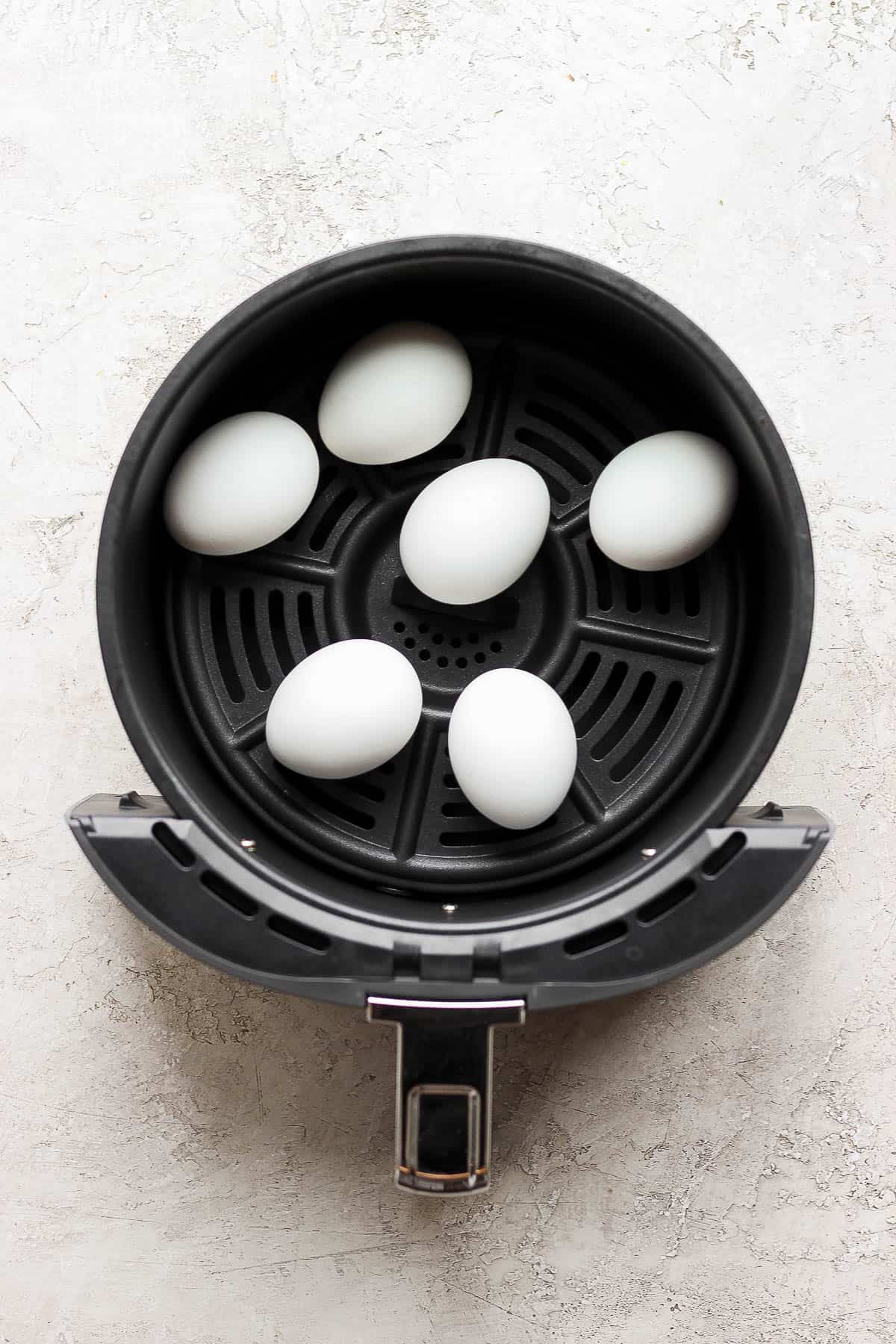
Source: budgetbytes.com
Cook until firm
For a hard cooked egg, the white and yolk should both be fully set.
Prevent cross-contamination
Wash hands, utensils, and work surfaces after handling raw eggs or their contents.
Keep eggs cold
Refrigerate cooked eggs promptly and maintain a refrigerator temperature of 40°F or below.
Follow appliance guidance
Use the method only if your air fryer manufacturer permits cooking whole eggs in their shells.
What to Do if You Are Unsure Whether an Egg Is Done
Cool one egg enough to handle, peel it, and cut it open. If the yolk is still runny or the white is not fully set, do not serve it as a hard cooked egg. Continue cooking the remaining eggs if your appliance manual allows this method, then check them again.
When cooking for someone at higher risk from foodborne illness, do not depend on a guess based on the outside of the shell. Use a reliable cooking process, check the result, and keep the eggs refrigerated after cooking.
Check the center
The inside of the egg gives a clearer indication of doneness than shell color or the timer alone.
When in doubt, do not serve
If you cannot confirm that the egg was cooked and stored safely, discard it rather than taking a risk.
Frequently Asked Questions
Q
How long does it take to make hard boiled eggs in an air fryer?
A practical starting point for large eggs is 15 to 17 minutes at 270°F, followed by 5 to 10 minutes in ice water. The exact time varies by air fryer, egg size, starting temperature, and preheating. Test one egg before relying on the setting for a large batch.
Q
Do I need to add water to the air fryer?
No water is needed in the basket for this basic method. The eggs cook in their shells using hot moving air, rather than boiling water. Prepare a separate bowl of ice water for cooling after the cooking cycle ends.
Q
Can I cook eggs straight from the refrigerator?
Yes, provided your air fryer manufacturer permits cooking whole eggs in their shells. Cold eggs may need a different amount of time from eggs that start at room temperature. Keep the starting condition consistent when testing your preferred settings.
Q
Why are my air fryer hard boiled eggs hard to peel?
Egg freshness, cooking conditions, and the shell membrane can affect peeling. Cool the eggs in ice water, crack the shell all around, and peel under a gentle stream of water if needed. An ice bath can help, but it does not guarantee a perfect peel.
Q
Can I cook a dozen eggs at once?
You can cook multiple eggs if they fit in a single layer and your air fryer manual permits the method. A crowded basket may cook unevenly, and a larger batch may need more careful checking. Test a smaller batch first and avoid stacking eggs.
Q
How can I tell when air fryer eggs are fully cooked?
After cooling, peel and cut one egg in half. A hard cooked egg should have a firm white and a fully set yolk. If the center is still soft or runny, continue cooking the remaining eggs when appropriate and check again.
Q
How long do air fryer hard boiled eggs last in the refrigerator?
Hard cooked eggs can generally be refrigerated for up to one week, whether they are peeled or unpeeled. Store them in a clean, covered container at 40°F or below and refrigerate them within two hours of cooking, or within one hour when the temperature is above 90°F.
Q
Can I use this method for soft boiled eggs?
You can test a shorter cooking time, but the result will depend on your air fryer and the size and starting temperature of the eggs. A shorter cycle does not guarantee a specific yolk texture. Eggs with runny yolks are not fully cooked, so they may carry a higher food safety risk.
✦ Wrapping Up
Conclusion
Making hard cooked eggs in an air fryer is a simple option when you want a small batch without a pot of boiling water. Start with large eggs at 270°F for 15 to 17 minutes, then cool them in ice water for 5 to 10 minutes. Treat these times as a starting point because different air fryers can produce different results.
The best way to find your preferred setting is to cook a small test batch, cut one egg open, and make a small adjustment if needed. Once the timing works for your appliance, you can prepare eggs for breakfast, salads, sandwiches, and snacks. Cool them promptly, refrigerate them safely, and use them within one week.
💡 Key Takeaway
Start with one or two large eggs at 270°F for 15 to 17 minutes, cool them in ice water, check the yolk, and adjust the next batch to match your air fryer.