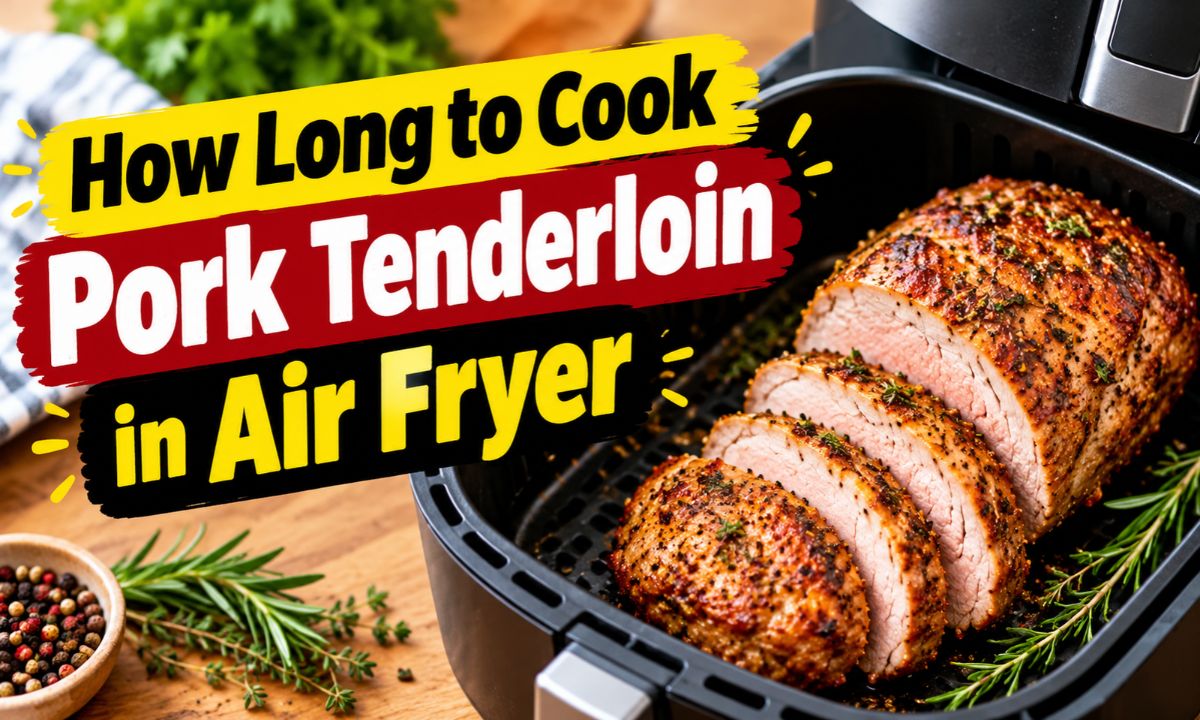
Cook a typical 1-pound pork tenderloin in an air fryer at 400°F for about 18 to 22 minutes, turning halfway, then check that the center reaches 145°F and rest the meat for at least 3 minutes.
Pork tenderloin makes a handy dinner for busy American households. It cooks faster than many large roasts, works well with common pantry spices, and pairs with simple sides like roasted potatoes, green beans, rice, or a fresh salad. An air fryer can give the outside a nice brown finish while keeping the inside moist, provided you watch the temperature and avoid overcooking.
The exact cooking time depends on the tenderloin’s weight, thickness, starting temperature, and your air fryer’s design. A narrow piece may cook faster than a thick one of the same weight. Use the clock as a guide, but let a food thermometer decide when the pork is ready. This guide explains how to prepare the meat, choose a cooking time, check for doneness, and fix common problems without guesswork.
How Long Does Pork Tenderloin Take in an Air Fryer?
A pork tenderloin that weighs about 1 pound often takes 18 to 22 minutes in an air fryer set to 400°F. Start checking the center near the early end of that range. If the meat is not yet at a safe temperature, continue cooking in short intervals and check again.
A larger or thicker tenderloin may need more time, while a smaller, narrow piece may finish sooner. Air fryers also vary in basket size, heating power, airflow, and temperature accuracy. These differences make a time range more useful than a single exact number.
The times below are starting estimates for a thawed, whole tenderloin cooked at 400°F in a preheated air fryer. They are not guaranteed cooking times. Always use a food thermometer to confirm doneness.
About 3/4 pound
Begin checking around 14 to 16 minutes. A thin tenderloin may finish earlier, so use the thermometer rather than waiting for the full estimate.
About 1 pound
Plan for roughly 18 to 22 minutes and begin checking around 16 minutes.
About 1 1/4 pounds
Allow around 20 to 25 minutes as a starting estimate, checking the center before adding more time.
About 1 1/2 pounds
Start checking around 22 to 28 minutes. The shape and thickness may matter more than the weight alone.
Why Cooking Time Can Change
Weight gives you a useful starting point, but it does not tell the whole story. A long, narrow tenderloin may cook faster than a shorter, thicker one with the same weight. A cold piece straight from the refrigerator may also take longer than one that has sat out briefly during preparation.
Basket crowding can slow browning and make cooking less even. A small air fryer may direct heat differently from a large model. For these reasons, use the timing table as a planning tool rather than a promise that the meat will finish at an exact minute.
Thickness
The thickest section usually determines how long the meat needs.
Starting temperature
Refrigerated meat may need more time than meat that is less cold.
Air fryer design
Heating strength, airflow, basket shape, and preheating can affect the result.
The Safe Internal Temperature for Pork Tenderloin
The most important number is 145°F. The United States Department of Agriculture advises cooking whole cuts of pork to an internal temperature of at least 145°F, followed by a rest of at least 3 minutes. This guidance applies to pork tenderloin as a whole cut.
Pork can look slightly pink in the center and still be safe when it has reached the required temperature and rest. Color alone cannot reliably show whether meat is safe to eat. A brown outside does not prove that the center is ready, either.
Use an instant-read food thermometer to check the thickest part of the tenderloin. Insert the probe into the center of the meat without touching the basket or passing through the meat into an air gap. If you get different readings from different spots, use the lowest reliable reading to decide whether more cooking is needed.
Minimum temperature
Reach 145°F in the center of the whole pork tenderloin.
Rest time
Let the pork rest for at least 3 minutes after it reaches 145°F.
Thermometer placement
Check the thickest section from the side if needed to position the probe in the center.
Do not rely on color
Pinkness, clear juices, and surface browning cannot replace a temperature reading.
How to Use a Food Thermometer Correctly
Pull the air fryer basket out carefully when the estimated cooking time is nearly complete. Keep your hands away from escaping steam, then insert the thermometer into the thickest section of the pork. Wait for the reading to settle before deciding what to do next.
If the center reads below 145°F, return the tenderloin to the air fryer and cook for another 2 to 3 minutes. Check again in the center and in another thick area if needed. Once the pork reaches 145°F, remove it and allow the required rest before slicing.
Below 145°F
Continue cooking and check again.
At least 145°F
Remove the pork and rest it for at least 3 minutes.
Uneven readings
Check other thick areas and continue cooking if any reliable reading is below the target.
What You Need Before Cooking
A few basic tools make the process easier and more reliable. You do not need a special pork setting or a complicated recipe. A clean work area, a suitable air fryer, simple seasonings, and a reliable food thermometer are enough.
Check the air fryer manual before using oil, liners, or accessories. Do not use anything that blocks the airflow or comes into contact with a heating element. The pork should fit inside the basket without being forced against the sides.
Pork tenderloin
Use a fully thawed whole tenderloin. Note its weight and shape before cooking.
Food thermometer
Use an instant-read thermometer to check the center.
Paper towels
Pat the surface dry before adding oil and seasoning.
Seasonings
Use salt, black pepper, garlic powder, paprika, or herbs to suit your taste.
A small amount of oil
A light coating can help seasonings stick and support browning.
Pork Tenderloin Versus Pork Loin
Pork tenderloin is a long, narrow cut from a muscle along the backbone. It is usually fairly lean and cooks quickly. Pork loin is a larger, wider cut that may be sold as a roast or as chops. It is not the same cut and often needs a different cooking plan.
Read the package label before setting your air fryer. If you have a thick pork loin roast rather than a tenderloin, do not rely on the timing estimates in this article. Its size and thickness can require a much longer cook.
Pork tenderloin
A smaller, narrow cut suited to the time estimates in this guide.
Pork loin roast
A larger cut that needs timing based on its own size, thickness, and temperature.
Step-by-Step: How to Cook Pork Tenderloin in an Air Fryer
For a typical 1-pound tenderloin, set the air fryer to 400°F and plan for about 18 to 22 minutes. Prepare the meat before heating the appliance, and start checking the internal temperature before the estimated cooking time ends.
The following method keeps the steps simple and helps you avoid dry meat. Adjust the timing as needed for your air fryer and the thickness of your tenderloin.
Step 1: Thaw the pork
Thaw frozen pork in the refrigerator before cooking. Do not put a frozen tenderloin into this timing plan because its center may cook too slowly.
Step 2: Remove the packaging
Take off all wrapping and remove any absorbent pad. Check the meat for any large pieces of surface fat or silverskin that you want to trim.
Step 3: Pat it dry
Blot the surface with paper towels. A dry surface generally browns better than a wet one.
Step 4: Trim if needed
Remove tough silverskin with a sharp knife if it is present. Avoid cutting away too much meat.
Step 5: Season the tenderloin
Rub on a little oil, then add salt, pepper, garlic powder, paprika, or your preferred dry seasoning.
Step 6: Preheat the air fryer
Preheat to 400°F if your model recommends or allows preheating. Follow the manufacturer’s directions for your appliance.
Step 7: Place the pork in the basket
Set the tenderloin in a single layer. Leave room around it for air to circulate, and do not force it into a crowded basket.
Step 8: Cook and turn
Cook for about 9 to 11 minutes, then turn the tenderloin. Continue cooking while watching the total time and checking early enough to avoid overcooking.
Step 9: Check the center
Begin checking the internal temperature around 16 minutes for a typical 1-pound tenderloin. If the center is below 145°F, cook in short intervals and check again.
Step 10: Rest before slicing
Once the center reaches 145°F, remove the pork and rest it for at least 3 minutes. Slice across the grain and serve.
How to Tell When It Is Ready
A properly cooked tenderloin should have a browned exterior and a moist center. The surface may look darker where the seasoning touches the hot basket air, but color is not a reliable measure of doneness.
The clearest sign of readiness is a thermometer reading of at least 145°F in the thickest part, followed by the required rest. If the pork is still below that temperature, give it more time even if the outside looks done.
Reliable sign
The thickest part reaches 145°F on a food thermometer.
Helpful visual clue
The outside may be browned, but this only indicates surface color.
Not a reliable test
Do not decide based only on the meat’s color or the color of its juices.
The Best Temperature and Seasoning Choices
A setting of 400°F is a practical starting point for a whole pork tenderloin in many air fryers. It can brown the surface while the center cooks, but a high setting does not guarantee a juicy result. The most useful control is to check the temperature before the meat spends too long in the hot basket.
Simple seasonings work well because pork tenderloin has a mild flavor. A little salt, pepper, garlic, and paprika can give it a savory crust without hiding the taste of the meat. Dried thyme, rosemary, onion powder, and a small amount of brown sugar are other options.
Garlic and paprika
Use garlic powder, paprika, black pepper, and salt for a savory, lightly smoky flavor.
Herb seasoning
Try dried thyme or rosemary with black pepper and a little oil.
Sweet and savory
Add a small amount of brown sugar to a dry rub, but watch the surface because sugar can darken quickly.
Simple salt and pepper
Use a light coating of oil, salt, and pepper when you want the pork to pair with many different sides.
Should You Use Oil?
A small amount of oil can help dry seasonings stick to the surface and promote browning. Pork tenderloin is naturally lean, so a thin coating may help the outside look more appealing without making the dish greasy.
You do not need to pour oil into the basket. Apply a light coating to the meat and follow the air fryer’s instructions about oils and accessories. Avoid aerosol sprays that the manufacturer warns may damage the basket coating.
Use a light coating
A little oil is generally enough to help the seasoning adhere.
Avoid excess oil
Too much oil can collect in the basket and create extra smoke or mess.
Common Mistakes That Make Pork Tenderloin Dry
Dry pork usually results from too much cooking, uneven heat, or slicing before the meat has rested. Since tenderloin is lean, it has less fat to buffer the effects of overcooking. A few small changes can make the cooking process much more reliable.
If your pork often comes out tough, do not automatically lower the temperature or add a long marinade. First check the internal temperature, meat thickness, and cooking time. These factors are usually more useful to review than changing several parts of the recipe at once.
Cooking by time alone
Two tenderloins with the same weight may have different thicknesses. Use a thermometer to confirm the center is ready.
Cooking too long after reaching 145°F
Once the center reaches the safe target, remove the pork and let it rest rather than continuing to cook it for extra time.
Crowding the basket
Poor airflow can lead to uneven browning. Cook one tenderloin at a time if two pieces do not fit with room around them.
Skipping the rest
Rest the meat for at least 3 minutes after it reaches the required temperature.
Slicing with the grain
Cut across the muscle fibers to make each bite easier to chew.
Using the wrong cut’s timing
A pork loin roast is not the same as a pork tenderloin. Check the package and use a method suited to the actual cut.
What If the Outside Is Brown but the Center Is Undercooked?
If the surface looks ready but the center is below 145°F, continue cooking the pork. You can reduce the air fryer setting slightly if the exterior is darkening too quickly, then check the center again after a few minutes. The exact adjustment depends on the appliance and how far the center is from the target.
Avoid cutting the tenderloin open repeatedly to judge its color. Each cut releases juices and still does not give you a dependable temperature reading. A thermometer gives you a clearer answer with less guesswork.
Lower the heat if needed
If the surface is getting too dark, use a somewhat lower setting and continue until the center reaches 145°F.
Check again soon
Use short cooking intervals and recheck the thickest area.
What If the Pork Is Dry?
You cannot fully reverse moisture loss once pork is overcooked, but you can make it easier to serve. Slice it thinly across the grain and add a little warm gravy, pan sauce, or broth. Serve it with moist sides instead of leaving the slices exposed to hot air for a long time.
For the next cook, start checking earlier and remove the meat once it reaches 145°F. Keeping a short note of the tenderloin’s weight, approximate thickness, and cooking time can help you adjust the process for your own air fryer.
For the current meal
Slice thinly and serve with a small amount of warm sauce or broth.
For next time
Check the temperature earlier and avoid extra cooking after the safe target is reached.
Fresh, Frozen, and Marinated Pork: What Changes?
The timing in this guide is intended for thawed pork tenderloin. Frozen meat does not heat at the same rate, and the center may remain cold while the outside cooks. For the most predictable result, thaw the tenderloin in the refrigerator before air frying.
A marinade can add flavor, but it does not remove the need to check temperature. If the marinade contains sugar, honey, or other sweet ingredients, the surface may brown faster than a plain seasoned tenderloin. Watch the exterior and use the thermometer to decide when the pork is done.
Refrigerator-thawed pork
Use the timing estimates as a starting point and check the center with a thermometer.
Frozen pork
Thaw first for more even cooking. Do not assume the standard time is enough for a frozen center.
Marinated pork
Let excess marinade drip off before cooking. Discard used marinade that touched raw pork unless you bring it to a safe boil before using it as a sauce.
Sugar-based rubs
Check the surface often enough to prevent excessive browning while the center finishes cooking.
How to Thaw Pork Safely
The refrigerator is a good choice for thawing pork because it keeps the meat cold while it defrosts. Place the wrapped tenderloin on a tray or in a dish to catch drips and keep it away from ready-to-eat foods.
If you use another safe thawing method, follow recognized food safety guidance and cook the meat promptly when required. Do not thaw pork on the counter at room temperature for hours. A tenderloin that is still frozen in the middle should not be treated as if it were fully thawed.
Use a tray
Catch any juices so they do not contaminate other foods.
Keep raw meat separate
Wash hands, utensils, and work surfaces after handling raw pork.
How to Serve and Store Air Fryer Pork Tenderloin
Let the pork rest before slicing, then serve it while warm. Cut across the grain into slices that are thick enough to hold their juices but thin enough to chew easily. A small amount of pan sauce, mustard sauce, or gravy can add moisture without hiding the flavor.
For a familiar American dinner, pair the pork with roasted potatoes, corn, steamed broccoli, green beans, coleslaw, or a simple salad. Rice or mashed potatoes also work well if you want a filling meal. Choose sides that can be prepared while the pork cooks so dinner reaches the table together.
Easy weeknight plate
Serve sliced pork with green beans and roasted potatoes.
Light meal
Pair the pork with a fresh salad and steamed vegetables.
Sandwiches
Use cooled, thin slices for sandwiches with mustard, greens, and a soft roll.
How Long Can Leftover Pork Be Stored?
Place leftovers in a clean, covered container and refrigerate them within 2 hours of cooking. If the surrounding temperature is above 90°F, refrigerate the food within 1 hour. Keep the refrigerator at 40°F or below.
Cooked pork leftovers generally keep for 3 to 4 days in the refrigerator. Reheat leftovers to 165°F, measured with a food thermometer, for food safety. If you will not eat the pork within that period, freeze it in a suitable airtight container or freezer bag.
Refrigeration
Refrigerate within 2 hours, or within 1 hour when the temperature is above 90°F.
Storage time
Use refrigerated cooked pork within 3 to 4 days.
Reheating
Reheat leftovers to 165°F.
Freezing
Freeze portions you will not use within the recommended refrigerator storage period.
How to Reheat Without Drying It Out
Thin slices can dry out quickly when reheated in hot moving air. Place them in a suitable heat-safe dish or accessory approved for your air fryer, add a small splash of broth or sauce, and warm them gently. The time will depend on portion size, starting temperature, and appliance design.
Check that the leftovers reach 165°F throughout. If you have a large amount of pork, reheating smaller portions may make it easier to heat the meat evenly without leaving the edges too dry.
Add moisture
A little broth or sauce can help prevent the slices from feeling dry.
Heat in small portions
Smaller portions are easier to reheat evenly.
Check the temperature
Make sure reheated leftovers reach 165°F.
Troubleshooting Air Fryer Pork Tenderloin
When the result is not what you expected, check the temperature and the cooking setup before changing the entire recipe. A dry center, pale exterior, or uneven cook can each point to a different issue. The right fix depends on the symptom.
Problem: The pork is pale
Cause: The surface may be wet, the basket may be crowded, or the cooking time may be too short for browning. Fix: Pat the pork dry, leave space around it, and continue cooking only as needed while checking the center temperature.
Problem: The pork is dark outside but undercooked inside
Cause: The surface is browning faster than the center heats. Fix: Reduce the temperature somewhat and continue in short intervals until the thickest part reaches 145°F.
Problem: One end is dry
Cause: The tenderloin may taper sharply, so the thin end cooks faster. Fix: Tuck the thin end under itself if practical, or monitor the center and thinner section as the cook nears completion.
Problem: The meat is tough
Cause: Overcooking or slicing with the grain may make the meat harder to chew. Fix: Use a thermometer next time and slice across the grain.
Problem: The air fryer smokes
Cause: Excess oil, sugary drips, or residue from earlier cooking may smoke. Fix: Stop the appliance if needed, follow its safe shutdown instructions, let it cool, and clean it according to the manual before the next use.
When Should You Stop and Check the Appliance?
A little steam can occur as moisture leaves the food, but persistent heavy smoke, a burning plastic smell, sparks, or unusual electrical sounds are not normal cooking signs. Stop the appliance if you notice these problems, unplug it when safe to do so, and allow it to cool before inspecting it.
Do not pour water into an operating air fryer or reach near a hot heating element. If there are signs of electrical damage or the appliance continues to behave abnormally, stop using it and follow the manufacturer’s service guidance.
Stop for unusual smoke or odor
Turn off the appliance and investigate only after it is safe and cool.
Clean after cooling
Remove grease and food residue using the method approved for your model.
A Practical Cooking Plan for a Typical 1-Pound Tenderloin
If you want a simple plan for tonight’s dinner, use this example for a thawed tenderloin weighing about 1 pound. It is a practical starting schedule, not a guarantee that every air fryer will finish at the same time. Keep the thermometer ready so you can respond to the actual temperature.
The main goal is to coordinate the steps without rushing the final check. Preparing the sides during cooking can save time, but do not leave raw pork sitting out for a long period while you work on other dishes.
Before cooking
Pat dry, trim silverskin if needed, season the meat, and preheat the air fryer according to the manual.
First cooking stage
Cook at 400°F for about 9 to 11 minutes, then turn the tenderloin.
Second cooking stage
Continue cooking and begin checking the center around 16 minutes total.
Temperature check
If the center is below 145°F, continue for 2 to 3 minutes at a time and check again.
Rest and serve
Remove the tenderloin when it reaches 145°F, rest it for at least 3 minutes, and slice across the grain.
How to Adapt This Plan for Your Air Fryer
If your air fryer cooks quickly, start checking earlier the next time you prepare a similar tenderloin. If the center repeatedly needs longer, record the weight and thickness and adjust your next cooking plan. Change one factor at a time so you can see which adjustment makes the biggest difference.
The goal is not to memorize a fixed number of minutes. It is to learn the pattern of your appliance while using the internal temperature as the final check. That approach works more reliably across different brands, basket sizes, and cuts of meat.
Record the useful details
Note the weight, approximate thickness, temperature setting, and total cooking time.
Check earlier next time
Begin temperature checks before the previous batch’s finishing time.
Keep the safe target
Do not lower the required internal temperature to shorten the cooking process.
Frequently Asked Questions
Q
Can I cook pork tenderloin in an air fryer at 375°F?
Yes. You can cook pork tenderloin at 375°F, but it may take longer than it would at 400°F. The exact time depends on the meat’s thickness and your air fryer, so begin checking the center before you expect it to finish. Remove the pork when it reaches 145°F and let it rest for at least 3 minutes.
Q
Should I flip pork tenderloin in the air fryer?
Turning the tenderloin about halfway through cooking can help it brown more evenly. Some air fryers circulate heat well enough that turning has a smaller effect, but it remains a useful step for many basket-style models. Use tongs and avoid touching the hot basket.
Q
Can pork tenderloin still be pink when it is done?
Yes. Pork can remain slightly pink after it has reached a safe internal temperature. Check the thickest part with a food thermometer and confirm at least 145°F, followed by a rest of at least 3 minutes. Do not use color alone to decide whether the meat is safe.
Q
Can I cook two pork tenderloins at the same time?
You can cook two tenderloins together if your air fryer has enough room for both pieces to sit without crowding. Leave space for air to circulate and expect the cooking time to vary with the total load and the size of each piece. Check each tenderloin separately because they may not finish at the same time.
Q
Do I need to preheat the air fryer for pork tenderloin?
Preheating can help the air fryer reach its intended cooking temperature before the meat goes in. Follow the manufacturer’s instructions because some models preheat automatically or do not require a separate preheating step. If you skip preheating, expect the cooking time to differ and rely on the thermometer.
Q
Can I cook pork tenderloin from frozen in an air fryer?
For the most even and predictable result, thaw the tenderloin in the refrigerator before cooking. A frozen center heats more slowly, so the usual timing for thawed meat may not be suitable. If using a method for frozen pork, follow reliable food safety guidance and verify the internal temperature rather than assuming the outside is enough.
Q
Why is my pork tenderloin dry even when I follow the cooking time?
The tenderloin may be thinner than the one used to set your timing, or your air fryer may cook faster than expected. Continuing to cook after the center reaches 145°F can also make lean pork dry. Start checking earlier, use a thermometer, rest the meat, and slice across the grain.
Q
How long should pork tenderloin rest after air frying?
Rest the pork for at least 3 minutes after it reaches 145°F. This meets the USDA guidance for whole cuts of pork. Keep the rest simple: move the meat to a clean plate and wait before slicing.
✦ Wrapping Up
Conclusion
For a typical 1-pound pork tenderloin, start with an air fryer setting of 400°F and an estimated cooking time of 18 to 22 minutes. Turn the meat halfway through when practical, but begin checking its temperature before the full time has passed. The weight, thickness, and design of your air fryer will determine the actual cooking time.
The most reliable way to avoid mistakes is to use a food thermometer, cook the center to at least 145°F, and rest the pork for at least 3 minutes. Patting the meat dry, leaving space in the basket, and slicing across the grain can also improve the result. With these steps, you can prepare a simple pork dinner without relying on guesswork or risking an overcooked tenderloin.
💡 Key Takeaway
Set your air fryer to 400°F, prepare a thawed tenderloin, and start checking a typical 1-pound piece at about 16 minutes. Remove it only when the center reaches 145°F, then rest it for at least 3 minutes before slicing.