Yes, flipping chicken halfway through cooking is usually best for even browning and crispness, but some cuts and cooking methods do not require it.
Air fryers have become a handy kitchen tool in many American homes. They help make chicken for busy weeknight dinners, quick lunches, game-day snacks, and family meals with less oil than traditional deep frying. Still, one small question can affect the result: should you turn the chicken while it cooks?
In most cases, flipping chicken halfway through the cooking time helps both sides brown more evenly. This is especially useful for chicken breasts, thighs, drumsticks, and breaded pieces. However, an air fryer uses circulating hot air, so some small pieces and certain cooking setups can work well without turning. The best choice depends on the cut, its thickness, the basket design, and how much food you cook at once.
This guide explains when to flip chicken, how to do it without damaging the coating, and how to tell when the meat is ready. Most importantly, appearance alone cannot confirm that chicken is safe to eat. The USDA recommends cooking all poultry to an internal temperature of 165°F, checked with a food thermometer.
You do not have to flip every piece of chicken in an air fryer, but turning it halfway through cooking is usually a good idea. It helps the side facing the basket receive more direct exposure to the circulating hot air. This can improve browning and make the finished chicken look and taste more evenly cooked.
An air fryer moves hot air around the food with a fan. This creates a crisp surface without the need to submerge chicken in oil. However, the side touching the basket may brown differently from the exposed side, especially when the chicken is thick or has a coating.
Flipping gives both sides a better chance to brown. It does not replace proper cooking time or a temperature check. A piece can look golden on the outside while the center remains undercooked.
For most full-size chicken pieces, turn them once around the halfway point. For very small pieces, you can shake the basket or stir them instead, if the food and appliance instructions allow it.
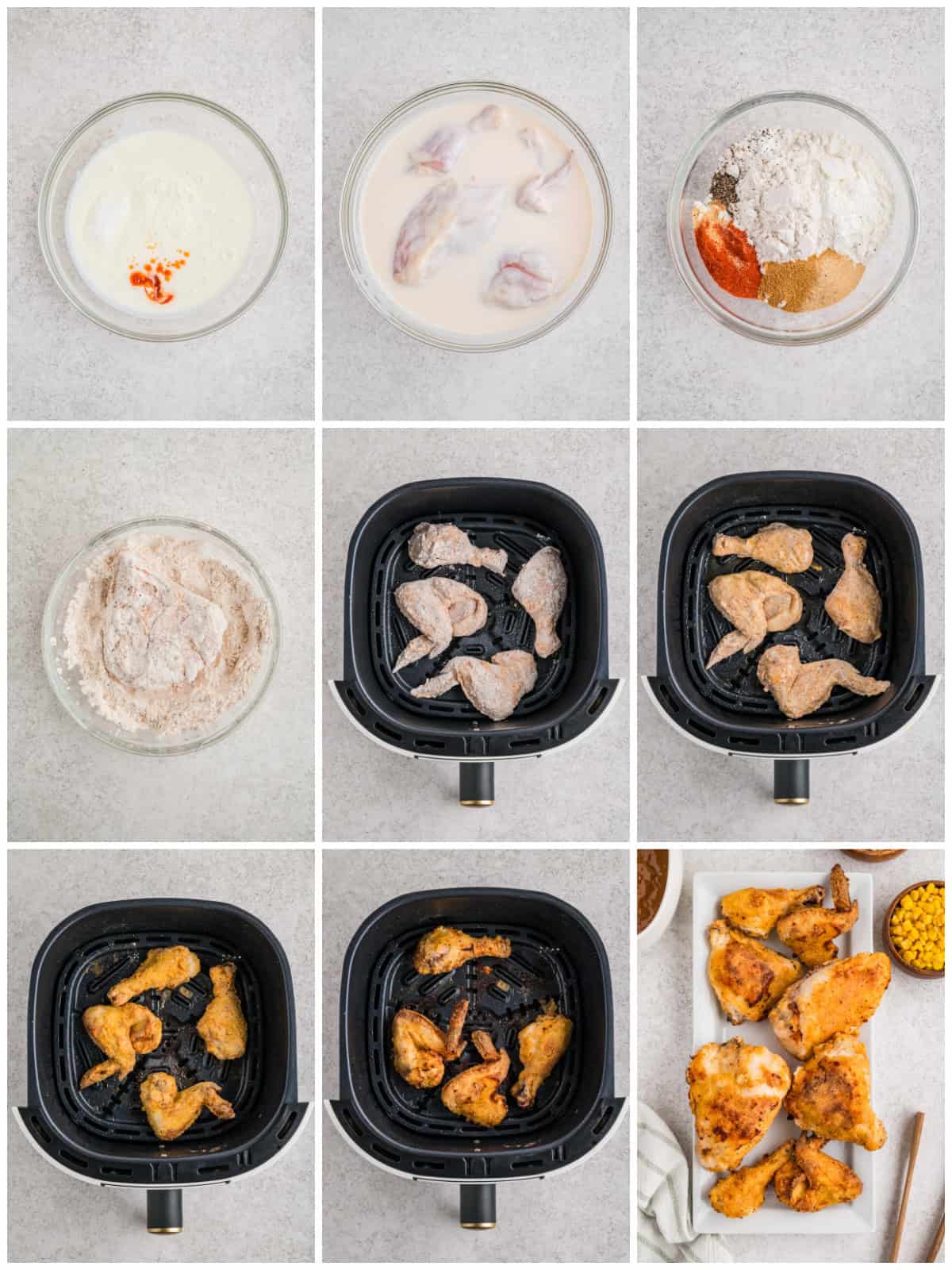
Source: munatycooking.com
Flip for more even browning
Turn larger chicken pieces so the top and bottom can both develop color and a crisp surface.
Skip flipping when it offers little benefit
Thin strips and small pieces may cook well without individual turning when air can move freely around them.
Check doneness separately
Use a food thermometer to confirm 165°F in the thickest part of the chicken.
Why Does Flipping Make a Difference?
The air fryer fan moves hot air around the basket, but airflow is not identical on every surface. A piece of chicken resting against the basket has less direct exposure to moving air on that side. Turning it changes which surface faces the stronger airflow.
This can help breading become crisp on both sides and reduce uneven color. It is also useful when cooking thick chicken breasts or bone-in pieces. The goal is not to turn the meat constantly, but to give each side a fair chance to brown.
Better color
Both sides have a chance to develop a golden finish.
More balanced texture
Turning can reduce the difference between a crisp upper surface and a softer lower surface.
Does Flipping Make Chicken Cook Faster?
Flipping does not guarantee a shorter cooking time. Its main benefit is more even surface exposure and browning. The time needed for the center to reach a safe temperature still depends on the thickness, starting temperature, amount of chicken, and air fryer model.
Do not shorten cooking time just because you flipped
Check the thickest section before deciding that the chicken is ready.
When Should You Flip Chicken in an Air Fryer?
For chicken that benefits from turning, flip it about halfway through the planned cooking time. For example, if a recipe calls for 20 minutes, check and turn the pieces near the 10-minute mark. This is a starting point, not a guarantee that every chicken piece will finish at the same time.
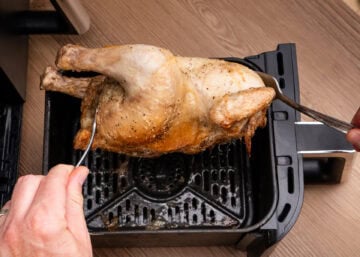
Open the basket carefully because hot air and steam can escape. Use clean, heat-safe tongs to turn the pieces. Place them back in a single layer and continue cooking until they reach the required internal temperature.
If the chicken is sticking, do not pull it away with force. Give it a little more cooking time, then try again. The surface may release more easily once the coating has set.
Source: flawlessfood.co.uk
Start cooking
Arrange chicken in a single layer with space between pieces.
Reach the halfway point
Pause the air fryer and carefully turn the larger pieces.
Finish cooking
Return the basket and continue until the center reaches 165°F.
Example: Turning a 20-Minute Chicken Recipe
Imagine a recipe that gives a 20-minute cooking estimate. You would cook the chicken for about 10 minutes, open the basket, and turn each piece with clean tongs. Then you would continue cooking and begin checking the internal temperature near the end of the estimated time.
If one piece is thicker than the others, it may need more time. Remove only the pieces that have reached 165°F, if your recipe and appliance allow you to do so safely. Keep cooking the remaining pieces and check them again.
Do not rely on the timer alone
The same cooking time may produce different results in different air fryers.
Should You Flip Different Cuts of Chicken?
The best flipping method depends on the shape and thickness of the chicken. A thick breast does not behave like a thin strip, and a whole bird needs a different approach from a basket of wings. The following guide gives practical starting advice.
Always check your specific air fryer manual and recipe. Cooking times vary with the appliance, portion size, bone structure, and whether the chicken starts fresh, chilled, or frozen.
Source: melaniecooks.com
Chicken breasts
Usually benefit from one turn halfway through cooking, especially when they are thick or uneven.
Chicken thighs
Usually benefit from turning once so the skin and other surface can brown more evenly.
Chicken wings
Turn them or shake the basket during cooking so different sides receive direct airflow.
Chicken tenders
Thin tenders may cook without turning, but turning them can improve browning on both sides.
Chicken drumsticks
Turning once during cooking helps expose more of the curved surface to the hot air.
Chicken Breast
Chicken breast is thick in the center and often tapers at the edges. This shape can cause uneven cooking and browning. Turning the breast halfway through helps expose both broad sides to the moving air.
For a more even result, use breasts of similar size. If one breast is much thicker than another, gently flatten the thick end to make the meat more uniform. This can help the pieces finish closer together.
Best approach
Turn once near the halfway point and check the thickest center with a thermometer.
Chicken Thighs
Boneless thighs are usually easy to turn with tongs. Bone-in thighs are thicker and may need more cooking time. Turning them can help improve surface color, especially if you want a browned finish on both sides.
If you want crisp skin, pay attention to the side that faces the heating element and the side that rests against the basket. Turning can help balance the finish, but the final result also depends on moisture, skin condition, and airflow.
Best approach
Turn larger thighs once and leave enough room around each piece.
Chicken Wings
Wings have several small surfaces and irregular shapes. Turning them or shaking the basket can help expose more of each wing to the hot air. If the basket is full, work in batches rather than piling the wings on top of one another.
Use tongs for large wings that do not move freely. A gentle shake may be enough for smaller pieces, but make sure the basket is secure before shaking.
Best approach
Turn or shake the wings during cooking, then check several of the largest pieces for safe doneness.
When Can You Cook Chicken Without Flipping It?
You can sometimes cook chicken without flipping it when the pieces are small, thin, or arranged on a rack that allows air to move around them. This is a matter of cooking quality, not a special food safety exemption. The chicken still needs to reach 165°F.
Some air fryer ovens have racks that let hot air reach more of the food surface than a solid basket floor. Even then, the results depend on the rack position, food spacing, and appliance design. Check the manufacturer’s instructions before choosing a no-flip method.
If you are cooking a single thin tenderloin or small pieces in a well-spaced layer, turning may make little difference. Watch the surface and check the center before serving.
Source: simpleindianmeals.com
Thin chicken strips
Small, evenly sized strips may brown well without individual turning.
Small chicken cubes
A basket shake may be easier than turning every piece with tongs.
Perforated racks
Some rack designs allow more airflow underneath the food, though results still vary.
Manufacturer-approved programs
Some air fryers use specific cooking programs that do not call for turning. Follow the manual and verify the temperature.
Does the Air Fryer Type Change the Answer?
Yes. A basket air fryer, an air fryer oven, and a model with a rotating basket can expose food to heat in different ways. A rotating basket may move small pieces during cooking, while a fixed basket leaves the food in one position unless you turn or shake it.
Do not assume that every air fryer cooks the same way. Use the instructions for your exact model, especially when cooking a whole chicken or large bone-in pieces.
Basket models
Larger pieces usually benefit from a manual turn.
Oven-style models
Rack position and the manufacturer’s turning guidance matter.
Rotating models
Movement may reduce the need for manual turning, but it does not prove that the center is cooked.
How to Flip Chicken in the Air Fryer Without Losing the Coating
The easiest way to flip chicken without pulling off the breading is to let the first side cook long enough for the coating to firm up. Turning too early can make wet batter or loose crumbs stick to the basket. Use tongs with a gentle grip rather than pressing down on the meat.
For breaded chicken, a light coating of oil may help the surface brown and crisp. Do not pour oil into the bottom of the air fryer. Follow the appliance instructions for oil use, and avoid sprays that may damage a nonstick coating if the manufacturer warns against them.
Source: tornadoughalli.com
Use the right tool
Choose clean, heat-safe tongs or a suitable silicone-tipped utensil.
Wait for the coating to set
If the chicken sticks, allow a little more cooking time before trying again.
Turn gently
Grip the side of the chicken without scraping the coating against the basket.
Keep raw and cooked utensils separate
Wash tools that touched raw chicken before using them on cooked food.
What If the Chicken Sticks to the Basket?
Chicken may stick when the basket is dirty, the coating is wet, or the food is turned too soon. It can also stick when a piece has not browned enough to release from the cooking surface.
Pause the air fryer and try to loosen the edge gently with a suitable utensil. Never use a sharp metal tool if your basket has a coating that could be scratched. If the chicken tears, continue cooking it and check its temperature before serving.
For the next batch
Clean the basket, dry the chicken surface when appropriate, and use a light amount of suitable cooking oil if the recipe calls for it.
How to Air Fry Chicken Evenly: A Simple Step-by-Step Method
A few simple steps can make air-fried chicken more consistent. Start with evenly sized pieces, give them enough room, and turn larger cuts once during cooking. Finish with a thermometer check rather than relying on color or the timer.
Source: topkitchenadvice.com
Step 1: Prepare the chicken
Thaw chicken safely in the refrigerator when using a thawed recipe. Pat the surface dry if needed, then add your seasoning or coating.
Step 2: Preheat if required
Some models and recipes call for preheating. Follow the manual rather than assuming every air fryer needs it.
Step 3: Arrange the pieces
Place chicken in a single layer. Leave space between pieces so hot air can circulate.
Step 4: Set the cooking controls
Use a reliable recipe or the model’s cooking guide for the temperature and estimated time.
Step 5: Turn halfway through
Use clean tongs to turn larger pieces. Shake small pieces only when appropriate.
Step 6: Check the internal temperature
Insert a food thermometer into the thickest part without touching bone. Confirm at least 165°F.
Step 7: Rest and serve
Let the chicken rest briefly if the recipe recommends it, then serve with clean utensils and plates.
Signs That Your Chicken Is Ready
A golden surface, crisp coating, and firm texture can suggest that chicken is nearly done. However, these signs cannot confirm food safety. Chicken can brown before its center reaches a safe temperature.
The reliable sign is a reading of 165°F in the thickest part. Check more than one piece when the sizes vary. For a whole bird, check the thickest areas of the breast and the innermost parts of the thigh and wing, avoiding the bone.
Use a food thermometer
A digital instant-read thermometer makes it easier to check the center of each piece.
Check the largest pieces
The thickest pieces are often the last to finish.
What Affects Chicken Cooking and Browning in an Air Fryer?
Several factors change how often chicken needs turning and how long it takes to cook. The biggest are thickness, crowding, moisture, coating, and the air fryer’s design. Understanding these factors helps you adjust a recipe without guessing.
A recipe time is an estimate for a particular size and setup. A crowded basket or thick cut may take longer than a smaller, well-spaced batch. Check the meat itself instead of assuming the same time works for every load.
Source: melaniecooks.com
Thickness
Thick pieces take longer for heat to reach the center and often benefit from turning.
Basket crowding
Overlapping pieces block airflow and can lead to uneven browning.
Surface moisture
Excess moisture can slow browning and soften a coating.
Breading and marinade
Wet coatings may need time to set before turning, while dry coatings can loosen if handled roughly.
Appliance design
Fan strength, basket shape, rack position, and heating element placement affect results.
Why Is One Side Crispy and the Other Side Soft?
This often happens because the lower surface has less direct airflow. Moisture can also collect where the chicken touches the basket. Turning the pieces halfway through can help the second side brown.
If the chicken remains soft, avoid crowding the basket. Cook a smaller batch and check whether the food is dry enough before adding seasoning or breading. A small amount of suitable oil may help some coatings brown, but more oil is not always better.
Try a smaller batch
Give each piece room instead of stacking or overlapping it.
Turn larger pieces
Expose the less-browned side to the hot air during the second half of cooking.
Why Is the Outside Brown but the Inside Undercooked?
This can happen when the cooking temperature is too high for the size of the chicken, when pieces are very thick, or when the recipe time is too short. The outside may brown before enough heat reaches the center.
Lower the temperature if the outside is becoming too dark while the center remains below 165°F. Continue cooking and check again. For thick pieces, a more moderate temperature and longer cooking period may give a better result.
Do not serve undercooked chicken
Continue cooking until the thickest part reaches 165°F.
Food Safety: The Most Important Chicken Cooking Rule
The USDA recommends cooking all poultry, including whole chicken, breasts, thighs, wings, and ground chicken, to an internal temperature of 165°F. This is the key safety target, whether you flip the chicken or leave it in one position.
Use a food thermometer to check the thickest part of each piece. For bone-in chicken, avoid touching the bone with the thermometer probe because that can affect the reading. Check several pieces if the batch contains different sizes.
Do not use color, clear juices, cooking time, or a crisp surface as the only test. These signs can be misleading. A thermometer provides a much more reliable way to confirm that the chicken has reached the recommended temperature.
Source: flawlessfood.co.uk
Safe internal temperature
165°F (74°C) for all poultry, measured with a food thermometer.
Prevent cross-contamination
Keep raw chicken and its juices away from cooked food, clean plates, and ready-to-eat ingredients.
Wash hands and tools
Wash hands, utensils, and food-contact surfaces after handling raw chicken.
Do not wash raw chicken
Rinsing can spread raw poultry juices around the sink and nearby surfaces.
What If the Chicken Is Below 165°F?
Put the chicken back in the air fryer and continue cooking. Check the temperature again after a few minutes. If some pieces have reached 165°F and others have not, remove the cooked pieces with clean utensils and continue cooking the rest.
Do not place partly cooked chicken on the same plate that held raw chicken unless the plate has been washed first. Use a clean plate for the finished food.
Keep cooking
Return under-temperature pieces to the air fryer until they reach 165°F.
Use a clean plate
Prevent raw poultry juices from contacting cooked chicken.
Common Mistakes to Avoid When Air Frying Chicken
Even a good air fryer recipe can disappoint when the basket is too full or the chicken is handled at the wrong time. A few small changes can improve the texture and make the cooking process safer.
Focus on spacing, gentle turning, and temperature checks. These steps matter more than flipping the chicken several times.
Source: simpleindianmeals.com
Overfilling the basket
Too much chicken can block airflow and create uneven results. Cook in batches when needed.
Flipping too early
A coating that has not set may tear or stick to the basket. Let it cook longer before turning.
Flipping too often
Repeated opening and turning can interrupt cooking and damage delicate coatings. One turn is often enough.
Trusting appearance alone
Brown chicken is not automatically safe. Confirm the center reaches 165°F.
Using dirty tongs
Utensils that touched raw chicken must not touch finished food unless washed first.
Ignoring the manual
Air fryer models differ. Follow the cooking and cleaning guidance for your appliance.
Should You Open the Air Fryer Often?
You can open most basket air fryers during cooking to check food or turn it. However, opening the basket too often can interrupt the cooking process and make it harder to follow a recipe’s estimated timing.
For larger chicken pieces, one halfway check is usually a practical approach. After that, check near the expected finish time and use a thermometer to decide whether more cooking is needed.
Keep checks purposeful
Open the basket to turn, inspect, or measure the chicken rather than repeatedly checking without a reason.
Quick Decision Guide: Should You Flip Your Chicken?
Use this simple guide to decide whether turning is useful for the chicken you are cooking. It is general guidance for browning and texture, not a replacement for the instructions that came with your air fryer.
Source: topkitchenadvice.com
Thick chicken breast
Yes. Turn once near the halfway point for more even browning.
Boneless chicken thigh
Usually yes. Turn once, especially if one side is much darker than the other.
Bone-in chicken thigh
Usually yes. Turn carefully and check the thickest area.
Chicken wings
Turn or shake during cooking so more surfaces receive direct airflow.
Thin chicken strips
Optional. They may cook evenly without individual turning if the basket is not crowded.
Small chicken cubes
Shake the basket if the appliance allows it and the pieces can move freely.
Whole chicken
Follow a tested recipe and your model’s instructions. A whole bird may need repositioning or turning, but its size and basket clearance matter.
The Simplest Rule to Remember
If the chicken is thick and has a large surface resting against the basket, turn it once. If it is small and thin, turning may be optional. If you are unsure, follow the recipe and appliance manual, then use a thermometer to confirm safe doneness.
Texture rule
Flip when you want more even browning.
Safety rule
Always cook poultry to 165°F internally.
Frequently Asked Questions
Q
Do you flip chicken halfway through cooking in an air fryer?
Yes, turning chicken halfway through cooking is usually helpful. It gives both sides a chance to brown and crisp more evenly. Thick breasts, thighs, and drumsticks often benefit the most. Small pieces may only need a gentle basket shake.
Q
Can I air fry chicken without flipping it?
Yes. Thin strips, small pieces, and some foods cooked on suitable perforated racks can cook well without manual turning. However, the result depends on the air fryer and how the chicken is arranged. Always check that the thickest part reaches 165°F.
Q
Do you flip chicken wings in an air fryer?
Turning chicken wings or shaking the basket during cooking can help them brown more evenly. Keep the wings in a single layer when possible. Check the largest wings with a thermometer before serving.
Q
How many times should you flip chicken in an air fryer?
For most chicken breasts, thighs, and drumsticks, one turn halfway through cooking is enough. Small pieces may need a shake rather than individual turning. Repeated flipping is usually unnecessary unless your recipe or appliance instructions call for it.
Q
Does flipping chicken make it crispy?
Flipping can help both sides become more evenly browned, which may improve the crisp texture. However, crispness also depends on the coating, surface moisture, oil, airflow, and basket spacing. Turning alone cannot guarantee crispy chicken.
Q
Can I flip chicken with a fork in the air fryer?
You can use a suitable utensil, but clean, heat-safe tongs are often easier. A fork may pierce the meat and allow some juices to escape. Avoid sharp metal tools if they could scratch your air fryer’s nonstick basket.
Q
Should I flip frozen chicken in the air fryer?
Follow a recipe designed for frozen chicken and the instructions on the package when applicable. Some methods call for turning the pieces after the surface has thawed enough to handle. Do not assume a normal fresh-chicken cooking time will work. Check the thickest part and make sure it reaches 165°F.
Q
Is it safe to eat chicken that looks white inside?
Not necessarily. Color is not a reliable way to confirm that chicken is safe. Use a food thermometer and check for an internal temperature of 165°F in the thickest part.
✦ Wrapping Up
Conclusion
So, do you have to flip chicken in the air fryer? Not every time, but turning larger pieces halfway through cooking is usually the better choice. It helps both sides brown more evenly and can improve the texture of chicken breasts, thighs, drumsticks, and breaded pieces.
Small strips and bite-size pieces may cook well without individual turning, especially when they have enough space. A gentle shake may be all they need. The type of air fryer, the thickness of the chicken, and the recipe all affect the best method.
Above all, do not let a golden surface or a cooking timer make the final safety decision. Use a food thermometer and confirm that every piece reaches 165°F. With enough space, a careful turn, and a proper temperature check, you can make air-fried chicken that is both enjoyable and safe to eat.
💡 Key Takeaway
For most chicken pieces, turn once halfway through air frying, then check the thickest part with a food thermometer to confirm it has reached 165°F.