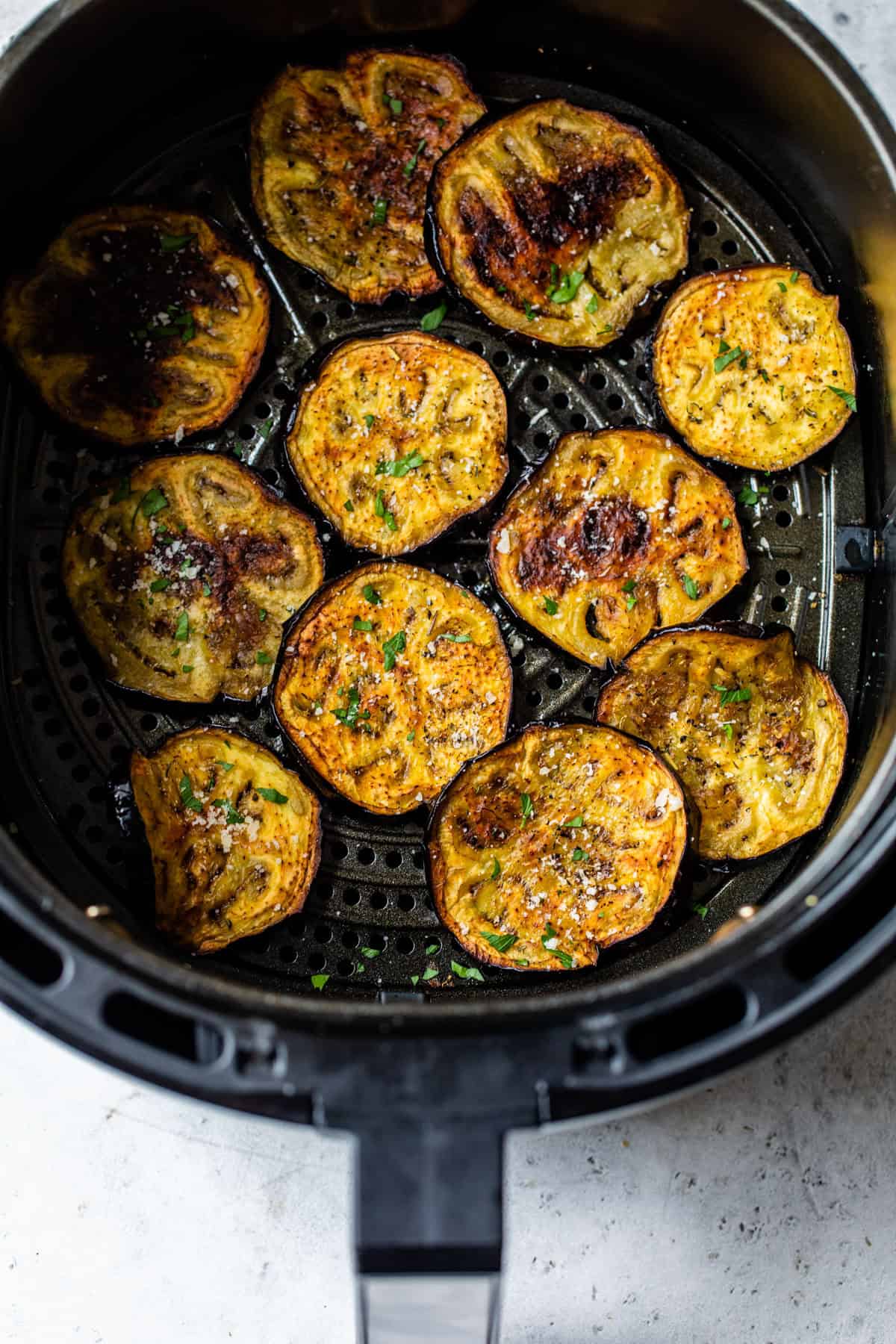
Cook sliced or cubed eggplant at 400°F for 10 to 15 minutes, turning or shaking halfway through, until tender inside and golden around the edges.
Whether you are making a quick weeknight dinner in Texas, preparing a vegetable side for a family cookout in California, or adding more vegetables to your meals in New York, an air fryer makes eggplant easy to prepare. You can get soft, creamy centers and nicely browned edges without filling a skillet with oil. The best part is that you only need a few basic ingredients and a short cooking time.
The exact cooking time depends on how you cut the eggplant. Thin slices cook faster than thick rounds, while large cubes and wedges need more time. For most everyday recipes, 400°F is a useful starting temperature. You should also leave room between the pieces so hot air can move around them. This guide explains the cooking times, preparation steps, signs of doneness, and simple fixes for common problems.
For most eggplant recipes, set your air fryer to 400°F and cook for 10 to 15 minutes. This range works well for bite-size cubes and medium-thick slices. Turn the pieces halfway through so both sides have a chance to brown.
The cooking time is not the same for every cut. A thin slice has less flesh to heat than a thick wedge. A whole eggplant also needs much longer because the heat must reach the center through the skin and flesh.
Start checking a few minutes before the expected finish time. Air fryers vary in size, airflow, heating power, and basket design. Your first batch will help you learn how quickly your own machine cooks eggplant.
Source: simplyairfryer.com
Thin slices
Cook at 400°F for about 8 to 10 minutes. Turn halfway through and check for soft centers and lightly browned edges.
Half-inch slices
Cook at 400°F for about 10 to 12 minutes. Add a few minutes if the centers still feel firm.
Three-quarter-inch cubes
Cook at 400°F for about 10 to 15 minutes. Shake the basket once or twice during cooking.
Thick wedges
Cook at 400°F for about 15 to 20 minutes. Turn them halfway through and check the thickest part.
Eggplant halves
Cook at 375°F to 400°F for about 18 to 25 minutes, depending on their size. Check the flesh with a fork.
Whole small eggplant
Allow roughly 20 to 30 minutes at 375°F to 400°F, depending on size. Prick the skin first and check the center for softness.
Why Does the Cooking Time Change?
Eggplant contains a lot of water, and its flesh softens as it heats. Small pieces expose more surface area to the hot air, so they cook faster. Large pieces take longer for the heat to reach the middle.
The amount of food in the basket matters too. A crowded basket blocks airflow and traps moisture between the pieces. This can leave some parts soft while others remain firm.
The type of air fryer also makes a difference. A compact basket model may cook differently from a large oven-style model. Treat the times in this guide as starting points rather than exact guarantees.
Piece size
Smaller, thinner pieces cook faster than thick chunks.
Basket space
A single layer allows hot air to reach more of the eggplant surface.
Air fryer design
Different heating elements and airflow patterns can change the final cooking time.
What Temperature Is Best for Air Fryer Eggplant?
A temperature of 400°F is a good choice for most sliced and cubed eggplant. It helps the outside brown while the inside becomes soft. You can use a lower temperature when cooking larger pieces that need more time to soften.
The best temperature also depends on the result you want. If you like soft, roasted eggplant, a slightly lower setting can give the center more time to cook. If you want golden edges, 400°F is a practical choice.
Avoid turning the temperature too high just to save a few minutes. The outside may darken before the center becomes tender. A steady cooking temperature gives you more control.
Source: foodess.com
375°F
A useful setting for larger pieces or eggplant halves that need extra time to soften.
390°F
A middle-ground setting for pieces that need steady browning without very intense heat.
400°F
A practical everyday setting for slices, cubes, and wedges.
425°F
Can brown thin pieces quickly, but requires close attention because the edges may darken before the center is ready.
Should You Preheat the Air Fryer?
Preheating can help eggplant begin cooking as soon as it enters the basket. If your model has a preheat setting, follow its instructions. Otherwise, a few minutes at the cooking temperature may be enough, depending on the appliance.
Some air fryers do not require preheating. Check the user manual before adding an extra step. If your appliance starts cooking immediately without preheating, simply begin checking the eggplant at the lower end of the suggested time.
For preheated air fryers
Add the seasoned eggplant once the appliance reaches the selected temperature.
For models without preheating
Place the eggplant in the basket and monitor the cooking process closely.
How to Cook Eggplant in an Air Fryer Step by Step
Making air fryer eggplant is simple. You need a fresh eggplant, a little cooking oil, salt, pepper, and any seasonings you enjoy. Olive oil or avocado oil works well for a basic recipe.
A medium eggplant is a useful starting point for a family side dish. You can adjust the amount based on your basket size and the number of people you are serving. If the pieces do not fit in one layer, cook them in batches.
Source: therecipecritic.com
What you need
One medium eggplant, 1 to 2 tablespoons of olive oil, salt, black pepper, and optional garlic powder or paprika.
Tools
A sharp knife, cutting board, mixing bowl, air fryer, and heat-safe tongs or a spatula.
Step 1: Choose and Wash the Eggplant
Choose an eggplant with smooth, firm skin and a fresh-looking green stem. Avoid one with large soft spots, deep wrinkles, or signs of decay. A fresh eggplant should feel firm when you gently press it.
Rinse it under cool running water and dry it with a clean kitchen towel. The skin is edible, so peeling is optional. You can leave it on for better shape and texture.
Look for firm skin
Choose an eggplant that feels firm and has no obvious damaged areas.
Dry it well
Remove surface water before cutting and seasoning.
Step 2: Cut the Eggplant Into Even Pieces
Trim off the stem and cut the eggplant into rounds, cubes, or wedges. For a basic recipe, half-inch slices or three-quarter-inch cubes are easy to handle. Try to keep all the pieces close to the same size.
Even pieces help prevent one part of the batch from becoming too soft while another part remains firm. If you want to make eggplant fries, cut the flesh into similar-sized sticks.
For rounds
Cut slices about half an inch thick for a tender center and browned surface.
For cubes
Make pieces about three-quarter inch wide for an easy side dish or salad topping.
For wedges
Cut the eggplant lengthwise into thick sections that can be turned during cooking.
Step 3: Decide Whether to Salt the Eggplant
You do not have to salt every eggplant before cooking it. Modern eggplant varieties are often mild, and small fresh eggplants may need no special treatment. You can season them and put them straight into the air fryer.
Salting can help when you are using a large eggplant that seems especially watery or tastes bitter. Sprinkle the cut pieces with salt and let them rest for about 15 to 30 minutes. Then blot away the moisture and excess salt with paper towels.
Do not put wet eggplant into the basket if you want browned edges. Removing excess surface moisture helps the hot air brown the outside.
Skip salting
Use this method for fresh, mild eggplant when you want a quick meal.
Salt first
Use this option for particularly watery or bitter eggplant, then pat it dry before adding oil.
Step 4: Add Oil and Seasonings
Place the dry eggplant in a large mixing bowl. Add a light coating of olive oil and toss until the pieces have a thin, even layer. You do not need to soak them in oil.
Season with salt, black pepper, garlic powder, or paprika. Italian seasoning also works well if you plan to serve the eggplant with pasta or marinara sauce. Keep wet sauces for after cooking because too much liquid can prevent browning.
Olive oil
Adds flavor and helps the outside brown.
Garlic powder
Adds a savory flavor without adding extra moisture.
Paprika
Adds a warm flavor and color.
Black pepper
Adds mild heat and balances the soft flavor of eggplant.
Step 5: Arrange the Pieces in the Basket
Place the eggplant in a single layer inside the air fryer basket. Leave a little space between the pieces so the hot air can move around them. Avoid piling slices or cubes on top of each other.
If you have more eggplant than the basket can hold, cook it in batches. A second batch is better than overcrowding the first one. This small change can make a big difference in texture.
Leave room
Keep space between pieces to support even cooking and browning.
Cook in batches
Split a large amount into smaller portions rather than filling the basket too tightly.
Step 6: Air Fry and Turn Halfway Through
Set the air fryer to 400°F. Cook thin slices for about 8 to 10 minutes, medium slices for 10 to 12 minutes, or cubes for 10 to 15 minutes. These are starting ranges, so check your food as it cooks.
Turn the slices with tongs or shake the basket halfway through. This helps expose different surfaces to the hot air. If the eggplant is browning too fast, lower the temperature slightly or remove it when the center is tender.
First half
Let the eggplant cook until the underside begins to brown.
Middle check
Turn or shake the pieces and check whether the edges are becoming golden.
Final minutes
Check the thickest piece with a fork and add short cooking intervals if needed.
Step 7: Check Doneness and Serve
The eggplant is ready when the center feels soft and a fork slides into the flesh with little resistance. The edges should look golden brown or lightly crisp, depending on the cut and the amount of oil used.
Remove the eggplant with tongs or a heat-safe spatula. Taste a piece and add a little more salt, lemon juice, or fresh herbs if needed. Serve while warm for the best texture.
Tender center
The flesh should be soft rather than firm or rubbery.
Browned surface
The outside should have some golden or lightly toasted spots.
No raw firmness
If the center feels hard, return the pieces to the air fryer for another 2 to 3 minutes.
Air Fryer Eggplant Cooking Time Chart
The chart below gives you a quick way to choose a cooking time based on the shape and thickness of your eggplant. The suggested times assume a basket-style air fryer set to the listed temperature, with the pieces arranged in a reasonably even layer.
These ranges are practical starting points, not fixed rules for every appliance. Begin checking near the lower end of each range, especially if your air fryer has strong airflow or your pieces are small.
Source: tipbuzz.com
Thin rounds
375°F to 400°F for 8 to 10 minutes. Turn once.
Half-inch rounds
400°F for 10 to 12 minutes. Turn halfway.
Three-quarter-inch cubes
400°F for 10 to 15 minutes. Shake halfway.
Thick wedges
400°F for 15 to 20 minutes. Turn once or twice.
Eggplant halves
375°F to 400°F for 18 to 25 minutes. Check the thickest part.
How to Adjust the Time for Different Air Fryers
A small air fryer may have less room for food, so you may need to cook in several batches. Some larger models have stronger airflow or different heating patterns. These differences can affect how quickly the eggplant browns.
If your first batch cooks too quickly, reduce the next batch by 1 or 2 minutes before checking it. If it remains firm after the suggested time, add 2-minute cooking intervals until the center is soft.
Keep a simple note of the temperature and time that worked in your appliance. This makes future batches easier and helps you avoid starting from scratch each time.
Eggplant browns too quickly
Lower the temperature to 375°F and allow more time for the center to soften.
Eggplant stays pale
Check the basket load, remove excess moisture, and leave more space between pieces.
Some pieces finish first
Remove the smaller pieces and continue cooking the larger ones.
How to Make Eggplant Crispy Instead of Soggy
The best way to get browned eggplant is to control moisture and give each piece enough space. Eggplant has a soft, water-rich structure, so it naturally becomes tender as it cooks. The goal is not to remove all moisture but to prevent excess water from collecting on the surface.
A light coating of oil helps with browning, but too much oil can make the result heavy. A crowded basket can also trap steam between pieces. Think of the basket as a small roasting space rather than a bowl where you pile vegetables together.
You may not get the same crunch as deep-fried breaded eggplant. Plain air-fried eggplant is usually crisp around some edges and soft in the center. For a stronger crunch, use a breadcrumb coating and cook the pieces in a single layer.
Source: gzrecipes.com
Dry before seasoning
Blot the eggplant after washing and again after salting if you use that step.
Use a light amount of oil
Coat the surface evenly without leaving excess oil at the bottom of the bowl.
Avoid overcrowding
Leave space between the pieces and cook in batches when needed.
Turn halfway
Expose the other side to the circulating air for more even browning.
Serve soon after cooking
Eggplant can soften as it sits because steam collects around the warm pieces.
Can You Use Breadcrumbs for Extra Crunch?
Yes. Breadcrumbs can give eggplant a more noticeable crisp coating. Cut the eggplant into rounds, then dip each piece in beaten egg or another suitable coating mixture before pressing it into seasoned breadcrumbs.
Arrange the coated slices in one layer and lightly spray or brush the coating with oil. Air fry at about 375°F to 400°F for approximately 10 to 15 minutes, turning once. Check the center and the coating before serving.
The exact time depends on slice thickness and coating depth. If the breadcrumbs brown before the eggplant softens, lower the temperature and finish cooking more gently.
For a light coating
Use a thin layer of breadcrumbs so the eggplant cooks without a heavy crust.
For better browning
Apply a small amount of oil to dry breadcrumb areas.
For eggplant Parmesan
Cook the breaded slices until tender, then add marinara and cheese and finish until the cheese melts.
Common Air Fryer Eggplant Problems and How to Fix Them
Most eggplant problems come from excess moisture, uneven cuts, too much food in the basket, or incorrect timing. You do not need to change the entire recipe when something goes wrong. Identify the problem and make one small adjustment.
The texture is the best guide. Eggplant that is too firm needs more cooking time, while eggplant that is very wet may need better drying and more space in the basket. If the outside is dark but the middle is still hard, lower the temperature rather than adding more intense heat.
Source: medicalalertsstore.com
Problem: The eggplant is soggy
Possible causes include excess moisture, overcrowding, or too much oil. Pat the pieces dry, reduce the basket load, and use a light oil coating.
Problem: The center is still firm
The pieces may be too thick or the cooking time too short. Continue cooking in 2-minute intervals until a fork slides through easily.
Problem: The outside is too dark
The temperature may be too high or the pieces may be too thin. Lower the temperature and check the food earlier.
Problem: Some pieces are raw while others are soft
The cuts may be uneven. Remove the finished pieces and continue cooking the larger ones.
Problem: The eggplant tastes bitter
The eggplant may be older or naturally more bitter. Try salting the cut pieces, letting them rest, and blotting away the moisture before cooking.
Problem: The eggplant sticks to the basket
The basket may need cleaning or the pieces may have been added before the cooking surface was ready. Use a light oil coating and follow the appliance instructions for basket care.
What If the Eggplant Is Dry or Rubbery?
Dry or rubbery eggplant may have cooked for too long, especially when the pieces are thin. Eggplant needs enough heat to soften, but extra cooking after it becomes tender can make its texture unpleasant.
For your next batch, reduce the cooking time by 2 or 3 minutes and check earlier. You can also use a light oil coating to help the surface brown while the inside stays moist.
If the eggplant is already cooked, try adding it to pasta sauce, tomato stew, or a dish with a little olive oil and lemon juice. These additions can make dry pieces easier to enjoy.
Reduce cooking time
Check thin pieces earlier than thick cubes or wedges.
Avoid excess heat
Use 375°F if the outside browns before the middle becomes tender.
Use a suitable amount of oil
Coat the pieces lightly to help prevent an overly dry surface.
How to Season and Serve Air Fryer Eggplant
Air fryer eggplant has a mild flavor that works with many herbs, spices, sauces, and meals. You can keep it simple with salt, pepper, and garlic powder or give it a stronger flavor with paprika, chili flakes, or Italian seasoning.
The best seasoning depends on how you plan to serve it. A Mediterranean-style side dish works well with lemon and parsley. For an Italian meal, use oregano, basil, and Parmesan. For an Asian-inspired dish, try sesame seeds, green onions, and a little soy-based sauce after cooking.
Source: therecipecritic.com
Garlic and herbs
Combine garlic powder, parsley, oregano, and black pepper for a simple savory flavor.
Lemon and parsley
Add fresh lemon juice and chopped parsley after cooking for a bright finish.
Italian style
Use Italian seasoning and Parmesan, then serve with marinara sauce.
Spicy style
Add paprika and crushed red pepper for a little heat.
Asian-inspired style
Finish with sesame seeds, green onions, and a small amount of soy sauce.
What Meals Go Well With Air Fryer Eggplant?
Air fryer eggplant works as a side dish, a salad topping, or part of a larger vegetarian meal. Its soft center pairs well with foods that have a firmer texture, such as rice, toasted bread, or roasted potatoes.
You can also add the cooked pieces to pasta, grain bowls, wraps, and sandwiches. If you want a simple lunch, place the warm eggplant in pita bread with lettuce, tomato, and a yogurt-based sauce.
With chicken or fish
Serve seasoned eggplant beside grilled chicken, baked salmon, or another main dish.
With pasta
Toss the cooked pieces with pasta, marinara, olive oil, and grated Parmesan.
In a grain bowl
Combine eggplant with rice, quinoa, chickpeas, and fresh vegetables.
In a sandwich
Layer the eggplant with tomato, greens, cheese, or a creamy spread.
As an appetizer
Serve warm rounds with marinara, ranch, or a yogurt and garlic dip.
How to Store and Reheat Air Fryer Eggplant
Store leftover cooked eggplant in a clean, airtight food container in the refrigerator. Let it cool briefly, then refrigerate it promptly. For best food safety, do not leave cooked vegetables at room temperature for more than 2 hours, or more than 1 hour when the temperature is above 90°F.
Use refrigerated leftovers within 3 to 4 days. The eggplant may become softer as it sits because moisture moves through the cooked flesh. That change is normal, but discard leftovers if they develop an unusual smell, mold, or other signs of spoilage.
You can freeze cooked eggplant, but its texture may become softer after thawing. This makes frozen pieces better for sauces, soups, and casseroles than for dishes where you want crisp edges.
Source: tipbuzz.com
Refrigerator
Keep cooked eggplant in an airtight container for 3 to 4 days.
Freezer
Freeze in a suitable airtight container for about 2 to 3 months for best quality.
Room temperature
Refrigerate leftovers within 2 hours, or within 1 hour in temperatures above 90°F.
How to Reheat Eggplant in the Air Fryer
The air fryer is a useful way to warm leftover eggplant and bring back some of its browned surface. Place the pieces in a single layer and heat them at 350°F for about 3 to 5 minutes. Check them before adding more time.
If the pieces are thick or cold from the refrigerator, they may need another minute or two. Avoid using a very high temperature because the outside can become too dark before the center is warm.
You can also use a microwave if speed matters more than crispness. The microwave will warm the eggplant, but the surface will usually become softer.
Air fryer method
Reheat at 350°F for about 3 to 5 minutes, checking the center before serving.
Oven method
Warm on a baking sheet at 350°F until heated through.
Microwave method
Heat in short intervals until warm, knowing that the texture will be softer.
Important Mistakes to Avoid When Air Frying Eggplant
A few small mistakes can change the texture of your eggplant. The most common is expecting one cooking time to work for every shape and size. Thin slices, large cubes, and whole eggplants need different amounts of heat.
You should also avoid adding too much oil or wet sauce before cooking. Excess oil can make the food heavy, while wet sauces can interfere with browning. Add delicate sauces and fresh herbs near the end instead.
Source: homekitchtech.com
Cutting uneven pieces
Different sizes cook at different speeds. Use similar-sized pieces for a more even result.
Filling the basket too much
Overcrowding blocks airflow and can cause steaming instead of browning.
Skipping the halfway check
Turning or shaking helps expose more surfaces to the hot air.
Using too much oil
Eggplant absorbs oil easily, so a light, even coating is usually enough.
Cooking only by the timer
Always check the texture because air fryer models and eggplant sizes vary.
Adding watery sauce too early
Finish with sauce after cooking when possible to preserve browned edges.
Is It Safe to Put Parchment Paper Under Eggplant?
You can use air fryer parchment paper if your appliance manufacturer allows it and the paper is made for the intended cooking conditions. However, parchment should not block the airflow openings or extend beyond the basket in a way that could touch the heating element.
Never place loose parchment in an empty, preheating air fryer. The fan can lift it toward the heating element and create a fire risk. Food should weigh down the paper, and the basket must still allow proper air circulation.
For most plain eggplant recipes, parchment is not necessary. A clean basket with a light coating of suitable oil is often enough.
Check the manual
Follow your air fryer’s instructions about liners and maximum temperatures.
Keep paper secure
Never use loose parchment during preheating or without food weighing it down.
Protect airflow
Do not cover the entire basket base if the design relies on airflow through those openings.
Frequently Asked Questions
Q
Can You Cook Eggplant in an Air Fryer Without Oil?
Yes, you can cook eggplant without oil. Cut it into even pieces, season it with salt and pepper, and arrange it in a single layer. Cook at 400°F for about 10 to 15 minutes, checking the texture as it cooks.
The result may be less golden and may have a drier surface than eggplant cooked with a little oil. A light coating is useful if you want more browning and a richer texture.
Q
Do You Need to Peel Eggplant Before Air Frying?
No. Eggplant skin is edible, and you can leave it on when making slices, cubes, or wedges. The skin helps the pieces hold their shape while cooking.
Peeling is optional if you prefer a softer texture or are using a large eggplant with tougher skin. There is no need to peel a fresh, tender eggplant for most air fryer recipes.
Q
Why Is My Air Fryer Eggplant Not Crispy?
The most common reasons are excess moisture, too much food in the basket, and too little space between the pieces. These conditions trap steam and make the eggplant soft instead of browned.
Pat the eggplant dry, use a light oil coating, and cook it in a single layer. If you want a stronger crunch, try a thin breadcrumb coating rather than expecting plain eggplant to become deeply crisp.
Q
Can You Air Fry Frozen Eggplant?
Yes, you can air fry frozen eggplant, but the cooking time depends on whether it is plain, breaded, or already cooked. Follow the package instructions when available because frozen products can differ in thickness and preparation.
For plain frozen pieces, spread them in a single layer and begin checking around the cooking time suggested for similar fresh pieces. Add time as needed until they are hot and tender. Expect more moisture and a softer texture than fresh eggplant.
Q
Can You Cook a Whole Eggplant in an Air Fryer?
Yes. Wash and dry the eggplant, then prick the skin several times with a fork to allow steam to escape. Place it in the basket and cook at about 375°F to 400°F for roughly 20 to 30 minutes, depending on its size.
Turn it halfway through if your air fryer heats unevenly. The eggplant is ready when the skin looks wrinkled and the flesh feels very soft when tested with a knife or fork.
Q
Should You Soak Eggplant in Salt Water Before Air Frying?
Soaking is optional. Some cooks soak larger eggplant pieces in lightly salted water for about 15 minutes to help draw out moisture and reduce bitterness. This can be useful for certain recipes.
If you use this method, drain the eggplant well and pat it completely dry before adding oil. Wet pieces are more likely to steam than brown in the air fryer.
Q
How Do You Know When Air Fryer Eggplant Is Fully Cooked?
Fully cooked eggplant has soft flesh that a fork can pierce easily. The surface may be golden brown, lightly crisp, or slightly charred, depending on your cooking method.
If the middle still feels firm, cook it for another 2 to 3 minutes and check again. Do not rely only on the timer because thickness and appliance design affect the result.
Q
Can You Cook Eggplant at 375°F Instead of 400°F?
Yes. Cooking at 375°F is useful for thicker slices, wedges, and larger pieces that need more time to soften. Expect the cooking time to be slightly longer than at 400°F.
Check the center with a fork and continue cooking in short intervals if needed. This lower setting can help when the outside is browning faster than the inside.
✦ Wrapping Up
Conclusion
The best cooking time for air fryer eggplant depends on how you cut it. For most everyday recipes, 400°F for 10 to 15 minutes is a reliable starting point for cubes and medium slices. Thin rounds may finish sooner, while thick wedges and whole eggplants need more time.
For the best results, choose fresh eggplant, cut it into even pieces, remove excess surface moisture, and add a light coating of oil. Arrange the pieces in a single layer and turn them halfway through cooking. Most importantly, check the texture instead of depending only on the timer.
Once you understand the basic timing, you can use air fryer eggplant in many meals. Serve it with chicken, pasta, rice, salad, or your favorite dipping sauce. A few simple steps can turn an everyday vegetable into a warm, flavorful side dish.
💡 Key Takeaway
For your next batch, cut one medium eggplant into three-quarter-inch cubes, pat them dry, toss with 1 tablespoon of olive oil and your favorite seasonings, then air fry at 400°F for 10 to 15 minutes. Shake halfway through and stop when the centers are fork-tender and the edges are golden.