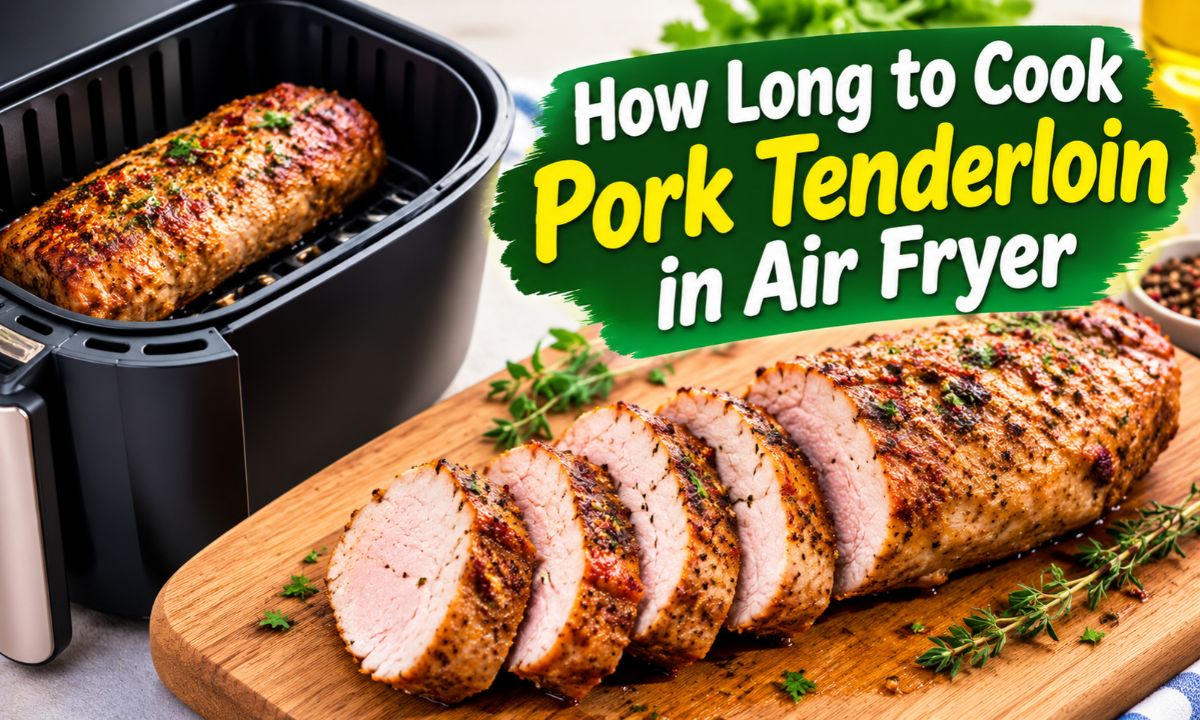
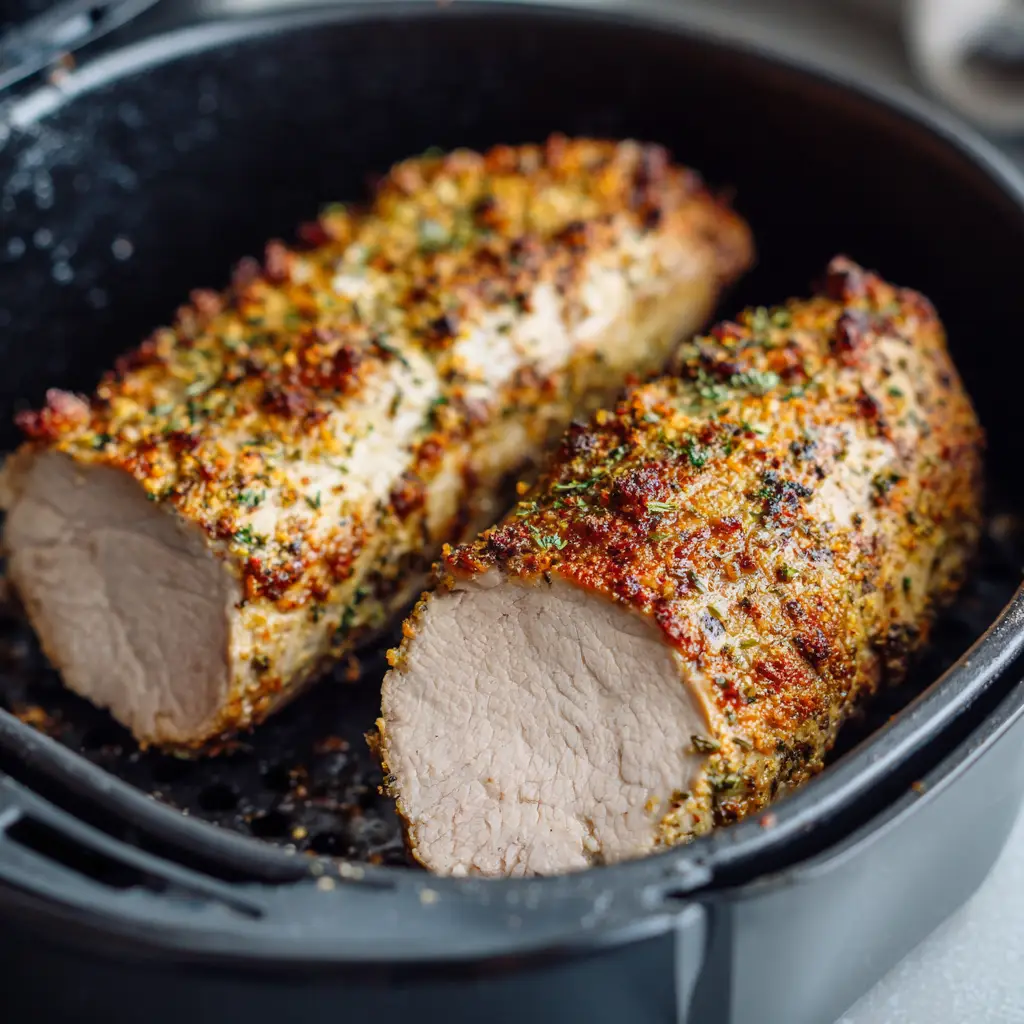
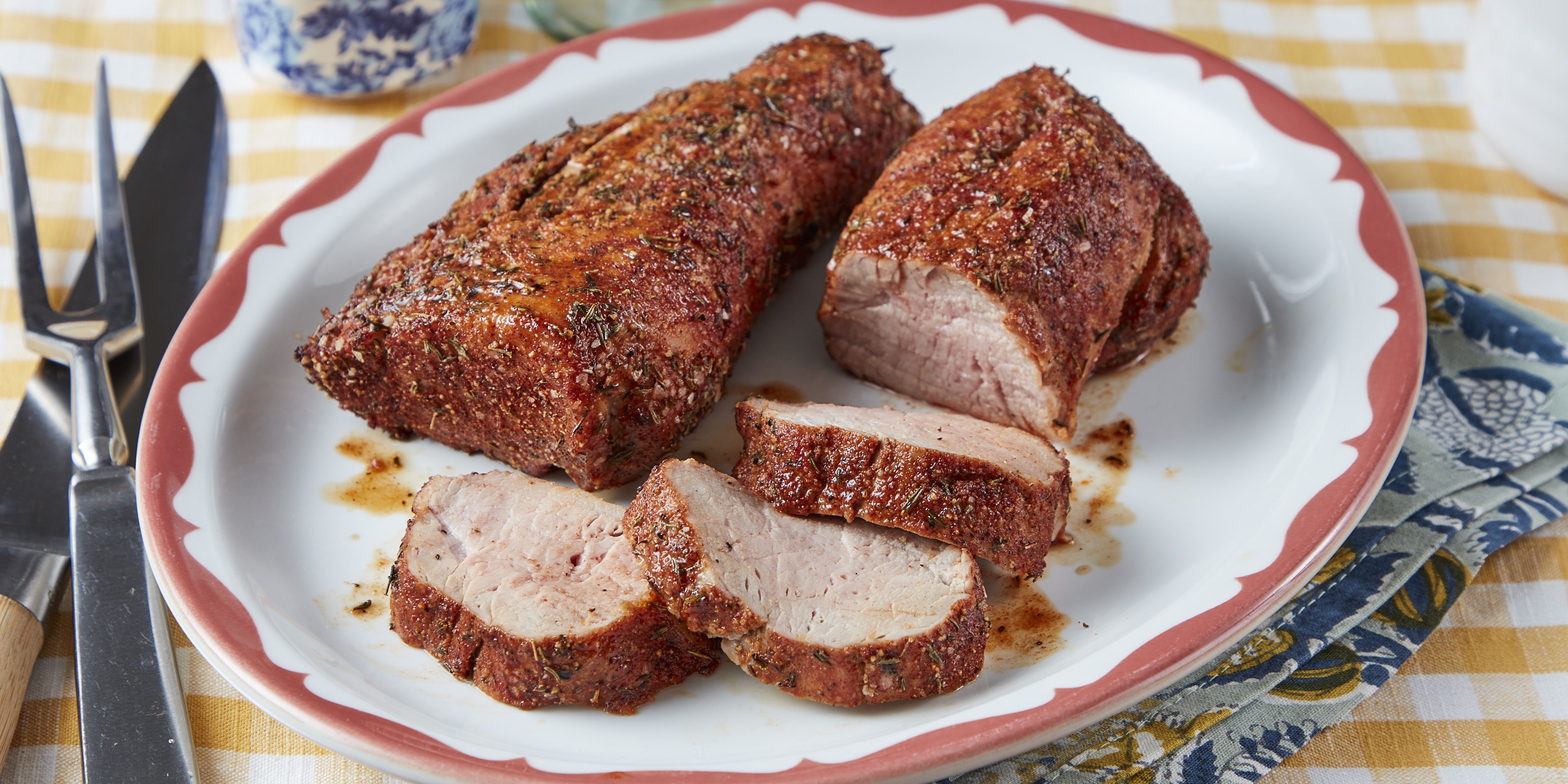
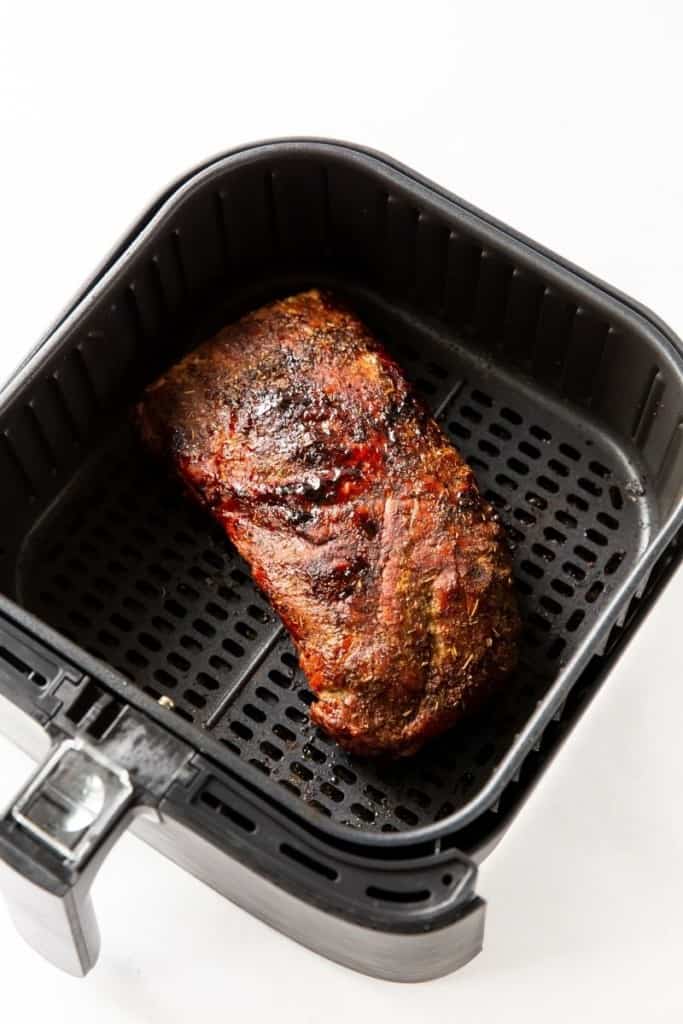
Cook a typical 1-pound pork tenderloin in an air fryer at 400°F for about 18 to 22 minutes, turning halfway. Check the thickest part with a food thermometer and remove the pork when it reaches 145°F, then rest it for at least 3 minutes.
For busy American households, an air fryer can make pork tenderloin a practical choice for a weeknight dinner. The meat cooks quickly, needs little added oil, and pairs well with familiar sides such as roasted potatoes, green beans, corn, or a fresh salad. The main challenge is getting the center cooked safely without drying out the lean meat.
The cooking time depends on the tenderloin’s weight, thickness, starting temperature, and the air fryer’s design. A small tenderloin may finish sooner than a thick one of the same weight. Use the clock as a guide, but let a food thermometer determine when the pork is ready.
How Long Does Pork Tenderloin Take in an Air Fryer?
A typical 1-pound pork tenderloin takes about 18 to 22 minutes in an air fryer set to 400°F. This is a starting estimate for a whole, unstuffed tenderloin. Smaller or thinner pieces may finish sooner, while thick pieces can take longer.
For the best result, begin checking the temperature before the end of the estimated cooking window. Air fryers differ in heating power, basket size, airflow, and temperature accuracy. These differences can affect cooking time even when two tenderloins weigh the same.
The goal is not to reach a particular number of minutes. It is to cook the pork to a safe internal temperature while keeping the meat tender. A digital instant-read food thermometer is the most useful tool for checking that result.
Source: kitchenwink.com
About 1 pound
Start checking at around 16 to 18 minutes and expect many tenderloins to finish in approximately 18 to 22 minutes at 400°F.
About 1.25 pounds
Begin checking around 18 to 20 minutes. A thicker cut may need additional time, so use its internal temperature rather than its weight alone.
About 1.5 pounds
Start checking around 20 minutes and allow extra time if the center remains below the target temperature. Do not assume that every tenderloin of this weight needs the same number of minutes.
Two smaller tenderloins
Arrange them with space around each piece. They may cook at different rates if their thicknesses differ, so check each one separately.
Why Cooking Time Is Only an Estimate
Weight helps you plan, but thickness often explains why one tenderloin cooks faster than another. Heat must travel into the center, and a thick section takes longer to heat than a thin section. A tenderloin with a narrow tail can also cook unevenly if that end becomes overdone before the center is ready.
Air fryer size
A small basket and a large basket can move heat differently. The heating element’s position and airflow also affect browning.
Starting temperature
Meat taken straight from the refrigerator may take longer than meat that has been out briefly during preparation. Do not leave raw pork at room temperature for extended periods to shorten cooking time.
Marinade and coating
Wet marinades can slow surface browning, while sugary sauces can darken quickly. A thick coating may also make visual checks less reliable.
Air Fryer Pork Tenderloin Cooking Time and Temperature Chart
Use the following chart to estimate when to check your pork. The times are practical starting ranges for a whole, unstuffed tenderloin cooked at 400°F, not guaranteed finishing times for every air fryer. The internal temperature is the deciding factor.
The listed weights refer to individual tenderloins. If you cook two pieces at once, do not automatically double the time. Instead, leave space between them and check the thickest part of each piece.
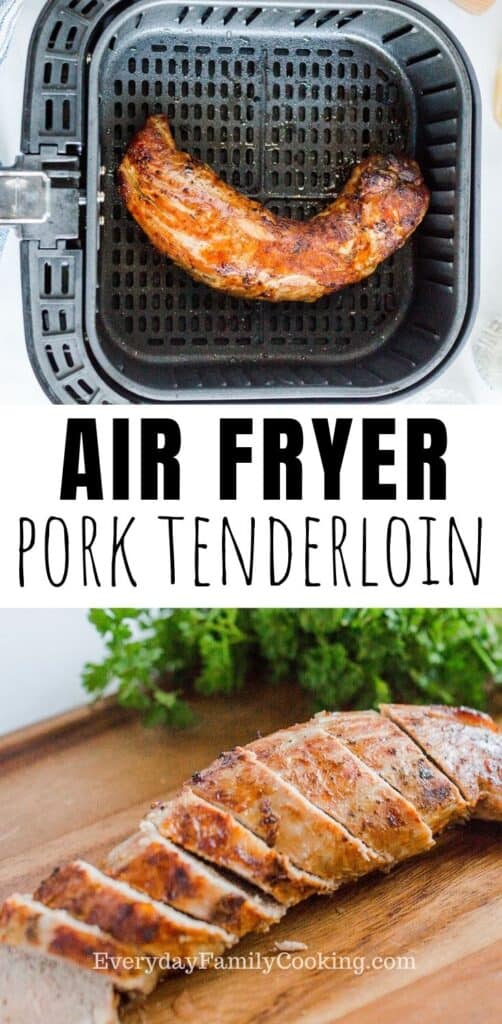
Source: everydayfamilycooking.com
Smaller tenderloin, around 0.75 pound
Start checking at approximately 14 to 16 minutes. A narrow piece may finish sooner than expected.
Standard tenderloin, around 1 pound
Start checking at approximately 16 to 18 minutes, with a common overall range of 18 to 22 minutes.
Larger tenderloin, around 1.25 pounds
Start checking at approximately 18 to 20 minutes and continue only as needed.
Large tenderloin, around 1.5 pounds
Start checking at approximately 20 minutes. Thick sections may need additional cooking time.
What Temperature Should the Air Fryer Be?
A setting of 400°F is a useful starting point for a browned exterior and a tender center. It is hot enough to cook the outside well while allowing a typical tenderloin to finish in a relatively short period. If your appliance browns meat very quickly, a lower setting may provide more control, but cooking will usually take longer.
Do not confuse the appliance temperature with the safe internal temperature. The air fryer may be set to 400°F, while the center of the pork needs to reach at least 145°F. These numbers measure two different things.
400°F
A practical starting setting for a whole tenderloin that needs a browned surface and a short cooking time.
375°F
A reasonable alternative if the outside browns too quickly in your appliance. Expect the cooking time to change and check the center with a thermometer.
What You Need Before Cooking
Gather the pork, seasoning, a small amount of oil, and a food thermometer before turning on the air fryer. Having these items ready makes it easier to season the meat, turn it on time, and check doneness without rushing. You do not need a complicated marinade or special cooking equipment.
Choose a raw pork tenderloin that fits inside the basket without touching the heating element. If it is too long, check your appliance instructions before cutting it into smaller pieces. Never force the meat into a crowded basket because restricted airflow can affect how evenly it cooks.
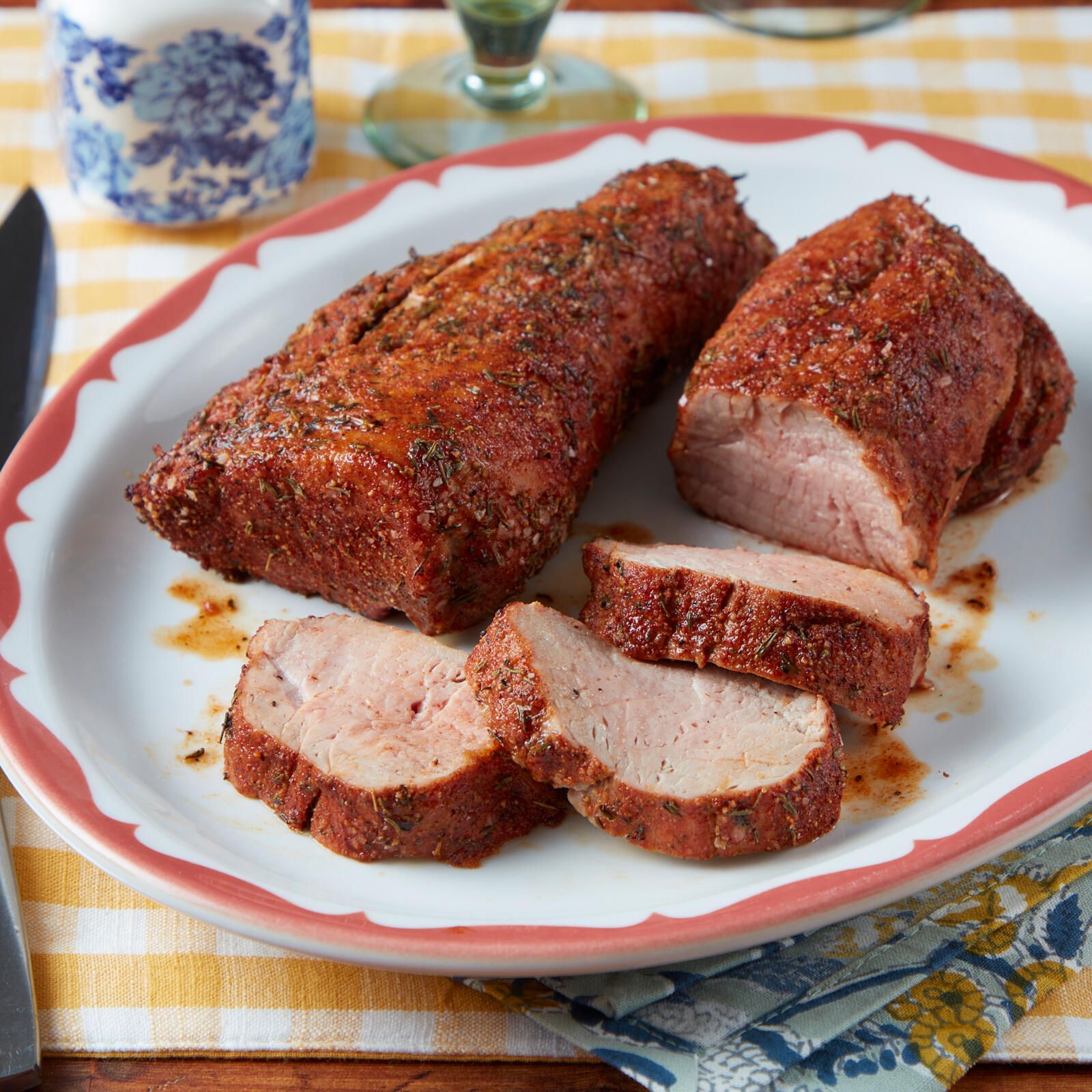
Source: www.pinterest.com
Pork tenderloin
Choose a fresh or properly thawed, unstuffed tenderloin. Remove packaging and any absorbent pad before preparing the meat.
Cooking oil
Use a light coating of a suitable cooking oil to help seasoning stick and encourage browning. A heavy coating is unnecessary.
Seasonings
Salt, black pepper, garlic powder, onion powder, paprika, and dried herbs all work well. Adjust the blend to suit your meal.
Food thermometer
Use an accurate instant-read thermometer to check the center of the thickest section. A color check alone cannot establish safe doneness.
Tongs and a clean plate
Use tongs to turn the pork and a clean plate for the cooked meat. Never return cooked pork to a plate that held raw meat unless it has been washed.
Should You Preheat the Air Fryer?
Preheating can help the air fryer begin cooking at a more consistent temperature. Follow the instructions for your model because some units require preheating while others do not. If the manufacturer recommends preheating, do so before adding the pork.
If your appliance does not require preheating, you can still cook the tenderloin successfully. Keep in mind that a cooking-time estimate from a preheated air fryer may not apply exactly to a cold-start method.
Follow the manual
Use the preheating method recommended by the manufacturer rather than assuming all air fryers work alike.
Keep a consistent method
Use the same preheating routine each time you cook so you can better judge how your own appliance performs.
How to Cook Pork Tenderloin in an Air Fryer Step by Step
For a typical 1-pound tenderloin, start with an air fryer setting of 400°F and an estimated cooking window of 18 to 22 minutes. Prepare the meat before heating the appliance, turn it during cooking, and check the center temperature before deciding whether it needs more time. This method keeps the process simple and reduces the chance of overcooking.
Source: therecipeideas.org
Step 1: Remove the packaging
Take the tenderloin out of its package and discard the packaging safely. Do not rinse raw pork in the sink because splashing water can spread germs to nearby surfaces.
Step 2: Trim excess silver skin
If you see a tough, shiny membrane on the meat, slide a sharp knife beneath it and trim it away carefully. Remove only the membrane and large pieces of excess fat.
Step 3: Pat the meat dry
Use clean paper towels to remove excess surface moisture. A dry surface generally browns better than one covered in water.
Step 4: Add oil and seasoning
Coat the tenderloin lightly with cooking oil. Add salt, pepper, garlic powder, paprika, or your preferred spice blend, spreading the seasoning over all sides.
Step 5: Preheat if required
Follow your air fryer’s instructions. Set the appliance to 400°F when using the suggested method.
Step 6: Place the pork in the basket
Set the tenderloin in a single layer with space around it. Avoid stacking other foods on top of the meat.
Step 7: Cook and turn
Cook for about 9 to 11 minutes, then turn the tenderloin with tongs. Continue cooking while watching the overall time, but begin checking the temperature before the expected finish.
Step 8: Check the internal temperature
Insert an instant-read thermometer into the thickest part of the tenderloin. Avoid touching the basket or placing the tip in a gap between the meat and its surface.
Step 9: Continue cooking if needed
If the center is below 145°F, return the pork to the air fryer. Check again after a short interval, such as 2 to 3 minutes, until the required temperature is reached.
Step 10: Rest before slicing
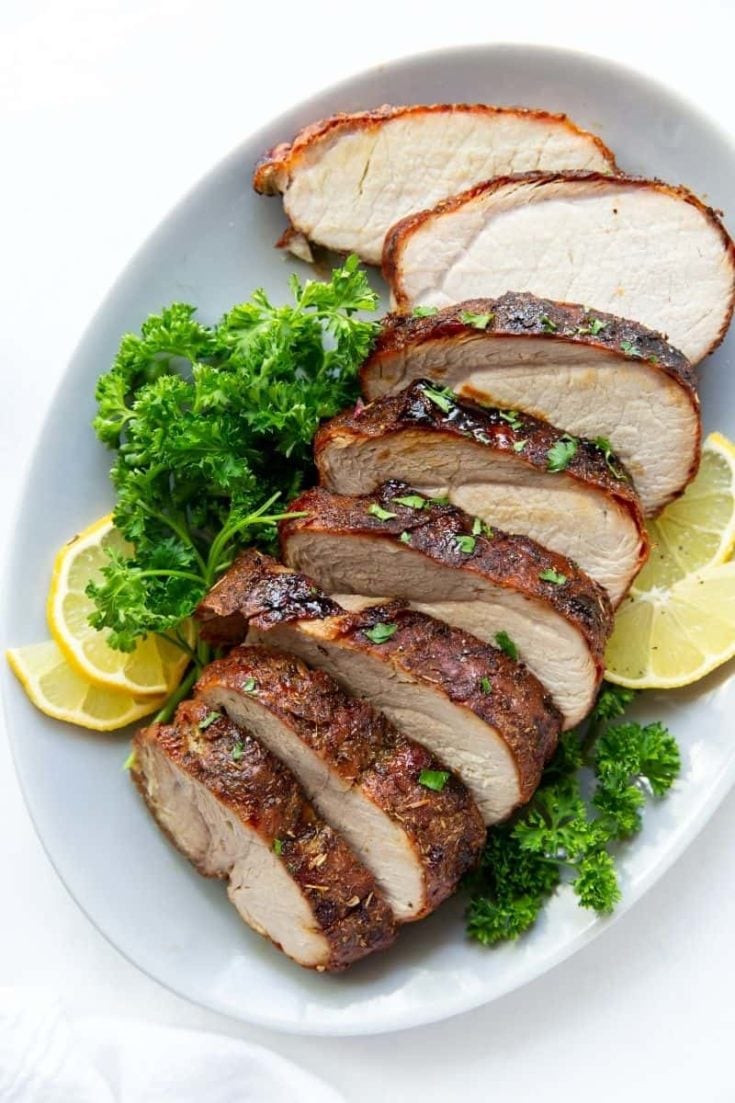
Transfer the cooked pork to a clean plate and rest it for at least 3 minutes. Slice across the grain and serve.
How Can You Tell When Pork Tenderloin Is Done?
The reliable sign is an internal temperature of 145°F, followed by a rest of at least 3 minutes. Check the thickest part because the thin ends can cook faster and give a misleading reading. If the tenderloin is irregular in shape, take readings in more than one thick area.
Pork can remain slightly pink in the center after reaching a safe temperature. Pink color does not automatically mean the meat is undercooked, and white or gray color does not prove that it is safe. A thermometer gives you a more dependable answer than appearance alone.
Temperature reaches 145°F
The thickest section has reached the recommended minimum internal temperature for whole cuts of pork.
Rest lasts at least 3 minutes
Keep the cooked pork off the heat during the rest. The resting period is part of the recommended safe cooking process.
Juices and color
Use these only as visual clues. Neither juice color nor the appearance of the center replaces a temperature check.
The Safe Internal Temperature for Pork Tenderloin
Whole pork tenderloin should reach an internal temperature of 145°F, followed by at least a 3-minute rest. This is the recommended minimum for whole cuts of pork under USDA guidance. It allows the meat to remain juicy without requiring the dry, fully gray center that many people once expected.
Insert the thermometer into the thickest section, with the sensing tip positioned inside the meat rather than against the basket. For a long or uneven tenderloin, check more than one spot. If any thick section remains below 145°F, return the meat to the air fryer and check again.
A thermometer reading should be taken near the end of cooking, not immediately after the pork goes into the basket. Clean the thermometer according to its instructions, especially if it has touched meat that has not yet reached the safe temperature.
Source: airfrye.com
Target temperature
145°F in the thickest part of the whole cut, followed by a rest of at least 3 minutes.
Thermometer placement
Insert the probe into the center of the thickest section. Avoid touching the basket, which can distort the reading.
Uneven readings
Check another thick section if the shape varies. Continue cooking if any area has not reached the recommended minimum.
Stuffed pork
Stuffed pork products require additional care. Follow a suitable tested recipe and applicable food-safety guidance rather than relying on the timing for an unstuffed tenderloin.
Why You Should Not Cook by Color Alone
Color changes as pork cooks, but the final appearance can vary with the cut, lighting, and cooking method. A slightly pink center can be safe when the required temperature and rest have been achieved. A fully pale center can still be unsafe if the thickest part has not reached the recommended temperature.
This is especially useful when serving guests or preparing dinner for a family. Rather than cutting into the meat several times to inspect the center, use a thermometer and make a small number of well-placed checks.
Do not judge by pinkness
Pork may retain a pink tint at a safe temperature.
Do not rely on clear juices
Juice appearance is not a dependable measure of internal temperature.
How to Keep Air Fryer Pork Tenderloin Juicy
Pork tenderloin is a lean cut, so it can become dry if it stays in the heat too long. The most useful way to protect its texture is to stop cooking when the center reaches the recommended temperature, then allow the meat to rest. More cooking does not automatically make pork more tender.
A little oil, even seasoning, and enough room in the basket help create a better surface. These steps support browning, but none can replace the temperature check. A sugary glaze may need to be added near the end because its sugars can darken or burn at high heat.
Source: www.pinterest.com
Use a light oil coating
A thin layer helps the spices adhere and supports browning. Too much oil can drip into the air fryer and create extra smoke.
Avoid excessive cooking
Begin checking before the estimated end time. Once the thickest section reaches the target, remove the tenderloin and let it rest.
Keep the basket uncrowded
Leave room for air to move around the meat. Crowding can make browning less even and complicate cooking.
Rest before cutting
Allow at least 3 minutes before slicing. Cutting immediately can let more juice run onto the plate.
Slice across the grain
Look for the direction of the muscle fibers and cut across them. Shorter fibers can make each bite easier to chew.
Should You Wrap Pork Tenderloin in Foil?
For a browned exterior, cooking the tenderloin directly in the basket is usually the simplest approach. Wrapping it in foil changes how heat and moisture reach the surface, so the result may be less browned. Only use foil if the air fryer manufacturer allows it and the foil can be secured safely without blocking airflow or contacting the heating element.
Do not cover the basket’s essential air openings. Loose foil can move during cooking, and a liner that blocks airflow can interfere with the appliance. Check your model’s manual before using foil or any disposable liner.
For browning
Cook the seasoned tenderloin uncovered when the appliance instructions permit.
For safety
Never place loose foil in the basket or let a liner touch the heating element.
Pork Tenderloin vs. Pork Loin: Why the Difference Matters
Pork tenderloin and pork loin are different cuts, and they should not be treated as interchangeable in an air fryer recipe. Tenderloin is a long, narrow muscle that is usually sold in relatively small pieces. Pork loin is broader and often much thicker, so a whole roast can require substantially more cooking time.
Check the package label before using a cooking chart. A recipe written for a tenderloin may not work for a large pork loin roast, even if the two cuts have similar names. The shape and thickness of the meat affect how quickly its center heats.
Source: thekitchenknowhow.com
Pork tenderloin
A narrow, lean cut that is often around 1 pound. It commonly cooks in less than half an hour in an air fryer, depending on thickness and appliance performance.
Pork loin
A wider cut that may be sold as a larger roast. A thick, whole pork loin generally needs a different time estimate and careful temperature checks.
Pork chops
Individual chops have a different shape and thickness from either roast. Use cooking guidance intended for chops rather than applying the tenderloin chart directly.
Can You Cook Pork Loin Using the Same Method?
You can use the same basic principles, such as seasoning the surface, leaving room for airflow, and checking internal temperature. However, you should not use the same cooking-time estimate without adjusting for the loin’s size and thickness.
For a large roast, consult a recipe designed for that cut and your air fryer model. Use the appropriate safe internal temperature and check the thickest part rather than assuming that the roast is ready after the time listed for tenderloin.
Confirm the cut
Read the package label and identify whether you have tenderloin, loin, chops, or another pork product.
Match the cooking guidance
Choose a time range based on the actual cut, size, and cooking method.
Common Air Fryer Pork Tenderloin Mistakes to Avoid
Most problems come from relying too heavily on the timer, using the wrong cut’s instructions, or leaving the pork in the heat after it is ready. A few small changes can improve the result without adding complicated steps. Check the meat’s thickness, use a thermometer, and give the tenderloin enough room in the basket.
Source: nordicrecipebox.com
Mistake 1: Cooking for a fixed time without checking
Why it fails: Air fryers and tenderloins vary. What to do instead: Start checking before the expected finish and continue in short intervals if needed.
Mistake 2: Skipping the thermometer
Why it fails: Appearance cannot reliably confirm the center’s temperature. What to do instead: Check the thickest section with an instant-read thermometer.
Mistake 3: Confusing tenderloin with loin
Why it fails: The larger, thicker cut may need a different cooking method and time. What to do instead: Verify the package label before using a recipe.
Mistake 4: Filling the basket too tightly
Why it fails: Crowding can limit airflow and cause uneven browning. What to do instead: Cook in batches when necessary.
Mistake 5: Cutting the meat immediately
Why it fails: The juices can escape onto the cutting board. What to do instead: Rest the pork for at least 3 minutes before slicing.
Mistake 6: Adding sugary sauce too early
Why it fails: Honey, sugar, and sweet barbecue sauces can darken quickly at high heat. What to do instead: Apply the glaze during the final few minutes if the recipe allows, while monitoring the surface.
Mistake 7: Using a wet surface without adjustment
Why it fails: Excess moisture can slow browning. What to do instead: Pat the meat dry before applying oil and dry seasoning, unless the recipe specifically calls for a wet coating.
Why Is My Pork Tenderloin Dry?
Overcooking is a common reason for dry pork tenderloin. Because this cut contains relatively little fat, prolonged heating can push out moisture and leave the meat firm. If the center was well above the recommended temperature before resting, the next attempt should include an earlier thermometer check.
Dryness can also make slicing technique more noticeable. Even correctly cooked meat may feel tougher when cut with the grain into long fibers. Slice across the grain and avoid leaving the tenderloin in the hot basket while preparing the rest of the meal.
If the meat is already dry
Slice it thinly across the grain and serve with a little warm pan sauce, gravy, or another suitable sauce to improve moisture and flavor.
For the next attempt
Check the temperature earlier, use a consistent preheating method, and remove the pork as soon as the safe temperature and rest requirements have been met.
Why Is the Outside Brown but the Center Undercooked?
A very hot cooking setting can brown the surface before the center has had enough time to heat. This can happen with a thick tenderloin, a sugary rub, or an air fryer that runs hotter than expected. Browning alone does not mean the pork is ready.
If the exterior is already dark but the center is below 145°F, lower the air fryer temperature modestly and continue cooking until the thickest part reaches the target. Check the surface often to avoid burning the seasoning.
Check the temperature first
Use the thermometer to determine whether the center needs more cooking.
Reduce the heat if needed
A lower setting can give the center more time to heat without browning the outside as quickly.
Seasoning Ideas and Easy Serving Options
Pork tenderloin has a mild flavor, so it works with many seasonings. A basic blend of salt, black pepper, garlic powder, and paprika is easy to prepare from pantry staples. You can also use dried rosemary, thyme, mustard, or a small amount of chili powder for a different flavor.
Choose seasonings that fit the meal rather than adding many ingredients at once. A simple herb blend suits a family dinner, while a lightly sweet glaze can work for a special meal. If you use a commercial seasoning mix or sauce, check the label for salt and sugar so you can adjust the amount.
Source: everydayfamilycooking.com
Garlic and paprika
Combine garlic powder, paprika, black pepper, salt, and a small amount of oil for a savory everyday seasoning.
Herb blend
Use dried thyme or rosemary with garlic and black pepper. Keep the herbs evenly spread over the meat.
Mustard and herbs
Apply a thin layer of mustard as a seasoning base, then add dried herbs and pepper. Avoid an excessively thick coating.
Barbecue glaze
Brush on a thin layer near the end of cooking to reduce the chance of the sugars burning.
What Should You Serve With Air Fryer Pork Tenderloin?
Pair the pork with sides that suit your cooking schedule. Potatoes, carrots, green beans, rice, and salad all work well. If you plan to cook vegetables in the same air fryer, check their cooking times separately and avoid crowding the pork.
For an easy American-style weeknight plate, serve sliced tenderloin with roasted potatoes and steamed green beans. For a lighter meal, add a green salad and a simple vinaigrette. A small amount of pan sauce or prepared gravy can also complement the meat without requiring a complicated recipe.
Classic dinner
Serve pork with potatoes, green beans, and a light gravy.
Quick meal
Add a bagged salad, microwaved rice, or another simple side that does not need much preparation.
Leftover lunch
Slice chilled cooked pork for sandwiches or a grain bowl, and keep it refrigerated promptly.
Can You Cook Frozen Pork Tenderloin in an Air Fryer?
Cooking a whole frozen pork tenderloin directly in an air fryer is less predictable than cooking a fully thawed one. The outside can brown while the center remains frozen or cold, which makes a standard timing chart unreliable. For the most consistent results, thaw the tenderloin safely in the refrigerator before cooking.
If you need to prepare frozen pork, follow a reliable recipe specifically designed for that starting condition and your appliance. Do not use the time for a thawed tenderloin or assume that a longer timer automatically guarantees safe cooking. Verify the temperature in the thickest section and make sure the center has reached the required minimum.
Source: www.pinterest.com
Best option
Thaw the pork in the refrigerator before seasoning and cooking.
Avoid counter thawing
Do not leave raw pork at room temperature for hours to speed up thawing.
Check every thick section
A frozen or partly frozen piece can heat unevenly, so careful temperature checks are essential.
How to Thaw Pork Safely
The refrigerator is the easiest way to thaw a tenderloin while keeping it cold. Place the meat in a leakproof container or on a tray to catch drips and keep it away from ready-to-eat foods. The time required depends on the size of the package and the refrigerator temperature.
For faster thawing, use a safe method such as cold-water thawing in a leakproof package, changing the water every 30 minutes. Cook pork thawed this way promptly. If you use a microwave to thaw the meat, cook it immediately afterward according to the appliance instructions.
Refrigerator
Thaw the packaged pork in the refrigerator and plan ahead for the required time.
Cold water
Keep the meat in a leakproof package, submerge it in cold water, and change the water every 30 minutes.
Microwave
Follow the microwave’s defrost instructions and cook the pork immediately after thawing.
How to Store and Reheat Leftover Pork Tenderloin
Refrigerate leftover pork tenderloin within 2 hours of cooking, or within 1 hour if it has been exposed to temperatures above 90°F. Store it in a clean, shallow, covered container so it cools promptly. Properly refrigerated cooked pork should generally be used within 3 to 4 days.
For longer storage, freeze the leftovers in a suitable airtight container or freezer bag. Label the package with the date so you can track how long it has been stored. Refrigerate frozen leftovers to thaw them when practical, and discard food that has been left out too long or shows signs of spoilage.
Source: airfrye.com
Refrigeration
Store cooked pork at 40°F or below and use it within 3 to 4 days.
Freezing
Pack leftovers tightly to reduce exposure to air and freezer burn. For best quality, use frozen cooked pork within a reasonable storage period.
Safe reheating
Reheat leftovers to 165°F throughout, checking the thickest portion with a food thermometer.
How to Reheat Pork Without Drying It Out
The air fryer can reheat pork tenderloin, but thin slices warm faster than a whole piece. Use a moderate setting and check the meat frequently so it does not stay in the heat longer than necessary. A small splash of broth or a little sauce can help the meat feel less dry when serving.
For food safety, reheated leftovers should reach 165°F throughout. If the pork was refrigerated in thick slices, spread them in a single layer so they heat evenly. Avoid reheating the same leftovers repeatedly because repeated heating and cooling can reduce quality and make safe handling harder.
Slice before reheating
Thin slices warm more quickly than a whole tenderloin, though you still need to check the temperature.
Add moisture
Use a small amount of broth or sauce to improve the texture and flavor.
Check the center
Make sure reheated leftovers reach 165°F throughout before serving.
A Simple Timing Plan for Your Next Dinner
A little planning makes it easier to serve pork tenderloin at the right time. For a typical 1-pound piece, allow around 18 to 22 minutes of cooking at 400°F, plus at least 3 minutes to rest. Add time for trimming, seasoning, preheating if needed, and checking the temperature.
Prepare the side dishes before the pork finishes cooking so you do not need to leave the meat in the hot basket while you work. If the tenderloin reaches 145°F before the sides are ready, remove it and let it rest on a clean plate. If it has not reached the target, continue cooking and check again after a short interval.
Source: nordicrecipebox.com
Before cooking
Check the cut and weight, gather the thermometer, trim the silver skin if needed, and season the meat.
During cooking
Turn the tenderloin halfway through and begin checking the center before the expected finish.
At the finish
Confirm 145°F in the thickest part, rest for at least 3 minutes, then slice across the grain.
After the meal
Refrigerate leftovers within the recommended time and label them if you plan to freeze them.
What to Do If Dinner Is Running Late
If the pork is still below 145°F when the expected cooking time ends, keep cooking it rather than serving it early. Check again after 2 to 3 minutes, using the thermometer in the thickest section. Repeat as needed until the safe temperature is reached.
If the pork is ready before the rest of the meal, remove it from the air fryer and let it rest. Avoid leaving it in the hot basket because residual heat can continue to cook the lean meat. If the delay is longer, handle the cooked pork safely and keep it at an appropriate temperature rather than leaving it at room temperature for an extended period.
Pork is under temperature
Continue cooking in short intervals and recheck the center.
Pork is ready early
Remove it from the heat, allow the required rest, and serve when the sides are ready.
Frequently Asked Questions
Q
How long does a 1-pound pork tenderloin take in an air fryer at 400°F?
A 1-pound pork tenderloin commonly takes about 18 to 22 minutes at 400°F. Start checking its internal temperature before the expected finish because thickness and air fryer performance affect cooking time. Remove it when the thickest part reaches 145°F, then rest it for at least 3 minutes.
Q
Should I flip pork tenderloin in the air fryer?
Yes, turning the tenderloin halfway through cooking can help the outside brown more evenly. Use tongs and avoid piercing the meat unnecessarily. Even if you turn it, check the thickest section with a thermometer before serving.
Q
Is pork tenderloin safe to eat when it is still pink?
Yes, pork tenderloin can be slightly pink in the center and still be safe. Whole cuts of pork should reach 145°F internally and rest for at least 3 minutes. Color alone cannot confirm whether the meat is safe.
Q
Can I cook two pork tenderloins at the same time?
You can cook two tenderloins together if they fit in the basket with space around each piece. They do not necessarily need twice as long as one tenderloin, but crowding can affect airflow and browning. Check each piece separately because one may finish before the other.
Q
Do I need to marinate pork tenderloin before air frying?
No, marinating is optional. A dry seasoning blend with a light coating of oil can provide plenty of flavor. If you use a marinade, keep the raw meat refrigerated and discard the used marinade or boil it thoroughly before using it as a sauce.
Q
Can I put aluminum foil in an air fryer with pork tenderloin?
Only use foil if the manufacturer permits it and you can keep it secured and away from the heating element. Loose foil can move during cooking, and foil that blocks airflow can interfere with the appliance. Cooking the tenderloin directly in the basket is often the simplest option.
Q
Why does my pork tenderloin take longer than the recipe says?
The tenderloin may be thicker, colder, or larger than the one used for the recipe. Your air fryer may also heat differently, or the recipe may assume a preheated appliance. Keep cooking until the thickest section reaches 145°F, checking again after short intervals.
Q
What is the difference between air fryer pork tenderloin and pork loin?
Pork tenderloin is a narrow, lean cut that often weighs about 1 pound. Pork loin is wider and can be much larger, so it generally needs different timing. Confirm the cut on the package and use cooking guidance designed for that specific piece.
✦ Wrapping Up
Conclusion
For a typical 1-pound pork tenderloin, start with 18 to 22 minutes in an air fryer set to 400°F. Turn the meat halfway through, but remember that the time is only an estimate. The cut’s thickness and your appliance’s performance determine how quickly the center cooks.
The most dependable way to avoid mistakes is to check the thickest part with a food thermometer. Whole pork tenderloin should reach 145°F and rest for at least 3 minutes before slicing. With the right temperature check, a little seasoning, and a short rest, you can serve tender pork without relying on guesswork.
💡 Key Takeaway
Set your air fryer to 400°F, plan for about 18 to 22 minutes for a typical 1-pound tenderloin, turn halfway through, and use a food thermometer to confirm 145°F in the thickest part. Rest for at least 3 minutes before slicing.