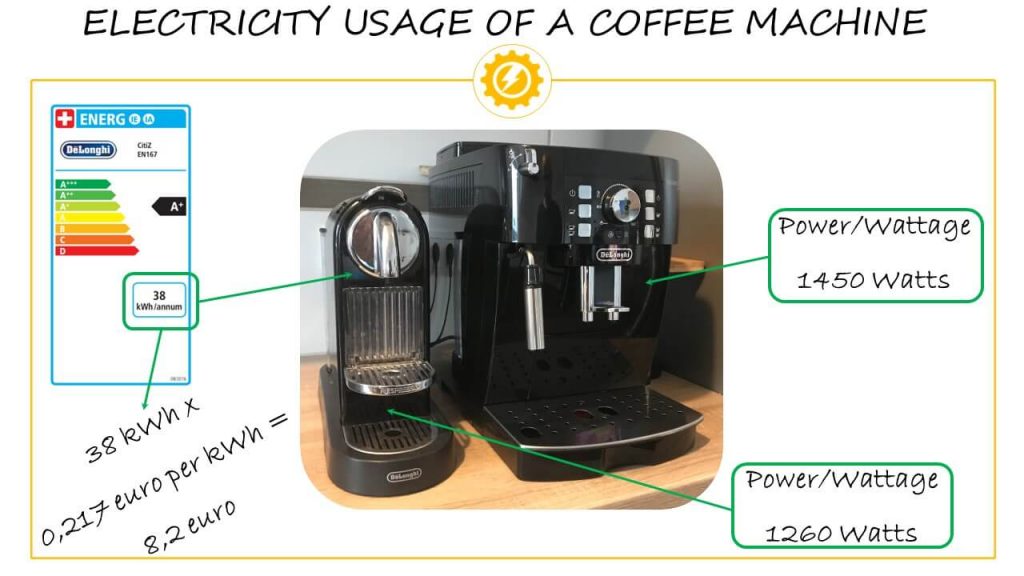
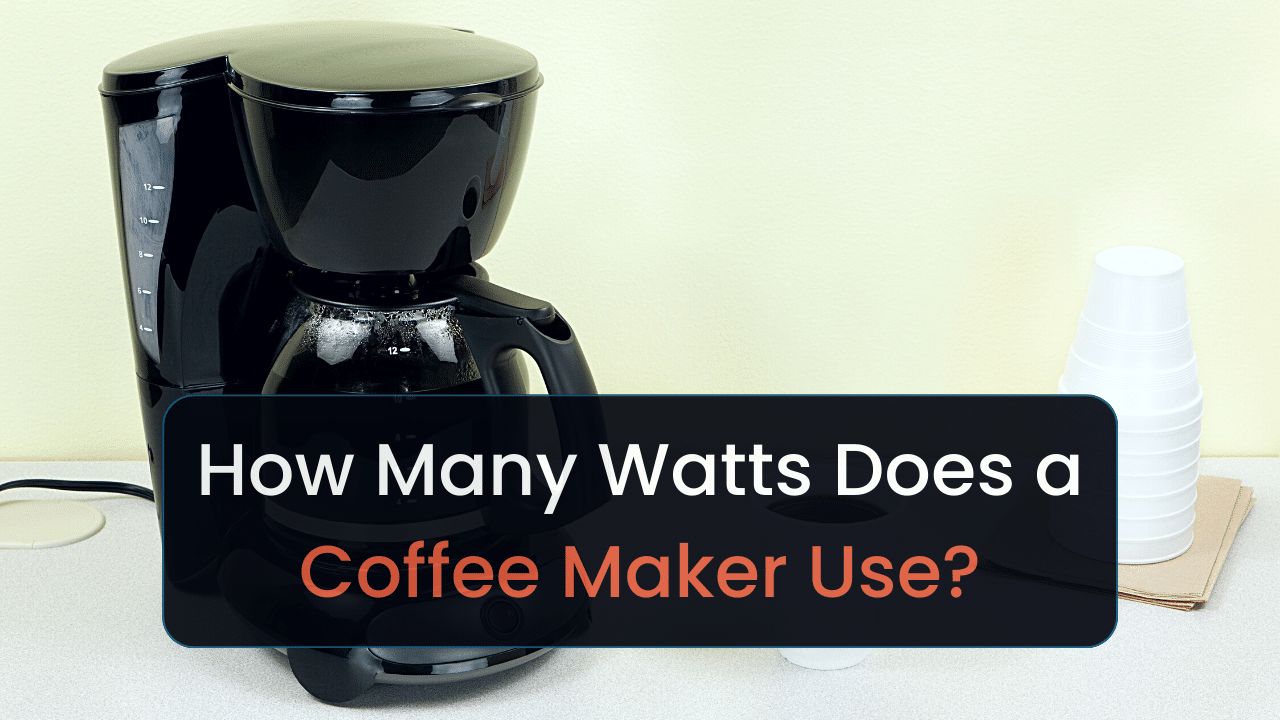
Most home coffee makers use between 550 and 1,500 watts while brewing. A standard drip coffee maker often uses 800 to 1,200 watts.
Coffee is part of the daily routine in millions of American homes. From a quick cup before work to a full pot for a family breakfast, coffee makers make the job easy. But these handy kitchen appliances need electricity to heat water and keep coffee warm. If you are watching your electric bill, choosing a backup power source, or planning a small kitchen, knowing the power use of your coffee maker can help.
The exact wattage depends on the type, size, and design of the machine. A small drip brewer may use around 600 watts, while a single-serve pod machine or home espresso maker may need 1,500 watts or more. The good news is that most machines use their highest power for only a short time. Their total energy use can be much lower than the wattage number first suggests.
How Many Watts Does a Coffee Maker Use on Average?
Most electric coffee makers use between 550 and 1,500 watts while heating water. A regular drip machine often falls between 800 and 1,200 watts. Small models may use less, while fast single-serve machines and espresso makers can use more.
The wattage tells you how much power an appliance draws at a given moment. It does not tell you how much electricity the machine uses over an entire day. A 1,000-watt coffee maker that runs for 10 minutes uses less energy than a 1,000-watt heater that runs for several hours.
Coffee makers use much of their power to heat water. Once the water reaches the needed temperature, the heating cycle may stop or change. Some machines then use a small amount of power to keep the coffee warm.
Source: measuringstuff.com
Small drip coffee maker
A compact machine may use around 550 to 750 watts, depending on its design and capacity.
Standard drip coffee maker
Many 8- to 12-cup machines use about 800 to 1,200 watts during brewing.
Single-serve coffee maker
Many pod machines use around 900 to 1,500 watts while heating water.
Home espresso machine
Many home models use about 1,000 to 1,500 watts, although some models have higher ratings.
Does Every Coffee Maker Use the Same Amount of Power?
No. Two coffee makers can have very different power ratings even if they make a similar amount of coffee. Their heating systems, water capacity, and brewing speed all affect the number.
A fast machine may use more watts for a short time. A slower machine may use fewer watts but run its heater for longer. This is why wattage alone cannot tell you which coffee maker uses less electricity overall.
Heating speed
A machine that heats water quickly may need a stronger heating element.
Water amount
Heating a full pot usually takes more total energy than heating a single cup.
Extra features
Timers, displays, pumps, and warming plates can affect total power use.
Coffee Maker Wattage by Type
The type of coffee maker is one of the biggest factors that affects power use. Drip machines, pod brewers, and espresso machines all heat water in different ways. The table below gives useful general ranges for common home models.
These numbers are estimates, not fixed ratings for every machine. A large drip brewer may use more power than a small one. Always check the label on your exact model before buying a generator, inverter, or battery.
Source: mtnlyoncafe.com
Drip coffee maker
Often uses 550 to 1,200 watts. It works well for people who make several cups at once.
Single-serve pod machine
Often uses 900 to 1,500 watts. It heats a small amount of water for a quick cup.
Espresso machine
Often uses 1,000 to 1,500 watts or more. Some models have extra heating and steam systems.
French press
The press itself uses zero watts. You need a separate kettle or other heat source for hot water.
Pour-over coffee maker
A manual pour-over brewer uses zero watts. Electricity is needed only if you heat water with an electric kettle.
Electric percolator
Many models use around 800 to 1,200 watts, depending on their size and heating system.
Drip Coffee Makers
Drip coffee makers are common in American kitchens because they can make several cups at once. Water moves through the heating system and then passes over the coffee grounds. The hot coffee collects in a glass or thermal carafe.
A typical full-size drip machine may use around 900 to 1,200 watts while brewing. Smaller four- or five-cup models may use less. If the machine has a hot plate, it may continue to draw power after brewing ends.
Best for
Families, shared kitchens, and people who drink more than one cup.
Single-Serve Pod Coffee Makers
Pod machines heat water and send it through a small coffee pod. Many models use around 900 to 1,500 watts during the heating stage. Their high wattage helps them heat water quickly, even though they make only one cup.
A high power rating does not mean a pod machine always uses more energy than a large drip brewer. It heats less water per cycle, so its total energy use may be lower for one serving.
Best for
People who want one quick cup at a time and do not need a full pot.
Espresso Machines
Espresso machines need hot water at a controlled temperature and pressure. Many home models use around 1,000 to 1,500 watts. Machines with steam wands or more complex heating systems may have different ratings.
Some espresso machines use a boiler to heat and hold water. Others use a thermoblock system that heats water as it passes through. These designs affect how the machine uses power during warm-up and operation.
Best for
People who make espresso, cappuccinos, and other espresso-based drinks at home.
Manual Coffee Makers
French presses, manual pour-over cones, and simple coffee drippers do not need electricity by themselves. They rely on hot water from another source. If you use an electric kettle, include its power use when comparing the full brewing process.
A manual brewer can be useful during a power outage if you have a safe way to heat water. You can also use it to avoid the standby power used by an electric coffee machine.
Best for
People who prefer a simple brewing method and want to use less electrical equipment.
How Much Electricity Does a Coffee Maker Use?
A coffee maker’s electricity use depends on its wattage and how long it runs. Electricity use is measured in kilowatt-hours, or kWh. One kilowatt-hour means using 1,000 watts of power for one hour.
To find the energy used during brewing, multiply the machine’s wattage by its running time in hours. Then divide the result by 1,000. This gives you the number of kilowatt-hours used for that cycle.
For example, a 1,000-watt coffee maker that runs for 10 minutes uses about 0.167 kWh. This is because 10 minutes is one-sixth of an hour. The result is an estimate, since the heater may switch on and off during the brewing cycle.
Source: ecocostsavings.com
Energy formula
Kilowatt-hours = Watts × Hours ÷ 1,000.
Cost formula
Electricity cost = Kilowatt-hours × Your electricity rate.
Example: Electricity Used by a 1,000-Watt Coffee Maker
Suppose you have a 1,000-watt drip coffee maker. You use it for 10 minutes each morning, and the machine runs at its full rated power for the whole example. The estimated energy use is 0.167 kWh per brew.
If you brew coffee once each day, the estimated monthly use is about 5 kWh over 30 days. If you brew twice each day under the same conditions, the estimate becomes about 10 kWh per month.
Real use can differ because heating elements cycle on and off. A warming plate can also add energy use after the main brewing cycle ends.
Does a Higher Wattage Always Mean More Electricity?
No. Wattage measures the rate of power use, while kilowatt-hours measure the total energy used over time. A machine with a high rating may finish brewing quickly, while a lower-wattage machine may take longer.
Think of wattage as the speed at which a machine uses electricity. Think of kilowatt-hours as the total amount used during the trip. Both numbers matter when you compare appliances.
Higher wattage
The appliance draws more power at that moment.
Longer running time
The appliance has more time to use electricity.
Total energy
The combination of power and time determines the energy used.
How Much Does It Cost to Run a Coffee Maker?
The cost of running a coffee maker is often modest because the main heating cycle is short. Your actual cost depends on the machine’s energy use, how often you brew coffee, how long you leave the warming plate on, and your local electricity rate.
The U.S. Energy Information Administration reported an average residential electricity price of 17.23 cents per kWh for 2025. This is a useful reference for an example, but your utility bill may show a different rate. Local prices, delivery charges, and other fees can change the amount you pay.
Using the earlier example of a 1,000-watt machine running for 10 minutes, one brew uses about 0.167 kWh. At 17.23 cents per kWh, that cycle costs about 2.9 cents before any extra energy use from warming or standby features.
Source: storage.googleapis.com
One daily brew
About 5 kWh per month, or roughly $0.86 at 17.23 cents per kWh.
Two daily brews
About 10 kWh per month, or roughly $1.72 at the same electricity rate.
Three daily brews
About 15 kWh per month, or roughly $2.58 at the same rate.
How to Calculate Your Own Monthly Cost
You can work out your coffee maker’s running cost with a few simple steps. First, find the wattage on the machine’s rating label. Next, estimate how long the machine uses power during each brew.
Convert the time into hours, calculate the kWh, and multiply by your electricity price. For a more accurate result, use the energy rate shown on your utility bill and include the warming period.
Step 1
Find the machine’s rated wattage.
Step 2
Record the time spent brewing and keeping coffee warm.
Step 3
Calculate kWh by multiplying watts by hours and dividing by 1,000.
Step 4
Multiply the kWh by your electricity rate.
Step 5
Multiply the daily cost by the number of days you use the machine.
Why Your Actual Bill May Be Different
The simple calculation assumes that the coffee maker runs at its full rated wattage for the full time. Many machines do not work this way. Their heating elements switch on and off as needed.
A hot plate can also use power after the coffee is ready. If you leave it on for an hour or more, its energy use may become a larger part of the total than the short brewing cycle.
Warming time
Keeping coffee hot for longer can increase electricity use.
Brew size
A full pot may need more heating time than a smaller batch.
Electricity rate
A higher price per kWh raises the cost of each brew.
How Many Amps Does a Coffee Maker Use?
The amps used by a coffee maker depend on its wattage and supply voltage. In the United States, many household countertop appliances are designed for a 120-volt supply. You can estimate the current by dividing watts by volts.
For example, a 1,000-watt coffee maker on a 120-volt supply draws about 8.33 amps while using its full rated power. A 1,500-watt machine on the same supply draws about 12.5 amps.
This matters when you use several appliances on the same circuit. A coffee maker may work well by itself, but adding a toaster or another high-power appliance can increase the total load.
Source: jackery.com
600 watts
About 5 amps at 120 volts.
900 watts
About 7.5 amps at 120 volts.
1,000 watts
About 8.33 amps at 120 volts.
1,200 watts
About 10 amps at 120 volts.
1,500 watts
About 12.5 amps at 120 volts.
Can You Run a Coffee Maker and Toaster on the Same Circuit?
It depends on the wattage of both appliances and the rating of the circuit. A coffee maker and toaster can draw a large amount of current at the same time because both use heating elements.
Check the circuit rating and the appliance labels. Do not assume that two devices are safe to run together just because they fit into the same outlet area. If a breaker trips repeatedly, stop using the combination and have the cause checked by a qualified electrician.
Check the labels
Find the wattage or amperage of each appliance.
Check the circuit
Know the circuit rating and what other appliances use it.
Watch for warning signs
Repeated breaker trips, hot outlets, buzzing, or a burning smell need attention.
What Factors Affect Coffee Maker Power Consumption?
Several parts of a coffee maker affect how much electricity it uses. The heating element is usually the main power user, but the water volume, brewing time, and extra features also matter.
A machine that makes a full carafe may need more total energy than one that makes a single cup. However, a single-serve machine may have a higher wattage because it heats water very quickly. The best comparison looks at energy used for the amount of coffee you actually make.
Source: storage.googleapis.com
Heating element
The heater uses much of the power during the brewing process.
Water capacity
More water usually needs more heat and can increase the energy used per cycle.
Brewing time
A longer heating cycle can raise total energy use.
Warming plate
A hot plate can keep drawing power after the coffee is brewed.
Automatic features
Clocks, displays, timers, and standby modes may use a small amount of electricity.
Does the Warming Plate Use a Lot of Electricity?
A warming plate can add to your coffee maker’s total energy use. It keeps the coffee hot after brewing, which means the machine may continue to use electricity even when the main heating cycle is over.
The exact amount depends on the plate’s rating and how long it stays on. Some machines shut the plate off automatically after a set period. Others let you adjust the warming time.
If you do not need the coffee to stay hot, turn the warming feature off when the brewing cycle ends. A thermal carafe is another option because it holds heat without an electric warming plate.
Short warming period
Uses less energy than leaving the hot plate on for several hours.
Automatic shutoff
Helps limit unnecessary heating when the coffee is ready.
Thermal carafe
Keeps coffee warm without a powered hot plate.
Does Making One Cup Use Less Electricity?
Making one cup often uses less total energy than making a full pot because less water needs heating. However, the machine may still draw its full rated wattage during the heating stage.
The amount of energy saved depends on the machine’s design. Some drip machines use a similar heating cycle for small and large batches, while others adjust their operation to the amount of water.
Use the right amount of water
Avoid heating more water than you need.
Use the correct brew setting
Select a small-batch setting if your machine offers one.
How to Find the Exact Wattage of Your Coffee Maker
The easiest way to find your coffee maker’s exact wattage is to check its rating label. Manufacturers often place this label on the bottom, back, or side of the machine. You may also find the information in the owner’s manual or on the manufacturer’s product page.
Look for a number followed by W, which stands for watts. Some labels list only volts and amps. If so, multiply volts by amps to estimate the wattage.
For example, a machine rated at 120 volts and 8 amps has an estimated power rating of 960 watts. This calculation gives a useful estimate, although the actual power draw can change during different stages of operation.
Source: storage.googleapis.com
Check the appliance label
Look underneath the base, around the back panel, or near the power cord.
Read the owner’s manual
Search for electrical ratings, power requirements, or technical specifications.
Check the manufacturer’s website
Use the exact model number to find the correct product information.
Use a plug-in watt meter
A suitable meter can show actual power use and total energy during a brewing cycle.
How to Measure Real Power Use With a Watt Meter
A plug-in energy meter can help you see how much electricity your coffee maker uses in normal operation. The meter sits between a compatible wall outlet and the appliance plug. It may display watts, amps, voltage, and accumulated kilowatt-hours.
Choose a meter with ratings suitable for your coffee maker. Follow the meter instructions, keep the setup dry, and do not use a damaged outlet or cord. Run a normal brewing cycle and record the energy reading.
If your coffee maker has a warming plate, measure the brewing cycle and the warming period separately. This helps you see whether keeping the coffee hot adds a meaningful amount of energy.
Before measuring
Check that the meter supports the appliance’s voltage and current rating.
During brewing
Watch the power reading while the heating element operates.
After brewing
Check the energy reading after the machine finishes its cycle.
For accurate comparison
Repeat the measurement under similar conditions and use the same water amount.
How to Reduce Coffee Maker Electricity Use
You do not need to stop making coffee to lower your energy use. A few simple habits can reduce unnecessary heating and standby power. Most of the savings come from heating only the water you need and avoiding long warming periods.
The best approach depends on your coffee habits. Someone who makes one cup each morning may save energy by heating only one serving. A family that makes a full pot may benefit more from using a thermal carafe.
Source: measuringstuff.com
Turn off the warming plate
Switch it off when you no longer need to keep the coffee hot.
Use only the water you need
Avoid heating a full tank for a single cup.
Choose a thermal carafe
A thermal carafe can keep coffee warm without continuous electric heating.
Use automatic shutoff
Choose a model with a suitable shutoff feature if you often forget to turn the machine off.
Unplug when appropriate
If the machine has no useful clock or programmed feature, unplugging it after use may reduce standby consumption.
Keep the machine clean
Follow the manual’s cleaning and descaling instructions to help maintain normal operation.
Is a Thermal Carafe More Energy Efficient?
A thermal carafe can reduce electricity use when compared with a glass carafe that sits on an electric warming plate. It keeps coffee warm through insulation rather than continuous powered heating.
However, the full comparison depends on the brewing system. A thermal carafe does not automatically make the initial brewing cycle more efficient. Its main benefit is that it can avoid extra electricity use after brewing.
Thermal carafe
Holds heat without an electric warming plate.
Glass carafe
May need a powered hot plate to keep coffee warm.
Does Cleaning a Coffee Maker Save Electricity?
Regular cleaning helps keep your machine in good working order. Mineral deposits can build up inside a coffee maker, especially in areas with hard water. Follow the manufacturer’s descaling schedule and use only the cleaning method it recommends.
Do not assume that cleaning will always produce a large drop in power use. Its main purpose is to maintain proper operation, reduce buildup, and help prevent problems with water flow and heating.
Clean removable parts
Wash the carafe, filter basket, and other removable parts as directed.
Descale when needed
Use the recommended product or method for your machine.
Check the power cord
Stop using the appliance if the cord or plug shows damage.
Can a Generator or Portable Power Station Run a Coffee Maker?
Yes, a suitable generator or portable power station can run a coffee maker. The key is to choose a power source that can handle the machine’s running wattage and provide enough stored energy for the brewing cycle.
For example, a coffee maker rated at 1,000 watts needs a power source with a continuous output that supports at least that amount. A larger margin may be useful for other loads, but the appliance’s label and the power source manual should guide your choice.
Do not choose a battery based on its capacity alone. Battery capacity is often listed in watt-hours, while the inverter’s output limit is listed in watts. Both numbers matter.
Source: storage.googleapis.com
Continuous output
The power source must support the coffee maker‘s required running watts.
Battery capacity
Watt-hours help estimate how long the power source can supply energy.
Inverter rating
Check the output rating and any limits in the manufacturer’s instructions.
Power quality
Use a power source that is suitable for the appliance and its electrical requirements.
How Much Battery Capacity Does a Coffee Maker Need?
Suppose a 1,000-watt coffee maker runs for 10 minutes. The theoretical energy use is about 167 watt-hours. This is the same as 0.167 kWh.
A battery system needs more stored energy than this simple number because inverters and other components lose some energy during operation. The actual result also depends on battery condition, temperature, and the appliance’s real power draw.
If you plan to make several pots of coffee, multiply the estimated energy use by the number of brewing cycles. Then allow for system losses and any other devices connected to the power source.
One brewing cycle
About 167 Wh for a 1,000-watt machine running for 10 minutes under the stated assumptions.
Two brewing cycles
About 334 Wh before conversion losses and extra use.
Three brewing cycles
About 501 Wh before conversion losses and extra use.
Can You Run a Coffee Maker in an RV?
You can use an electric coffee maker in an RV if the power system can support its electrical needs. A small inverter may not be able to handle a machine with a high heating load. Check the inverter’s continuous output, battery capacity, and wiring requirements.
When connected to campground power, follow the RV and appliance manuals. Do not overload outlets or use damaged cords. If you are unsure whether the electrical system can support the appliance, ask a qualified RV technician.
Check the inverter
Compare its continuous watt rating with the coffee maker’s label.
Check the battery
Make sure the available energy can support the planned number of brewing cycles.
Avoid extra loads
Do not run several high-power appliances without checking the system’s limits.
Coffee Maker Electrical Safety Tips
Coffee makers use heating elements and operate near water, so safe electrical use matters. Place the machine on a stable, dry surface and keep its power cord away from hot areas, wet counters, and sharp edges.
Use the original power cord or an approved replacement specified by the manufacturer. Do not use an appliance with a cracked plug, damaged cable, loose connection, or signs of overheating.
The U.S. Consumer Product Safety Commission warns that poorly made or unsuitable extension cords can create shock and fire risks. A coffee maker should be connected according to its manual, preferably directly to a suitable wall outlet rather than through an overloaded cord or power strip.
Source: storage.googleapis.com
Keep the area dry
Do not operate the coffee maker near standing water or wet electrical connections.
Avoid overloaded outlets
Check the total electrical load before using several heating appliances on the same circuit.
Check the cord and plug
Replace damaged parts only through an approved service route.
Follow the manual
Use the machine only with the voltage and electrical supply specified by its manufacturer.
Stop if something seems wrong
Unplug the machine if it produces smoke, a burning smell, sparks, or unusual heat, provided you can do so safely.
Can a Coffee Maker Cause a Circuit Breaker to Trip?
Yes. A coffee maker can contribute to an overloaded circuit, especially when another high-power appliance runs at the same time. The heating elements in coffee makers and toasters can draw substantial current.
If the breaker trips once, check what else was running on the circuit. If it keeps tripping, do not keep resetting it and repeating the same setup. A qualified electrician should inspect the circuit and identify the cause.
A hot outlet, buzzing sound, burning smell, or discolored plug is a warning sign. Stop using the affected outlet and get professional help.
One isolated trip
Review the appliances running at the time and reduce the combined load.
Repeated trips
Have the circuit and connected appliances checked by a qualified electrician.
Heat or burning smell
Stop using the outlet and seek professional electrical help.
Frequently Asked Questions
Q
Does a 12-Cup Coffee Maker Use More Electricity Than a Single-Serve Machine?
Not always. A 12-cup drip machine may use around 800 to 1,200 watts, while a single-serve pod machine may use around 900 to 1,500 watts. The pod machine can have a higher wattage but heat much less water per cycle.
The total electricity used depends on how much coffee you make, how long the heater runs, and whether the machine keeps coffee warm afterward.
Q
How Many Watts Does a Mr. Coffee Machine Use?
The wattage depends on the exact Mr. Coffee model. Many standard drip coffee makers fall within the general range of 550 to 1,200 watts, but this should not be treated as the rating of every model.
Check the electrical label on the machine or its owner’s manual. Use the model number to find the correct specifications.
Q
Can a 1,000-Watt Coffee Maker Run on a 1,000-Watt Inverter?
It may run if the inverter can provide 1,000 watts of continuous output and the rest of the system supports the load. However, an inverter rated at exactly 1,000 watts leaves little room for other devices or changes in actual power demand.
Check the inverter’s continuous rating, battery limits, wiring, and manufacturer guidance. A suitable margin can make the setup more practical.
Q
Does a Coffee Maker Use Electricity When It Is Turned Off?
Some coffee makers use a small amount of electricity in standby mode. This may power a clock, display, timer, or other electronic feature.
Machines with a mechanical switch and no electronic standby functions may use little or no power when switched off. A plug-in energy meter can help check your model.
Q
Is a 1,500-Watt Coffee Maker Expensive to Run?
Not necessarily. A 1,500-watt coffee maker draws a lot of power while heating, but the heating cycle may be short. The total cost depends on how long it runs, how often you use it, and your electricity rate.
For example, a 1,500-watt machine running for 10 minutes at full rated power uses 0.25 kWh. At 17.23 cents per kWh, that is about 4.3 cents for the cycle, before any extra warming or standby use.
Q
Does a Coffee Maker Use More Electricity Than an Electric Kettle?
It depends on the power ratings, water amounts, and heating times. Both appliances use electricity to heat water, and both can have high wattage ratings.
An electric kettle may use more power while heating but finish quickly. A coffee maker may use additional power for brewing and keeping coffee warm. Compare the total kWh needed for the same amount of hot water or coffee rather than comparing watts alone.
Q
How Many Watts Does a Coffee Maker Need for a Generator?
The generator must support at least the coffee maker’s rated running wattage. A machine rated at 1,000 watts needs a generator that can supply that load, with enough capacity left for any other devices you plan to use.
Check the generator’s continuous output, not just its peak rating. Also follow the manufacturer’s instructions for safe outdoor operation. Never operate a fuel-powered generator inside a home, garage, or other enclosed space.
✦ Wrapping Up
Conclusion
Most home coffee makers use around 550 to 1,500 watts while brewing. Standard drip machines often use 800 to 1,200 watts, while single-serve and espresso models may need more power. The exact rating depends on the machine, its heating system, and its features.
A high wattage does not always mean a high electricity bill. Brewing time, water volume, daily use, and warming plate operation all affect total energy consumption. A coffee maker used for a few minutes each morning may have a modest monthly energy cost.
If you want an accurate answer for your machine, check its rating label or owner’s manual. You can also use a suitable plug-in energy meter to measure actual use. Turn off unnecessary warming features, heat only the water you need, and follow the manufacturer’s electrical safety instructions.
💡 Key Takeaway
Check the wattage label on your coffee maker, calculate its kWh per brew, and multiply that number by your local electricity rate to estimate your real running cost.