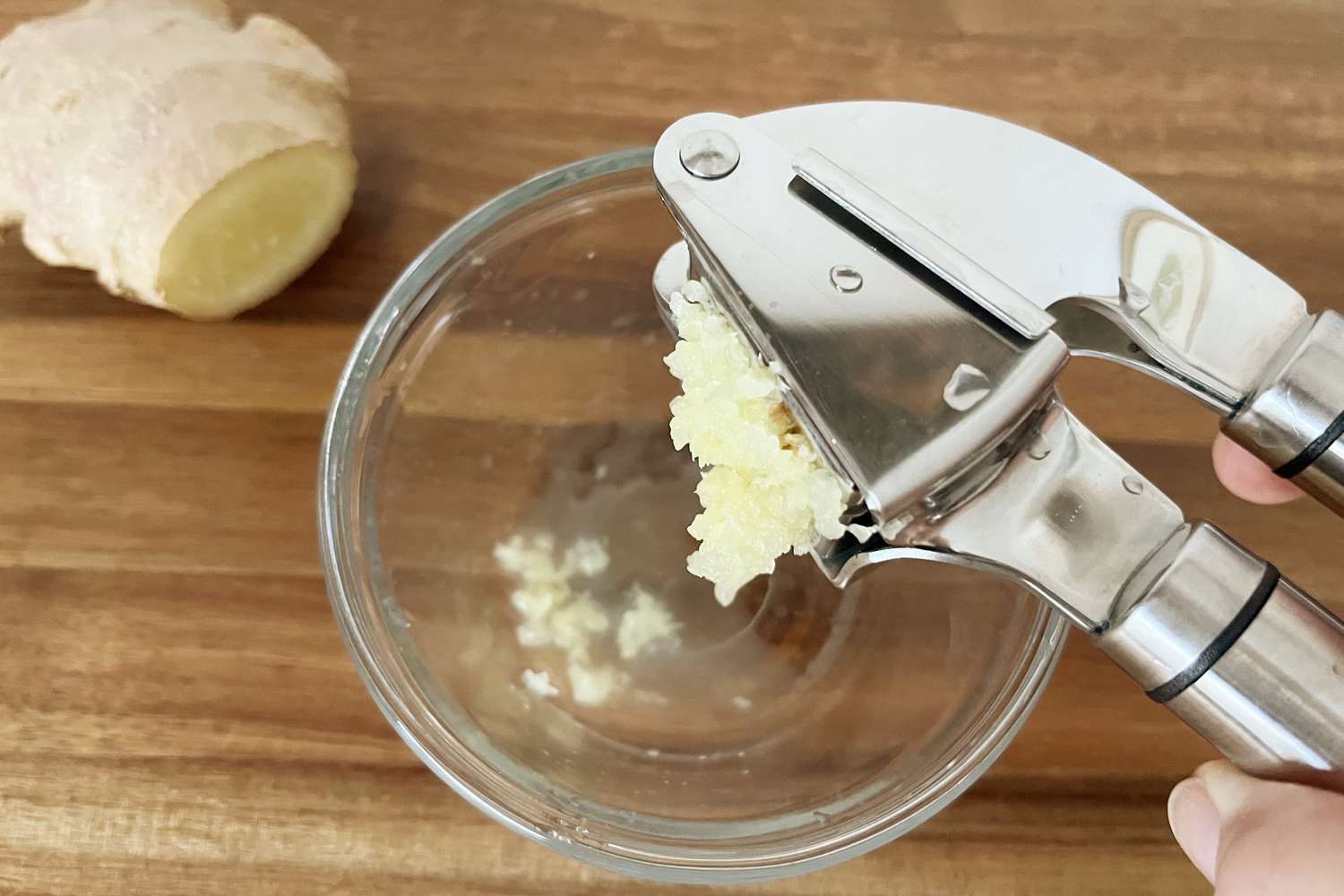
Peel fresh ginger, cut it into small pieces, place one piece in a sturdy garlic press, and squeeze the handles firmly over a bowl.
Fresh ginger adds a warm, sharp taste to many meals. In American kitchens, it is often used in stir-fries, homemade soups, marinades, sauces, roasted vegetables, and baked treats. However, chopping a small piece of ginger can take more time than expected, especially when a recipe needs a fine mince.
A garlic press can make this job easier. You do not need to buy a separate ginger tool just to prepare a small amount of fresh ginger. With the right preparation, a standard press can crush small ginger pieces into a moist, fine pulp. The main trick is to use small pieces and avoid forcing too much fibrous root through the holes at once.
This method works best with a strong garlic press that has a firm hinge and a comfortable grip. It may not work as well with a weak plastic press or a tool with a very small chamber. Ginger is fibrous and can take more effort to press than a soft garlic clove.
In this guide, you will learn how to prepare ginger, load the press, squeeze it without damaging the tool, collect the pulp, and clean the holes afterward. You will also learn when a garlic press is useful and when a grater or knife is a better choice.
Yes, you can use a garlic press for fresh ginger. The tool does not have to be limited to garlic. Its small holes and pressing action can break ginger into tiny pieces and push out some of its natural juice.
The main difference is texture. Garlic is usually softer and easier to crush, while fresh ginger has firm flesh and long fibers. These fibers can stay inside the chamber or become stuck in the holes. That is why ginger needs a little more care before pressing.
A garlic press is especially useful when you need a small amount of ginger for a quick meal. It saves chopping time and helps spread ginger through a sauce or marinade. However, it is not always the best choice for large amounts or recipes that need neat ginger pieces.
Source: tastingtable.com
Good for small portions
A press is useful when a recipe needs a little fresh ginger for a sauce, dressing, soup, or stir-fry.
Creates a fine texture
The holes break the ginger into small pieces and create a moist pulp that blends into many dishes.
Needs extra cleaning
Ginger fibers can stick inside the chamber, so cleaning soon after use is important.
Not ideal for every press
A weak tool or one with a narrow chamber may struggle with firm ginger and may be harder to operate.
Why Ginger Needs More Pressure Than Garlic
Fresh ginger has a firm, fibrous structure. When you squeeze it through a garlic press, the flesh must break apart and pass through the small holes. Some of the long fibers may not pass through easily.
This can make the handles feel harder to close than they do when pressing garlic. A strong hinge and solid handles help, but you should never use your full body weight or force a jammed press. Smaller pieces are usually the better answer.
Firm flesh
Fresh ginger can resist the pressure of a small kitchen tool.
Long fibers
Stringy parts may remain inside the chamber after the softer pulp passes through.
What You Need Before Pressing Ginger
Gather a few simple kitchen items before you begin. You do not need a special machine or a long list of tools. A clean garlic press, fresh ginger, a small knife, a cutting board, and a bowl are enough.
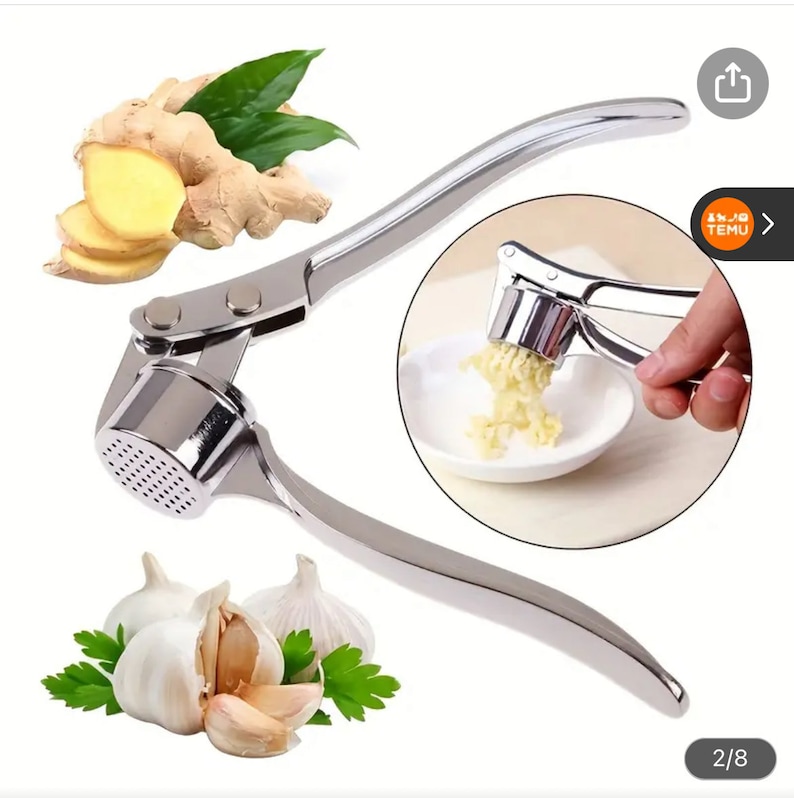
Choose a press that feels solid when you open and close it. Stainless steel models are often a practical option because they are sturdy and easy to wash. Still, material alone does not guarantee that a press can handle ginger. Check the hinge, chamber, and manufacturer’s instructions before using it for firm roots.
Source: naaptol.com
Fresh ginger root
Choose a firm piece with no visible mold, wet decay, or badly damaged areas.
Garlic press
Use a clean, sturdy press with a hinge and handles that move smoothly.
Small knife
Use it to trim the root and cut the ginger into pieces that fit inside the chamber.
Peeler or teaspoon
Either tool can help remove the outer skin when peeling is needed.
Small bowl
Place it under the press to catch the ginger pulp and juice.
Cleaning brush
A small kitchen brush can help remove fibers from the pressing holes.
How To Choose Good Ginger
Look for ginger that feels firm when you hold it. The skin should not look excessively shriveled, and the root should not feel soft or wet. A fresh, pleasant ginger smell is another useful sign.
Avoid pieces with visible mold or signs of decay. A very old, dry root may also be harder to press because its flesh can be tough and less juicy. Fresh ginger usually gives a better result and is easier to prepare.
Choose firm roots
Firm ginger is easier to cut into small, even pieces.
Check the skin
Avoid roots with mold or extensive damage.
Look for fresh flesh
A fresh root is generally more suitable for making moist ginger pulp.
How To Use A Garlic Press For Ginger Step By Step
The process is simple when you prepare the root before putting it inside the press. Do not try to push a large chunk of ginger through the chamber. Cut it into small portions and let the tool do the work at a steady pace.
Follow these steps for a smooth result. Keep a bowl under the press so you can collect both the pulp and the juice.
Source: amazon.ca
Step 1: Wash The Ginger Root
Rinse the ginger under cool running water. Rub the surface with your fingers to remove loose dirt and any soil trapped around its small bumps.
Use a clean vegetable brush if the root has dirt in its folds. Dry it with a clean kitchen towel before peeling or cutting. A dry surface also makes the root easier to hold.
Rinse well
Remove visible dirt from the entire root, including its narrow joints.
Dry the surface
Use a clean towel before handling the ginger with a knife.
Step 2: Peel The Ginger
Remove the outer skin if it is thick, rough, or damaged. A vegetable peeler works well on the smooth parts of the root. For small bumps and tight corners, use the edge of a teaspoon to gently scrape away the skin.
You do not always need to peel young ginger. If the skin is thin, clean, and in good condition, it may be left on. However, peeling is a useful choice when using a garlic press because tough skin can add more material to the chamber and make cleaning harder.
Avoid cutting away too much flesh. Ginger often has an uneven shape, so a spoon can help you reach the small areas without wasting much of the root.
Use a spoon
Scrape around small bumps and uneven sections to remove thin skin.
Use a peeler
Remove thicker skin from smooth sections of the root.
Trim damaged areas
Remove any visibly spoiled or damaged sections before pressing.
Step 3: Cut Ginger Into Small Pieces
Place the peeled root on a stable cutting board. Cut it into small chunks that fit comfortably inside the garlic press chamber. Pieces around the size of a garlic clove are a useful starting point, but the chamber size should guide your cuts.
For very fibrous ginger, cut across the direction of the visible fibers when possible. Shorter fibers are less likely to form long strands that become tangled in the holes.
Do not leave the pieces so large that they prevent the press from closing. A few small pieces are much easier to handle than one large block.
Keep pieces small
Cut the ginger to fit the chamber without pushing or forcing the handles.
Cut across the fibers
Shorter pieces can be easier to press than long strips of ginger.
Remove tough ends
Trim dry or especially woody sections if they do not break down easily.
Step 4: Place Ginger Inside The Press
Open the garlic press and place one small ginger piece inside the chamber. Make sure it sits in the center and does not stick out around the edges.
Do not fill the chamber to its limit. A small portion leaves room for the pressing plate to move and helps prevent the tool from becoming jammed. If you have more ginger, press it in separate batches.
Start with one piece
A small test portion lets you see how well your press handles the ginger.
Avoid overfilling
Too much ginger can make the handles difficult to close.
Step 5: Squeeze The Handles Slowly
Hold the garlic press over your bowl and bring the handles together with a steady squeeze. Apply even pressure rather than jerking the handles or trying to crush the ginger in one sudden movement.
The ginger pulp should begin to come through the small holes. You may also see some juice collect in the bowl. This is normal and can be added to your recipe.
If the handles resist or the chamber does not close, stop. Open the press, remove the ginger, and cut it into smaller pieces. Never force a stuck piece through the tool.
Use steady pressure
A smooth squeeze is easier to control and places less sudden strain on the hinge.
Watch the pressing plate
Stop if the plate becomes misaligned or the handles feel unusually difficult to move.
Work in small batches
Several easy presses are better than one overloaded squeeze.
Step 6: Collect The Ginger Pulp
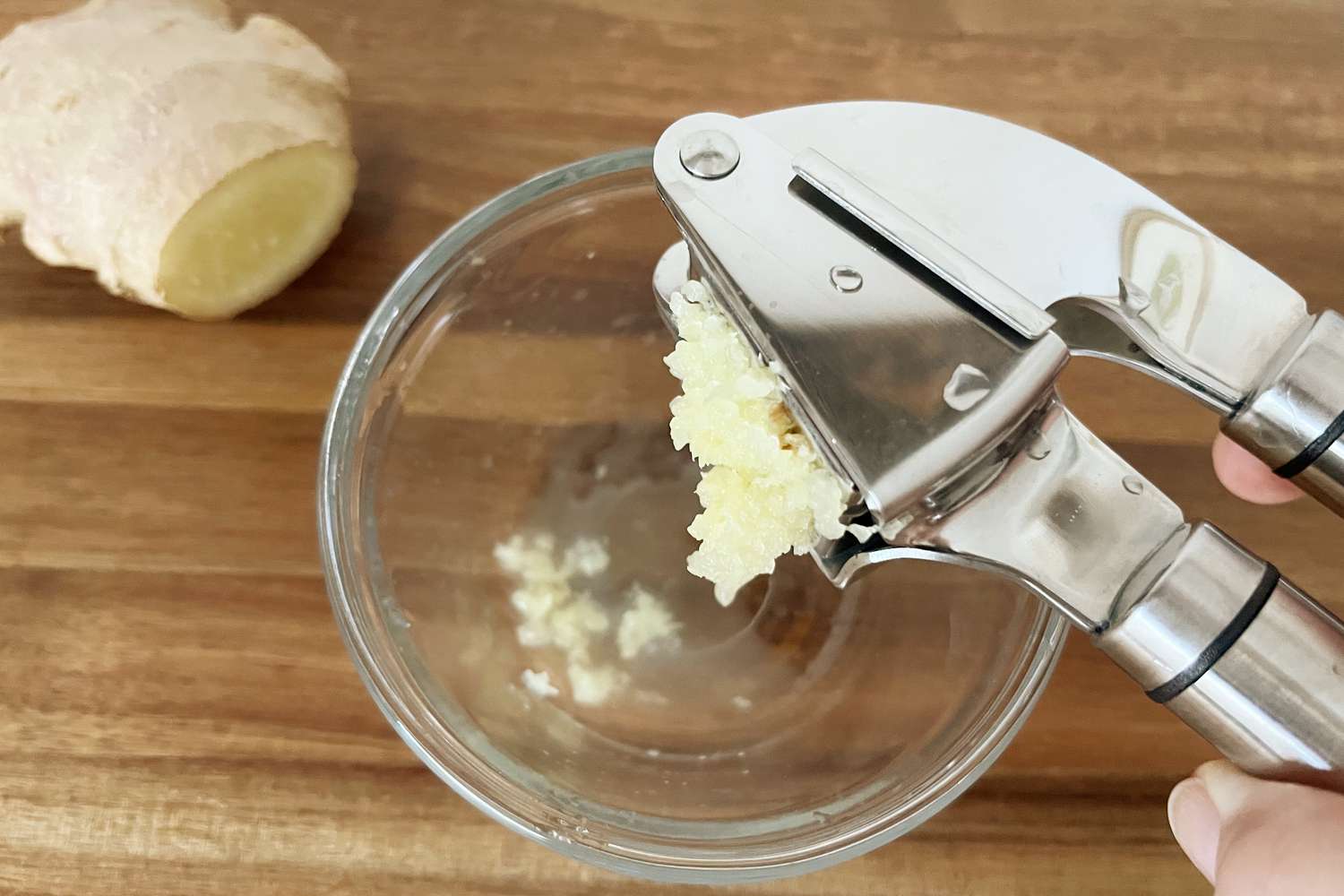
Open the press once the handles have completed their movement. Use a small spoon or spatula to collect the ginger that has passed through the holes. Scrape it into your bowl or directly into the dish you are preparing.
Some ginger may remain on the front of the pressing plate. Remove it gently with a spoon or another suitable utensil. Avoid using the sharp edge of a knife near your fingers.
You may also find a small amount of fibrous ginger left inside the chamber. This is normal. Remove it before loading the next piece.
Collect the pulp
Scrape the pressed ginger into a bowl with a small spoon.
Save the juice
Add the collected liquid to soups, sauces, or marinades when the recipe calls for ginger.
Clear the chamber
Remove leftover fibers before pressing another batch.
Step 7: Repeat Until You Have Enough Ginger
Continue with the remaining ginger, using one small piece at a time. Check the chamber after each squeeze to make sure no long fibers are blocking the holes.
Stop when you have the amount your recipe needs. There is no need to press the same ginger again and again if it has already passed through the holes. Repeated squeezing may place unnecessary strain on the tool.
Check between batches
Remove trapped fibers so the next piece can pass through more easily.
Measure after pressing
Use the amount of pulp your recipe requires rather than assuming every root produces the same quantity.
How To Get The Best Results When Pressing Ginger
The quality of your ginger pulp depends on the root, the size of the pieces, and the design of the press. A few small changes can make the process easier and help prevent clogging.
The most useful rule is to avoid treating ginger exactly like garlic. Give the root a little more preparation and use less pressure when the chamber begins to resist.
Source: l192.com
Use A Strong Garlic Press
A sturdy press is a better choice for ginger than a thin, weak model. Look for a firm hinge, handles that line up correctly, and a pressing plate that moves smoothly.
A comfortable grip also matters. Ginger may need more pressure than garlic, so a press that feels awkward in your hand can make the task uncomfortable. If the manufacturer does not recommend pressing ginger, do not assume that the tool can handle it.
Check the hinge
It should move smoothly without loose or bent parts.
Look at the handles
They should feel secure and comfortable when you close the press.
Check the instructions
Follow the manufacturer’s guidance about suitable ingredients and care.
Prepare Ginger In Small Portions
Smaller pieces are easier to position and press. They also reduce the chance of long fibers getting caught in the holes.
If you are preparing ginger for several dishes, divide the root into small portions before you start. This makes it easier to work at a steady pace and clean the chamber between batches.
Avoid large chunks
Large pieces may prevent the pressing plate from closing properly.
Remove woody sections
Very tough sections may not pass through a small garlic press.
Use The Ginger Immediately When Possible
Freshly pressed ginger has a moist texture and a strong aroma. It is convenient to add it to a dish soon after preparation.
If you prepare more than you need, place the extra ginger in a clean, covered container and refrigerate it promptly. For longer storage, freeze it in small portions. Do not leave fresh ginger pulp sitting at room temperature for extended periods.
For immediate cooking
Add the pulp directly to sauces, soups, or stir-fries.
For short storage
Use a clean, airtight container and keep it refrigerated.
For longer storage
Freeze small portions in a suitable freezer container.
What Does Pressed Ginger Look Like?
Properly pressed ginger should look like a moist, finely crushed pulp. It may have a slightly uneven texture because some fibers can remain in the mixture. You may also notice a little ginger juice around the pulp.
The result does not have to look perfectly smooth. A garlic press is designed to force food through small holes, not to make a completely refined puree. The texture can vary with the ginger root and the press design.
Source: etsy.com
Signs That Your Ginger Is Properly Pressed
Look for small pieces of ginger that have passed through the holes and collected in your bowl. The pulp should smell fresh and have the familiar sharp ginger aroma.
A small amount of leftover fiber inside the chamber is common. However, if almost none of the ginger passes through, check whether the pieces are too large or the root is too tough.
Fine pulp
The ginger should be broken into small pieces rather than remaining in large chunks.
Fresh aroma
The pressed ginger should smell like fresh ginger root.
Easy handle movement
The press should close without unusual resistance or signs of bending.
How To Clean A Garlic Press After Using It For Ginger
Clean the garlic press as soon as you finish pressing ginger. Fresh ginger fibers can become harder to remove when they dry inside the small holes. A quick rinse and a small brush can save time.
Pay attention to the chamber, pressing plate, and hinge area. Ginger pulp may collect in places that are not easy to see when the press is closed.
Source: uk.pinterest.com
Step 1: Open The Press
Open the handles fully and release any removable parts according to the manufacturer’s instructions. Do not pull or twist a part that is not designed to come off.
Remove large pieces of leftover ginger with your fingers or a small spoon. This makes the next cleaning steps easier.
Open carefully
Keep your fingers away from moving parts and sharp edges.
Step 2: Rinse With Warm Water
Hold the press under warm running water to loosen the remaining pulp. Rinse both sides of the pressing plate and the inside of the chamber.
Do not use very hot water unless the manufacturer’s care instructions allow it. Some presses have plastic, coated, or mixed-material parts that need special care.
Rinse both sides
Water should reach the small holes where ginger fibers can become trapped.
Step 3: Brush Out Stuck Fibers
Use a small cleaning brush or a clean, soft toothbrush to remove fibers from the holes. Brush gently so you do not damage the pressing plate.
If your press comes with a cleaning tool, use it as directed. Avoid pushing a sharp knife or metal point into the holes because this can damage the surface and may cause an injury.
Use soft bristles
A small brush can reach the narrow spaces without scraping the metal.
Remove trapped pulp
Check the chamber and the pressing plate before washing again.
Step 4: Wash With Dish Soap
Wash the press with warm water and ordinary dish soap. Clean all food-contact areas, including the handles and hinge area where residue may collect.
Rinse away the soap completely. If the manufacturer says the press is dishwasher-safe, you can follow its dishwasher instructions. Otherwise, hand-washing is the safer default.
Do not assume every garlic press can go in the dishwasher.
Step 5: Dry Before Storage
Dry the press with a clean towel and leave it open until all parts are fully dry. Pay attention to the hinge and small spaces where water may remain.
Store the tool in a clean, dry drawer or kitchen organizer. Proper drying helps prevent unwanted moisture from remaining on the metal parts.
Dry the chamber
Remove water from the small holes and inner surfaces.
Store it open if practical
Allowing air to reach the chamber can help it dry fully.
Garlic Press Vs. Ginger Grater Vs. Knife
A garlic press is not the only way to prepare fresh ginger. A grater and a sharp kitchen knife can also do the job, but each tool creates a different texture.
The right choice depends on the recipe. Pressed ginger is useful when you want a fine, moist pulp. Grated ginger works well when you want the flesh and juice to spread through a sauce. Knife-minced ginger is better when you want small pieces that remain more noticeable in the finished dish.
Source: recipes.net
Using A Garlic Press
A garlic press is convenient for small amounts of ginger. It creates a fine, moist mixture and requires less knife work. It can also be helpful when you have limited time to prepare a quick meal.
Its main drawback is the cleaning process. Fibers may become trapped inside the holes, and some roots can be too firm for a weak press.
Best for
Small portions of ginger for sauces, marinades, dressings, and soups.
Main drawback
The chamber can become clogged with long ginger fibers.
Using A Ginger Grater
A fine grater or ginger grater breaks the root into very small pieces. It is useful when you want ginger to blend into a sauce or spread its flavor through a mixture.
A grater may produce a finer result than some garlic presses. However, it requires care because the teeth can be sharp, and small pieces of ginger can be difficult to hold near the end of the root.
Best for
Smooth sauces, dressings, marinades, and recipes that need finely grated ginger.
Main drawback
The grating surface can be sharp and may take more effort to clean.
Using A Kitchen Knife
A sharp knife gives you more control over the size and shape of the ginger. You can make thin slices, matchsticks, or very small pieces, depending on the recipe.
Knife-minced ginger often has more distinct pieces than pressed or grated ginger. This can be useful in stir-fries where you want small bits of ginger to remain noticeable.
Best for
Stir-fries, roasted dishes, soups, and recipes that need controlled pieces.
Main drawback
It takes more time and requires safe knife-handling skills.
Which Ginger Preparation Method Should You Choose?
Use the following comparison to choose a preparation method based on your recipe. The best tool is the one that gives you the texture you need without creating extra work.
Source: shopee.ph
Garlic press
Choose this method for a small amount of fine, moist ginger pulp. It is convenient for quick sauces and marinades.
Fine ginger grater
Choose this method when you want very fine ginger that blends into liquids and sauces.
Box grater
Choose a fine grating surface for a quick way to prepare a larger amount of ginger.
Sharp knife
Choose this method when you want small, separate pieces or thin strips of ginger.
Food processor
Choose this method when preparing a larger batch of ginger or a combined ginger-garlic mixture.
Does A Garlic Press Change The Flavor Of Ginger?
A garlic press changes the texture more than the basic identity of the ingredient. It crushes the ginger flesh and releases some of its juice, creating a moist mixture that can spread through food.
Because the pieces are very small, pressed ginger may blend into a dish more easily than larger chopped pieces. This can make its flavor seem more evenly distributed. However, the final taste also depends on the amount used, cooking time, and the other ingredients in the recipe.
Pressed ginger
Creates a fine mixture that is easy to stir into sauces.
Chopped ginger
Leaves more distinct pieces that can provide a stronger bite in individual mouthfuls.
How To Use Pressed Ginger In Everyday Cooking
Pressed ginger works well in recipes where you want the flavor to spread through the food. Since the pulp is small and moist, it is easy to mix with other ingredients.
You can use it in many common American home-cooking situations. Start with the amount your recipe calls for, then adjust the flavor to suit your taste.
Source: shuncy.com
Add It To Stir-Fries
Pressed ginger is useful in chicken, beef, shrimp, and vegetable stir-fries. Add it to the cooking process with other aromatics, following the order in your recipe.
Because pressed ginger is finely crushed, it can release its aroma quickly. Avoid leaving it over very high heat for too long, as small pieces can burn.
Cooking tip
Add the ginger at the stage your recipe recommends and stir it often.
Mix It Into Marinades
Combine pressed ginger with soy sauce, oil, citrus juice, garlic, and other seasonings to make a simple marinade. It works well with chicken, fish, tofu, and vegetables.
The fine texture makes it easier to spread ginger through the mixture. Stir well so the pulp does not collect in one spot.
Cooking tip
Mix the ginger with the liquid ingredients before coating the food.
Use It In Homemade Soups
Pressed ginger can add warmth to chicken soup, vegetable soup, and homemade broth. Its fine texture helps it blend into the liquid as the dish cooks.
Start with a small amount if the recipe does not give a clear measurement. You can add more later, but it is difficult to remove ginger once it has mixed into the soup.
Cooking tip
Add a little ginger first and taste the broth before adding more.
Make A Quick Ginger-Garlic Paste
You can press ginger and garlic separately, then combine them in a small bowl. Add a little oil or another ingredient from your recipe if you need a more spreadable mixture.
This mixture can serve as a base for curries, sauces, roasted vegetables, and savory marinades. If you want to press both ingredients with the same tool, clean the chamber between them when you need to keep their flavors separate.
Prepare only what you plan to use soon. For storage, place the mixture in a clean covered container and refrigerate it promptly or freeze it in small portions. Do not assume that homemade ginger-garlic paste is safe at room temperature.
Cooking tip
Press each ingredient in small portions and mix them after collecting the pulp.
Add It To Salad Dressings And Sauces
Pressed ginger can add a sharp, fresh note to homemade dressings. Combine it with vinegar or citrus juice, oil, and a little sweetener if the recipe calls for one.
Its fine texture is useful because large ginger pieces may not be pleasant in a smooth dressing. Whisk the mixture well before serving.
Cooking tip
Use a small amount at first so the ginger does not overpower the other flavors.
Common Problems When Using A Garlic Press For Ginger
Most problems happen when the ginger is too large, too fibrous, or packed too tightly into the chamber. The good news is that you can solve many of these issues by changing how you prepare the root.
If the press becomes difficult to close, stop and check the chamber. Forcing the handles can damage the tool or cause your hand to slip.
Problem 1: Ginger Is Not Coming Through The Holes
If little or no ginger comes through, the pieces may be too large or too tough. A blocked chamber can also prevent the pressing plate from moving properly.
Open the press and remove the ginger. Cut it into smaller pieces and try again with a fresh portion. If the tool still struggles, switch to a grater or knife.
Possible cause
The ginger is too large, too firm, or poorly positioned.
What to do
Use smaller pieces and make sure the chamber is clear.
Problem 2: Ginger Fibers Are Stuck Inside
Long ginger fibers can become trapped in the holes or wrapped around the inside of the chamber. This is more common with mature, fibrous roots.
Open the press and rinse it under warm water. Use a small brush to clear the holes. For your next batch, cut the ginger across the direction of the fibers and use smaller portions.
Possible cause
Long strands of ginger have become trapped in the pressing plate.
What to do
Brush out the fibers and cut the next pieces into shorter sections.
Problem 3: The Handles Are Too Hard To Squeeze
Handles that feel unusually hard to close may mean the chamber is overfilled or the ginger is too firm. A weak or damaged press can also be the cause.
Stop squeezing and open the chamber if possible. Remove some ginger and try a smaller piece. If the hinge is bent, loose, or damaged, stop using the press.
Possible cause
Too much ginger, tough root flesh, or a damaged hinge.
What to do
Reduce the portion and inspect the press before trying again.
Problem 4: The Ginger Pulp Is Too Wet
Pressed ginger may release a noticeable amount of juice. This is normal and does not mean the ginger has gone bad.
If your recipe needs a thicker mixture, use a spoon to collect the pulp and leave some of the liquid behind. You can also mix the juice into a sauce or soup rather than throwing it away.
Possible cause
The pressing action has released natural ginger juice.
What to do
Separate some liquid from the pulp or include it in the recipe.
Problem 5: The Press Is Difficult To Clean
Dried ginger fibers can stick firmly inside the small holes. Waiting until the end of a long cooking session can make the job harder.
Rinse the press soon after use and brush the holes before the pulp dries. If the ginger has already dried, soak the press only when its care instructions allow it.
Possible cause
Ginger residue has dried inside the chamber.
What to do
Use warm water, dish soap, and a small cleaning brush.
Common Mistakes To Avoid
A garlic press can handle small amounts of ginger, but a few mistakes can make the task harder than it needs to be. Use the right amount, prepare the root well, and let the tool work at its own pace.
Putting a whole ginger knob inside
Large pieces will not fit properly and can block the chamber. Cut the root into small chunks first.
Filling the chamber completely
Too much ginger can stop the pressing plate from moving smoothly. Use smaller portions.
Using a weak plastic press
Some lightweight presses may not handle the resistance of firm ginger. Check the tool’s instructions and condition.
Ignoring trapped fibers
Fibers left inside can block the holes during the next squeeze. Clear the chamber between batches.
Forcing the handles
Excessive pressure can damage the hinge or cause the tool to slip. Stop if the handles resist.
Leaving the press dirty
Dried pulp takes more effort to remove. Rinse and brush the press soon after use.
Expecting a perfectly smooth puree
A garlic press makes fine pulp, but some fibers may remain. Use a suitable grater or food processor when a smoother result is required.
Should You Press Frozen Ginger?
A standard garlic press is generally easier to use with fresh ginger than with a hard, frozen piece. Frozen ginger may be very firm and could place extra strain on the handles and hinge.
If you have frozen ginger, let a small portion soften enough to cut safely before trying to press it. A fine grater may be a better choice for frozen ginger, depending on its texture and your recipe.
Best approach
Use fresh, cut ginger for the easiest pressing process.
Alternative
Use a grater for firm frozen ginger when it is suitable for that tool.
Can You Press Ginger And Garlic Together?
Yes, you can combine pressed ginger and garlic to make a quick aromatic mixture. This is useful for recipes that call for both ingredients, such as stir-fries, marinades, sauces, and many savory dishes.
For the most control, press each ingredient separately and combine the pulp in a bowl. This lets you adjust the amount of each ingredient and makes it easier to keep track of the recipe measurements.
If you press the ingredients in the same chamber, remember that the flavors will mix. This is not a problem when you want a combined paste, but it may not suit a recipe that needs separate portions.
Simple Ginger-Garlic Preparation
Wash and prepare the ginger, then peel the garlic cloves. Cut the ginger into small pieces and press it in a sturdy garlic press. Next, press the garlic and combine both ingredients in a clean bowl.
Use the mixture right away or refrigerate it promptly in a clean, covered container. For longer storage, freeze it in small portions so you can take out only what you need.
Control the flavor
Press the ingredients separately so you can change their amounts.
Keep it clean
Wash the press after preparation and before storing it.
Store safely
Refrigerate promptly or freeze extra portions rather than leaving the mixture at room temperature.
Frequently Asked Questions
Q
Do You Need To Peel Ginger Before Using A Garlic Press?
Peeling is recommended when the ginger has thick, rough, or damaged skin. A spoon or vegetable peeler can remove the outer layer without wasting much of the root.
Young ginger with clean, thin skin may not need peeling. However, removing the skin can make the pressing process and cleanup easier.
Q
Can You Use A Garlic Press For Frozen Ginger?
A garlic press is usually easier to use with fresh ginger. Hard frozen ginger may be too firm and can put extra pressure on the handles and hinge.
For frozen ginger, a grater may be a better option. If you want to use a press, allow the ginger to soften enough to cut safely and follow the tool manufacturer’s instructions.
Q
Can You Use A Garlic Press For Ginger Without Peeling It?
Yes, if the ginger is young, clean, and has very thin skin. The skin is not always necessary to remove before preparing ginger.
For mature ginger with thick or rough skin, peeling is a better option. It also helps reduce the amount of tough material that enters the press.
Q
Is Pressed Ginger The Same As Grated Ginger?
No. Both methods break ginger into small pieces, but they can produce different textures. A garlic press creates moist pulp and may leave some long fibers inside its chamber.
A fine grater breaks the flesh into very small shreds and releases juice. The best choice depends on whether your recipe needs a fine mixture or more noticeable pieces of ginger.
Q
Can A Garlic Press Damage Ginger?
A garlic press does not normally damage the ginger in a way that makes it unsuitable for cooking. It simply crushes the flesh into smaller pieces and releases some juice.
The bigger concern is damage to the press. Avoid overfilling the chamber or forcing the handles when the ginger is too firm.
Q
Why Does Ginger Get Stuck In A Garlic Press?
Ginger contains long fibers that may become caught in the small holes of a garlic press. Large pieces and overfilled chambers can make the problem worse.
Cut the root into smaller pieces, preferably across the direction of the fibers. Rinse and brush the chamber between batches to remove trapped material.
Q
Can You Use A Garlic Press For Ginger Paste?
Yes. A garlic press can turn small pieces of fresh ginger into a moist paste-like pulp. This is useful for marinades, sauces, soups, and stir-fries.
For a very smooth paste or a large batch, a fine grater or food processor may work better. A standard garlic press may leave some fibrous pieces behind.
Q
How Much Ginger Can You Put In A Garlic Press?
There is no single amount that works for every garlic press. Chamber size and ginger firmness vary from one tool and root to another.
Start with one small piece that fits comfortably inside the chamber. Avoid filling it completely, and press additional pieces in separate batches.
Q
Can You Put A Garlic Press In The Dishwasher After Pressing Ginger?
Only if the manufacturer says your particular garlic press is dishwasher-safe. Some models have materials, coatings, or parts that require hand-washing.
When in doubt, rinse the press, brush out the ginger fibers, and wash it with warm water and dish soap. Dry it fully before storage.
Q
Can You Use A Garlic Press For Ginger In Tea?
Yes. You can press fresh ginger and add the pulp and juice to hot water or your favorite tea. The fine texture releases ginger into the liquid more readily than larger chunks.
If you prefer a clear drink without ginger fibers, strain the tea before serving. Adjust the amount of ginger to suit your taste.
✦ Wrapping Up
Conclusion
Using a garlic press for fresh ginger is a simple way to save time in the kitchen. You do not need a separate tool for every ingredient, especially when you only need a small amount of ginger for a meal. A sturdy garlic press can turn prepared ginger into fine, moist pulp that works well in sauces, soups, marinades, and stir-fries.
The key is to prepare the root before pressing. Wash it, peel it when needed, and cut it into small pieces that fit comfortably inside the chamber. Press one piece at a time with steady pressure, collect the pulp, and clear any trapped fibers before continuing.
Remember that not every garlic press is designed to handle firm ginger. Never force the handles if the chamber becomes blocked or the hinge feels strained. If your press struggles, use a grater or a sharp knife instead.
Finally, clean the tool soon after use. Warm water, dish soap, and a small brush can help remove the ginger fibers from the holes. Dry the press fully before storing it so it is ready for your next cooking session.
💡 Key Takeaway
Start with a small piece of peeled fresh ginger, cut it across the fibers, and place it inside a sturdy garlic press. Squeeze slowly over a bowl, collect the pulp, and rinse the press as soon as you finish. If the handles resist, stop and switch to a grater or knife.