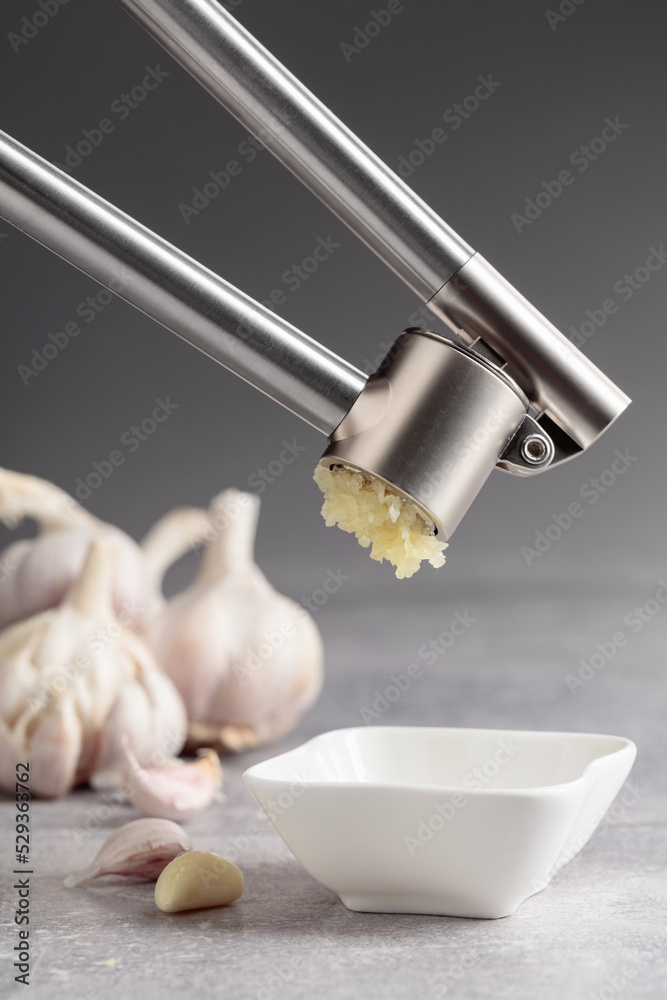
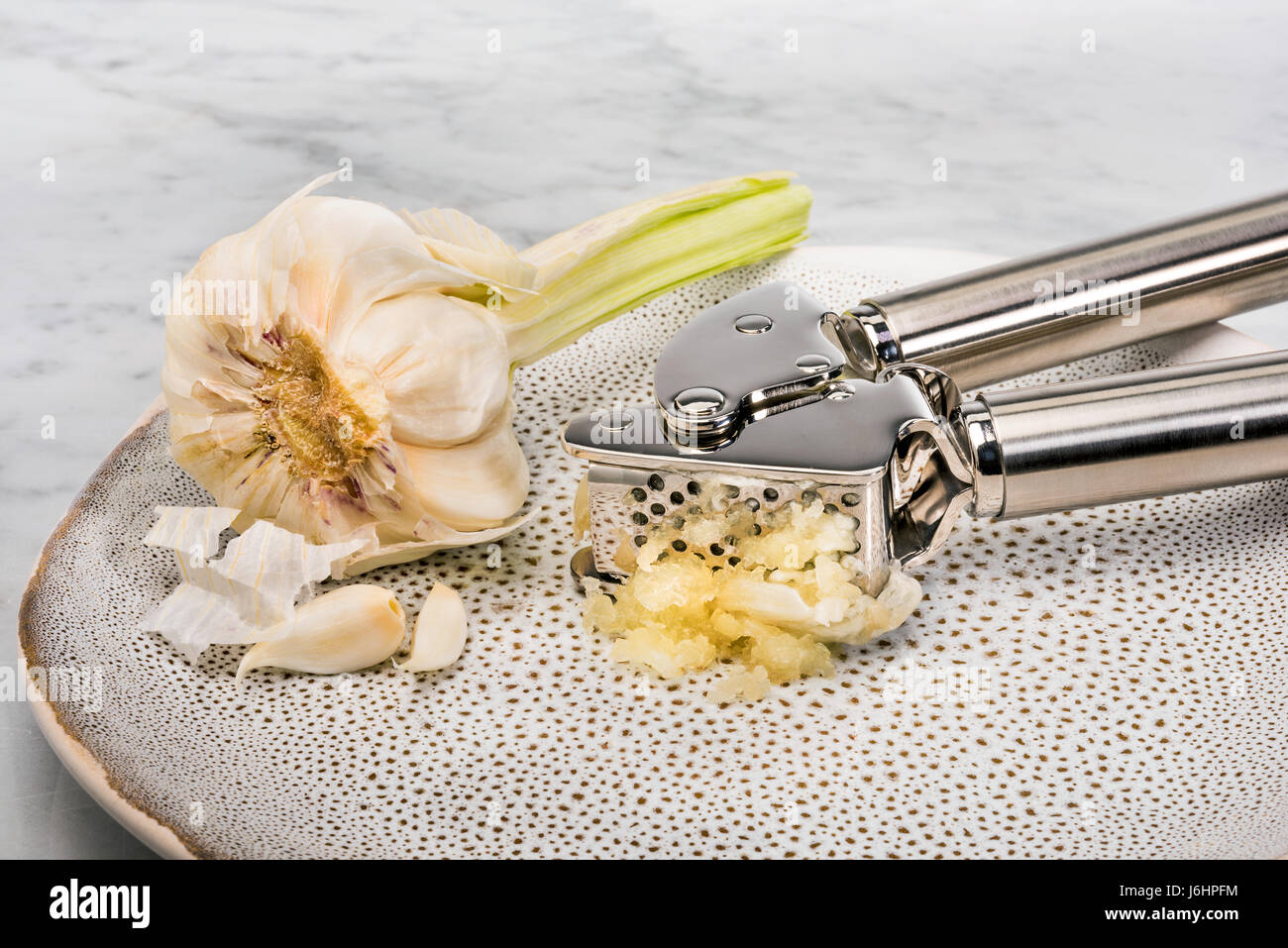
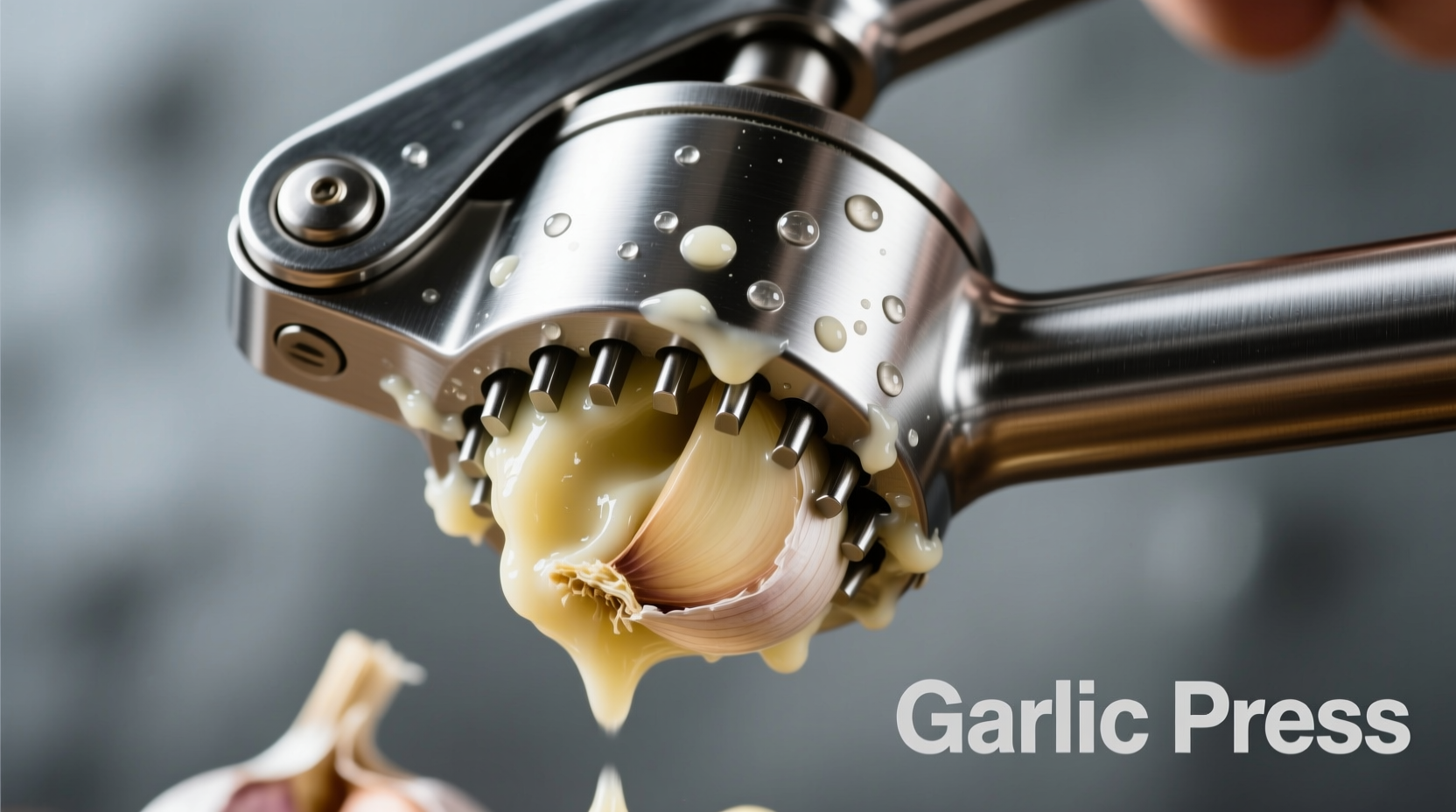
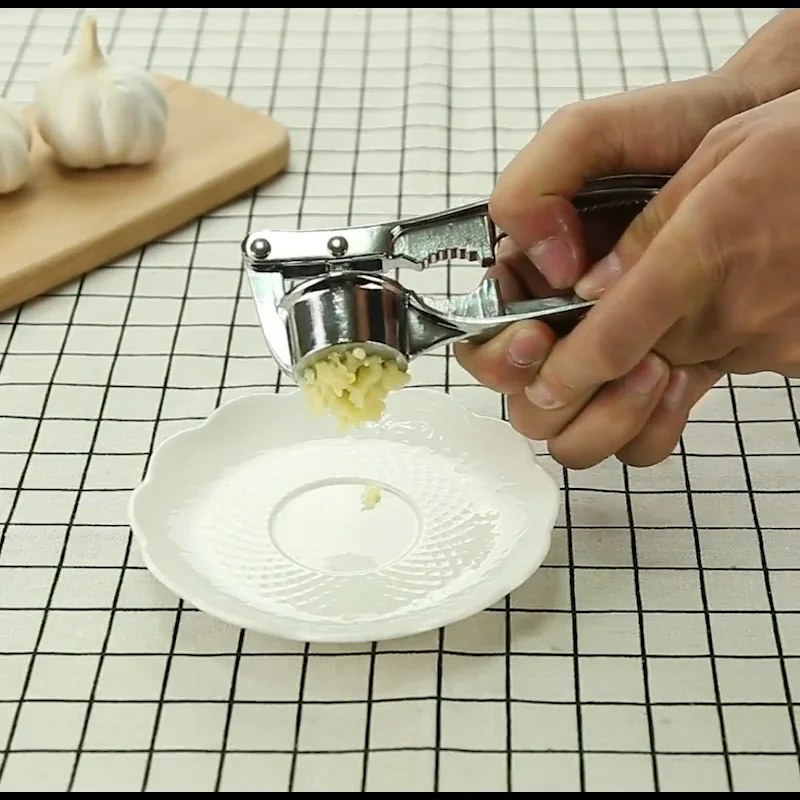
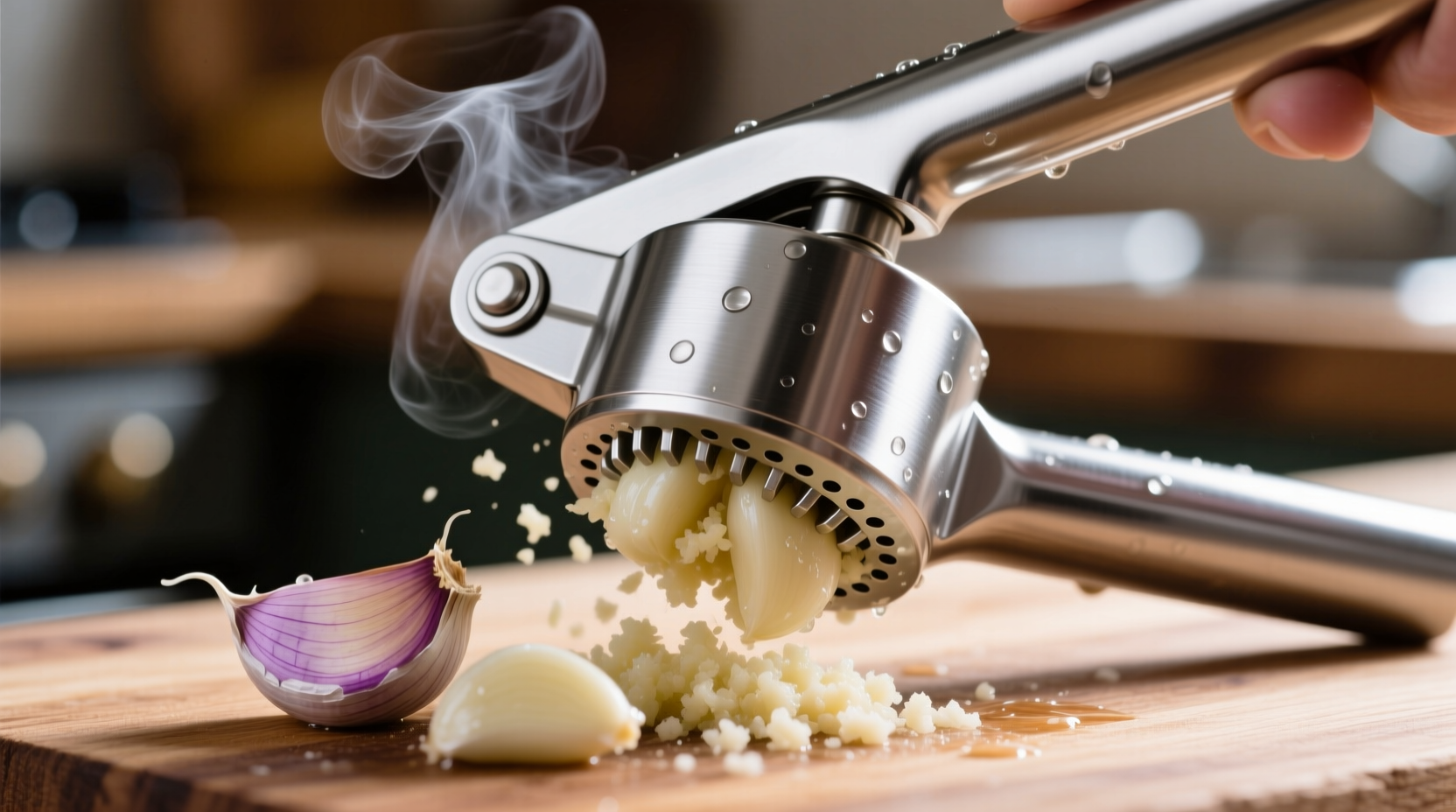
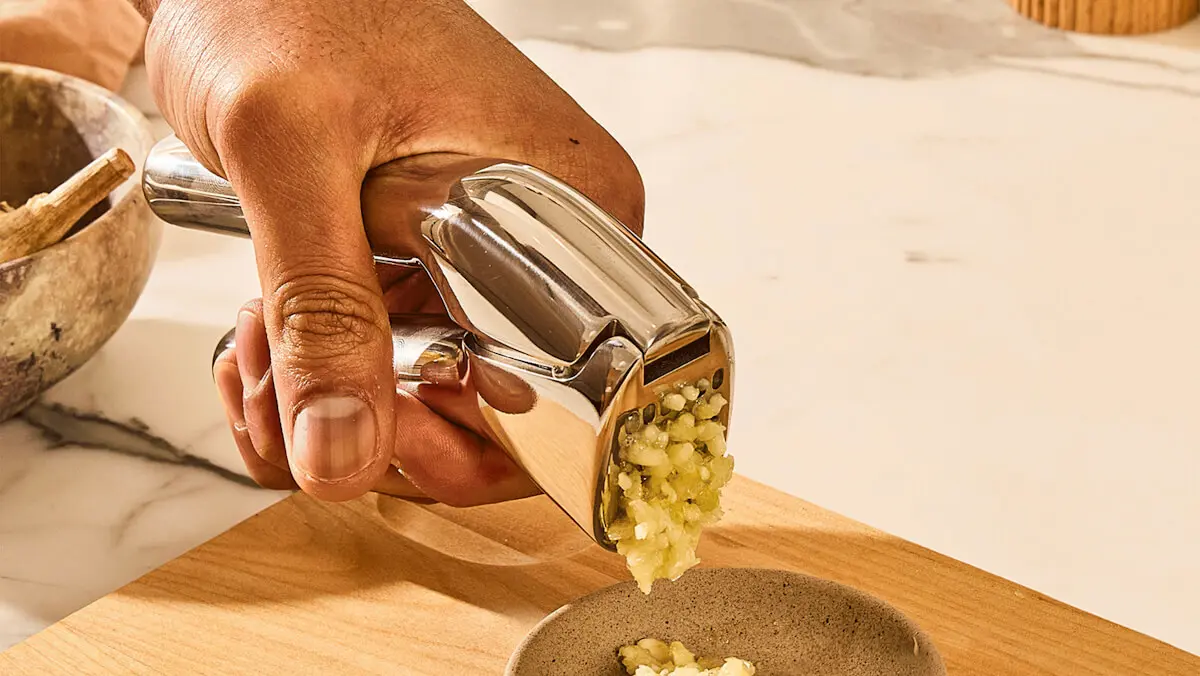
Your garlic press is usually hard to squeeze because of oversized cloves, a clogged screen, poor alignment, or a stiff hinge.
If you cook at home in the United States, you may reach for a garlic press when making pasta sauce, garlic bread, roasted vegetables, marinades, or a quick weeknight meal. The tool should make this small kitchen task easier. However, a press that takes both hands and a lot of force can turn a simple recipe into a frustrating job.
The good news is that a stiff garlic press does not always need replacing. Dried garlic, old residue, a crowded chamber, and a tight hinge can all make the handles difficult to close. The best first step is to find out whether the problem comes from the garlic, the way you load the press, or the tool itself.
This guide explains how to check each cause, clean the press, reduce the force needed, and decide when a damaged press should be replaced. It also covers differences between peeled and unpeeled cloves, fresh and older garlic, and various press designs. These checks use general kitchen-tool principles rather than claims of hands-on testing of a particular model.
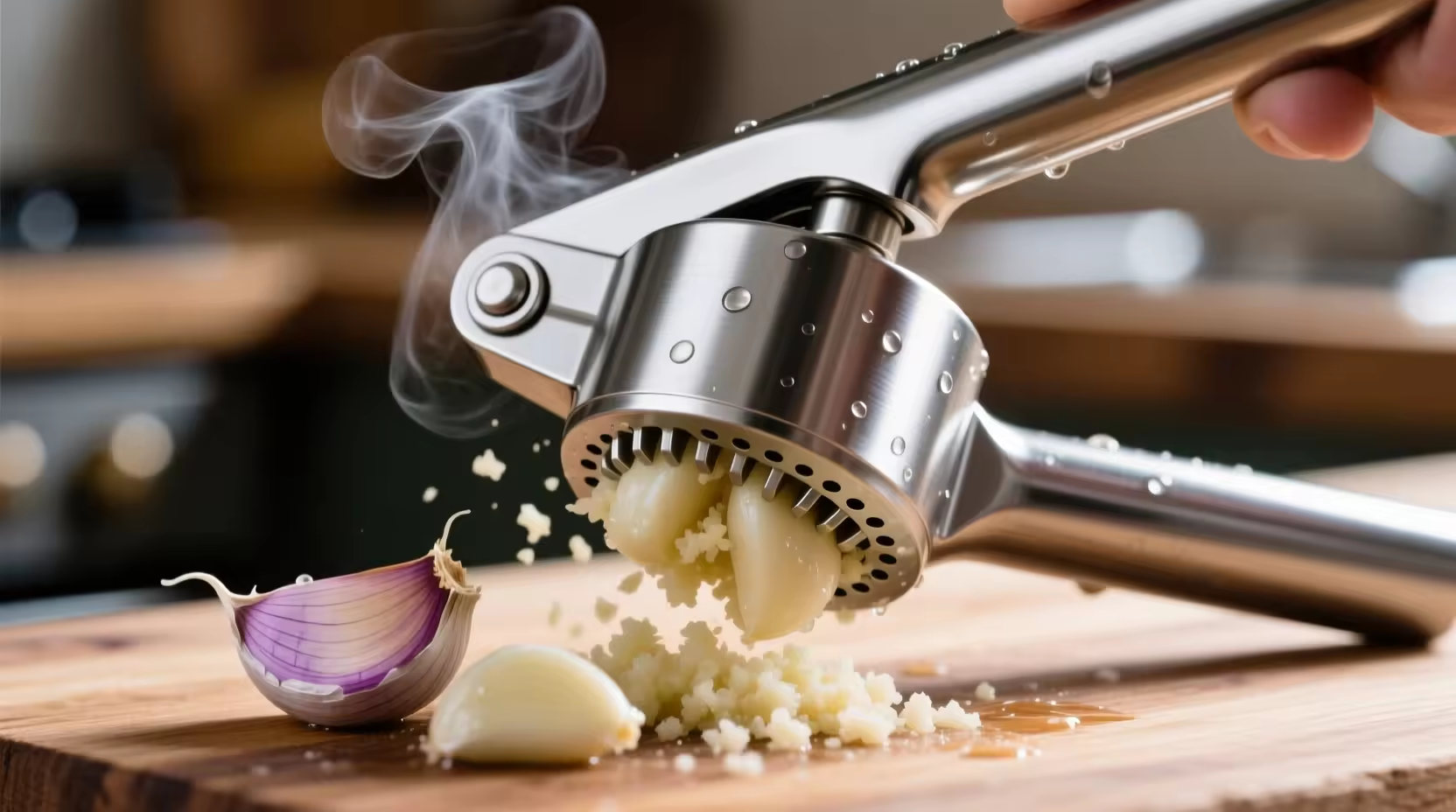
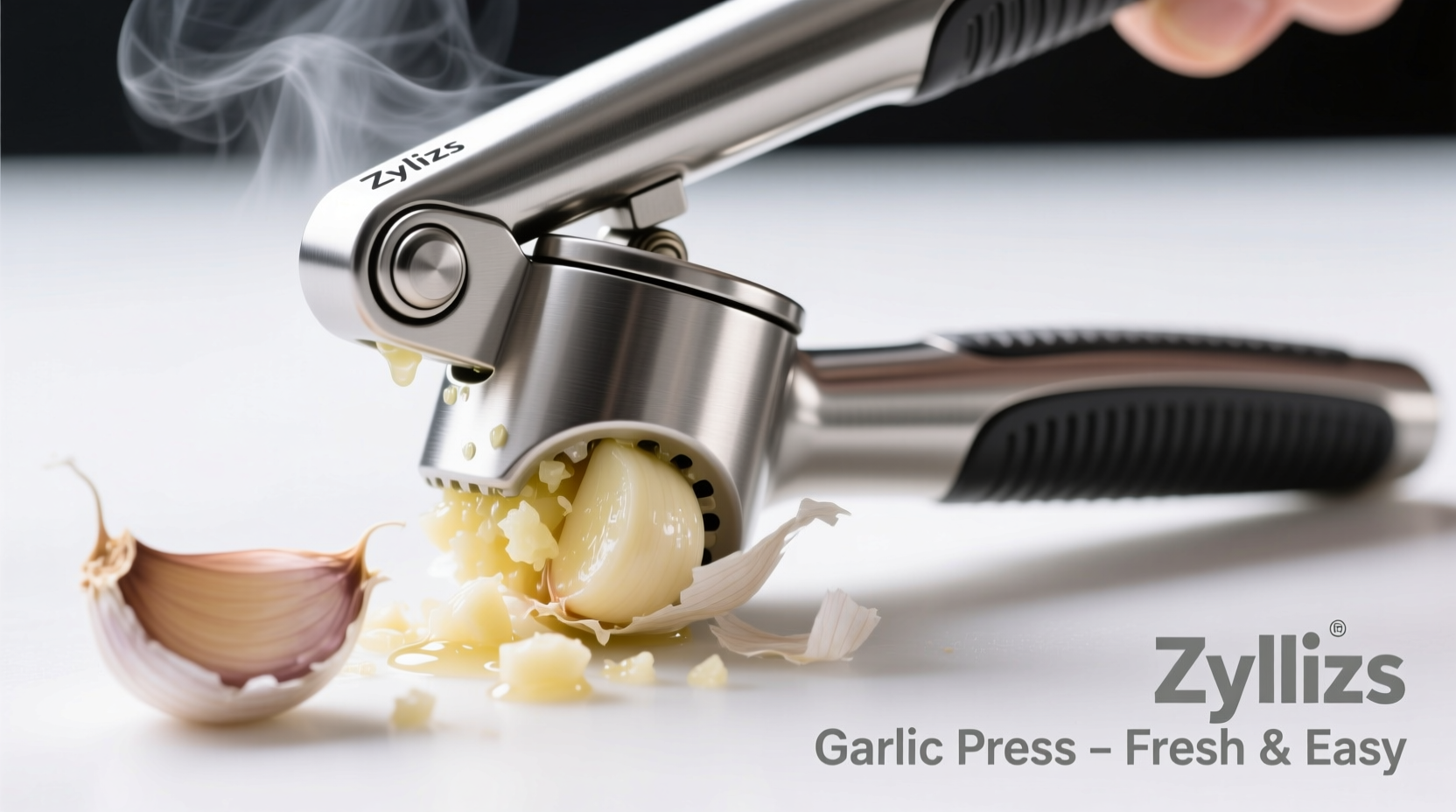
A garlic press is hard to squeeze when the garlic does not move through the holes easily or the tool has extra resistance in its moving parts. The pressing plate pushes the clove against a perforated surface. Garlic must then pass through small openings while the two handles move closer together.
If the chamber is packed too tightly, the garlic is unusually firm, or old paste blocks the holes, the pressing plate meets more resistance. A stiff hinge can add another source of friction. These problems may occur alone or at the same time.
Start with the simplest checks. Empty the chamber, inspect the holes, and open and close the handles without garlic inside. This quick test helps separate a food-related problem from a mechanical one.
Source: i5.walmartimages.com
Garlic residue
Dried paste can block the holes and make the next clove much harder to press.
Overfilled chamber
Too much garlic can crowd the chamber and prevent the pressing plate from moving normally.
Stiff hinge
Dirt, corrosion, dried food, or mechanical wear can make the handles resist movement.
Large or firm cloves
A clove that is too large or unusually firm may need more force than the press can comfortably provide.
Poor alignment
A bent handle or pressing plate can create uneven contact and make the tool bind.
How the Pressing Mechanism Works
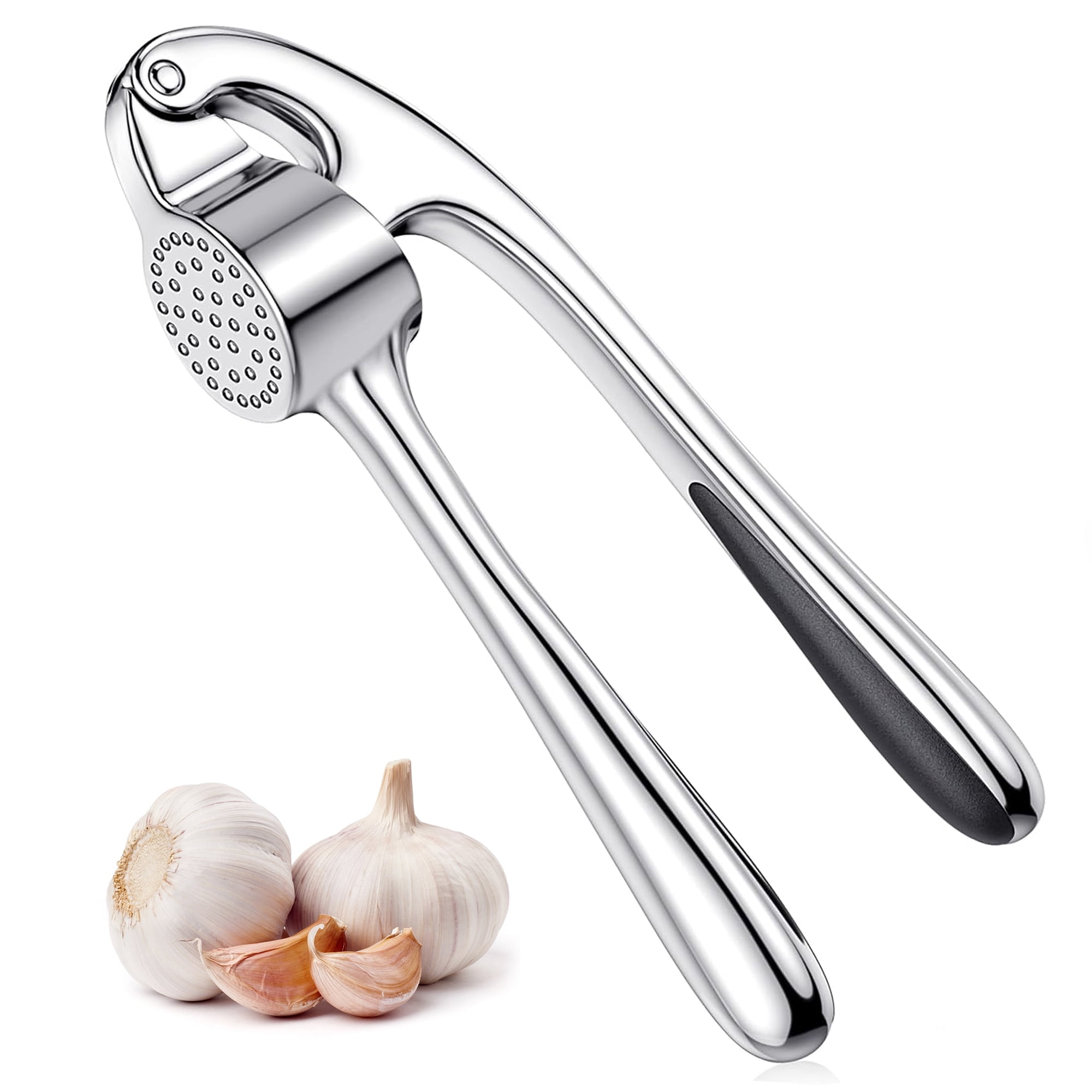
Most manual garlic presses use two connected handles and a small chamber. One handle carries a plunger or pressing plate, while the other supports the chamber. When you bring the handles together, the plate pushes garlic toward the holes in the chamber.
The handles provide leverage. This means the tool can apply more pressure to the garlic than your fingers could apply directly. However, leverage does not remove all resistance. If the holes are blocked or the clove is too large, the handles may still need considerable force.
A press with long, comfortable handles may feel easier to use because the handle design gives your hand more leverage. The chamber size, hinge quality, handle shape, and pressing plate fit also affect how smoothly it works.
Chamber
The small space where the garlic sits before pressing.
Plunger
The moving part that pushes garlic toward the holes.
Perforated plate
The surface with small holes through which the crushed garlic passes.
Hinge
The joint that connects the handles and allows them to move.
1. Check for Clogged Garlic Press Holes
Blocked holes are a good first suspect when a garlic press suddenly becomes difficult to use. Garlic paste contains moisture and small pieces of garlic fiber. Some of this material can remain inside the holes after each use.
When the residue dries, it becomes harder to remove. The next clove has less room to pass through, so the pressing plate meets more resistance. Even a small amount of buildup can affect several holes at once.
Look closely at the pressing surface. If some holes appear dark, filled, or covered with dried garlic, clean them before trying another clove. Do not keep squeezing a blocked press, because extra force can strain the hinge or bend a weak part.
Source: s.alicdn.com
What to look for
Dried paste, small garlic fibers, dark spots, or holes that no longer look open.
Best first action
Rinse the chamber and gently clear the holes with a soft brush or the cleaning tool supplied with the press.
How to Clear Blocked Holes
Open the press and remove any remaining garlic. Rinse the pressing area under warm running water to soften loose residue. If the garlic has dried, let the part soak briefly in warm water if the manufacturer’s care instructions allow it.
Use a soft dish brush to work across the perforated plate. A small nylon brush can reach spots that a sponge may miss. If your press includes a matching cleaning comb, use it as directed.
Rinse the tool again and inspect both sides of the holes. The surface should look clear, with no visible paste blocking the openings. Dry the press well before storing it if its material or care instructions call for dry storage.
Avoid sharp metal tools
Knives, needles, and sharp picks can scratch the surface, damage the holes, or slip and injure your hand.
Clean after each use
Fresh residue is easier to remove than dried garlic left on the screen.
Check the cleaning guide
Some presses have removable baskets or dishwasher-safe parts, while others require hand washing.
2. You May Be Using Cloves That Are Too Large
An oversized garlic clove can make a press feel much harder to close. The chamber has a fixed amount of space. When a large clove fills too much of that space, the pressing plate may struggle to move it through the small holes.
This is common with large garlic bulbs found in many American grocery stores. Clove sizes vary by variety, growing conditions, and storage. A clove that fits comfortably in one press may be too large for another.
The simple fix is to divide a large clove into smaller pieces. You do not need to crush the clove by hand first. Cut it into two or more pieces with a kitchen knife, then place a manageable amount in the chamber.
Source: cookingapplianceworld.com
Small cloves
Usually fit more easily into compact chambers.
Large cloves
May need to be cut into smaller pieces before pressing.
Multiple cloves
Should be pressed in separate batches if the chamber cannot hold them comfortably.
How Much Garlic Should You Put in a Press?
Use only enough garlic to fit inside the chamber without packing it tightly. The clove should sit below the rim, and the pressing plate should have room to move toward the perforated surface.
For a small press, one large clove may be too much. For a larger model, two small cloves may fit. There is no universal number because chamber sizes differ.
Try one small piece first. If the handles close smoothly and garlic comes through the holes, the amount is suitable. If the handles stop early, open the press and reduce the load rather than forcing it.
A useful rule
Leave enough room for the pressing plate to move without the garlic being tightly packed.
A common mistake
Adding several cloves at once to save time can increase pressure and make the tool harder to operate.
3. The Garlic May Be Too Dry or Firm
Older or poorly stored garlic can be firmer and less flexible than fresh, sound cloves. A dry clove may resist the pressing plate, especially when the chamber is small or the holes are narrow.
Garlic also loses moisture as it ages. A clove that has become shriveled or rubbery may not crush as smoothly as a plump clove. This does not mean every older clove is unusable, but its texture can affect how easily it passes through a press.
Check the garlic before loading it. A firm, plump clove with no signs of spoilage is generally easier to work with than one that is badly dried. If the clove is simply large, cut it into smaller pieces. Do not soak garlic to make it soft, as added water can change the texture and flavor of your recipe.
Source: as2.ftcdn.net
Fresh garlic
A sound, plump clove usually has a texture that is easier to crush.
Very dry garlic
May resist the plunger and create more pressure during pressing.
Spoiled garlic
Should not be used if it is moldy, rotten, or has other clear signs of spoilage.
Can You Press Garlic Straight From the Refrigerator?
Yes. Refrigerated garlic can be pressed if it is in good condition and fits the chamber. However, very cold garlic may feel firmer than garlic kept at a suitable room temperature.
If the clove is cold, you can let it sit briefly while preparing the other ingredients. There is no need to heat it or add water. Keep peeled garlic covered and follow safe food-storage practices.
If the press remains difficult to squeeze after the garlic has warmed slightly, inspect the holes, load size, and hinge. Temperature alone should not be assumed to explain a press that consistently jams.
Check texture
Look for firm, sound cloves rather than shriveled or spoiled ones.
Avoid unnecessary treatment
Do not microwave or soak cloves just to make them easier to press.
4. A Stiff or Dirty Hinge May Be Causing the Problem
If your garlic press is hard to squeeze even when the chamber is empty, check the hinge. The hinge allows the handles to pivot. If it is dirty, corroded, damaged, or poorly aligned, the handles may not move freely.
Food particles can collect near the joint. Dried water spots or residue may also make the area feel rough. On an older press, wear can affect the fit between the moving parts.
Open and close the empty press slowly. Notice whether the handles move smoothly throughout their range. A press that catches, grinds, twists, or stops at one point may have a mechanical problem rather than a garlic problem.
Source: c8.alamy.com
Dirt near the joint
Can make the hinge move less freely.
Corrosion
Can roughen metal surfaces and weaken parts over time.
Bent hinge
Can cause the handles or pressing plate to move out of alignment.
How to Check and Clean the Hinge
Wash the hinge area according to the manufacturer’s instructions. Use a soft brush to remove visible food particles, then rinse and dry the joint. Move the handles gently while cleaning so you can reach accessible areas.
Do not pull the handles apart or try to bend the hinge back into place. Many presses have joints that are not designed for user repair. Forcing the joint can cause permanent damage.
If the empty press still catches or feels unusually stiff after cleaning, check the warranty or contact the manufacturer. Replace the press if the hinge is cracked, badly corroded, loose, or visibly bent.
Safe cleaning
Use warm water, mild dish soap, and a soft brush when permitted by the care instructions.
Avoid force
Do not twist, hammer, or bend the handles to free a stuck joint.
Check the fit
The pressing plate should move toward the chamber without rubbing heavily against one side.
5. Your Garlic Press May Have a Design or Quality Problem
Some garlic presses need more hand strength than others because of their design. A short handle gives you less leverage than a longer handle. A narrow grip can also feel uncomfortable, even when the pressing mechanism works as intended.
The material and construction matter too. A poorly fitted pressing plate may rub against the chamber. Thin or weak handles may flex under pressure, while a rough hinge may make the tool feel stiff.
If your press has always been hard to use, rather than becoming difficult after months of cooking, its design may not suit your hand or the garlic you normally use. Cleaning will not correct a design that requires more force than you can comfortably apply.
Source: s.alicdn.com
Handle length
Longer handles can provide more leverage, depending on the hinge and chamber design.
Grip shape
Rounded, wide, or padded grips may feel more comfortable during use.
Chamber size
A larger chamber may accommodate bigger cloves, but its overall mechanism still matters.
Metal construction
A well-fitted metal body can resist flexing, but material alone does not prove that a press is easy to squeeze.
What to Look for in an Easier Garlic Press
If you need a replacement, look for comfortable handles, a smooth hinge, a stable chamber, and a pressing plate that fits properly. Try the handle shape in your hand if you can inspect the tool in a store.
A press with long handles may offer better leverage, but it should still feel balanced. A large grip can help spread pressure across your fingers. People with limited hand strength may prefer a model designed to reduce gripping effort.
Also check how the tool is cleaned. A press with an accessible chamber or a removable insert may be easier to maintain. The easiest tool to squeeze is not always the easiest one to clean, so consider both tasks.
Comfortable grip
Choose handles that fit your hand without sharp edges or narrow pressure points.
Smooth movement
Look for a hinge that opens and closes without catching.
Easy cleaning
Check whether the holes and chamber are accessible with a brush or included cleaning tool.
Clear care instructions
Confirm whether the press is hand-wash only or safe for a dishwasher.
6. Should You Peel Garlic Before Using a Press?
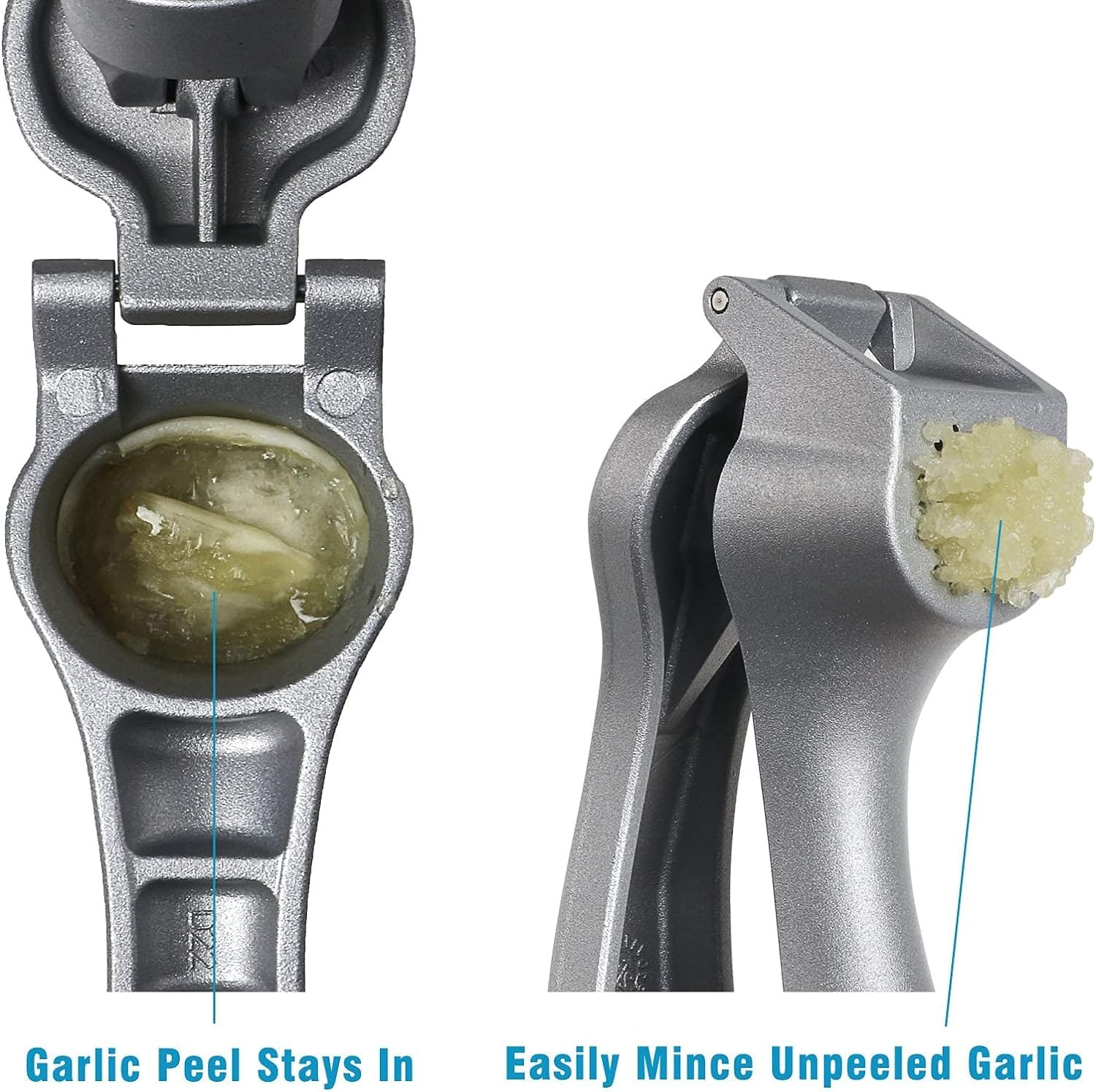
Whether you need to peel garlic depends on the design of your press. Some models are designed to press unpeeled cloves, while others work best with peeled garlic. The manufacturer’s instructions are the best guide.
Garlic skin can sometimes remain in the chamber after pressing. This may help keep the skin separate from the crushed garlic, but it can also add resistance if the chamber is small or the clove is too large.
If your press is difficult to squeeze, try a peeled clove of a suitable size. If the tool becomes easier to use, the skin or the way the clove was loaded may have contributed to the problem. If nothing changes, inspect the chamber and hinge.
Source: sc04.alicdn.com
Peeled cloves
Can reduce the amount of skin left in the chamber and may be easier to press in some designs.
Unpeeled cloves
Work with presses specifically designed to handle the skin.
Excess skin
Should be removed from the chamber before the next batch.
How to Test Whether Peeling Helps
Clean the press first so old garlic does not affect the result. Peel one small, sound clove and place it in the empty chamber. Close the handles slowly without using excessive force.
If the press works smoothly, try the same size of unpeeled clove only if the manufacturer allows it. Compare how the handles move and how much residue remains.
This simple comparison can help identify whether skin is contributing to the problem. It does not mean every press should be used with peeled cloves.
Keep the test consistent
Use cloves of similar size so the comparison is useful.
Follow the design
Do not test unpeeled garlic in a model whose instructions require peeled cloves.
7. How to Use a Garlic Press Without Straining Your Hands
The right loading method can make a garlic press easier to use. Start with a clean tool and a clove that fits the chamber. Use steady pressure rather than squeezing suddenly or trying to crush several cloves at once.
Place the press over a bowl or cutting board so the crushed garlic falls where you need it. Keep your fingers away from the hinge and the area where the handles meet. If the press stops moving, release the pressure and inspect the chamber.
Do not use your full body weight or place the press on a hard surface to force it closed. A hand tool should work within its intended range. Excess force can damage the tool and cause your hand to slip.
Source: s.alicdn.com
Start with a clean press
Remove old garlic from the holes, chamber, and hinge.
Choose a suitable clove
Use a small or medium clove, or cut a large one into pieces.
Load the chamber lightly
Avoid packing it tightly or filling it beyond its capacity.
Hold the handles firmly
Keep your grip comfortable and your fingers clear of pinch points.
Press slowly
Bring the handles together with steady, controlled pressure.
Stop if it jams
Open the press and remove the excess garlic instead of forcing the handles.
Signs That You Are Using the Press Correctly
A properly loaded press should close smoothly enough for you to control the movement. The garlic should pass through the holes without the handles twisting or the chamber shifting.
Some pressure is normal. A garlic press is a manual crushing tool, not an automatic appliance. However, sharp pain, sudden resistance, unusual metal movement, or a handle that bends are signs to stop.
After pressing, open the tool and remove the remaining skin or fiber. Rinse the chamber while the garlic is still fresh. This helps prevent the same problem from returning during the next meal.
Normal result
The handles close in a controlled way and crushed garlic comes through the holes.
Possible jam
The handles stop early, garlic stays trapped, or the chamber is packed tightly.
Possible damage
The handles bend, the hinge shifts, or metal parts rub unevenly.
8. How to Clean a Garlic Press So It Stays Easy to Squeeze
Regular cleaning is one of the best ways to prevent a garlic press from becoming stiff. Fresh garlic paste is easier to remove than residue that has dried inside the holes. Clean the tool soon after cooking rather than leaving it on the counter overnight.
First, remove loose garlic and rinse the chamber with warm water. Add a little dish soap and use a soft brush to clean the perforated plate, the inside of the chamber, and the accessible hinge area.
Rinse away the soap and inspect the holes. If the press has removable parts, take them apart only as the instructions allow. Dry the tool as directed and store it in a clean, dry place.
Source: images.ctfassets.net
Warm water
Helps loosen fresh garlic paste and small food particles.
Mild dish soap
Removes food residue from surfaces that need washing.
Soft brush
Helps clear small holes without damaging the pressing surface.
Dry storage
Helps reduce moisture buildup and corrosion on metal parts.
Can You Put a Garlic Press in the Dishwasher?
Some garlic presses are dishwasher-safe, while others should be washed by hand. The material, finish, handle design, and construction determine the correct care method. Check the product label or manual before putting yours in the dishwasher.
Dishwasher use does not guarantee that every garlic hole will become clear. Small pieces of garlic can remain trapped even after a wash cycle. Inspect the chamber when the cycle ends and brush away any residue that remains.
If the press has a wooden handle, a special coating, or mixed materials, hand washing may be the better choice when required by its care instructions. Do not assume that a stainless steel pressing surface makes the entire tool dishwasher-safe.
Dishwasher-safe model
Follow the maker’s instructions for placement, temperature, and cleaning.
Hand-wash model
Use warm water, mild soap, and a soft brush.
After washing
Check the holes and hinge for leftover garlic and moisture.
How Often Should You Clean It?
Clean the press after every use. Even if you only crush one clove, small bits of garlic may remain inside the holes.
For regular cooks, a quick rinse immediately after pressing can save time later. Give the tool a more careful brush cleaning whenever you see residue or notice that the handles are becoming harder to close.
After each use
Remove garlic, rinse, and wash the chamber.
When movement changes
Inspect and clean the hinge and pressing plate.
Before storage
Dry the tool according to its material and care instructions.
9. What to Do If Your Garlic Press Is Still Hard to Squeeze
If cleaning and reducing the garlic load do not solve the problem, test the press without food. This is the simplest way to find out whether the resistance comes from the hinge or the pressing mechanism.
Open and close the empty tool slowly. If it moves freely, try one small peeled clove. If it becomes difficult only when garlic is inside, the chamber size, garlic texture, or blocked holes may still be the cause.
If the empty press is stiff, catches, or feels uneven, stop using it until you identify the problem. A bent handle, cracked joint, or loose pressing plate may make the tool unreliable. Do not try to fix a damaged metal press by bending it back with pliers.
Step 1: Remove all garlic
Empty the chamber and clear visible residue.
Step 2: Test the empty hinge
Move the handles slowly and check for catching, grinding, or uneven motion.
Step 3: Inspect alignment
Check whether the pressing plate sits straight above the chamber.
Step 4: Test a small clove
Use one suitable clove if the empty tool moves normally.
Step 5: Decide whether to replace it
Replace a press with structural damage or persistent mechanical resistance.
When Should You Replace a Garlic Press?
Replace the press if its body is cracked, its handles are badly bent, or the hinge no longer holds the parts in proper alignment. These problems can affect control and may create sharp edges or pinch hazards.
A press with heavy corrosion, loose components, or a pressing plate that catches against the chamber may also be unsuitable for continued use. Cleaning cannot restore damaged metal or correct a badly misaligned joint.
If the tool is under warranty, contact the maker before discarding it. For an inexpensive press with no available repair or replacement parts, buying a better-fitting model may be the more practical choice.
Replace it
When you see cracks, serious bends, sharp damage, or a loose hinge.
Seek manufacturer support
When the tool is new and the mechanism is stiff despite correct use.
Keep using it
Only when the tool is undamaged, clean, aligned, and works with a suitable amount of garlic.
10. Garlic Press Troubleshooting: Symptoms and Likely Causes
The way your garlic press behaves can help narrow down the problem. A press that moves freely when empty but jams with garlic needs a different fix from one that feels stiff even when there is nothing inside.
Use the table below as a quick guide. It connects common symptoms with likely causes and a sensible first action. These are troubleshooting possibilities, not a guarantee that one cause explains every model.
Use the symptom first
Identify exactly when the press becomes difficult to close.
Change one thing at a time
Clean the holes, reduce the load, or test the hinge separately so you can identify the cause.
Quick Troubleshooting Table
Compare the symptom you notice with the possible cause and first action below. If the problem continues after the suggested check, inspect the press for damage or consult its manufacturer.
Hard to squeeze only with garlic inside
Possible cause: a large clove, overfilled chamber, or clogged holes. First action: remove the garlic, clean the screen, and test one small clove.
Hard to squeeze even when empty
Possible cause: a stiff hinge, corrosion, or misalignment. First action: clean the accessible joint and inspect for damage.
Garlic stays inside the chamber
Possible cause: blocked holes, unsuitable clove size, or a pressing plate that does not reach the chamber correctly. First action: clean and inspect the pressing surface.
One handle moves unevenly
Possible cause: a bent handle or damaged hinge. First action: stop forcing the tool and check whether replacement is needed.
Press works after cleaning but jams later
Possible cause: residue builds up during use. First action: rinse and brush the press after each batch.
Hands hurt while pressing
Possible cause: poor grip, insufficient leverage, excessive load, or a mechanical fault. First action: stop, reduce the load, and consider a more ergonomic design.
11. Common Mistakes That Make Garlic Pressing Harder
A few common habits can make a good garlic press feel like a poor one. Most problems come from overloading the chamber, leaving residue behind, or trying to force the tool through resistance.
Changing these habits can make garlic preparation easier without buying another kitchen tool. It can also help protect the hinge and handles from unnecessary strain.
Overfilling the chamber
Pressing too many cloves at once creates extra resistance. Use smaller batches.
Ignoring dried residue
Old garlic blocks the holes and makes future use harder. Clean the tool right away.
Using very large cloves whole
A large clove may not fit properly. Cut it into smaller pieces.
Forcing a jammed press
Excess pressure can bend handles or damage the hinge. Open the press and remove the obstruction.
Using sharp objects to clean holes
Sharp metal tools can damage the surface and injure your fingers. Choose a soft brush or the supplied cleaner.
Storing the press wet
Trapped moisture can contribute to corrosion on metal parts. Follow the maker’s drying instructions.
Assuming every model works the same way
Some presses accept unpeeled cloves or have removable chambers, while others do not. Follow the instructions for your model.
Can You Use a Garlic Press for Ginger?
Some garlic presses are marketed for ginger, but not every model is suitable. Ginger is fibrous and can create a different kind of resistance from garlic. Tough fibers may become trapped in the holes or remain in the chamber.
If the manufacturer allows ginger use, cut it into small pieces and work with a modest amount. Stop if the press becomes difficult to close. A grater or a knife may be a better tool for firm ginger roots.
Do not assume that a press that handles garlic easily will handle every root or vegetable. The size, texture, and fiber content of the food affect the result.
Use only compatible foods
Check the maker’s instructions before pressing ginger or other firm ingredients.
Cut fibrous foods
Smaller pieces may be easier to manage, but they do not make every press suitable for ginger.
12. Alternatives If You Cannot Squeeze a Garlic Press Easily
You do not need to struggle with a manual press to prepare garlic. If the tool causes hand pain or requires more force than you can comfortably apply, another method may be a better fit.
A chef’s knife, a fine grater, or a small food chopper can all prepare garlic for cooking. Each method creates a slightly different texture, so choose based on the dish and the amount you need.
Chef’s knife
Finely chop garlic with a sharp, stable knife on a cutting board. This gives you control over the size of the pieces.
Knife and cutting board
Crush a peeled clove with the flat side of a broad knife only if you can do so safely, keeping your fingers clear of the blade.
Fine grater
Grate a peeled clove into a fine paste. Use a stable grater and keep your fingers away from the sharp surface.
Small food chopper
Useful when preparing several cloves or larger amounts for sauces and marinades.
Pre-minced garlic
A convenient option when you want to avoid manual crushing, although its flavor and texture may differ from freshly prepared garlic.
Which Garlic Preparation Method Is Easiest?
For one or two cloves, a knife or fine grater may be faster than cleaning a press. For several cloves, a food chopper can reduce repetitive hand pressure. If you prefer crushed garlic, a well-maintained press may still be convenient.
The best option depends on your hand comfort, cooking needs, and desired texture. A press creates crushed garlic, while a knife gives you more control over the size of the pieces.
If gripping and squeezing cause pain, do not keep testing your hand strength. Choose a method that lets you prepare food without discomfort.
For a small amount
Use a knife or grater.
For several cloves
Consider a small food chopper.
For crushed garlic
Use a clean, correctly sized garlic press that moves smoothly.
Frequently Asked Questions
Q
Why is my new garlic press so hard to squeeze?
A new garlic press may feel stiff because of its hinge design, tight mechanical fit, or the amount of leverage provided by its handles. It may also be difficult to use if the chamber is small or the cloves are too large.
Test the press empty first. If the handles catch or feel unusually stiff, check the instructions and contact the manufacturer rather than trying to loosen the joint by force.
Q
Should a garlic press be hard to close?
A garlic press needs some pressure to crush a clove, but it should not require excessive force or cause sharp hand pain. The handles should move in a controlled way, and the pressing plate should stay aligned with the chamber.
If the tool stops suddenly, twists, or bends, release the handles and inspect it. Do not assume that more pressure is the correct solution.
Q
Does peeling garlic make it easier to press?
It can. Peeled garlic may pass through some presses more easily because there is no skin taking up space in the chamber. However, some models are specifically designed for unpeeled cloves.
Check your model’s instructions and try a small peeled clove if the design allows it. Make sure the chamber is clean before comparing results.
Q
Why does my garlic press leave garlic inside instead of pushing it through?
The holes may be clogged, the clove may be too large, or the pressing plate may not be reaching the chamber correctly. Old garlic residue can also prevent fresh garlic from passing through.
Remove the garlic, clean the holes, and check the pressing plate for alignment. If the problem continues with a small clove, inspect the tool for damage.
Q
Can I use oil on a stiff garlic press hinge?
Do not apply cooking oil or household lubricant without checking the manufacturer’s care instructions. Lubricants can collect dirt, affect food-contact surfaces, or damage certain finishes.
Clean and dry the accessible hinge first. If it remains stiff, contact the maker to ask whether a food-contact-safe lubricant is approved for that specific model.
Q
Is a stainless steel garlic press easier to squeeze?
Not automatically. Stainless steel can provide a strong, corrosion-resistant construction when properly made, but ease of squeezing also depends on handle length, grip shape, hinge movement, chamber size, and alignment.
Choose a press based on how comfortably it moves and fits your hand, not just the material listed on the packaging.
Q
Can a garlic press be too full?
Yes. Packing too much garlic into the chamber can prevent the pressing plate from moving freely. This creates extra resistance and may leave garlic trapped inside.
Use a smaller amount, press in batches, and leave enough room for the plate to move toward the perforated surface.
Q
What if my garlic press hurts my hands?
Stop using it if squeezing causes pain. Check for a jam, reduce the amount of garlic, and make sure the handles are not damaged or misaligned.
If the press still requires uncomfortable effort, choose a more ergonomic model or prepare garlic with a knife, grater, or food chopper. Do not force a hand tool through pain.
✦ Wrapping Up
Conclusion
A garlic press that is hard to squeeze usually has a simple problem behind it. Blocked holes, oversized cloves, an overfilled chamber, and a stiff hinge are all common things to check. Start by cleaning the tool and testing its movement while empty.
If the hinge moves freely, try one small clove and use steady pressure. If the press remains difficult to operate without garlic, inspect the handles and pressing plate for damage. A bent or cracked tool should not be forced back into use.
A clean, properly loaded press should make garlic preparation easier, not turn it into a struggle. If your hands still hurt, switching to a knife, grater, or food chopper is a sensible choice.
💡 Key Takeaway
Empty your garlic press, clean every hole with a soft brush, test the empty hinge, and then try one small clove. If the tool still catches, bends, or causes pain, stop using it and consider a replacement.