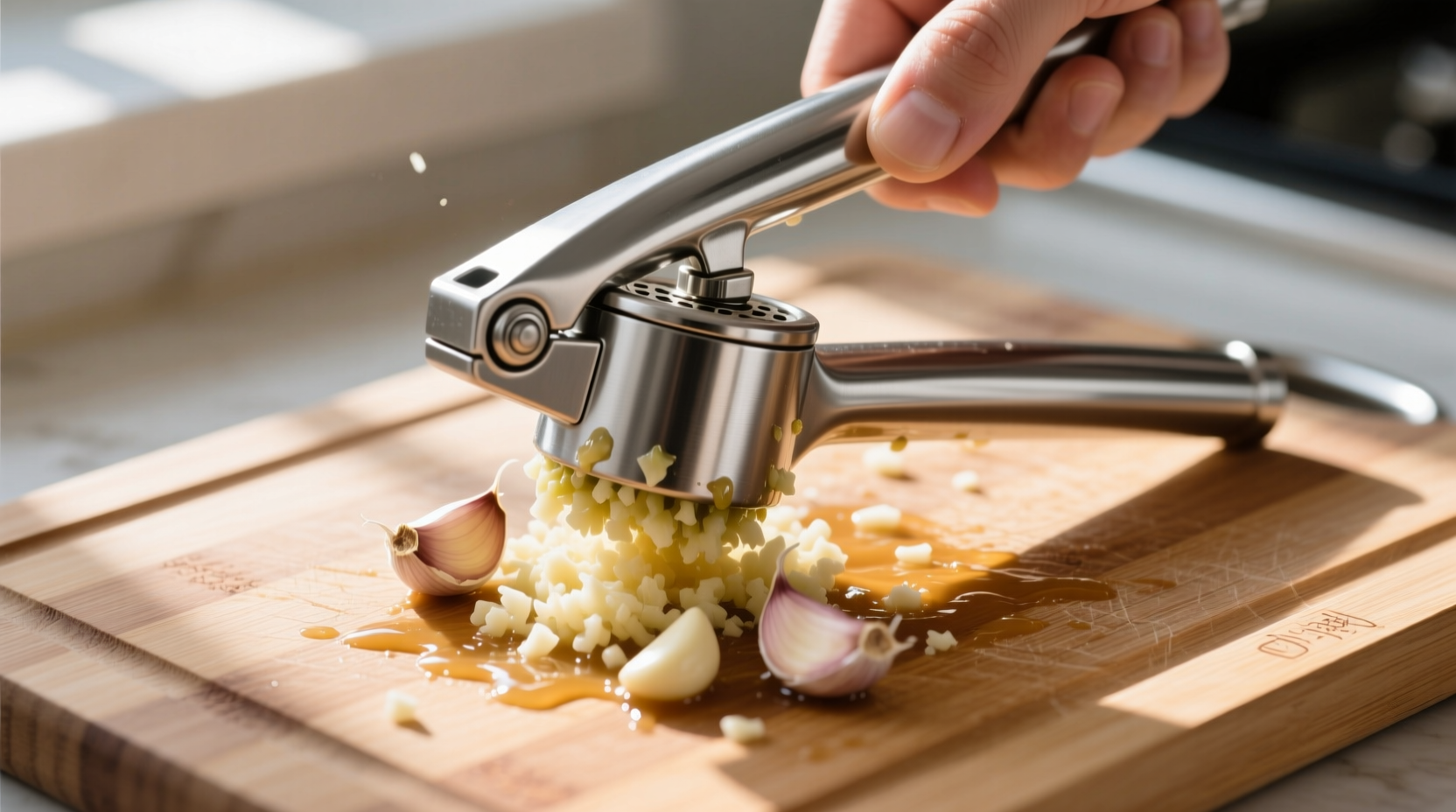
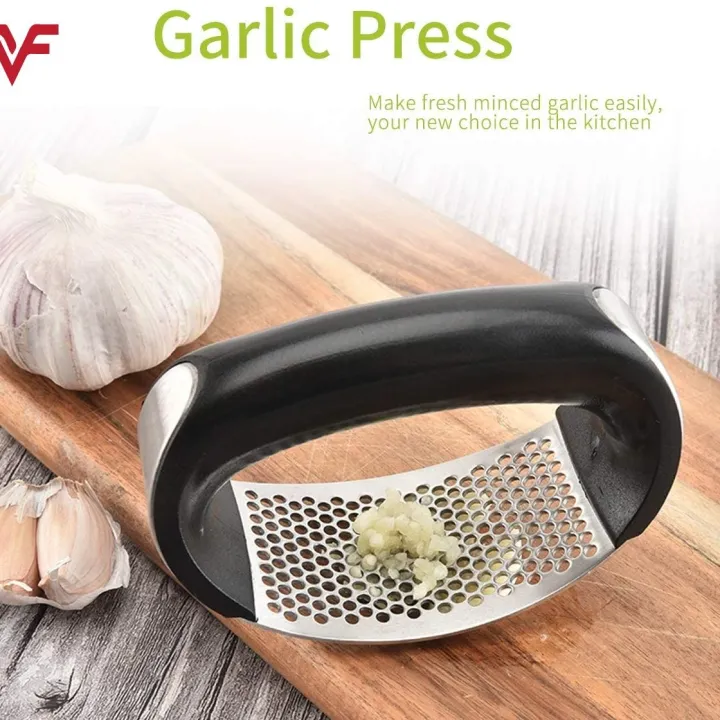
A rocker garlic crusher is often easier to clean and store, while a squeeze press offers more control and can crush several cloves at once.
Garlic is a staple in many American kitchens. It adds flavor to pasta sauce, roasted chicken, burgers, soups, stir-fries, and homemade salad dressings. Whether you cook a quick weeknight meal or prepare a large family dinner, crushing fresh garlic can be one of those small tasks that takes more effort than expected.
Two common tools can make this job easier: the rocker garlic crusher and the traditional squeeze press. Both break down garlic cloves, but they use different movements. A rocker works with downward pressure and a gentle rocking motion, while a squeeze press uses two handles to push garlic through small holes.
So, is a rocker garlic crusher better than a squeeze press? The answer depends on your hands, cooking habits, preferred garlic texture, and cleaning routine. A rocker often wins for simple cleanup and easy storage. A squeeze press may be more useful when you need to process several cloves quickly or want a familiar one-handed crushing motion.
This guide compares both tools in practical terms. You will learn how each one works, what kind of garlic it produces, how much effort it takes, and which option makes more sense for your kitchen.
How Does a Rocker Garlic Crusher Differ From a Squeeze Press?
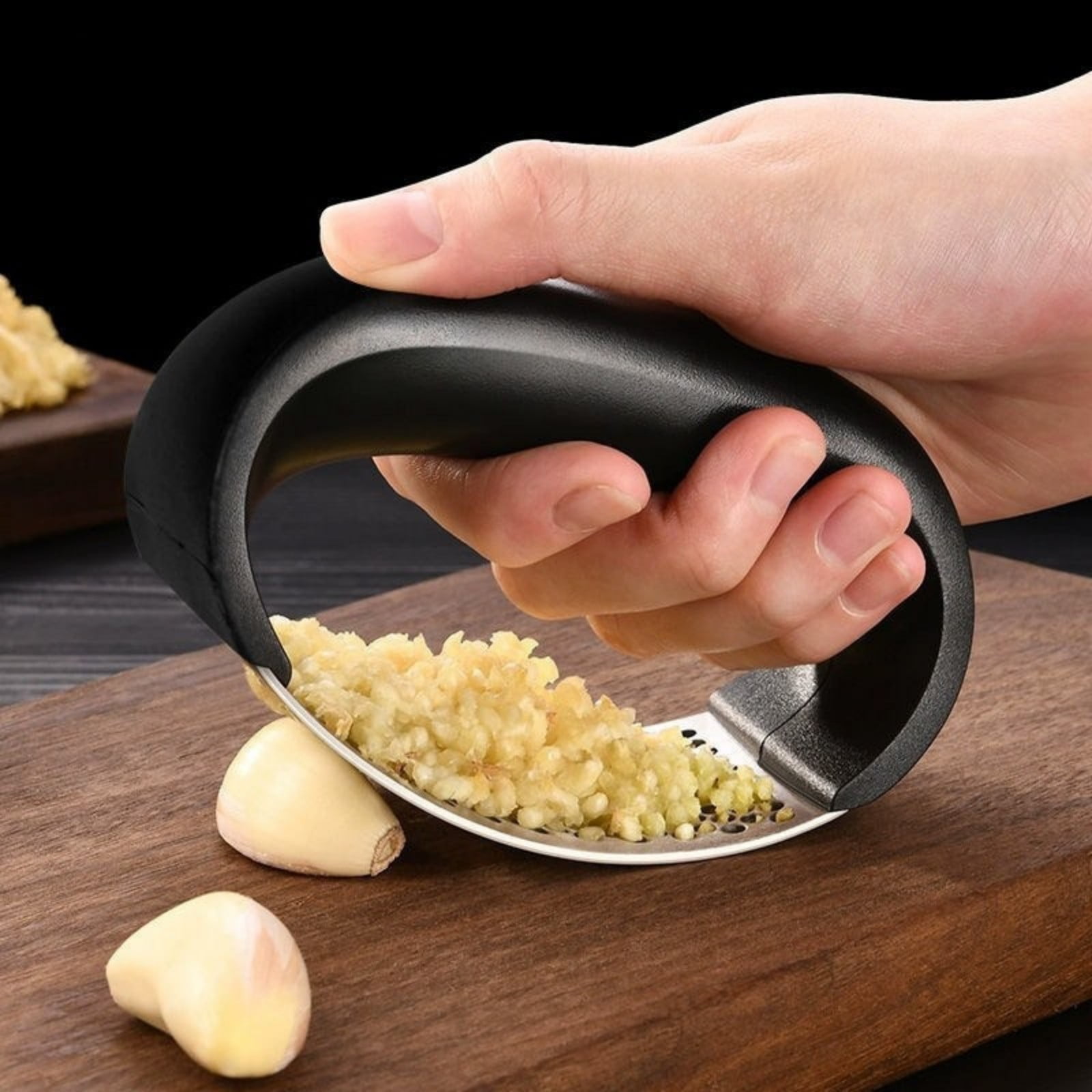
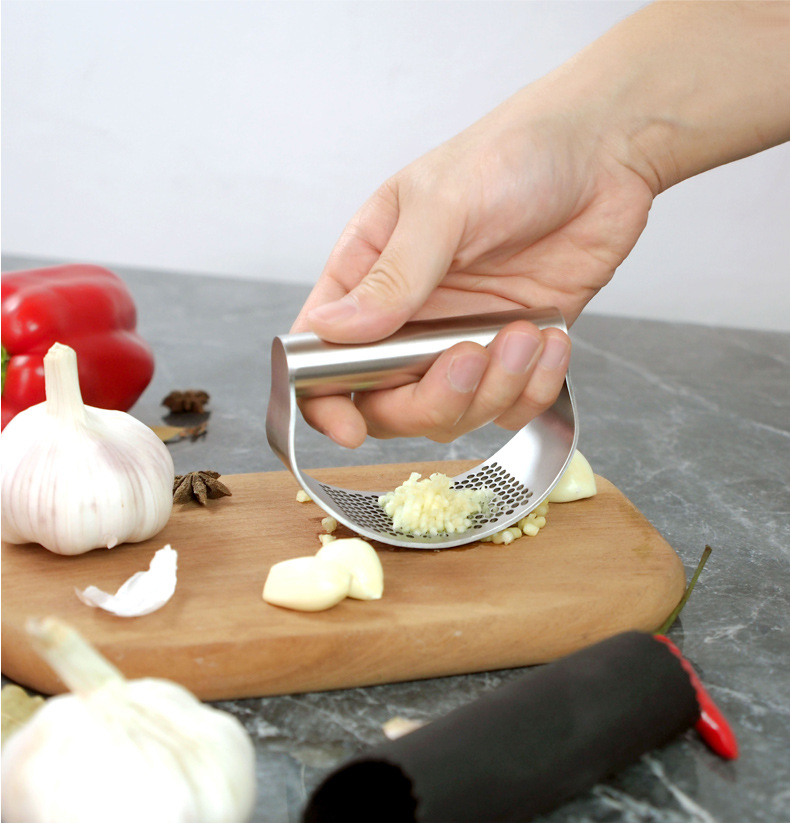
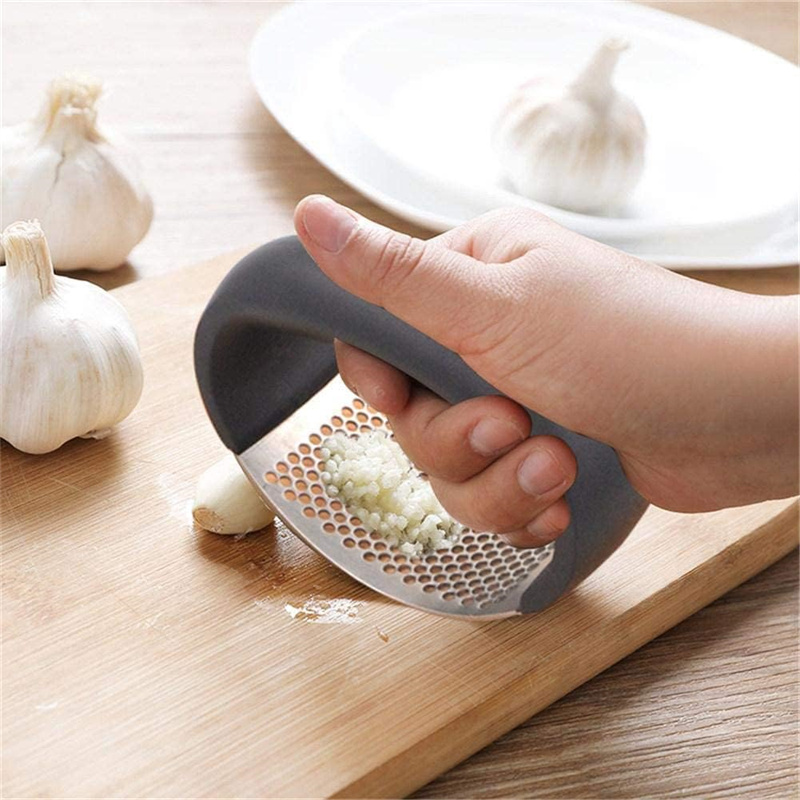
The main difference is how each tool applies pressure. A rocker garlic crusher has a curved metal plate with small holes or openings. You place a garlic clove on a cutting board, set the curved tool over it, and press down while moving the handle back and forth.
The garlic passes through the openings and collects beneath the tool. You then lift the rocker and scrape off the crushed garlic. The motion is similar to rocking a small kitchen knife, although the tool is designed specifically for garlic.
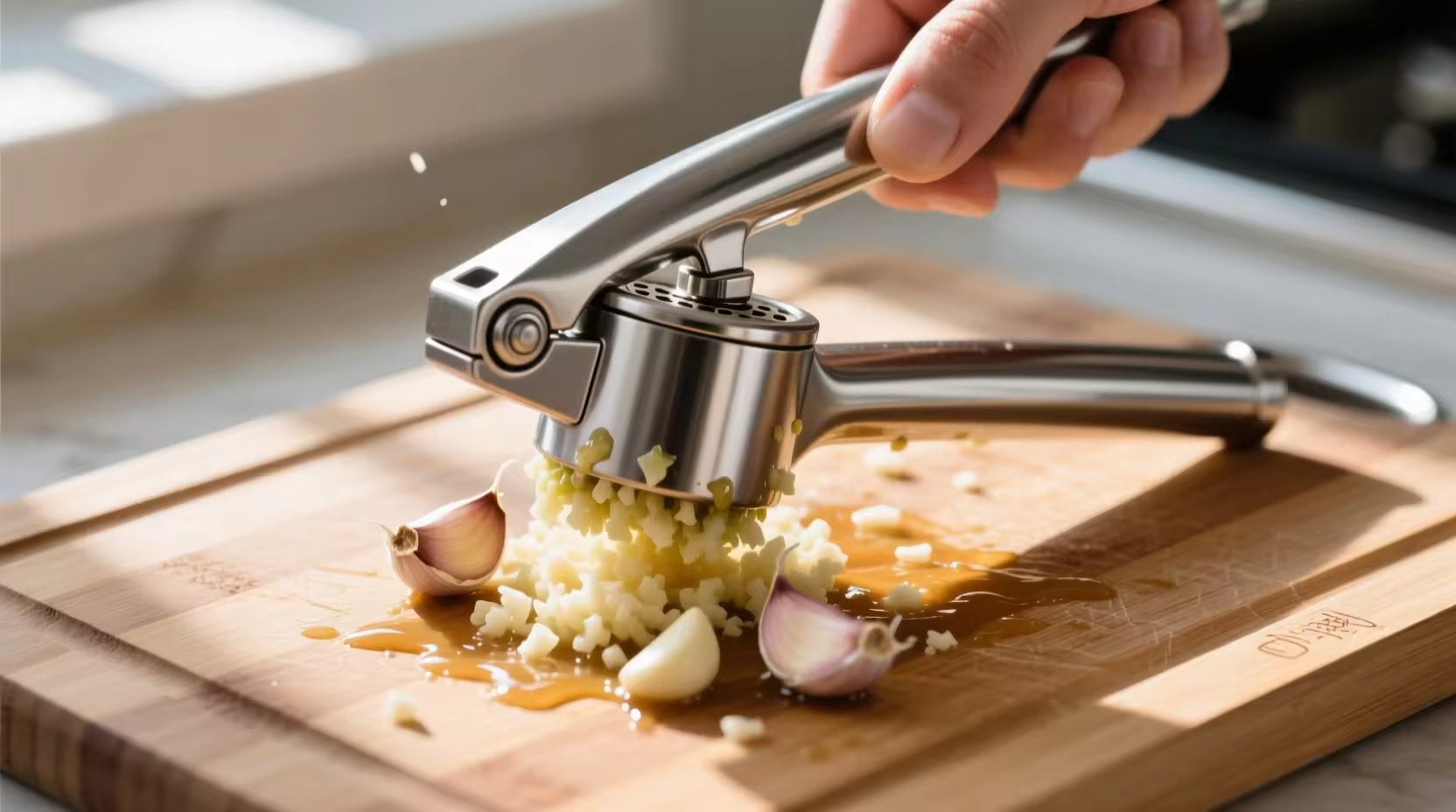
A squeeze press has two handles joined by a hinge. One side holds a small chamber for garlic, while the other side has a plunger. When you close the handles, the plunger pushes the garlic through a perforated plate.
The squeeze press usually keeps the garlic inside its chamber until you open the handles. This can make it convenient for direct use over a bowl or pan, although some garlic may remain inside after pressing.
Both tools perform the same basic job, but the rocker uses pressure from your palm and the squeeze press uses force from your fingers and hand.
Source: amazon.com
Rocker garlic crusher
A curved crushing plate that breaks garlic through a rocking motion against a flat surface.
Squeeze garlic press
A hinged tool that pushes garlic through small holes when you close its handles.
Shared purpose
Both tools reduce whole garlic cloves into smaller pieces without requiring a knife and manual chopping.
How a Rocker Crusher Works
Start with a clean, dry cutting board. Place one or more peeled garlic cloves beneath the curved plate, depending on the size of the tool. Hold the handle and press down firmly.
Move the rocker slightly from side to side. The curved base rolls across the garlic and forces it through the holes. Repeat the motion until the cloves are crushed to your preferred texture.
Lift the tool and use a small spatula or spoon to collect the garlic. The crushed pieces should be ready for a sauce, marinade, or skillet.
Main movement
Downward pressure combined with a short rocking motion.
Best work surface
A stable cutting board or another flat, food-safe surface.
How a Squeeze Press Works
Open the handles and place a garlic clove inside the chamber. Close the handles slowly until the plunger pushes the clove against the perforated plate.
Crushed garlic comes through the small openings. Open the handles and remove any garlic left inside the chamber before preparing another batch.
Some models have a removable insert or cleaning pin. These features can help remove trapped pieces, but they add parts that may need attention during cleanup.
Main movement
Squeezing two handles together to push garlic through a perforated surface.
Best work surface
A bowl, cutting board, or cooking area where you can collect the crushed garlic.
Is a Rocker Garlic Crusher Easier to Use?
A rocker garlic crusher can feel easier to use because it relies on palm pressure instead of a strong finger grip. You press the handle against a flat surface and move it gently from side to side.
This motion can be comfortable for people who find small squeeze handles awkward. It also gives you a clear view of the garlic as you crush it, so you can stop when the texture looks right.
However, the rocker still requires some downward force. You must hold the handle securely and keep the tool in contact with the cutting board. It may not feel comfortable for someone who has trouble pressing down with their palm or controlling repeated wrist movements.
A squeeze press is also simple to operate. You place garlic in the chamber and close the handles. Many people already understand this movement, so there is little learning involved.
The challenge is that some squeeze presses need a firm grip. Large or firm cloves can require more effort, especially when the chamber is small or the handles do not provide much leverage.
There is no universal winner for ease of use. The rocker may suit someone who prefers palm pressure, while the squeeze press may suit someone who finds a closing-hand movement more natural.
Source: walmart.com
Choose a rocker if
You prefer pressing with your palm and moving a tool over a flat cutting board.
Choose a squeeze press if
You prefer a simple handle-closing movement and are comfortable applying grip pressure.
Consider your hand comfort
Arthritis, reduced grip strength, wrist discomfort, and limited movement can change which design feels easier.
Which Tool Is Better for People With Weak Grip Strength?
A rocker may be worth trying if gripping and squeezing two handles causes discomfort. Its wider handle can let you distribute pressure across your palm rather than relying only on your fingers.
Still, a rocker is not automatically suitable for people with weak hands. It requires enough control to press down and rock the plate. If that movement causes pain, stop rather than forcing the tool.
For someone with limited hand strength, a garlic chopper with a large handle or an electric mini chopper may be another option. A knife and a stable cutting board can also work when the user can handle them safely.
Important check
Try the movement without garlic first, using light pressure to see whether the handle and wrist position feel comfortable.
Which Garlic Crusher Produces Better Results?
Both tools can produce finely crushed garlic, so the result depends more on the design and how you use the tool than on its category alone.
A rocker presses the clove against a flat surface. Its holes break the garlic into small pieces that collect underneath. You can make another pass if you want a finer result.
A squeeze press forces garlic through a perforated plate. This often creates a moist, finely crushed texture that mixes well into sauces, dressings, and marinades.
Some squeeze presses leave a thin piece of garlic skin or fibrous material inside the chamber. This does not mean the tool has failed. It simply means that not every part of the clove passed through the holes.
A rocker may also leave some garlic attached to the plate. You may need to scrape it away before adding it to your recipe.
For a smooth garlic paste, neither tool is guaranteed to produce the same result as a mortar and pestle. A mortar lets you crush and grind garlic further, especially when you add salt or oil.
Source: cjdropshipping.com
For sauces
Both tools can make small garlic pieces that blend into tomato sauce, pasta sauce, and salad dressing.
For marinades
A squeeze press can produce a moist texture that spreads easily through oil and other liquids.
For coarse garlic
A rocker lets you stop crushing early or use fewer rocking movements.
For smooth paste
A mortar and pestle may offer more control than either press.
Does a Rocker Crush Garlic More Evenly?
A rocker can crush garlic evenly when the cloves are placed beneath the perforated area and the tool stays flat against the cutting board. A steady motion helps spread pressure across the clove.
However, a large clove may not fit fully beneath a small rocker. You may need to cut it into smaller pieces before crushing it.
The same issue can affect squeeze presses. A chamber that is too small may not hold a large clove properly. In either case, tool size matters.
For consistent results
Use cloves of a similar size and apply steady pressure rather than rushing the crushing motion.
Does Crushed Garlic Taste Different From Minced Garlic?
Crushed garlic can taste stronger than larger chopped pieces because crushing damages more of the clove’s cells. This allows garlic compounds to mix and react after the clove is broken apart.
The difference is not exclusive to rockers or squeeze presses. Both can damage garlic cells and release their flavor. The final taste also depends on how finely the garlic is crushed and how long it sits before cooking.
If you want a milder garlic flavor, use larger chopped pieces or cook the garlic gently. For a stronger flavor, finely crush it and use it in a recipe that calls for raw or lightly cooked garlic.
Which Tool Is Easier to Clean?
A rocker garlic crusher usually has the advantage when it comes to cleaning. Its simple shape often has fewer parts and no deep chamber where wet garlic can collect.
After crushing, you can lift the rocker and rinse the underside under running water. A small brush can remove pieces trapped in the holes. Dry the tool well before putting it away.
A squeeze press can take more time to clean because garlic often sticks inside its chamber and around the perforated plate. Small holes can trap fibers and skin, making a quick rinse less effective.
Some squeeze presses have a built-in cleaning attachment. This can help push out trapped garlic, but the attachment itself also needs to be cleaned.
Dishwasher safety depends on the exact product. Stainless steel does not automatically mean every part is dishwasher-safe. Check the manufacturer’s care instructions before placing a garlic crusher in the dishwasher.
If you cook with garlic often, cleaning should be a major part of your decision. A tool that takes only a short rinse and brush may be more pleasant to use every day.
Source: cjdropshipping.com
Rocker cleaning
Rinse the crushing plate and brush any garlic out of the holes before drying.
Squeeze press cleaning
Open the chamber, remove leftover garlic, and clean the perforated plate and hinge area.
Dishwasher care
Follow the exact manufacturer’s instructions instead of assuming that all metal tools can go in the dishwasher.
How to Clean a Rocker Garlic Crusher
Clean the rocker soon after use. Fresh garlic is usually easier to remove before it dries and sticks inside the small holes.
First, rinse the underside with warm running water. Use a soft dish brush to remove any pieces that remain in the openings.
Wash the handle and curved plate with dish soap. Rinse away the soap, inspect both sides, and dry the tool with a clean towel.
Avoid sharp metal picks that can scratch the surface or damage a coating. If garlic remains stuck, soak the tool briefly in warm, soapy water before brushing again.
Best cleaning habit
Rinse the tool immediately after use instead of leaving garlic to dry on the plate.
How to Clean a Squeeze Garlic Press
Open the press as far as the design allows. Remove large garlic pieces from the chamber with a spoon or the cleaning tool supplied by the manufacturer.
Rinse the chamber and perforated plate under warm water. Use a small soft brush to clear the holes and wash around the hinge.
If the press has a removable insert, take it out only as directed by the manufacturer. Wash all removable parts, rinse them, and allow them to dry fully.
Do not force the handles apart or bend the hinge to reach hidden areas. A damaged joint can make the press difficult to use.
Best cleaning habit
Remove garlic residue before it dries and check the holes for trapped fibers.
Is a Rocker Garlic Crusher More Durable?
Durability depends on material quality, construction, and care. A simple rocker has fewer moving parts than a hinged squeeze press, which can reduce the number of parts that may loosen or wear out.
Many rocker crushers use stainless steel. A well-made stainless steel model can resist ordinary kitchen wear and is easy to wash. However, not all stainless steel grades and finishes offer the same corrosion resistance.
A squeeze press has a hinge, handles, and a pressure plate. These parts must work together each time you close the tool. A poorly made hinge may become loose, while thin handles may bend under heavy pressure.
This does not mean that every rocker lasts longer. A thin rocker can bend, develop sharp edges, or lose its shape if it is made poorly. A sturdy squeeze press can serve a home cook for many years with proper care.
Look closely at the joints, plate thickness, finish, and handle design before choosing either style. Avoid tools with rough edges, loose parts, or visible gaps that collect food.
Source: daraz.lk
Material
Look for clearly described food-contact materials and a smooth finish that is easy to clean.
Construction
Check for a firm handle, stable crushing plate, and no loose joints or sharp burrs.
Maintenance
Wash away food residue, dry the tool, and follow the care instructions.
Is Stainless Steel Better Than Aluminum?
Stainless steel is a common choice for garlic crushers because it is strong and generally resists rust better than untreated iron or ordinary steel. It can also withstand regular washing when the product is properly made.
Aluminum is lighter and can be easy to handle. However, its surface and finish may react differently to cleaning products and food exposure. Some aluminum tools also have coatings that require special care.
The material name alone does not tell you everything about quality. A well-built tool with clear care instructions is a better choice than a poorly finished tool simply because its product listing uses the word stainless steel.
Practical choice
Choose a smooth, sturdy tool with a clear material description and suitable cleaning instructions.
Which Garlic Crusher Is Better for Everyday Cooking?
The best tool for everyday cooking depends on how much garlic you prepare and where you use it. A rocker is useful for small batches when you want a simple tool that is easy to rinse and store.
A squeeze press can be more practical when a recipe needs several cloves. Its chamber lets you load garlic and press it without moving the cloves across a cutting board.
For example, someone making a quick pasta dinner may prefer a rocker because one or two cloves are easy to crush and collect. Someone preparing a large batch of garlic marinade may prefer a squeeze press with a larger chamber.
Your cooking style also matters. If you often add garlic directly to a skillet, a squeeze press may be convenient because you can position it over the pan. A rocker requires a flat surface and a separate step to transfer the garlic.
Neither tool replaces a good chef’s knife for every task. Chopped garlic is useful when a recipe calls for distinct pieces, while crushed garlic is better when you want small pieces that spread through a dish.
Source: spice.alibaba.com
For one or two cloves
A rocker is often convenient because it is simple to position, use, and rinse.
For larger batches
A squeeze press may save repeated handling if its chamber can hold the amount you need.
For direct pan use
A squeeze press may be easier to position over a pan, provided the handles and cooking area allow safe use.
For chopped garlic
Use a knife when you want larger pieces or a texture that a crusher cannot easily provide.
Can You Crush Garlic Without Peeling It?
Some garlic presses are designed to handle unpeeled cloves, but the results depend on the chamber and plate design. The skin may remain inside while the softer garlic passes through.
A rocker can also separate some of the skin from the crushed garlic, but loose skin may spread around the cutting board. Peeling the cloves first usually makes both tools easier to clean.
If you want to try unpeeled garlic, start with one clove and check the manufacturer’s instructions. Do not assume that every rocker or squeeze press can handle garlic with its skin on.
Recommended approach
Peel the cloves when possible for more predictable results and easier cleanup.
Can You Use Either Tool for Ginger?
Some garlic crushers are marketed for both garlic and ginger, but that does not mean every model can handle both foods well. Ginger is fibrous and can leave long strands inside small openings.
Check the manufacturer’s instructions before using a garlic tool for ginger. Cut ginger into small pieces first if the design allows it, and clean the holes carefully afterward.
A grater or dedicated ginger tool may be a better choice when you need a fine, even ginger texture.
Rocker Garlic Crusher vs. Squeeze Press: Side-by-Side Comparison
The table below compares the two tools by their everyday features. These are general design differences, not measured performance results for every product on the market.
Individual models can differ in size, hole design, handle shape, material, and cleaning features. A well-designed squeeze press may be easier to use than a poorly made rocker, and the reverse is also true.
Source: amazon.com
Which Features Matter Most?
Ease of cleaning and hand comfort are often the most important factors. Crushing speed matters too, but a small time saving may not be worthwhile if the tool is uncomfortable or difficult to wash.
Storage is another useful point. A flat rocker can fit in a shallow drawer, while a squeeze press may need more room around its handles. Both designs are generally compact compared with electric food processors.
Cleanup
The rocker usually has the simpler shape, while the squeeze press may have more areas that collect garlic.
Hand movement
The rocker uses palm pressure and rocking, while the squeeze press uses grip and handle pressure.
Batch size
The squeeze press may be convenient for repeated cloves, depending on chamber capacity.
Comparison Table
Use this table as a starting point when choosing a tool for your kitchen.
Ease of use
Rocker: requires a rocking motion. Squeeze press: requires closing the handles.
Hand comfort
Rocker: may reduce the need for a strong finger grip. Squeeze press: may need more grip strength.
Cleaning
Rocker: usually easier to rinse. Squeeze press: may trap garlic inside the chamber.
Garlic texture
Rocker: crushed pieces with texture depending on pressure and holes. Squeeze press: often moist, finely crushed garlic.
Storage
Rocker: often lies flat in a drawer. Squeeze press: needs space for the handles.
Moving parts
Rocker: usually has a simple fixed design. Squeeze press: has a hinge and moving handles.
Multiple cloves
Rocker: may require repeated crushing. Squeeze press: can process several cloves in separate loads.
Price
Both styles are available at different price levels. Build quality matters more than the design name alone.
Common Mistakes When Using a Garlic Crusher
Even a good garlic crusher can be frustrating if you use it the wrong way. Most problems come from oversized cloves, dried garlic residue, poor positioning, or too much pressure.
A few simple changes can improve the results and help protect your tool. You do not need to push as hard as possible to crush a small garlic clove.
Source: lovegreatfinds.com
Using oversized cloves
Large cloves may not fit beneath a rocker or inside a squeeze chamber. Cut them into smaller pieces when the manufacturer permits it.
Applying too much force
Excess pressure can make a tool uncomfortable to use and may damage a weak handle or hinge.
Leaving garlic inside
Old garlic dries inside the holes and makes the next cleaning session harder.
Using an unstable surface
A moving cutting board can make a rocker difficult to control. Place the board on a stable counter.
Ignoring care instructions
Dishwasher use or harsh cleaning products may damage certain finishes and components.
What If the Rocker Garlic Crusher Will Not Crush Garlic?
First, check whether the clove is too large for the crushing plate. Cut it into smaller pieces and try again with gentle, steady pressure.
Next, inspect the holes. Dried garlic or food residue can block the openings and prevent the garlic from passing through. Wash the tool and use a soft brush to clear the plate.
Check that the rocker sits flat on the cutting board. If the surface is uneven or the handle is tilted, pressure may not reach the garlic evenly.
If the tool bends, feels loose, or has a damaged edge, stop using it. Replace a damaged crusher rather than trying to force it through another batch.
First check
Make sure the cloves are small enough to fit beneath the plate.
Second check
Clear blocked holes and remove dried garlic.
Final check
Inspect the handle and plate for damage before using the tool again.
What If the Squeeze Press Is Too Hard to Close?
Open the press and check the size and position of the garlic. A large clove may be caught at an angle or may not fit the chamber properly.
Remove any old garlic from the perforated plate. Residue can prevent the plunger from moving smoothly.
Check the hinge and handle alignment. If the handles are bent or the joint is damaged, do not keep squeezing. A damaged press may fail under pressure.
If the tool is clean and undamaged but still requires more force than you can comfortably apply, consider a larger or better-leveraged model, or choose a rocker instead.
Avoid forcing it
Never use excessive force to close a jammed garlic press.
How to Choose the Right Garlic Crusher for Your Kitchen
Choose a garlic crusher by thinking about how you cook, how much garlic you use, and which hand movements feel comfortable. A lower price or attractive design should not be the only deciding factor.
If you crush garlic once or twice a week, a simple rocker may be enough. If you prepare garlic for several meals at once, a squeeze press with a suitable chamber may be more convenient.
Before buying, look at the handle shape, crushing area, material, and cleaning instructions. Product photos can help you understand the design, but they do not prove how comfortable or durable a tool will be.
Read product details carefully and check whether the manufacturer provides instructions for peeling, cleaning, and dishwasher use. If possible, inspect the tool in person to see whether the handle fits your hand.
You should also think about where the garlic will go after crushing. A rocker leaves garlic on the cutting board, while a squeeze press can be positioned over a bowl or pan. That small difference may affect your cooking routine.
Source: daraz.pk
Choose a rocker for simple cleanup
This design is worth considering if you want a compact tool with fewer parts and a quick washing routine.
Choose a squeeze press for repeated batches
Its chamber can make repeated crushing convenient when preparing larger amounts.
Check the handle first
The shape should feel secure and comfortable without requiring painful pressure.
Check the plate
Look for evenly formed holes and a smooth finish without sharp edges.
Check the care label
Confirm whether the tool needs hand washing or allows dishwasher cleaning.
Is a Rocker Garlic Crusher Worth Buying?
A rocker is worth considering if you want a straightforward way to crush garlic without dealing with a hinged chamber. Its simple design can make cleanup and storage easier.
It may not be the best choice if you dislike working on a cutting board or prefer pressing garlic directly over a bowl. Some people also find the rocking motion less natural than squeezing handles.
The best value comes from choosing a sturdy tool that solves a real problem in your kitchen. You do not need an expensive model if a basic crusher meets your needs.
When Should You Choose a Traditional Squeeze Press?
A squeeze press is a sensible choice if you already like the handle movement and want to crush garlic in repeated batches. It may also be useful when you want to hold the tool over a bowl or cooking pot.
Look for comfortable handles, a strong hinge, and a chamber that can hold the cloves you normally use. A removable cleaning insert can be helpful if the design includes one.
If cleaning is your main complaint about your current press, compare the chamber and plate design before replacing it. A new squeeze press may solve the problem without requiring a change to a rocker.
Frequently Asked Questions
Q
Is a rocker garlic crusher better for people with arthritis?
A rocker may be more comfortable for some people because it uses palm pressure instead of a strong finger grip. However, it still requires downward pressure and a controlled wrist movement.
The best option depends on the person’s range of motion and comfort. Test the movement gently before using the tool for a full batch. If either movement causes pain, consider a different garlic preparation method.
Q
Does a rocker garlic crusher make garlic finer than a squeeze press?
Not necessarily. Both tools can produce finely crushed garlic, but the final texture depends on the hole size, clove size, and pressure applied.
A squeeze press often creates moist, finely crushed pieces. A rocker can produce a similar result with repeated passes. Neither design guarantees a perfectly smooth paste.
Q
Can you use a rocker garlic crusher without peeling garlic?
Some rockers can separate garlic from parts of its skin during crushing, but the results vary by design. Loose skin may remain on the cutting board or around the crushing plate.
Peeling the cloves first is usually the easiest way to get predictable results and reduce cleanup. Check the manufacturer’s instructions before crushing unpeeled cloves.
Q
Why does garlic stick to my garlic crusher?
Garlic contains moisture and natural compounds that can make crushed pieces cling to metal surfaces. Small holes and narrow spaces can also trap garlic fibers.
Rinse the tool soon after use and remove residue with a soft brush. Avoid leaving crushed garlic to dry on the plate or inside the chamber.
Q
Can a garlic rocker replace a chef’s knife?
A rocker can replace some basic garlic crushing tasks, but it cannot replace a chef’s knife for every preparation job. A knife gives you more control over the size and shape of chopped garlic.
Use a crusher when you want small, crushed pieces. Use a knife when your recipe needs slices, larger chunks, or evenly chopped garlic.
Q
Which garlic crusher is best for cleaning?
A rocker often has an advantage because its simple shape has fewer enclosed areas. You can usually rinse the plate and brush the holes clean.
A squeeze press may need more attention around its chamber, hinge, and perforated plate. However, a model with a useful cleaning attachment can make the job easier.
Q
Can I put a rocker garlic crusher in the dishwasher?
Some rocker crushers are dishwasher-safe, but others require hand washing. The answer depends on the material, finish, handle construction, and manufacturer’s instructions.
Check the product care label before using a dishwasher. When instructions are unclear, hand washing with mild dish soap and thorough drying is a cautious choice.
✦ Wrapping Up
Conclusion
So, is a rocker garlic crusher better than a squeeze press? For many home cooks, a rocker is the better choice when easy cleaning, simple storage, and comfortable palm pressure matter most. Its straightforward design makes it useful for crushing a small amount of garlic without dealing with a hinged chamber.
A traditional squeeze press still has clear benefits. It can be convenient for repeated batches, produces moist crushed garlic, and can be held over a bowl or pan. If you are comfortable using its handles and do not mind cleaning the chamber, there is little reason to replace a good press.
The right choice comes down to your cooking routine and physical comfort. Think about the amount of garlic you prepare, the texture you want, and how much time you want to spend cleaning the tool. A sturdy, comfortable crusher that you enjoy using is more useful than a complicated gadget that stays in the drawer.
💡 Key Takeaway
Choose a rocker garlic crusher if simple cleanup and palm pressure are your priorities. Choose a squeeze press if you prefer its handle movement and need to crush several cloves in repeated batches. Before buying, check the handle comfort, hole design, material, and cleaning instructions.