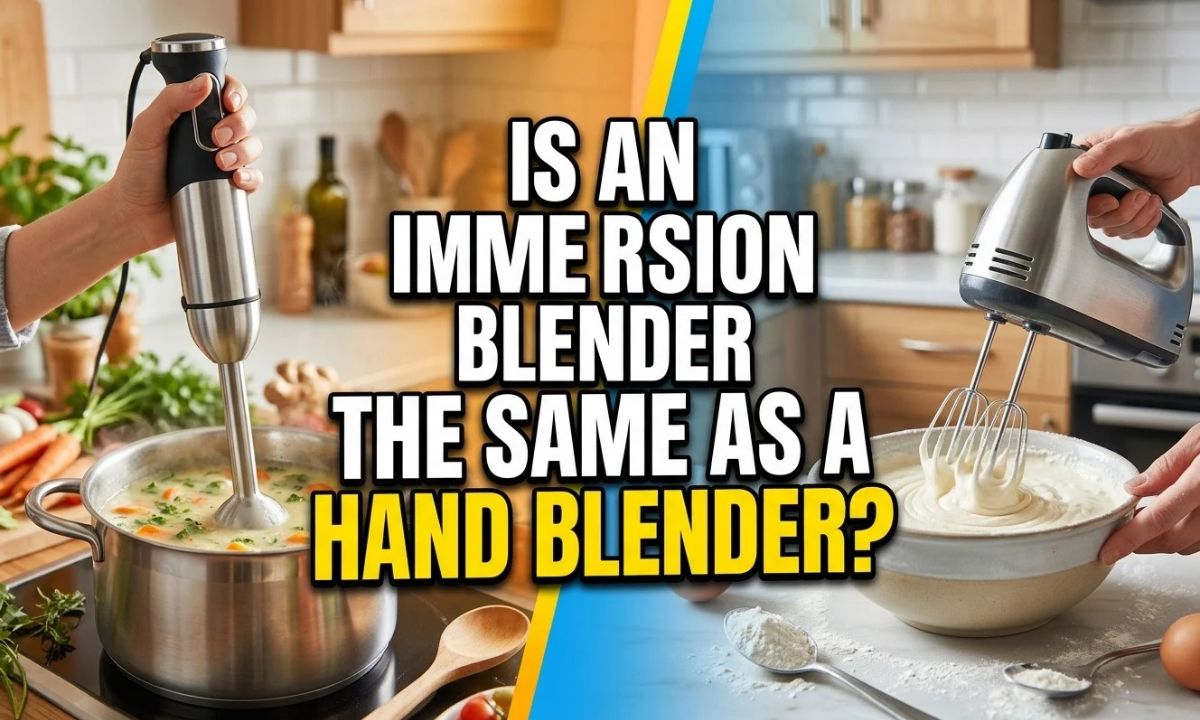
Yes. An immersion blender and a hand blender are usually the same type of handheld kitchen appliance, but names can vary by region and brand.
Across kitchens in the United States, shoppers often see the terms immersion blender, hand blender, and stick blender used for the same basic tool. The appliance has a motor handle with a blending blade at the end that you place directly into a container of food or liquid. The main idea is the same: blend ingredients without transferring them to a countertop blender jar.
The difference is usually not the tool itself but how manufacturers and stores describe it. Some brands prefer immersion blender because it explains the way the device works, while others use hand blender because you operate it by holding it in your hand. Before buying one, focus on the motor power, attachments, materials, and the foods you plan to prepare rather than the name alone.
An immersion blender is a handheld electric blender designed to mix, puree, or emulsify ingredients directly inside a bowl, pot, cup, or other container. Instead of pouring food into a separate blender jar, you lower the blending end into the ingredients and move the device through the mixture.
The appliance usually contains a motor housing, a blending shaft, and a blade guard around the cutting blades. Many models also include extra attachments such as a whisk, chopper bowl, or measuring cup. These additions can expand what the tool can do, but the core function remains direct blending.
Direct blending
The tool works inside the cooking container, which can reduce transfers and cleanup.
Compact storage
Its smaller size makes it useful for kitchens where countertop space is limited.
Why Is It Called An Immersion Blender?
The word immersion refers to placing the blade end into the ingredients. The blending action happens while the tool is partly surrounded by the food being processed. This design makes it practical for foods like soups, sauces, and purees that are already in a pot or bowl.
Common names
Stick blender and hand blender are common alternative names for the same category of appliance.
Is A Hand Blender Different From An Immersion Blender?
In most cases, a hand blender is not a different appliance from an immersion blender. The two terms are commonly used interchangeably. A customer searching for either name is generally looking for a handheld device that blends food without using a traditional blender pitcher.
Some confusion happens because the word hand blender can describe other handheld mixing devices in certain contexts. However, in kitchen appliance stores, the term usually refers to the same product category as an immersion blender.
Same basic design
Both names usually refer to a handheld motor unit with a blade attachment.
Different marketing language
Brands may choose different names to describe similar kitchen tools.
Immersion Blender Vs Hand Blender At A Glance
This comparison shows why the names often create confusion.
Immersion blender
Usually emphasizes that the tool is placed directly into food.
Hand blender
Usually emphasizes that the user holds the appliance while blending.
What Can You Use An Immersion Blender For?
An immersion blender is useful for many everyday kitchen tasks, especially when ingredients are soft, liquid, or already cooked. It is commonly used for blending soups directly in a cooking pot, creating smooth sauces, mixing dressings, and making purees.
The tool works best when the blade can move freely through the ingredients. Thick mixtures, very hard foods, or large amounts of ice may require a different appliance depending on the model and manufacturer instructions.
Soups
Blend cooked vegetables and liquids into smooth soups without moving hot food into another container.
Smoothies
Some models can handle soft fruits and liquids for smaller smoothie portions.
Sauces
Useful for creating smooth sauces and emulsified mixtures.
Foods That May Not Work Well
A handheld blender is not always a replacement for a countertop blender or food processor. Very hard ingredients, large quantities, and extremely thick mixtures can place more demand on the motor and blade assembly.
Hard foods
Some hard ingredients may require specialized equipment.
Large batches
A countertop appliance may be more practical for preparing large amounts.
How To Choose Between A Handheld Blender And Other Blenders
The right choice depends on what you cook most often. An immersion blender is convenient for cooks who regularly prepare soups, sauces, and small batches. A countertop blender may be better for large smoothies, crushing ice, or high-volume blending.
Think about storage, cleaning, food types, and how often you will use the appliance. A smaller tool that matches your routine can be more useful than a larger appliance that stays unused.
Choose an immersion blender if
You want quick blending in pots, bowls, and small containers.
Choose a countertop blender if
You often make large batches or need stronger blending for specific ingredients.
Important Features To Compare
When comparing models, look beyond the name. Features that may affect daily use include power, removable parts, attachment options, comfort, and cleaning needs.
Motor strength
Affects how easily the appliance handles different mixtures.
Attachments
Extra tools may add functions such as whisking or chopping.
Common Mistakes And Safety Tips
Using an immersion blender is simple, but a few mistakes can affect results or create unnecessary mess. Always follow the instructions provided with your specific appliance because designs and limits differ between models.
Hot liquids require extra care. Keep the blade fully covered by the mixture when blending and avoid sudden movements that can cause splashing. Allow enough space in the container for ingredients to move safely.
Do not run it dry
The blades are designed to work with ingredients around them.
Clean carefully
Remove food residue from the blade area according to the manufacturer’s instructions.
Use suitable containers
Avoid containers that may be damaged by contact with the blade.
When An Immersion Blender Is Not Enough
If your main goal is crushing ice, making large frozen drinks, or processing very dense mixtures, another appliance may better match the task. The handheld design prioritizes convenience and control rather than replacing every type of blender.
Consider alternatives
A countertop blender or food processor may better suit demanding tasks.
Frequently Asked Questions
Q
Are immersion blenders and stick blenders the same?
Yes. Stick blender is another common name for an immersion blender. These names usually describe the same handheld kitchen appliance.
Q
Can I use a hand blender instead of a regular blender?
Sometimes. A hand blender can replace a regular blender for tasks like soups and sauces, but it may not handle every job that a countertop blender can.
Q
Can an immersion blender make smoothies?
Many immersion blenders can make small smoothies when used with suitable ingredients and enough liquid. Results depend on the model and recipe.
Q
Why do brands use different names for the same blender?
Manufacturers often choose names that describe how customers use the appliance. Immersion blender explains the blending method, while hand blender describes how it is held.
Q
What should I check before buying an immersion blender?
Check the tasks you want to perform, available attachments, cleaning requirements, and manufacturer instructions for limitations.
✦ Wrapping Up
Conclusion
An immersion blender and a hand blender are usually two names for the same handheld kitchen tool. The important difference is not the label but whether the appliance matches the foods you want to prepare.
For soups, sauces, purees, and smaller blending jobs, this type of blender can save time and reduce cleanup. For heavier tasks, a different appliance may be a better fit.
💡 Key Takeaway
Choose based on your cooking habits, the foods you prepare, and the limits of the specific model rather than the name printed on the box.