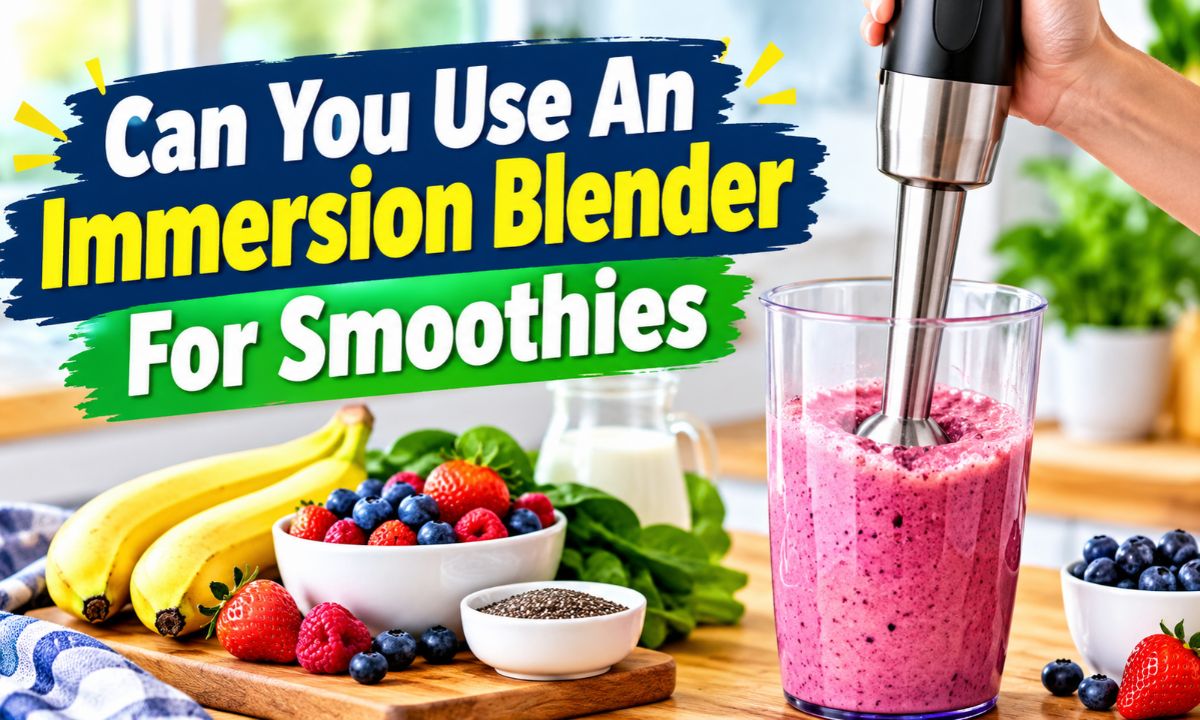
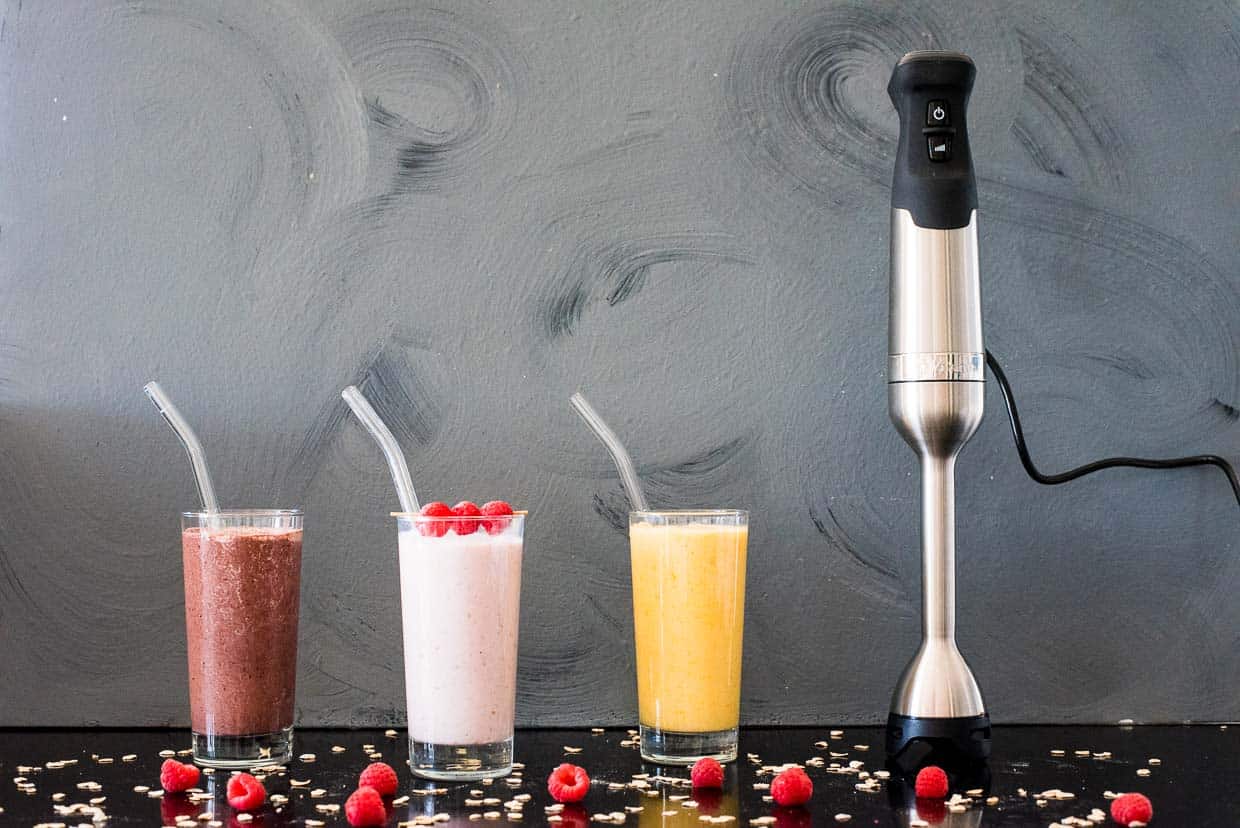
Yes, you can use an immersion blender for smoothies, especially for soft fruits, liquids, and small batches.
Many home cooks in the United States use immersion blenders as a compact alternative to countertop blenders for everyday kitchen tasks. An immersion blender can make smoothies when the ingredients are prepared properly, the container is tall enough, and the recipe does not require heavy crushing power.
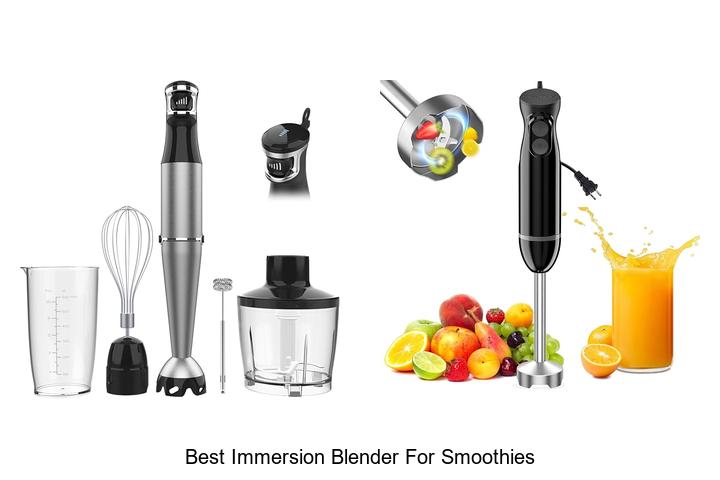
An immersion blender works differently from a traditional blender. Instead of pulling ingredients down into a large jar, the handheld blade moves through the mixture inside a container. This makes it convenient for quick drinks, but it also means some frozen or very hard ingredients may need extra preparation before blending.
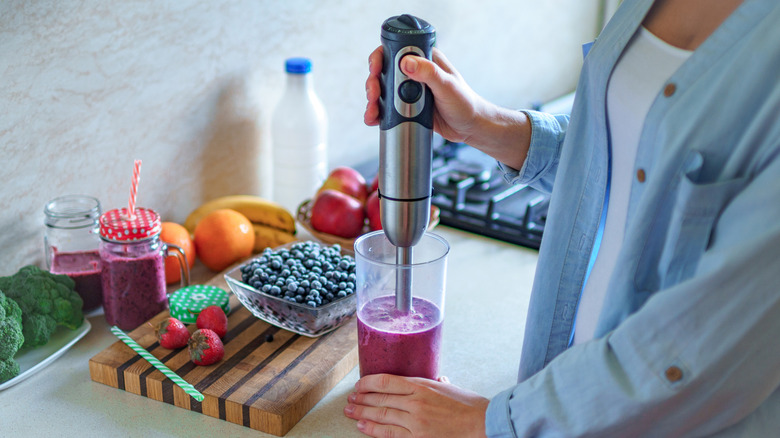
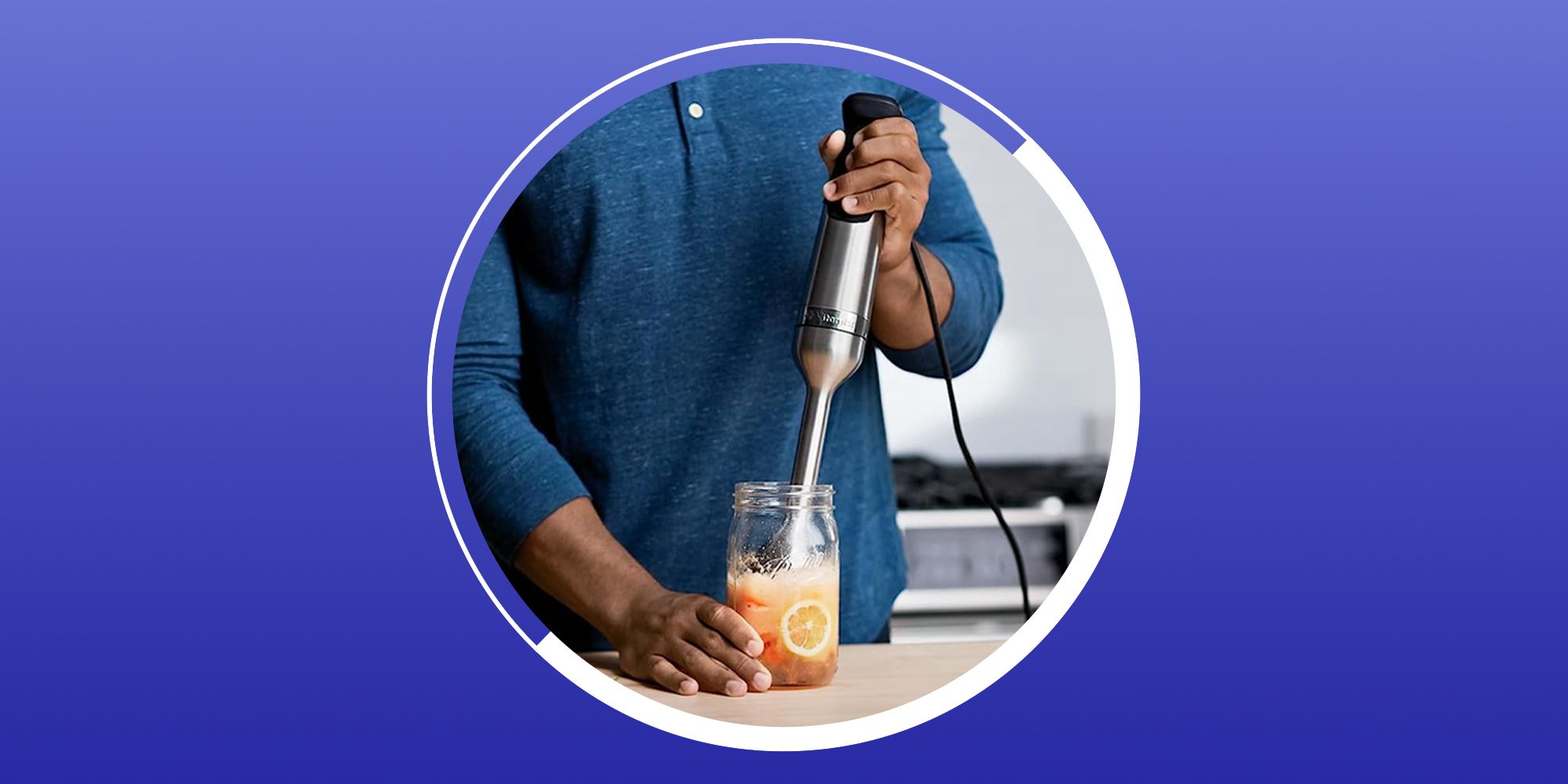
An immersion blender makes smoothies by using a small spinning blade at the end of a handheld motor unit. When the blade moves through the ingredients, it cuts and mixes food into a smoother texture. The user controls where the blade moves, which can help with small portions.
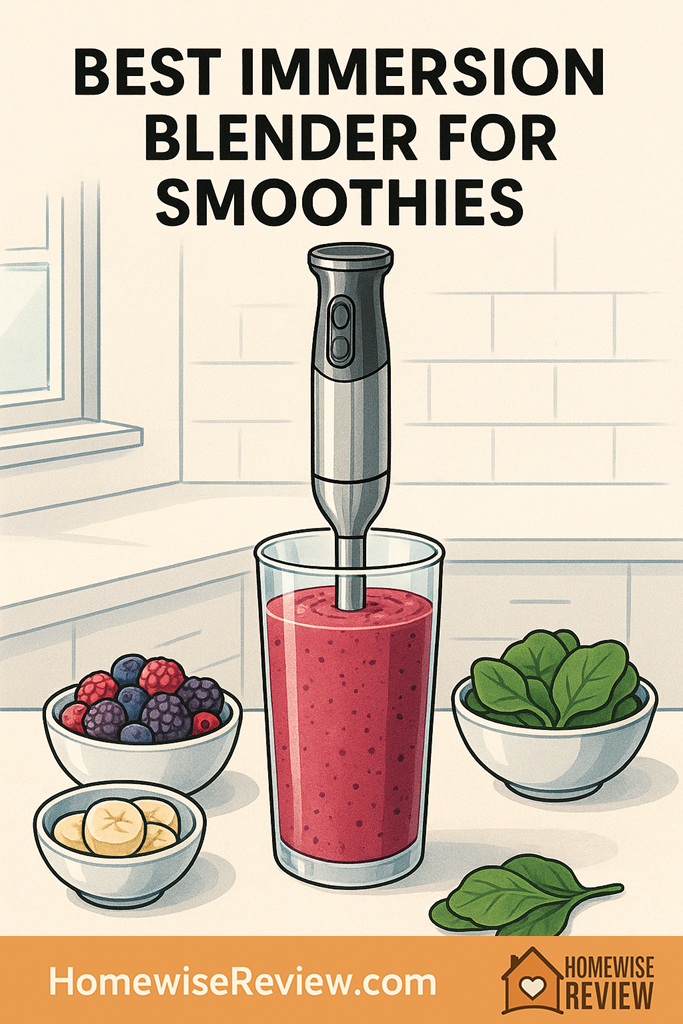
The best results come from ingredients that are easy for the blade to process. Bananas, berries, mango, yogurt, milk, nut butter, and protein powder are common smoothie ingredients that usually work well. The mixture should have enough liquid so the blade can move freely.
Source: sagealphagal.com
Good ingredients for immersion blender smoothies
Soft fruits, dairy products, plant-based milk, and liquid supplements are generally easier to blend than large chunks of frozen food.
Ingredients that need more care
Large ice cubes, hard frozen fruit, nuts, and fibrous vegetables can be difficult because immersion blenders may not have the same jar circulation as countertop models.
Immersion Blender Compared With A Countertop Blender
A countertop blender is usually designed for larger batches and stronger blending tasks. Its jar shape helps move ingredients toward the blades, which can create a more uniform smoothie texture.
An immersion blender offers convenience because it takes less storage space and can blend directly in a cup or bowl. The trade-off is that it may require more attention while blending and may not handle every smoothie recipe equally well.
Choose immersion blender
Best for quick single servings, soft ingredients, limited storage space, and easy cleanup.
Choose countertop blender
Better for large batches, frequent frozen smoothies, and recipes needing very fine texture.
How To Make A Smoothie With An Immersion Blender
Making a smoothie with an immersion blender is simple when the ingredients are added in the right order. Start with liquids, then add softer ingredients, and finish with thicker items. This helps the blade move without getting trapped.
A tall, narrow container often works better than a wide bowl because the ingredients stay closer to the blade. Many immersion blenders include blending cups, but a deep kitchen container can also work if it allows enough room for movement.
Source: fooddrinklife.com
Step 1: Add liquid first
Pour milk, juice, yogurt, or another liquid into the container before adding solid ingredients.
Step 2: Add soft ingredients
Place fruits, powders, and other easy-to-blend ingredients into the container.
Step 3: Blend with slow movement
Keep the blade head below the surface and move it gently up and down to combine the mixture.
Step 4: Adjust texture
Add more liquid for a thinner smoothie or more soft ingredients for a thicker drink.
Signs Your Smoothie Is Blending Correctly
A properly blended smoothie should have an even texture without large pieces of fruit or powder pockets. The blade should move smoothly through the mixture instead of stopping repeatedly.
If the motor sounds strained or the ingredients stop moving, the mixture may be too thick. Adding a small amount of liquid can often help the blade work more effectively.
Smooth movement
The blender should move through the mixture without excessive resistance.
Consistent texture
The drink should look evenly mixed rather than separated into layers.
What Smoothie Ingredients Work Best With An Immersion Blender
Ingredient choice has a major effect on smoothie quality. An immersion blender is most effective when ingredients are soft enough for the blade to break apart without excessive force.
Fresh fruit and thawed frozen fruit are often easier to process than large frozen pieces. Cutting ingredients into smaller pieces also reduces the workload on the blade.
Source: homewisereview.com
Fruit
Bananas, strawberries, blueberries, peaches, and mango are commonly suitable when prepared into manageable pieces.
Liquids
Milk, oat milk, almond milk, coconut milk, and juice help create movement around the blade.
Protein additions
Protein powder and yogurt can blend well when enough liquid is present.
Greens
Tender greens may work, but tougher vegetables may require more blending time or a different blender type.
Can You Use Frozen Fruit In An Immersion Blender
You can use frozen fruit, but the results depend on the blender model and the size of the fruit pieces. Frozen berries that are small or partially thawed are usually easier than large frozen chunks.
For a smoother process, let frozen fruit sit for a few minutes, cut large pieces smaller, and add enough liquid before blending.
Helpful adjustment
Use smaller frozen pieces and avoid filling the container too tightly.
Common Mistakes When Making Smoothies With An Immersion Blender
Most problems with immersion blender smoothies come from technique rather than the basic ability of the appliance. Changing ingredient preparation and blending habits can improve results.
Using the wrong container, adding too many thick ingredients, or running the blender without enough liquid can make the process harder and may place extra stress on the motor.
Source: hips.hearstapps.com
Using a shallow bowl
A shallow container can cause splashing and make it harder for ingredients to stay near the blade.
Frequent starts and stops may happen when ingredients are too thick or unevenly prepared.
Safety Tips For Using An Immersion Blender
Always keep the blade guard covered by ingredients when blending to reduce splashing. Follow the instructions provided with the specific immersion blender model because designs and limitations vary.
Avoid placing the blender head near your hands while the motor is running. Unplug the device before cleaning around the blade area.
Prevent splashes
Use a deep container and start at a lower speed if your model allows speed adjustment.
Protect the appliance
Avoid forcing the blade through extremely hard ingredients that the manufacturer does not recommend.
When An Immersion Blender May Not Be The Best Choice
An immersion blender is useful for many smoothies, but it is not always the best tool. People who make large family-sized batches or frequently blend very hard ingredients may prefer a countertop blender.
The right choice depends on how often you make smoothies, the ingredients you use, and the texture you want. A quick breakfast smoothie has different needs than a thick frozen dessert drink.
Source: jumbopalacerestaurant.com
Large quantities
A countertop blender may save time when preparing multiple servings.
Very thick recipes
Frozen bowls and dense mixtures may require stronger blending power.
Ultra-smooth texture
Some users may prefer the texture produced by a blender designed specifically for high-volume blending.
A Simple Decision Guide
Choose an immersion blender if you usually make one or two servings, value easy storage, and use mostly soft ingredients. Choose another blender style if your recipes demand heavy ice crushing or large volumes.
Best fit
Small daily smoothies with easy-to-blend ingredients.
How To Clean And Maintain An Immersion Blender After Smoothies
Cleaning an immersion blender after making smoothies helps prevent dried fruit and protein residue from building around the blade area. Many models have detachable blending shafts that can be washed separately, but users should follow the product instructions.
Rinse the blending attachment soon after use. A quick cleanup is usually easier than removing hardened smoothie residue later.
Source: kitchenaid-h.assetsadobe.com
Rinse immediately
Remove leftover smoothie before it dries around the blade.
Check manufacturer guidance
Cleaning methods vary between models, especially for removable parts and electrical components.
Frequently Asked Questions
Q
Can an immersion blender crush ice for smoothies?
Some immersion blenders may handle small amounts of ice, but many are not designed for large ice cubes. Check the manufacturer instructions for your specific model before adding hard ingredients.
Q
Can I make a protein shake with an immersion blender?
Yes. Protein powder, milk, yogurt, and other soft ingredients usually work well when there is enough liquid for the blade to move.
Q
Why is my immersion blender not making a smooth smoothie?
Common causes include ingredients that are too large, not enough liquid, an unsuitable container, or ingredients that are too hard for the blender design.
Q
How much smoothie can I make with an immersion blender?
The practical amount depends on the container size and blender design. Immersion blenders are usually more convenient for smaller batches than large servings.
Q
Is an immersion blender good for daily smoothies?
Yes, it can be a convenient option for daily smoothies if your recipes use ingredients the blender can handle and you prefer quick cleanup.
✦ Wrapping Up
Conclusion
An immersion blender can make smoothies successfully when you match the ingredients and technique to what the appliance is designed to do. It works especially well for quick servings made with soft fruit, liquids, and other easy-to-blend ingredients.
The best results come from using a tall container, adding enough liquid, preparing ingredients into smaller pieces, and understanding the limits of your specific model. For many home kitchens, an immersion blender is a practical tool for simple everyday smoothies.
💡 Key Takeaway
Start with soft ingredients and enough liquid, then adjust your recipe based on the texture your immersion blender can create.