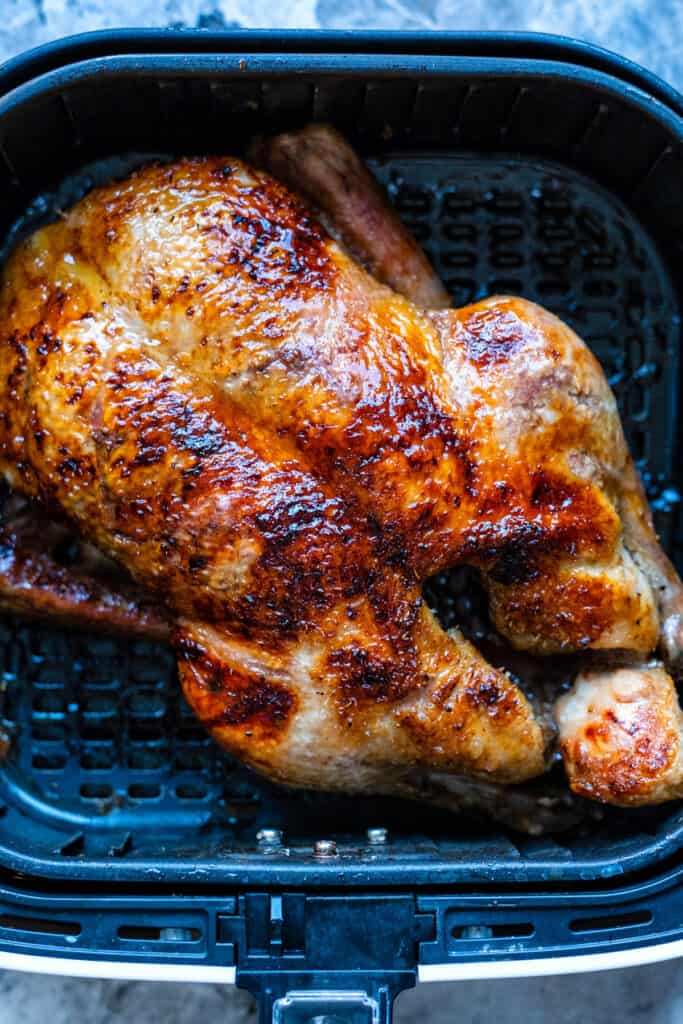
Yes, you can cook a whole duck in an air fryer if the bird fits comfortably and your appliance has enough room for hot air to circulate. Proper preparation, regular fat removal, and a food thermometer are essential for good results.
Planning a special Sunday dinner, Thanksgiving meal, or Christmas feast in an American kitchen? A whole roasted duck can make a wonderful centerpiece. However, you do not always need a large oven to prepare one. A suitable air fryer can roast a whole duck while helping its skin turn brown and crisp.
Duck is different from chicken. It has a thick layer of fat beneath its skin, dark meat, and a rich flavor. That fat needs time to melt and drain during cooking. If the bird is too large for the basket, the hot air cannot reach all its surfaces, which can lead to uneven cooking and soft skin.
The best approach is to choose a duck that fits your appliance, thaw it fully, dry the skin, and cook it in stages. Check the breast and thigh with a food thermometer rather than relying on a fixed cooking time. The USDA recommends cooking all poultry, including duck, to at least 165°F (74°C).
This guide explains how to prepare a whole duck, how to choose a suitable air fryer, how to manage the fat, and how to tell when the meat is ready. It also covers common problems and safer alternatives when your air fryer is too small.
Yes, an air fryer can cook a whole duck. Its heating element and fan move hot air around the bird, much like a small convection oven. This can brown the skin while the meat cooks inside.
However, not every air fryer can handle a whole duck. Basket size, cooking chamber height, bird weight, and the space around the duck all affect the result. A duck that touches the heating element or blocks the fan is not a suitable fit.
A whole duck also releases a lot of fat as it cooks. Your appliance must have a safe way to collect that fat without allowing it to overflow or touch the heating element. Check your appliance manual before attempting this meal.
Whole-duck air fryer recipes use different cooking temperatures and times. For example, some methods use a lower temperature first and finish at a higher temperature to brown the skin. These are recipe approaches, not universal settings for every machine.
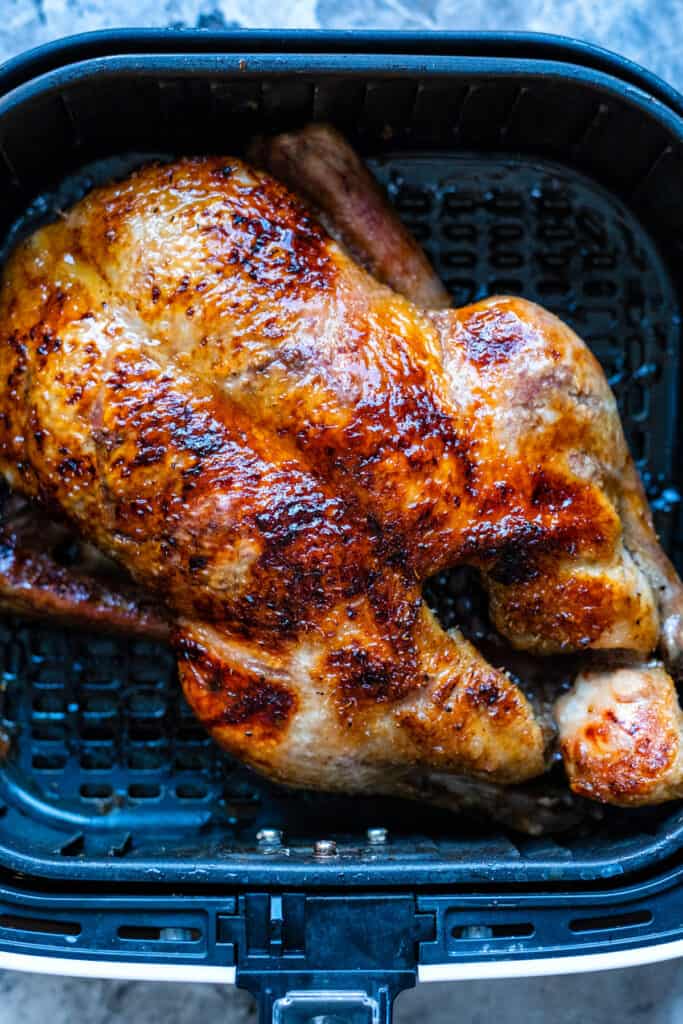
Source: i.pinimg.com
Choose the right size
The duck should sit inside the cooking area with space around its sides and top. Never force a large bird into a small basket.
Allow fat to drain
Use the appliance’s approved basket and drip tray arrangement. Check the fat during cooking and empty it safely when necessary.
Check the center
The outside can look fully roasted before the inside reaches a safe temperature. Use a reliable food thermometer.
Which Air Fryer Is Best for a Whole Duck?
A large oven-style air fryer or a spacious air fryer with a suitable roasting function may be easier to use than a small countertop basket model. These appliances often provide more room for a whole bird and a tray to collect fat.
Capacity labels can be misleading. Two appliances with the same listed capacity may have different basket shapes and usable cooking areas. Measure the cooking space and compare it with the duck before buying one or preparing dinner.
A good fit matters more than the number printed on the box. If the bird blocks airflow or sits too close to the heating element, cook it in pieces instead.
Basket air fryer
Suitable only when the duck fits without crowding and the appliance can safely collect the rendered fat.
Oven-style air fryer
Often offers more room and may provide a separate drip tray, making it a practical option for larger poultry.
Dual-basket air fryer
Usually better for duck portions than a whole bird because each cooking area may be too small.
Whole Duck Versus Duck Pieces
A whole duck looks attractive when served at the table, but duck legs, thighs, and breasts are easier to fit into most air fryers. Smaller pieces also give you more control over cooking and browning.
If your appliance cannot hold the whole bird, divide the duck into portions. Cook the pieces in batches rather than stacking them. This gives hot air better access to the skin and allows fat to drain more freely.
Whole duck
Best when presentation matters and the appliance has enough room.
Duck legs and thighs
Useful for smaller air fryers and meals where dark meat is preferred.
Duck breast
A practical option for a quick meal, although it requires a different cooking method from a whole bird.
What You Need Before Cooking a Whole Duck
Gather your ingredients and equipment before turning on the air fryer. A little preparation helps prevent problems once the duck starts releasing hot fat.
Start with a fully thawed whole duck. Remove the packaging, neck, and giblets from the cavity. Check the cavity carefully because a packet of giblets left inside can interfere with cooking and may create an unexpected food safety problem.
You will also need paper towels, a sharp knife, a cutting board, kitchen tongs, a suitable tray or drip pan, and a food thermometer. Keep a heat-safe container nearby if you need to collect rendered duck fat.
Source: supergoldenbakes.com
Whole duck
Choose a bird that fits the usable cooking space of your appliance. A smaller bird is usually easier to manage.
Salt and black pepper
These provide a simple seasoning base and help bring out the duck’s natural flavor.
Garlic and herbs
Rosemary, thyme, and garlic can add aroma without covering the taste of the meat.
Optional spices
Paprika, five-spice powder, and a little ground ginger can give the skin a different flavor.
Food thermometer
Use an instant-read thermometer or another suitable food thermometer to check the internal temperature.
Drip tray
Use only a tray approved for your appliance. It should collect fat without blocking airflow or touching the heating element.
How to Choose a Duck That Fits
Do not choose a duck based on weight alone. A long, narrow bird may fit a basket that cannot hold a wider bird of the same weight. The legs, wings, and breast shape also affect the fit.
Measure the usable length, width, and height of the cooking area. Leave room around the bird and follow the clearance requirements in your air fryer manual.
If you cannot close the appliance properly or the duck touches the heating element, stop and use an oven or cook the duck in pieces.
Check the height
The top of the bird must remain clear of the heating element and other restricted areas.
Check the width
The wings and legs should not press against the basket walls.
Check the drainage
Make sure the cooking setup can hold the fat produced during roasting.
Should You Thaw Duck Before Air Frying?
Yes. Thaw the duck completely in the refrigerator before cooking it whole. A frozen center can heat much more slowly than the outside, making even cooking difficult.
Place the wrapped duck in a dish or tray to catch any liquid. Keep it on a low refrigerator shelf so raw poultry juices cannot drip onto other food.
Never thaw raw duck on the kitchen counter. If you use cold water or a microwave to thaw poultry, follow safe thawing guidance and cook it immediately when thawing is complete. Refrigerator thawing is the easiest option for a whole bird.
Plan ahead
Allow enough refrigerator time for the entire duck to thaw, based on its size.
Keep it covered
Use a leak-proof dish or suitable packaging to prevent raw juices from spreading.
Check the cavity
Make sure no ice remains inside before seasoning and cooking.
How to Prepare a Whole Duck for the Air Fryer
Good preparation helps the duck cook more evenly and gives the skin a better chance of becoming crisp. The most useful steps are removing excess moisture, preparing the skin, and seasoning the bird.
Start by removing the giblets and excess fat from the cavity. Pat the entire duck dry with paper towels. Pay attention to the area beneath the wings, around the legs, and inside the cavity.
Duck skin contains a layer of fat that needs to render during cooking. You can prick the fatty skin with a clean skewer or the tip of a sharp knife. Make shallow holes without piercing the meat, especially around the breast and thighs.
Avoid cutting deeply into the breast. Deep cuts can allow meat juices to escape and may leave the finished meat less moist. The aim is to help fat escape from beneath the skin, not to damage the flesh.
Source: cheffoodiecast.com
Remove excess fat
Trim loose pieces around the cavity opening and neck area without removing the useful layer beneath the skin.
Dry the surface
Use clean paper towels to remove moisture. Dry skin is easier to brown than wet skin.
Prick the skin
Make small, shallow holes in fatty areas. Keep the openings away from the meat.
Season evenly
Rub salt, pepper, garlic, and your chosen herbs over the skin and inside the cavity.
Tuck the wings
Position the wing tips so they do not stick out toward the heating element.
Should You Brine a Whole Duck?
Brining is optional. A salt brine can season the meat, but it also adds another preparation step and may leave the skin wetter if you do not dry it properly afterward.
For a simple air fryer roast, dry-brining is a useful alternative. Apply salt to the skin and refrigerate the duck uncovered in a suitable dish. This can help dry the surface while seasoning the meat.
Keep raw poultry refrigerated throughout this process. Do not leave the duck at room temperature for several hours to dry.
Dry brining
Season with salt and refrigerate uncovered when you have enough preparation time.
Wet brining
Use only if your recipe calls for it, then dry the skin thoroughly before cooking.
No brine
A simple salt and pepper seasoning works well when you want a straightforward roast.
Can You Put Stuffing Inside the Duck?
It is better to leave the cavity empty when cooking a whole duck in an air fryer. Stuffing can slow heat movement through the center and make it harder to confirm that every part has cooked safely.
You can add a small amount of fresh herbs or aromatics if they do not block the cavity or interfere with the appliance. For a side dish, prepare bread stuffing separately.
If you choose to cook stuffed poultry, the center of the stuffing must also reach at least 165°F. This adds another temperature check and makes the cooking process more difficult.
Better option
Cook stuffing in a separate oven-safe dish.
Light aromatics
A small amount of garlic or herbs can add aroma without tightly filling the cavity.
How to Cook a Whole Duck in an Air Fryer
The easiest method is to cook the duck at a moderate temperature first, turn it when the skin and structure allow safe handling, and finish with additional heat if needed for browning. The exact temperature and cooking time depend on the appliance, duck size, and recipe.
The following is a general cooking approach, not a tested universal recipe. Follow your air fryer’s instructions and use its approved roasting setup. If the manufacturer does not allow a whole duck or large amounts of rendered fat, do not attempt this method.
For a suitable appliance, a starting approach is to use about 300°F (149°C) for the initial roasting stage. Some recipes use this lower setting to allow more time for the fat to render before increasing the heat to brown the skin.
Keep the bird in a single layer and avoid crowding. Check the cooking area during the process. If the fat builds up, pause the appliance according to its instructions and carefully remove the tray or basket before draining it.
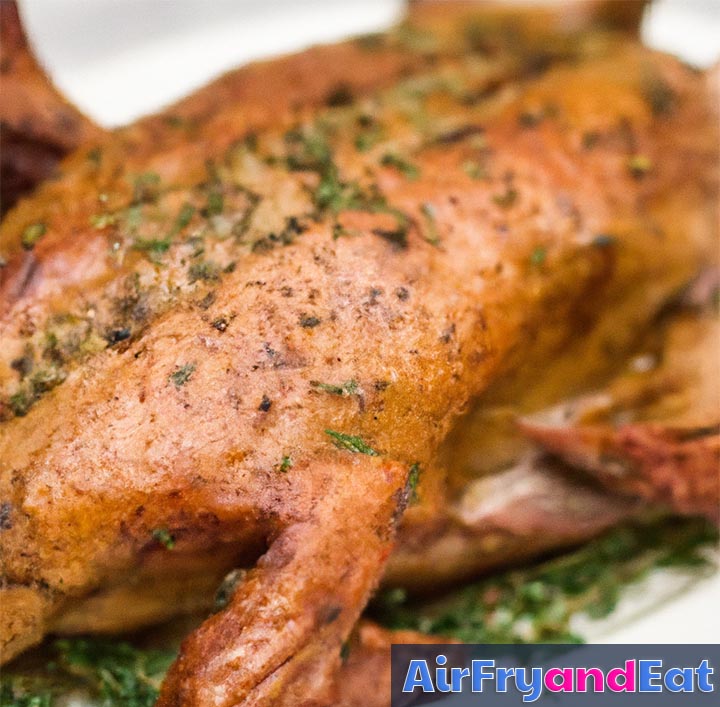
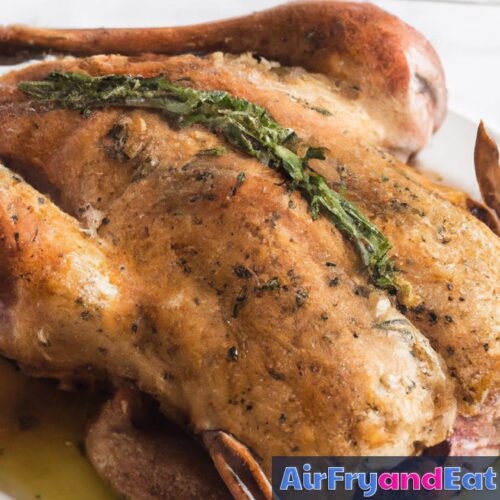
Source: airfryandeat.com
Step 1: Preheat the appliance
Preheat only if the manufacturer recommends it. Make sure the basket, drip tray, and other parts are correctly fitted.
Step 2: Position the duck
Place the duck breast side down if the recipe and appliance setup allow it. Keep the bird away from the heating element.
Step 3: Start roasting
Use a moderate cooking temperature and begin checking the bird during the first stage. Do not assume a fixed time will work for every duck.
Step 4: Check the fat
Pause and drain accumulated fat when necessary. Use heat-safe tools and protect your hands from hot grease.
Step 5: Turn the duck
Use sturdy heat-safe tools to turn the bird carefully. Avoid piercing the meat or spilling hot fat.
Step 6: Continue cooking
Cook until the thickest parts reach the required safe temperature. Increase the heat near the end only if the appliance and recipe allow it.
Step 7: Rest and carve
Transfer the cooked duck to a clean platter and let it rest before carving. Keep raw-poultry tools away from the finished food.
How Long Does a Whole Duck Take in an Air Fryer?
There is no single reliable cooking time for every whole duck. A smaller bird may cook faster than a large one, but shape, starting temperature, air fryer design, and airflow also matter.
Some published whole-duck air fryer methods use cooking periods of around 60 to 90 minutes or longer. These times describe individual recipes and equipment, not a guarantee that another bird will be ready at the same point.
A useful way to plan dinner is to allow extra time for cooking, temperature checks, and resting. Start checking the internal temperature before you expect the duck to finish, then continue cooking in short stages if needed.
Small duck
May cook faster, but still requires temperature checks in both the breast and thigh.
Large duck
May need more time and may not fit safely in a standard basket air fryer.
Uneven browning
May mean the bird needs repositioning or that the basket is too crowded.
Undercooked center
Continue cooking and check again rather than serving based on the outside color.
When Should You Drain Duck Fat?
Check the fat during cooking because duck releases a substantial amount of it. A full drip tray can reduce the space available for grease and may cause splashing or smoke.
Do not pull out a hot basket carelessly. Turn off or pause the appliance as directed by the manual. Use oven mitts, keep the tray level, and pour the fat into a heat-safe container.
Never pour hot duck fat into a plastic container, a sink, or a drain. Let it cool safely before storing or disposing of it. If you want to save the fat, strain it after it has cooled enough to handle safely and refrigerate it in a suitable covered container.
Watch the tray
Check for excessive fat buildup during the cooking process.
Avoid overfilling
Do not allow the collected fat to reach the basket or heating element.
Keep the area clean
Wipe away spills only after the appliance has cooled and it is safe to clean.
How to Get Crispy Duck Skin
Crispy duck skin starts with dry skin and enough time for the fat beneath it to render. High heat alone will not solve the problem if the skin is wet or the bird is crowded.
Once the duck is safely cooked, a short higher-heat finishing stage may help brown the surface. Watch it closely because seasoning, skin thickness, and appliance power can cause browning to happen quickly.
Avoid brushing the skin with a sugary glaze too early. Honey, maple syrup, and sweet sauces can darken before the meat is done. Apply a suitable glaze near the end if your recipe calls for one.
Dry skin
Remove surface moisture before seasoning.
Rendered fat
Allow enough cooking time for the fat under the skin to melt.
Good airflow
Avoid placing the duck against the sides of the basket.
Final browning
Use a brief higher-temperature stage only when the meat is cooked or nearly cooked and the appliance allows it.
What Temperature Should Whole Duck Reach?
Cook whole duck to a minimum internal temperature of 165°F (74°C). This is the USDA safe minimum temperature for poultry, including duck and goose.
Do not judge doneness by skin color, meat color, or the amount of juice in the basket. Duck can have browned skin while the center is still undercooked. A food thermometer is the dependable way to check.
Measure the thickest part of the breast and the innermost part of the thigh. Avoid touching bone because it can affect the reading. Check another thick area if the first reading is below 165°F.
If one area has not reached the required temperature, continue cooking. Check again before removing the bird. Do not serve it until all the checked areas have reached the safe minimum.
Source: supergoldenbakes.com
Breast
Insert the thermometer into the thickest part without touching the bone.
Thigh
Check the innermost part of the thigh, near the joint but away from the bone.
Other thick areas
Check any part that appears less cooked or may have received less heat.
Stuffing
If the duck is stuffed, the center of the stuffing must also reach 165°F.
Can Duck Meat Still Look Pink When It Is Done?
Yes. Cooked duck meat may retain a pink or darker color in some areas. Color alone does not prove that the bird is raw or fully cooked.
Duck has naturally darker meat than chicken, especially around the legs. The appearance can also change based on cooking conditions and the age of the bird.
Use the thermometer reading rather than trying to judge safety from the color. If the temperature is below 165°F, return the duck to the air fryer.
Do not rely on color
Pink meat does not automatically mean unsafe meat, and brown skin does not prove the center is ready.
Use a clean thermometer
Wash and sanitize the probe according to its care instructions between raw and cooked food checks.
Should You Rest Duck After Air Frying?
Yes. Resting gives the meat time to settle before carving and can help keep more juices in the slices. Place the duck on a clean platter and allow it to rest for about 10 to 15 minutes as a practical serving guideline.
Resting does not replace the required temperature check. Make sure the duck has reached at least 165°F before you remove it from the heat source.
Do not leave cooked duck sitting at room temperature for an extended period. Serve it promptly or refrigerate leftovers within two hours.
Use a clean platter
Never reuse the plate that held raw duck unless it has been washed thoroughly.
Carve carefully
Use a clean knife and cutting board to separate the legs, wings, and breast.
Common Problems When Cooking Whole Duck in an Air Fryer
Most air fryer duck problems come from poor fit, excess fat, wet skin, or uneven heat. You can often avoid them by checking the appliance before cooking and monitoring the bird during the roast.
If something goes wrong, do not increase the temperature without checking the cause. A hotter setting may brown the outside faster while leaving the center undercooked.
The following table connects common problems with likely causes and practical solutions.
Source: supergoldenbakes.com
Soft skin
The skin may be wet, the basket may be crowded, or the fat may not have rendered enough.
Smoke
Excess fat or food residue may be reaching hot surfaces. Stop the appliance if it is smoking heavily and follow the manufacturer’s cleaning and safety instructions.
Uneven cooking
The bird may be too large, positioned poorly, or blocking airflow.
Dry breast
The breast may have cooked for too long while the thicker parts finished.
Why Is My Duck Skin Not Crispy?
Wet skin is one of the main reasons duck does not become crisp. If the duck was not dried well or was covered in a watery marinade, the surface may steam before it browns.
Crowding can also prevent the hot air from reaching the skin. If the bird fills the entire basket, consider cooking it in pieces instead.
Drain accumulated fat when necessary and use an approved finishing temperature if the recipe allows it. Do not keep increasing the heat while the center is still below the safe temperature.
Possible cause: Wet skin
Solution: Pat the duck dry before seasoning and allow the skin to dry in the refrigerator.
Possible cause: Too much crowding
Solution: Use a smaller bird or cook the duck in portions.
Possible cause: Insufficient fat rendering
Solution: Allow more time at a moderate temperature while monitoring the bird.
Why Is My Air Fryer Smoking?
Duck releases a large amount of fat, and excess grease can cause smoke if it reaches hot components. Old food residue inside the appliance can make the problem worse.
If you notice heavy smoke, stop cooking and switch off the appliance if it is safe to do so. Do not open the unit toward your face or reach into hot grease. Follow the manufacturer’s instructions for dealing with smoke and hot oil.
Never pour water onto burning grease. If a grease fire starts, keep the appliance closed if safe, disconnect power only if you can do so without risk, and use an appropriate fire extinguisher or emergency services. Do not move the appliance while it contains burning grease.
Before cooking
Clean the basket and tray and remove old grease or food particles.
During cooking
Monitor the fat level and drain it when required by the appliance instructions.
After cooking
Let all parts cool before cleaning them.
Why Is the Duck Cooked Outside but Raw Inside?
This usually happens when the cooking temperature is too high for the bird’s size or the air fryer cannot distribute heat around it. The outside browns quickly while the thick breast and thigh remain undercooked.
Continue cooking at a suitable temperature until the internal temperature reaches 165°F. If the skin is already dark, follow the appliance and recipe guidance for reducing the heat without stopping the cooking process.
For future meals, use a smaller bird, leave more space around it, or cook it in portions. A conventional oven may be the better option when the duck is too large.
Do not serve early
A brown outside is not proof that the center is safe.
Check more than one place
Measure the breast and thigh separately.
Adjust the next attempt
Use a more suitable bird size and a cooking method that gives the heat better access.
Is Cooking a Whole Duck in an Air Fryer Better Than an Oven?
An air fryer can be convenient for a smaller duck, but a conventional oven is often easier for a large bird. The better choice depends on the size of the duck, the equipment you have, and the kind of meal you want to prepare.
Air fryers circulate hot air in a smaller space. This can help brown exposed skin, but limited room can make it difficult to position a whole duck properly. A full-size oven provides more room for a roasting pan and gives you greater flexibility with larger birds.
An oven is also useful when you want to roast vegetables or prepare side dishes at the same time. An air fryer may be more convenient when you are preparing a smaller meal and want to avoid heating a large oven.
Source: cheffoodiecast.com
Air fryer advantage
A compact cooking space can provide strong hot-air circulation and may brown exposed duck skin well.
Air fryer limitation
Basket space and fat collection can become problems with a large whole bird.
Oven advantage
A large roasting pan provides more room and makes it easier to handle larger ducks.
Oven limitation
A conventional oven may take longer to preheat and may use more energy for a small meal.
When Should You Use a Conventional Oven?
Choose the oven if your duck is too large for the air fryer, if the appliance cannot safely handle rendered fat, or if the cooking manual does not support whole poultry.
A roasting pan also gives you more room to collect duck fat and cooking juices. You can use the collected fat for roasted potatoes after straining it and handling it safely.
For a large holiday meal, the oven is often the more practical choice. It allows you to cook the duck without struggling to fit it into a small appliance.
Large birds
Use an oven when the whole duck cannot fit safely in your air fryer.
Multiple dishes
An oven can handle a larger roasting pan and other suitable oven-safe dishes.
Better fat collection
A suitable roasting pan can collect more rendered fat and juices.
Can You Cook Duck in an Air Fryer Without a Basket?
Only use the cooking arrangement approved for your specific air fryer. Some oven-style models allow roasting on a rack above a drip tray, while other designs require the supplied basket.
Do not remove parts or improvise a setup that could allow grease to reach the heating element. A tray that blocks airflow can also cause uneven cooking.
Check the user manual before changing the normal basket arrangement. If the appliance does not support the setup needed for a whole duck, use another cooking method.
Approved rack
Use only a rack designed for your appliance.
Drip tray
Make sure it is positioned as directed and has enough room for collected fat.
Avoid makeshift equipment
Do not use loose foil, oversized pans, or accessories that interfere with the fan or heating element.
How to Serve and Store Air Fryer Duck
Serve roast duck with sides that balance its rich flavor. Crisp vegetables, potatoes, fresh greens, and fruit-based sauces work well with the meat.
For an American family dinner, you could serve duck with roasted potatoes, green beans, glazed carrots, or a fresh salad. Cranberry sauce or an orange-based sauce can add a sweet and slightly tart contrast.
Carve the duck with a sharp knife. Remove the legs and wings first, then slice the breast meat across the grain where practical. Use a clean serving platter and utensils.
Source: airfryandeat.com
Roasted potatoes
Duck fat can add rich flavor to potatoes when it has been collected and handled safely.
Green vegetables
Green beans, Brussels sprouts, and asparagus offer a fresh contrast.
Fruit sauce
Orange, cherry, and cranberry flavors pair well with the richness of duck.
Fresh salad
A crisp salad can balance a hearty roast dinner.
How Long Can You Keep Cooked Duck in the Refrigerator?
Store cooked duck in the refrigerator within two hours of cooking. If the room temperature is above 90°F, refrigerate it within one hour.
Remove the meat from the bones if that makes it easier to store. Divide larger portions into shallow, covered containers so they cool more quickly.
Use refrigerated cooked poultry within three to four days. If you want to keep it longer, freeze it in suitable airtight packaging. Label the container with the date.
Refrigerator
Keep cooked duck at 40°F (4°C) or below and use it within three to four days.
Freezer
Freeze portions in suitable airtight containers or freezer bags for longer storage.
Reheating
Reheat leftovers to 165°F (74°C) before serving.
Can You Reheat Duck in an Air Fryer?
Yes, you can reheat cooked duck in an air fryer. It can also help restore some crispness to the skin, especially when the meat is not covered in a thick sauce.
Place the duck pieces in a single layer and heat them until the center reaches 165°F. The exact time depends on the size and thickness of the portions, so check them rather than relying on a fixed timer.
If the meat begins to dry, cover it with a suitable air fryer-safe accessory only when the appliance manual permits it. Avoid using loose foil that could move toward the heating element.
Separate large portions
Smaller pieces heat more evenly than a large cold section of duck.
Avoid overcrowding
Leave space for air to move around the meat.
Check the center
Make sure every reheated portion reaches 165°F.
Frequently Asked Questions
Q
Can You Cook a 5-Pound Duck in an Air Fryer?
Possibly, but the answer depends on the appliance’s usable cooking space and its instructions. A 5-pound duck may be too large for many standard basket air fryers.
Measure the cooking area and check the clearance around the bird. If it blocks airflow or sits too close to the heating element, use a conventional oven or cook the duck in pieces.
Q
Should You Cook Duck Breast Side Up or Down?
Some whole-duck methods begin with the breast side down and then turn the bird so the breast faces up. This can expose different parts of the duck to the hot air during cooking.
The best position depends on your recipe and appliance. Follow the manufacturer’s instructions and turn the duck only when you can do so safely without spilling hot fat.
Q
Do You Need to Add Oil When Air Frying a Whole Duck?
Usually, you do not need much added oil. Duck has a natural layer of fat beneath its skin, which melts during cooking.
A light coating of seasoning is often enough. Adding too much oil can make the cooking area greasy and may increase smoke.
Q
Can You Put Foil Under a Whole Duck in an Air Fryer?
Only use foil if your air fryer manufacturer permits it and the foil can be secured without blocking airflow or contacting the heating element. Loose foil can move during cooking and create a fire risk.
A manufacturer-approved drip tray is usually the better choice for collecting rendered duck fat. Never allow grease to overflow or reach hot electrical components.
Q
Can You Cook a Frozen Whole Duck in an Air Fryer?
It is better to thaw the duck fully in the refrigerator before air frying it whole. A frozen center can make even cooking difficult and may leave parts of the bird undercooked.
Do not thaw raw poultry on the counter. If the duck is still frozen, wait until it has thawed safely before preparing it.
Q
Why Does Duck Take Longer to Cook Than Chicken?
Duck often has a different shape, thicker fatty skin, and a different balance of dark and breast meat than chicken. The fat beneath its skin also needs time to render.
Cooking time depends on the bird’s size, the appliance, and its starting temperature. Always use the internal temperature rather than comparing duck with a chicken cooking chart.
Q
Can You Cook Duck Legs Instead of a Whole Duck?
Yes. Duck legs are often easier to prepare in a standard air fryer because they take up less room and allow better airflow.
Arrange them in a single layer and cook according to a suitable duck-leg recipe. Check the thickest part with a food thermometer and make sure it reaches at least 165°F.
✦ Wrapping Up
Conclusion
You can cook a whole duck in an air fryer, but the appliance must have enough room and a safe way to collect the rendered fat. A smaller duck and a spacious air fryer make the task easier. A large bird that blocks airflow belongs in a conventional oven instead.
Start with a fully thawed duck. Remove the giblets, dry the skin, make shallow holes in the fatty areas, and season the bird. Cook it in stages, check the fat during roasting, and turn it carefully when needed.
Most importantly, do not rely on cooking time or skin color to decide when the duck is ready. Use a food thermometer and confirm that the breast and thigh reach at least 165°F. Rest the duck, carve it with clean tools, and serve it with your favorite sides.
💡 Key Takeaway
Before cooking, measure your air fryer and check its manual. Choose a duck that fits with room for airflow, prepare the skin properly, monitor the rendered fat, and use a food thermometer to confirm a safe internal temperature of 165°F.