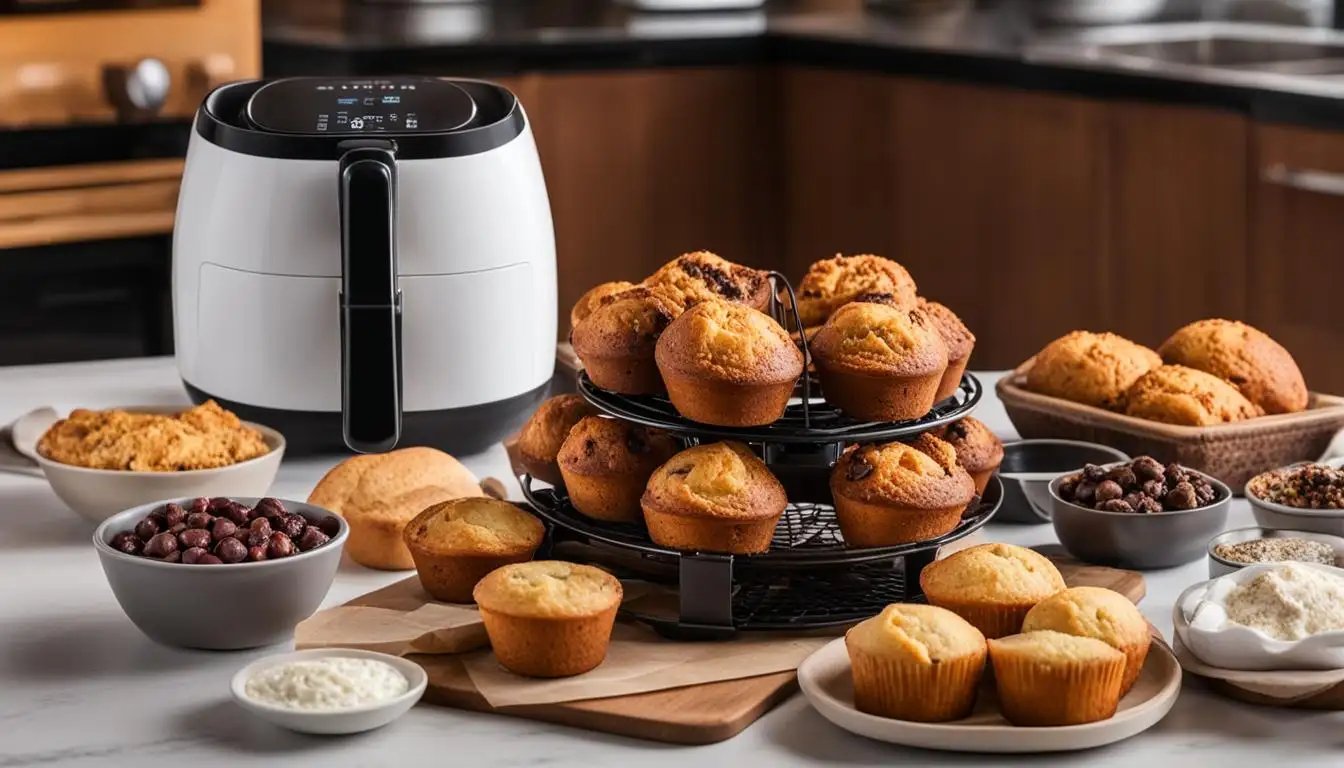
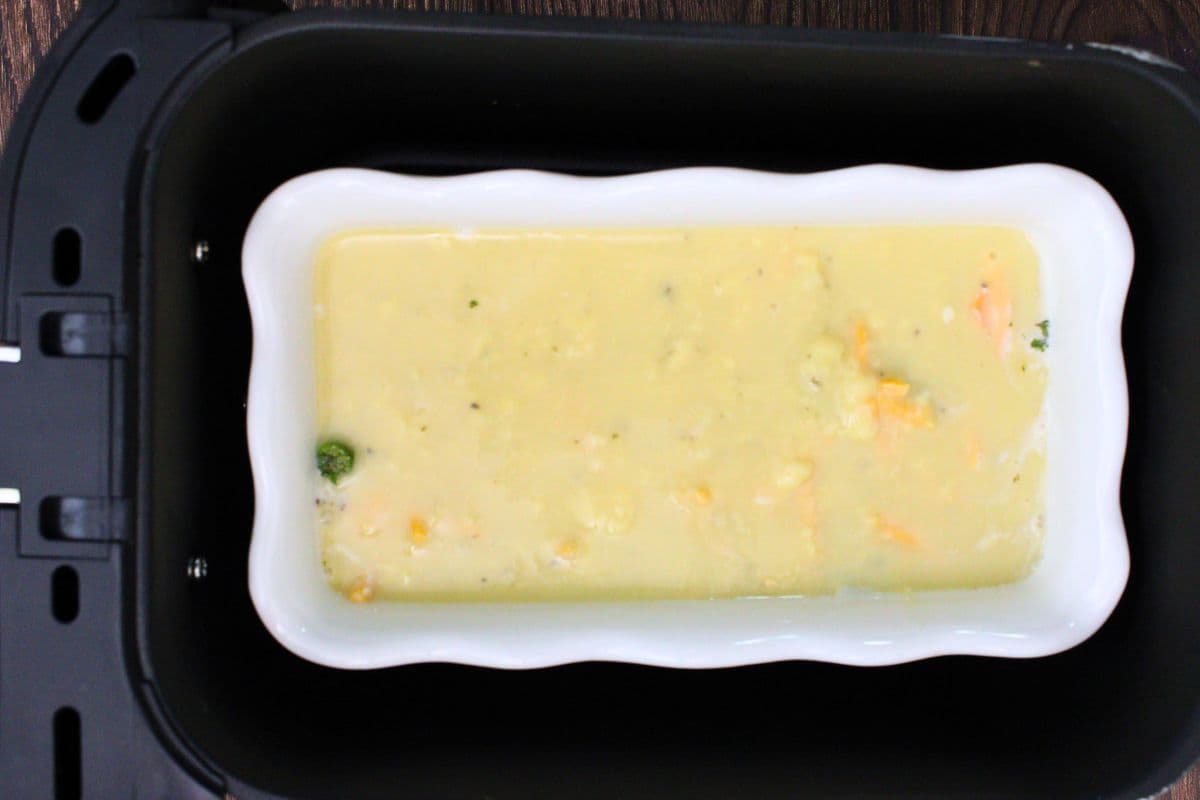
Yes, you can put some baking dishes in an air fryer, but the dish must be approved for the appliance’s heat, fit safely, and allow hot air to circulate.
If you use an air fryer in your American kitchen, you may already know how handy it is for quick dinners, roasted vegetables, chicken, and small batches of baked food. You may also want to use a familiar baking dish instead of placing food directly in the basket. That can work, but choosing the right dish matters.
An air fryer uses a heating element and a fan to move hot air around food. This makes it similar to a small convection oven, but it does not mean every oven-safe dish is automatically safe in every air fryer. The appliance manual and the dish manufacturer’s instructions must both allow the combination.
Metal pans, approved ceramic dishes, and food-grade silicone bakeware may work when their temperature ratings and dimensions are suitable. Glass needs special care. For example, Pyrex’s US safety guidance specifically says its standard glassware should not be used in air fryers. Some products are made and labeled for air fryer use, so check the exact item rather than relying on the brand name alone.
Yes, provided the baking dish is designed for the heat and the air fryer manufacturer permits its use. A suitable dish can hold foods that release sauce, cheese, grease, or other liquids. It also makes it easier to cook casseroles, small cakes, baked eggs, and individual desserts.
However, the word oven-safe is not enough on its own. Air fryer designs differ, and cookware makers may place limits on which countertop appliances their products can enter. Check both sets of instructions before cooking.
A dish must also fit the cooking chamber. It should sit securely, leave room for the appliance to operate as designed, and stay clear of the heating element. Never force a large dish into a small basket.
Source: kitchenaims.com
Check the appliance manual
Look for guidance on baking pans, oven-safe containers, materials, maximum temperatures, and approved accessories.
Check the dish label
Look for an explicit oven-safe or air-fryer-safe rating and follow any temperature or appliance restrictions.
Check the fit
Make sure the dish can sit level and does not interfere with the basket, drawer, fan, or heating element.
Why a Baking Dish Changes Air Fryer Cooking
The basket allows hot air to reach much of the food’s surface. A solid baking dish changes that pattern because its base and walls block airflow. Food inside the dish may cook more like food in a small convection oven than food placed directly on an air fryer rack.
This is useful for moist recipes, but it can affect browning. A casserole in a deep dish may cook through while the top stays pale. A shallow metal pan may brown food more readily because it heats quickly and leaves more space around the food.
For saucy foods
A suitable dish keeps juices and sauces contained.
For crisp foods
A basket or perforated accessory usually allows better airflow around the food.
Which Baking Dish Materials Are Safe?
The material is one of the first things to check, but the product’s actual rating matters more than the material name. Two dishes made from the same material may have different heat limits or appliance restrictions.
The table below is a practical starting point. It does not replace the instructions for your specific air fryer or dish.
Source: airfryeraid.com
Metal
An oven-safe metal pan is often a useful option when the air fryer manual allows it. Aluminum and stainless steel pans can work, but check coatings, handles, and temperature limits.
Ceramic and stoneware
Use only cookware approved for the appliance. Avoid chipped dishes and sudden changes from cold to hot.
Silicone
Use food-grade silicone bakeware with a clear heat rating suitable for the recipe and appliance. A flexible mold may need support when filled.
Glass
Do not assume ordinary glass bakeware is suitable. Some manufacturers prohibit their standard glassware in air fryers, while specific products may be designed and labeled for that use.
Plastic
Do not use ordinary plastic food containers, storage tubs, or plastic plates. Microwave-safe does not mean air-fryer-safe.
Can You Use a Metal Baking Pan?
Yes, a metal baking pan can be a good choice if the air fryer instructions permit it and the pan has a suitable heat rating. Metal transfers heat efficiently, so it can help brown the base and edges of small baked foods.
A shallow pan is often more practical than a deep one. It leaves more room above the food and may interfere less with airflow. Still, do not let the pan touch the heating element or any part that moves.
Aluminum
Lightweight aluminum pans can suit small cakes, brownies, and roasted foods when approved.
Stainless steel
A suitable stainless steel dish can handle high cooking temperatures, but its shape and thickness affect heating.
Nonstick metal
Follow the coating’s maximum temperature and care instructions. Stop using a pan if its coating is peeling or damaged.
Can You Use Ceramic or Stoneware?
Ceramic and stoneware dishes may be suitable when their maker approves them for air fryer use and the appliance manual permits them. They are useful for foods that need a solid container, such as baked eggs, small gratins, and individual portions.
These dishes can be heavy and may heat more slowly than thin metal pans. Avoid using chipped or cracked cookware. Do not move a cold dish straight from the refrigerator into a hot appliance unless its manufacturer specifically permits that use.
Check the temperature limit
Make sure the dish can handle the highest temperature required by the recipe.
Inspect before use
Look for cracks, chips, and damage that could weaken the dish.
Can You Use Silicone Baking Molds?
Food-grade silicone molds can be useful for small cakes, muffins, egg bites, and other soft baked foods. Choose a mold with a stated heat limit that covers the cooking temperature and follow the manufacturer’s appliance guidance.
Silicone bends easily, which can make a full mold hard to carry. Place it on an approved rigid tray or support if the air fryer design allows one. Do not fill the mold so high that the batter can rise into the heating area.
Use a stable base
Support flexible molds before filling or moving them.
Check the rating
Do not rely on the word silicone alone. Confirm the product’s stated temperature range.
Is Glass Bakeware Safe in an Air Fryer?
Glass requires extra caution. Standard glass bakeware may be suitable for a conventional oven but still be prohibited in a countertop air fryer. The US Pyrex safety guidance, for example, says its standard glassware must not be used in air fryers or other listed countertop appliances.
That warning is a good reason not to assume all oven-safe glass is suitable. Some products sold in other markets are specifically designed and labeled for air fryer use. The exact product instructions matter, and a rating for one glass dish does not apply to every dish from the same brand.
If the maker does not clearly approve the dish for your intended appliance, choose a suitable metal pan or another approved container instead.
Never use damaged glass
Avoid any dish with a chip, crack, or deep scratch.
Avoid thermal shock
Do not move cold glass into a hot appliance or place hot glass on a cold, wet surface.
Follow the exact product instructions
A general oven-safe label is not proof that the glass is approved for an air fryer.
How to Choose the Right Dish Size
The dish should fit with enough room for safe placement and normal airflow. A pan that nearly fills the basket may block the movement of hot air and lead to uneven cooking. It may also be difficult to remove without touching hot surfaces.
Measure the usable cooking area rather than relying on the air fryer’s advertised capacity in quarts. Capacity does not tell you the exact width, depth, or height available for cookware.
Source: dinnersdonequick.com
Measure the base
Check the flat area where the dish will sit, including any raised rails or supports.
Measure the height
Allow room above the dish and food so neither comes close to the heating element.
Check the handle
Make sure handles do not prevent the drawer from closing or catch on the appliance.
Leave airflow space
Avoid a tight fit that blocks the air paths around the container.
Basket Air Fryers and Oven-Style Air Fryers
Basket models often have a smaller cooking area and a drawer that must close fully. A round or square dish may fit, but its outer edges must not interfere with the drawer or heating system.
Oven-style air fryers often have racks and trays, so they may accept a wider range of cookware. Even so, the dish must fit the rack securely and stay clear of the fan and heating elements. Use the accessories and positions listed in the manual.
Basket model
Check the inside width, depth, height, and drawer clearance.
Oven-style model
Check rack dimensions and the distance between the rack and heating elements.
How to Put a Baking Dish in an Air Fryer Safely
Once you have confirmed that both the appliance and dish allow this use, prepare the cookware before turning on the air fryer. A few simple checks can reduce spills, uneven cooking, and burns.
Use the following steps for a small casserole, cake, baked egg dish, or similar recipe. Follow the recipe and appliance manual if they give more specific directions.
Source: bakingbakewaresets.com
Step 1: Read both sets of instructions
Confirm the material, temperature rating, and permitted appliance use. If either manufacturer says not to use the dish in an air fryer, do not use it.
Step 2: Inspect the dish
Check for cracks, chips, loose handles, damaged coatings, and other signs of wear.
Step 3: Measure the cooking space
Make sure the dish fits level and does not touch the heating element or obstruct the drawer.
Step 4: Prepare the food
Add ingredients without overfilling the dish. Leave space for bubbling sauces and rising batter.
Step 5: Place the dish securely
Set it on an approved rack or basket surface. Do not balance it on loose foil or an unstable accessory.
Step 6: Set the cooking temperature
Use the recipe as a starting point, but follow the appliance’s temperature limits and check food as it cooks.
Step 7: Check for doneness
Use an appropriate food thermometer for meat, poultry, and other foods that require a safe internal temperature. For cakes, check the center with a suitable cake tester.
Step 8: Remove with dry protection
Use dry oven mitts or heat-resistant gloves. Set the hot dish on a dry, heat-safe trivet or cooling rack.
How to Tell If the Dish Is Working Properly
A suitable dish should remain stable, show no signs of cracking or damage, and allow the appliance to run normally. The food should cook without the dish touching the heating element or blocking the drawer.
Check the food rather than judging it by the top color alone. A browned surface does not prove that the center is cooked. If the food is uneven, adjust the recipe, dish depth, or placement only after the appliance and cookware remain within their approved limits.
Good signs
The dish sits flat, the drawer closes fully, and food cooks without unusual smoke or contact with the heating area.
Stop and check
Stop cooking if you notice cracking, a strong unusual odor, a damaged coating, or smoke that does not come from normal food drippings.
What Can You Cook in a Baking Dish?
A suitable baking dish is useful for recipes that need a container rather than direct exposure to the basket. Small portions are often easier to manage because they leave more space for air movement and are easier to remove.
The best container depends on the food. A shallow pan may suit a small cake, while a deeper dish may be more useful for a casserole. In either case, do not fill the dish to the rim.
Source: kitchenaims.com
Small casseroles
A suitable ceramic or metal dish can hold pasta bakes, vegetable gratins, and small portions of layered food.
Baked eggs
Approved ramekins or small metal dishes can hold eggs and other breakfast mixtures.
Small cakes and brownies
A shallow metal pan or approved silicone mold can work for a small batch.
Roasted vegetables with sauce
A solid dish can contain oil, seasoning, and cooking juices, although it may reduce crisping.
Fruit desserts
A suitable dish can hold fruit crisps, cobblers, and baked apples.
Why Food May Take Longer in a Dish
A baking dish blocks hot air from reaching the bottom and sides of the food. The dish itself must also heat up before it transfers heat to the ingredients. This can make cooking slower than placing food directly in the basket.
Deep dishes can make this effect more noticeable. If the top browns before the center cooks, check the recipe’s depth and temperature guidance. Do not raise the temperature without considering the dish’s rating and the risk of burning the surface.
Use shallow portions
A lower food depth can help heat reach the center more evenly.
Check the center
Use a thermometer or another suitable doneness test instead of relying on appearance.
Avoid overcrowding
Leave space around the dish and do not stack cookware unless the appliance maker permits it.
Common Mistakes to Avoid
Most problems come from assuming that all cookware works the same way. An air fryer has a compact cooking space, strong airflow, and a nearby heating element, so small mistakes can have a bigger effect than they might in a full-size oven.
Avoid these errors before you start cooking. If you are unsure about a dish, use an accessory approved by the air fryer manufacturer.
Source: airfryeraid.com
Using any oven-safe glass
Oven-safe does not always mean approved for an air fryer. Check the exact glass product’s instructions.
Using microwave-safe containers
Microwave-safe plastic or glass may not be suitable for the heat and airflow conditions in an air fryer.
Blocking the airflow
A dish that fills the entire basket can affect cooking and may interfere with the appliance’s design.
Touching the heating element
Never use a dish that is too tall or wide to fit safely inside the cooking chamber.
Using damaged cookware
Cracked ceramic, chipped glass, and peeling nonstick coatings should not be used.
Adding a loose cover
A lid, foil sheet, or liner can move in strong airflow and may contact the heating element. Use covers only when the appliance and cookware instructions expressly allow them.
Handling hot dishes with wet towels
Wet fabric can transfer heat quickly and may increase the risk of burns. Use dry oven mitts.
Washing a hot dish immediately
A sudden temperature change can damage glass and ceramic. Let the dish cool on a suitable dry surface first.
What Should You Do If a Dish Starts Cracking or Smoking?
If you hear cracking, see a damaged dish, or notice smoke that may come from cookware, stop the appliance if you can do so safely. Keep your hands away from hot surfaces and allow the appliance and dish to cool before handling them.
Do not try to save food from a broken glass or ceramic dish. Small fragments can be difficult to see. Discard food that may contain fragments and clean the appliance only after it has cooled, following the manufacturer’s instructions.
If glass breaks
Do not handle it while hot. Keep others away and inspect the cooking chamber carefully after cooling.
If a coating smokes
Stop using the pan and check its temperature limit and condition before deciding whether it can be used again.
Baking Dish vs. Air Fryer Basket
A baking dish is best when you need to contain liquid or hold a soft mixture. The open basket is usually better when you want air to reach as much of the food as possible. Neither option is right for every recipe.
Use this comparison to decide which setup suits your meal. The main trade-off is containment versus airflow.
Source: dinnersdonequick.com
Baking dish
Better for casseroles, baked eggs, small cakes, and saucy foods. It can reduce browning and may extend cooking time.
Open basket
Better for fries, wings, and many vegetables that benefit from airflow. Small or liquid foods may fall through or drip.
Perforated accessory
Can offer more support than the open basket while allowing air to pass through, if approved for the model.
Which Option Should You Choose?
Choose a baking dish when the recipe needs a solid base or has liquid ingredients. Choose the basket when the goal is to brown or crisp exposed surfaces. If a recipe needs both, you may be able to start in a dish and finish without it, but only if the food can be transferred safely and the instructions allow the change.
For crispy food
Use the basket or a suitable perforated accessory.
For wet mixtures
Use a suitable solid dish.
How to Adjust Cooking When Using a Baking Dish
A dish can change how quickly food cooks, so do not assume the time for an open basket will work exactly the same way. The material, depth, amount of food, and starting temperature all affect the result.
Start with the recipe’s guidance, use a safe temperature for every part of the setup, and check the food before the expected finish. Avoid making large temperature changes just to speed up the process.
Source: airfryeraid.com
Use the recipe as a starting point
A recipe written for a dish may need less adjustment than one written for direct basket cooking.
Check earlier than expected
Look at the food before the full cooking time has passed, especially in a small air fryer.
Check the center
Use a food thermometer for foods that need a safe internal temperature.
Avoid excess filling
Leave room for bubbling, rising, and expansion.
What If the Top Browns Too Fast?
If the top browns before the center is done, the dish may be too deep or the cooking temperature may be too high for the recipe. Check the center and confirm that the food is still within the safe cooking process.
You can use a lower recipe-approved temperature or a shallower dish on the next batch. Do not add a loose foil cover while the fan is running unless your appliance manual specifically permits a secured cover.
Reduce food depth
Use a wider, shallower dish if it fits safely.
Check the recipe
Use a suitable time and temperature for the food and cookware.
What If the Bottom Is Still Wet?
A wet bottom may mean that the dish is too deep, the mixture contains excess liquid, or heat is not reaching the center quickly enough. Stir or rearrange food only when the recipe allows it and when doing so is safe.
For a future batch, use less liquid if the recipe permits, divide the mixture into smaller portions, or choose a shallower approved dish.
Use smaller portions
Smaller amounts can cook more evenly than one deep mass.
Avoid excess moisture
Drain ingredients when the recipe calls for it.
Frequently Asked Questions
These quick answers cover common cookware questions that come up when using an air fryer for baking.
Source: bakingbakewaresets.com
Can I Put a Regular Baking Pan in an Air Fryer?
You can use a regular baking pan only if its manufacturer approves the temperature and appliance use, and your air fryer manual permits it. Check its size, handles, coating, and clearance before cooking.
Can I Put a Pyrex Dish in an Air Fryer?
Do not assume that standard Pyrex glassware is safe. Pyrex’s US safety guidance says its standard glassware should not be used in an air fryer. Only use a specific product if its own instructions clearly approve air fryer use.
Can I Put Aluminum Foil Baking Trays in an Air Fryer?
A sturdy aluminum tray may be suitable if your air fryer manual permits it. It must sit securely and must not block airflow or touch the heating element. Do not use loose foil that could move in the fan’s airflow.
Can I Use a Ceramic Plate in an Air Fryer?
Only use a ceramic plate if it is approved for the temperature and air fryer use. Ordinary dinner plates may not be designed for rapid heating, and a cold plate placed in a hot appliance may crack.
Can I Use a Cake Tin in an Air Fryer?
Yes, a suitable metal cake tin or approved silicone mold can work if it fits safely and allows enough room for airflow. Do not fill it too high, and check the center of the cake before removing it.
Can I Put a Lid on a Baking Dish in an Air Fryer?
Only use a lid if both the dish and appliance instructions allow it. A lid can block airflow, trap steam, and affect browning. Never use a loose lid that could move toward the heating element.
Frequently Asked Questions
Q
Can I use a microwave-safe bowl in an air fryer?
Not unless the bowl is also approved for the air fryer’s temperature and use. Microwave-safe labels do not establish oven or air fryer compatibility. Check the bowl manufacturer’s instructions before using it.
Q
Can I put a disposable foil pan in an air fryer?
A foil pan may work if the appliance maker permits it and the pan is stable, correctly sized, and clear of the heating element. Thin disposable pans can bend when filled, so support them before adding food and avoid carrying them by a weak edge.
Q
Do I need to preheat the air fryer with the baking dish inside?
Follow the air fryer and cookware instructions. Some recipes call for preheating, while others do not. Do not preheat an empty dish unless its manufacturer and the appliance manual permit that use.
Q
Can I put a cold baking dish straight into a hot air fryer?
Do not do this unless the dish manufacturer clearly permits the temperature change. Glass and ceramic can crack from thermal shock. Let cold cookware reach a suitable temperature first, following its care instructions.
Q
Why does food cook more slowly in a baking dish?
The dish blocks hot air from reaching some food surfaces, and the dish itself must heat up. Deep containers and large portions can slow cooking further. Check the center for doneness rather than relying on the surface color.
✦ Wrapping Up
Conclusion
You can put a baking dish in an air fryer when the cookware and appliance makers both approve the combination. Suitable metal pans, approved ceramic dishes, and oven-safe silicone molds can help you make casseroles, cakes, baked eggs, and small desserts. Glass needs special care because some manufacturers, including Pyrex in the United States, prohibit their standard glassware in air fryers.
The safest choice is not based on material alone. Check the exact product instructions, measure the cooking space, keep the dish clear of the heating element, and allow the air fryer to work as designed. Use dry oven mitts and let hot cookware cool before washing.
💡 Key Takeaway
Before your next recipe, check your air fryer manual and the baking dish label. If either one does not clearly permit the use, choose an approved accessory instead.