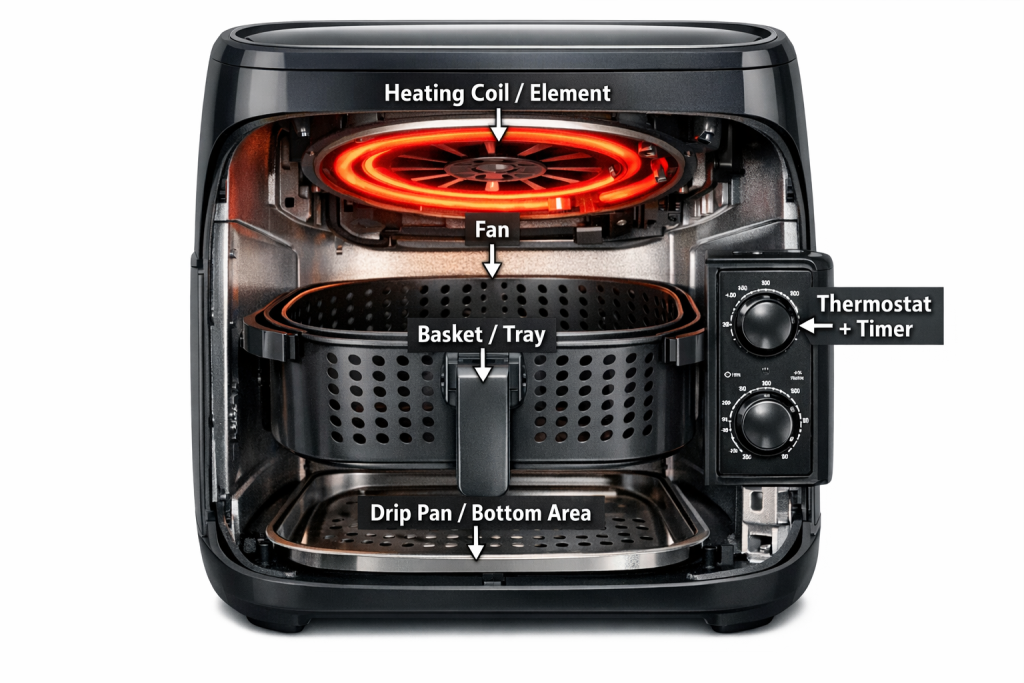
The inside of an air fryer has a cooking chamber, heating element, fan, removable basket, perforated tray, and airflow openings that work together to cook food with hot circulating air.
If you have an air fryer on your kitchen counter in the United States, you may have wondered what is hiding behind its front drawer. When you pull out the basket, you see a cooking space with a dark inner wall, a removable food tray, and an area above where the heat comes from. The most important parts are the heating element and fan, which help move hot air around your food.
Most basket-style air fryers have a simple design. The food sits inside a perforated basket, while a heating element and fan sit near the top of the cooking chamber. The fan moves heated air around the food, and openings in the basket let the air reach the bottom and sides. This setup helps make foods such as French fries, chicken wings, and vegetables crisp on the outside.
The exact layout depends on the brand and model. A small two-quart air fryer may look different inside from a large six-quart model or an air fryer toaster oven. Still, learning about the main parts makes it easier to use, clean, and care for your appliance.
The inside of a typical basket-style air fryer looks like a small, deep cooking chamber. It is usually dark gray, black, or coated with a nonstick finish. When you remove the drawer, you can see the space where the cooking basket sits and the upper area where the heating system is located.
The cooking chamber is not an empty box. It has shaped walls, guides, openings, and spaces that help hot air travel around the food. The removable basket fits into this chamber, while the heating element warms the air above it.
Look inside with the appliance unplugged and completely cool. You may see a circular or spiral-shaped metal heating element near the ceiling of the chamber. Depending on the model, you may also see a metal cover, a protective screen, or a shaped plate around the heating area.
The lower part usually holds a removable basket or pan. A perforated insert sits inside it, keeping food slightly raised so air can move underneath. This design is one of the main reasons an air fryer can brown food on more than one side.
Source: wp-cdn.typhur.com
Upper cooking area
This area contains or covers the heating element and fan assembly. It is where most of the heat enters the cooking chamber.
Side walls
The walls surround the cooking space and help guide hot air around the basket. They also form part of the insulated cooking chamber.
Lower cooking area
This area supports the removable basket, tray, or pan. It may collect small crumbs and food residue during cooking.
Rear airflow area
Air openings help the appliance move air through the cooking system. Some warm air and moisture leave through an exhaust vent.
Does Every Air Fryer Have the Same Interior?
No. Basket-style air fryers share a basic design, but their inner shapes and parts can differ. Some have round baskets, while others use square or rectangular drawers. Certain models have removable metal racks, multiple cooking levels, or two separate baskets.
Air fryer toaster ovens look different from drawer-style models. They usually have a larger rectangular cooking chamber with metal racks, rails, and removable trays. Their heating elements may sit at the top, bottom, or both, depending on the design.
A glass-bowl air fryer may have a clear cooking container and a lid-mounted heating unit. Do not expect its inside to look like a standard basket fryer.
Basket-style models
Usually have a pull-out drawer, removable food basket, and an upper heating and fan assembly.
Air fryer toaster ovens
Usually have a wider cooking chamber, wire racks, trays, and visible heating elements.
Dual-basket models
Have two separate cooking spaces, although their heating and airflow designs vary by model.
The Main Parts Inside an Air Fryer
The main parts inside an air fryer each have a different job. The heating element makes heat, the fan moves the heated air, and the basket holds the food. Other parts help control temperature, protect the electrical system, and keep the appliance working as intended.
You do not need to take the appliance apart to understand these parts. Most of the useful features are visible when you remove the cooking drawer and inspect the cool interior.
Source: airfryerdelicacies.com
Heating element
This metal component creates the heat needed to cook food. It is commonly located near the top of a basket-style air fryer.
Circulation fan
The fan moves heated air through the cooking chamber and around the food. It is usually hidden behind the upper protective area.
Cooking basket
This removable container holds food during cooking. Its shape and size depend on the appliance.
Perforated tray
This insert has holes or slots that let hot air pass beneath the food. It may also keep food away from collected grease.
Temperature sensor
A sensor helps the appliance monitor temperature and regulate the heating cycle. Its exact location and design vary.
Exhaust vent
This opening allows warm air and moisture to leave the appliance. It is often found near the back or upper area.
1. The Heating Element
The heating element is one of the most important parts inside an air fryer. It often looks like a curved metal tube or a spiral-shaped coil near the top of the cooking chamber. When the appliance runs, electricity heats this component, which then transfers heat into the cooking space.
Some heating elements have a protective metal cover. This cover can make the heater harder to see when you look inside the drawer. Never remove it just to get a better view.
Over time, small bits of food and grease may collect near the heating element. This is why it is useful to check the upper cooking area during routine cleaning.
What it does
Produces the heat needed to cook and brown food.
Where it is
Usually near the upper part of a basket-style air fryer.
What to watch for
Heavy grease buildup, trapped crumbs, visible damage, or unusual smoke.
2. The Fan and Motor
The fan is usually located above or near the heating element. It is often hidden behind a protective cover, so you may not see its blades when looking into the cooking chamber. A small motor powers the fan and keeps air moving while food cooks.
The fan helps spread heat throughout the cooking space. Without proper airflow, food near one area may cook differently from food in another area. This is also why filling the basket too tightly can lead to uneven results.
You may hear a steady fan sound while the air fryer runs. This is normal for many models. However, loud scraping, grinding, or repeated rattling should not be ignored.
Air movement
The fan moves heated air around the food and helps it cook.
Motor support
The motor turns the fan and is part of the appliance’s electrical system.
Sound
A normal airflow sound is expected, but harsh mechanical noises may need professional attention.
3. The Cooking Basket and Tray
The basket is the part you handle most often. It is usually made from metal with a nonstick coating, although materials and finishes vary. Its sides hold food in place, while holes or slots allow heated air to pass through.
Many models include a removable crisper plate or tray. This insert raises food above the bottom of the basket and creates room for air to move underneath. It can also help keep food from sitting directly in collected grease.
The basket should not be filled beyond the level recommended by the manufacturer. If food is piled too high, the airflow may not reach every piece. This can leave some areas soft while other areas become brown.
Basket
Holds food and slides into the main cooking chamber.
Crisper plate
Raises food and allows air to move beneath it.
Nonstick surface
Helps release food and makes cleanup easier when properly maintained.
How Does Air Move Around Inside an Air Fryer?
An air fryer works by heating air and moving it around the cooking chamber. The fan and heating element work together to transfer heat to the food. This process is called convection, which means heat moves through the movement of air or another fluid.
When you switch on a typical basket-style air fryer, the heating element begins to warm up. The fan moves air through the heating area and around the cooking chamber. The hot air travels around the food, while the holes in the basket let it reach the underside.
As the food cooks, moisture leaves its surface. This helps create a dry, browned outside on foods such as potatoes, chicken, and breaded vegetables. The air fryer does not need a bath of hot oil to produce this effect.
Source: simplyairfryer.com
Step 1: Heat starts
The heating element warms the air inside the cooking chamber.
Step 2: The fan starts moving air
The fan circulates heated air around the food.
Step 3: Air reaches the food
Hot air moves over the top, sides, and underside of food through the basket openings.
Step 4: Moisture leaves the surface
Moving hot air helps remove surface moisture, which supports browning and crispness.
Step 5: The food cooks
Heat moves from the outside toward the center, cooking the food over time.
Why Does the Basket Have Holes?
The holes in an air fryer basket are there for a reason. They allow hot air to pass through the bottom and sides instead of trapping it above the food. This helps expose more of the food’s surface to moving heat.
A solid pan would block much of the airflow beneath the food. That could make the bottom cook differently from the top. A perforated tray helps reduce this problem.
The openings also allow some grease and food juices to fall into the lower pan. This keeps the food from sitting in as much liquid while it cooks.
Better airflow
Air can move through the holes and reach more of the food.
Less direct contact
The raised tray keeps food above much of the collected grease.
More even exposure
The food receives heat from more than one direction, although turning or shaking may still be needed.
Why Should You Avoid Overfilling the Basket?
Overfilling blocks the space that hot air needs to move around the food. Pieces pressed tightly together may stay soft or cook unevenly. This is common when people add too many fries, chicken wings, or frozen snacks at once.
For better results, spread food in a loose layer when the recipe calls for it. Cook in batches if needed, and shake or turn the food when your recipe or appliance instructions recommend it.
Some foods can be stacked safely when the appliance and recipe allow it. The important point is to leave enough room for air to move through the food.
Spread food out
Leave open spaces between pieces when possible.
Use smaller batches
Cook more than one batch rather than blocking most of the basket.
Turn food when needed
Shaking or turning can help expose different sides to the hot air.
What Do the Inside Walls and Air Vents Look Like?
The inside walls of an air fryer form the cooking chamber. They are usually made from heat-resistant metal and may have a dark protective coating. Their shape helps contain the hot air and guide it around the basket.
You may notice small grooves, raised sections, or metal guides along the walls. These features can support the basket, help position accessories, or form part of the airflow design. Their exact shape depends on the manufacturer.
Air vents are another important part of the appliance. They allow air to enter or leave the system. The intake and exhaust openings may be located at the rear, top, or other parts of the outer housing.
Source: smorescience.com
Cooking chamber walls
Surround the basket and help form the enclosed cooking space.
Air intake
Allows air to enter the appliance’s airflow system.
Air exhaust
Releases warm air and moisture during operation.
Protective surfaces
Help separate the cooking area from other internal parts.
What Is the Difference Between an Air Intake and an Exhaust Vent?
An air intake is an opening through which air enters the appliance. An exhaust vent is where warm air leaves. Both help maintain airflow while the air fryer is operating.
The exhaust may release hot air, steam, and cooking smells. This is usually normal. Keep your hands, face, curtains, and other items away from the outlet while the appliance is running.
Never cover the vents with a towel or place the appliance directly against a wall if the manual requires open space. Blocked airflow can affect cooking and may cause the appliance to overheat.
Intake opening
Brings air into the appliance.
Exhaust opening
Lets warm air and moisture escape.
Clear space
Keeps airflow openings free from objects and allows heat to escape.
What Are the Hidden Parts Inside an Air Fryer?
Some parts of an air fryer are not visible when you pull out the basket. They sit behind the cooking chamber or inside the outer housing. These parts help control heat, power the fan, and protect the appliance during use.
You generally do not need to see or touch these components. The outer shell protects them from heat, food spills, and accidental contact. Opening the housing can expose electrical parts and create a risk of electric shock or damage.
Source: static.vecteezy.com
Electric motor
Powers the fan that moves air through the cooking chamber.
Control board
Processes the settings and signals from the appliance’s controls and sensors.
Temperature control system
Monitors heat and helps regulate the heating cycle.
Electrical wiring
Connects the internal electrical components. It should only be handled by a qualified service professional.
Thermal protection
Some designs use protective devices that help respond to excessive heat.
Does an Air Fryer Have a Thermostat?
Most modern air fryers have a temperature control system. It helps the appliance maintain the selected cooking temperature by controlling the heating element. The system may use a temperature sensor and other electronic or mechanical parts.
The exact design varies between models. Some use digital controls, while others use manual dials. You may see the temperature setting on the front panel, but the sensor itself is usually hidden.
If the air fryer cannot maintain heat, stops unexpectedly, or displays an error, check the manual before trying any repair. A damaged sensor or electrical part should not be handled at home unless the manufacturer provides a specific user-service procedure.
Temperature setting
Lets you select the desired cooking heat.
Sensor
Helps monitor the temperature inside the appliance.
Heating control
Regulates when the heating element operates.
Can You See the Fan Without Taking the Air Fryer Apart?
Usually, you cannot see the full fan assembly through the basket opening. A protective cover or the shape of the upper cooking chamber may hide the blades. This is normal and does not mean that a part is missing.
You may be able to see a small part of the fan area when you look upward with a flashlight. Do this only when the appliance is unplugged and fully cool. Do not insert tools, fingers, or other objects into the upper opening.
If you suspect that the fan is loose or damaged, contact the manufacturer or an authorized repair service. Do not remove the upper cover to investigate.
Safe inspection
Use a flashlight to look at visible surfaces without touching internal parts.
Avoid disassembly
Keep the electrical housing and protective covers in place.
How to Inspect the Inside of an Air Fryer Safely
You can inspect the visible inside of an air fryer without taking it apart. A basic check can help you find crumbs, grease, damaged surfaces, or blocked openings. The appliance must be unplugged and fully cool before you begin.
Use the owner’s manual as your main guide. Some models have removable crisper plates, while others have special covers or parts that should stay in place. Never assume that a metal panel is removable just because it looks like a tray.
Source: m.media-amazon.com
What you need
A soft cloth, a nonabrasive sponge, mild dish soap, a soft brush if the manual permits it, and a flashlight.
What to avoid
Water poured into the cooking chamber, sharp tools, metal scrubbers, harsh cleaners, and attempts to open the electrical housing.
Step 1: Unplug the Appliance
Turn off the air fryer and remove its plug from the wall outlet. Do not rely only on the power button because the appliance is still connected to electricity while plugged in.
Place it on a stable, dry surface. Give it enough time to cool before you remove the basket or inspect the upper cooking area.
Check the plug
Make sure it is completely disconnected from the electrical outlet.
Wait for cooling
Do not reach into the cooking chamber while any part remains hot.
Step 2: Remove the Basket and Tray
Pull out the drawer and remove the basket and crisper plate if your model allows it. Place the parts on a safe surface where they cannot fall or scratch your countertop.
Look for crumbs, oil, and bits of food around the bottom of the cooking chamber. Check the removable parts for damage to the nonstick coating.
Inspect the basket
Look for stuck food, deep scratches, rust, or loose parts.
Check the lower chamber
Look for grease and food debris that may have collected beneath the basket.
Step 3: Look at the Heating Element
Use a flashlight to examine the upper area of the cooking chamber. Look for visible grease splashes, crumbs, or food residue near the heating element and its protective cover.
Do not touch the heating element or try to bend it. If you notice damaged metal, loose components, or exposed wiring, stop using the appliance and seek help from the manufacturer.
Normal appearance
A clean heating element may have a metal or darkened surface, depending on its material and design.
Warning signs
Heavy grease, loose parts, damaged covers, or signs of electrical burning need attention.
Step 4: Check the Air Vents
Look at the outside of the appliance and find the air intake and exhaust openings. Check for dust or debris that could block airflow.
Keep the openings clear. Do not push a screwdriver, wire, or other object into a vent to remove dirt. Follow the cleaning instructions in the manual.
Look for blockages
Check for dust, grease, or objects covering the openings.
Keep vents open
Do not cover them during cooking or storage.
Step 5: Clean and Dry the Parts
Wash removable parts using the method allowed by the manufacturer. Warm water, mild dish soap, and a soft sponge are suitable for many baskets and trays, but not every part can be immersed or placed in a dishwasher.
Wipe the accessible cooking chamber with a soft, damp cloth. Avoid pouring water into it or spraying liquid toward the fan, heater, or electrical openings.
Allow every cleaned part to dry fully before putting the air fryer back together. Check that the basket and tray sit correctly before using the appliance again.
Use gentle cleaning tools
Avoid abrasive pads that can damage nonstick surfaces.
Remove all soap
Wipe away cleaning residue from removable parts.
Dry completely
Do not operate the appliance while its interior or removable parts remain wet.
What Should a Clean Air Fryer Look Like Inside?
A clean air fryer should have a cooking chamber free from loose crumbs, thick grease, and stuck food. The basket and tray should be clean, dry, and free from damage that could affect their use. The upper heating area should not have heavy food buildup.
A clean interior does not need to look brand-new. Some metal surfaces may change color slightly with normal use, and minor marks may remain after cooking. What matters is that there is no thick grease, loose debris, or visible damage.
Cleaning after each use helps prevent food residue from building up. This is especially useful when you cook greasy foods such as bacon, chicken wings, or foods coated with oil.
Source: images.expertreviews.co.uk
Clean basket
No loose crumbs, stuck food, or heavy grease.
Clear cooking chamber
No large food particles or thick grease deposits on accessible surfaces.
Clean heating area
No heavy oil splashes or food residue around the visible heating assembly.
Open air vents
No objects or dust buildup blocking the airflow openings.
How Often Should You Clean the Inside?
For most home users, cleaning the basket and removable tray after each cooking session is a useful habit. Wipe the accessible cooking chamber whenever you notice grease or food residue.
The upper heating area may not need cleaning after every use, but it should be checked from time to time. Grease splashes can build up there, especially when cooking fatty foods.
Your cleaning schedule should depend on how often you use the appliance and what you cook. Always follow the cleaning schedule and instructions provided by the manufacturer.
After every use
Clean removable parts and remove loose food debris.
When needed
Wipe grease from the accessible cooking chamber.
During routine checks
Inspect the heating area, vents, basket coating, and visible surfaces.
Can You Use Water Inside an Air Fryer?
You can use a damp cloth to clean many accessible interior surfaces, but you should never pour water into the main cooking chamber. The chamber contains or sits close to electrical components, and liquid can damage the appliance or create an electric shock risk.
Do not rinse the complete air fryer under a faucet or immerse its main body in water. Only wash removable parts according to the instructions for your model.
If water accidentally enters the electrical area, unplug the appliance if you can do so safely. Do not switch it on to test whether it still works. Contact the manufacturer or a qualified service provider.
Damp cloth
Useful for wiping approved, accessible interior surfaces.
Removable basket
May be washed separately according to the manual.
Main housing
Must not be immersed or rinsed under running water.
Common Problems You May Notice Inside an Air Fryer
Changes inside an air fryer can tell you when it needs cleaning or attention. Some signs are harmless, while others may point to a damaged part. The safest approach is to look at the symptom, unplug the appliance, and check only the parts that the owner can safely access.
Never open the housing to investigate a problem with the fan, motor, wiring, or control board. These parts are not meant for routine home inspection.
Grease around the heating element
May result from cooking fatty foods or allowing residue to build up. Clean the accessible area according to the manual.
Food cooks unevenly
May be caused by an overloaded basket, blocked airflow, or food that needs turning.
Unusual fan noise
May indicate debris or a mechanical problem. Stop using the appliance if the noise is loud, scraping, or persistent.
Smoke from the cooking chamber
May come from burning food or accumulated grease. Black smoke or an electrical burning smell requires immediate action.
Why Is There Grease on the Heating Element?
Grease can reach the upper cooking area when cooking foods with a high fat content. Tiny splashes may rise from the basket and stick to nearby surfaces. Over time, this residue can become dark and difficult to remove.
Unplug the appliance and let it cool completely. Follow the manual to clean the accessible area with a soft cloth. Do not scrape the heating element with a knife or metal brush.
If grease is trapped behind a protective cover, do not remove the cover unless the manufacturer specifically identifies it as a user-removable part.
Prevent buildup
Clean the basket and chamber regularly, especially after cooking greasy foods.
Use gentle methods
Follow the manufacturer’s instructions for the heating area.
Why Is My Air Fryer Smoking?
A little steam or light smoke-like vapor may come from moisture and food residue during cooking. However, repeated smoke should not be ignored. Grease on a hot surface or food particles near the heater may burn and create smoke.
If the appliance produces black smoke, an electrical burning smell, or signs of fire, cancel the cooking cycle and disconnect power if you can do so safely. Keep the appliance closed if opening it would expose you to flames or smoke, and follow emergency fire guidance. Do not pour water on an electrical fire.
Once the appliance is completely safe and cool, inspect the removable parts and accessible cooking chamber. If the smoke came from an unknown source or appears again, stop using the unit and contact the manufacturer.
Possible food residue
Old crumbs or grease may burn when the appliance heats up.
Possible electrical issue
A burning plastic or electrical smell may indicate a serious fault.
Safe response
Stop the appliance, disconnect power when safe, and seek help if the cause is unclear.
Why Is My Air Fryer Not Blowing Hot Air?
If the air fryer runs but food does not cook, there may be a problem with the heating element, fan, temperature control, or power supply. A basket that is not seated correctly can also prevent some models from starting.
Check that the drawer is fully inserted and the settings are correct. Make sure the vents are clear and that the appliance is not showing an error message. Consult the manual for model-specific checks.
If the appliance still does not heat or circulate air, do not open it. Arrange service through the manufacturer or an authorized repair provider.
Check the drawer
Make sure it is seated correctly.
Check the settings
Confirm that a cooking program and temperature are selected.
Seek repair
Get professional help if the heating or fan system appears to have failed.
Air Fryer Interior Safety: What You Should Never Do
The inside of an air fryer gets extremely hot during use. Even after cooking stops, the heating element, basket, and cooking chamber may remain hot enough to cause burns. Always unplug the appliance and let it cool before cleaning or inspecting it.
The main cooking chamber also sits close to electrical components. Using too much water, inserting metal objects, or removing protective covers can create serious risks. Simple cleaning and visual checks are usually enough for routine care.
Never touch a hot heating element
Wait until the appliance has cooled fully before inspecting the upper cooking area.
Never pour water into the chamber
Use only the approved cleaning method for accessible surfaces.
Never open the electrical housing
Internal wiring, motors, and control boards should be serviced by qualified personnel.
Never block the air vents
Keep the intake and exhaust openings clear during use.
Never use damaged accessories
Replace a basket or tray if its condition makes normal use unsafe.
Never ignore black smoke
Stop cooking, disconnect power if safe, and investigate the cause only after the appliance is cool.
How Much Space Should You Leave Around an Air Fryer?
An air fryer needs open space around its vents so it can release heat. The required distance depends on the model. Some manuals specify a minimum gap around the sides and back, as well as open space above the appliance.
Place the air fryer on a flat, stable, heat-resistant surface. Keep it away from curtains, paper towels, cabinets that may be affected by heat, and other items that could block airflow.
Check the owner’s manual for the exact clearance required. Do not use a general distance as a replacement for the instructions supplied with your appliance.
Stable surface
Place the appliance on a firm, level, heat-resistant counter.
Clear vents
Leave the required space around the air intake and exhaust.
Safe surroundings
Keep flammable items and liquids away from the appliance.
Air Fryer Interior Parts and Their Functions at a Glance
The following table gives you a quick way to identify the main parts and understand why each one matters. It focuses on a common basket-style air fryer, so your model may have a different arrangement or additional features.
Heating element
Creates the heat used to cook food.
Fan
Moves hot air through the cooking chamber.
Motor
Powers the fan.
Basket
Holds food during cooking.
Perforated tray
Allows air to reach the underside of food.
Temperature sensor
Helps monitor the cooking temperature.
Air vents
Allow air to enter or leave the appliance.
Outer housing
Protects and surrounds the internal system.
Which Parts Can You Clean Yourself?
Most users can clean the removable basket, crisper plate, and accessible cooking chamber. The outer housing can usually be wiped with a soft damp cloth. The exact cleaning rules depend on the model.
The fan motor, control board, wiring, and hidden electrical parts are not ordinary cleaning areas. Do not remove panels or spray cleaning products into openings to reach them.
If you cannot remove residue without scraping or forcing a part, check the manual or ask the manufacturer for guidance.
Usually user-cleanable
Removable baskets, approved trays, and accessible interior surfaces.
Not for routine user cleaning
Electrical wiring, fan motor, control board, and sealed internal assemblies.
Next Steps: Get to Know Your Air Fryer
Understanding the inside of an air fryer makes daily cooking easier. You now know where the heat comes from, how the fan moves air, and why the basket has holes. You also know which parts need regular cleaning and which parts should remain untouched.
Your owner’s manual is the best source for the exact location of removable parts, cleaning methods, and required ventilation space. Air fryer designs vary, so follow the instructions for your specific model rather than copying the layout of another appliance.
Start with a visual check
Look at the cool, unplugged cooking chamber and identify the basket, tray, and visible upper heating area.
Clean after cooking
Remove crumbs and grease from approved removable parts and accessible surfaces.
Keep the airflow clear
Avoid overfilling the basket and keep the outside vents unobstructed.
Get help with hidden faults
Contact an authorized service provider if the fan, heater, or electrical system appears damaged.
Frequently Asked Questions
Q
What is the round metal part at the top of an air fryer?
The round or spiral-shaped metal part near the top is usually the heating element. It produces heat that helps cook food inside the chamber. Some models have a protective cover around it, so the element may not be fully visible.
Do not touch it while hot or try to remove it. Always unplug the air fryer and let it cool before inspecting the visible area.
Q
Is the fan inside an air fryer visible?
The fan is often hidden behind a protective cover near the upper part of the cooking chamber. You may not see its blades when you pull out the basket, but you can usually hear it moving air during cooking.
You do not need to remove the cover to check whether the fan works. If you hear grinding, scraping, or unusual mechanical sounds, stop using the appliance and contact the manufacturer.
Q
What should the inside of a new air fryer look like?
A new air fryer should have a clean cooking chamber, a properly fitted basket, and a clean removable tray. Depending on the model, the upper area may contain a visible metal heating element or a protective cover.
Some models may have a slight manufacturing smell during initial use. Follow the setup and first-use instructions in the manual. Do not use the appliance if you find loose parts, damaged wiring, or other signs of damage.
Q
Why does my air fryer have a metal plate above the basket?
The metal plate may be a protective cover for the heating element or part of the airflow system. Its purpose depends on the design of the appliance.
Do not remove it unless your owner’s manual identifies it as a removable part. Removing a protective cover can expose hot or electrical components.
Q
Can I clean the heating element inside my air fryer?
You may be able to clean accessible surfaces near the heating element, but the correct method depends on your model. Unplug the appliance, let it cool completely, and follow the manufacturer’s cleaning instructions.
Use a soft cloth or another approved tool. Do not soak the heating element, pour water into the chamber, or use sharp metal tools. If the residue is trapped behind a fixed cover, seek manufacturer guidance.
Q
Why does the inside of my air fryer turn brown?
Brown marks may come from normal cooking residue, oil splashes, or food particles exposed to repeated heat. A small amount of discoloration does not always mean the appliance is damaged.
Clean the accessible interior regularly and check for thick grease deposits. If you see peeling coating, rust, damaged metal, or unusual burning, stop using the appliance until you have checked with the manufacturer.
Q
Does an air fryer have oil inside?
No. A typical air fryer does not have a built-in oil tank or a bath of hot oil. It cooks by circulating hot air around food in a basket or on a tray.
You can add a small amount of cooking oil to some foods when a recipe calls for it, but you should never pour oil into the cooking chamber or heating area.
Q
Why is there a smell coming from inside my air fryer?
A food smell may remain after cooking, especially when you prepare greasy or strongly seasoned meals. Old crumbs and grease can also create unpleasant odors when the appliance heats up.
Unplug the air fryer, let it cool, and clean the removable parts and accessible cooking chamber. If you notice a burning plastic smell or an electrical odor, stop using the appliance and contact the manufacturer.
Q
Can I use my air fryer if the inside coating is peeling?
Do not ignore peeling or flaking material inside the cooking chamber or on the basket. The condition and location of the damage matter, and the manufacturer can advise whether the part needs replacement.
Stop using a damaged removable basket or tray until you have checked the replacement guidance. Do not scrape away the coating or apply a new coating yourself.
Q
Can I replace the inside basket of an air fryer?
Many manufacturers sell replacement baskets, crisper plates, or trays for selected models. However, the replacement must fit the exact appliance model and be approved by its manufacturer.
Check the model number on the rating label and use the manufacturer’s parts information. A basket that looks similar may have a different size, shape, or locking design.
✦ Wrapping Up
Conclusion
The inside of a typical basket-style air fryer contains a cooking chamber, heating element, fan, basket, perforated tray, and airflow openings. These parts work together to move hot air around food and create a crisp outside without using a deep bath of oil.
The heating element creates heat, the fan circulates it, and the perforated basket allows air to reach the food from different directions. Other hidden parts, such as the motor and temperature control system, help the appliance operate.
You can inspect and clean many visible areas without taking the appliance apart. Unplug it, let it cool completely, and follow the cleaning instructions in your owner’s manual. Leave electrical parts and hidden assemblies to qualified service professionals.
💡 Key Takeaway
Unplug your air fryer, let it cool, remove the basket and tray, and inspect the accessible cooking chamber for grease, crumbs, and damage. Keep the heating area and vents clear, and never open the electrical housing.