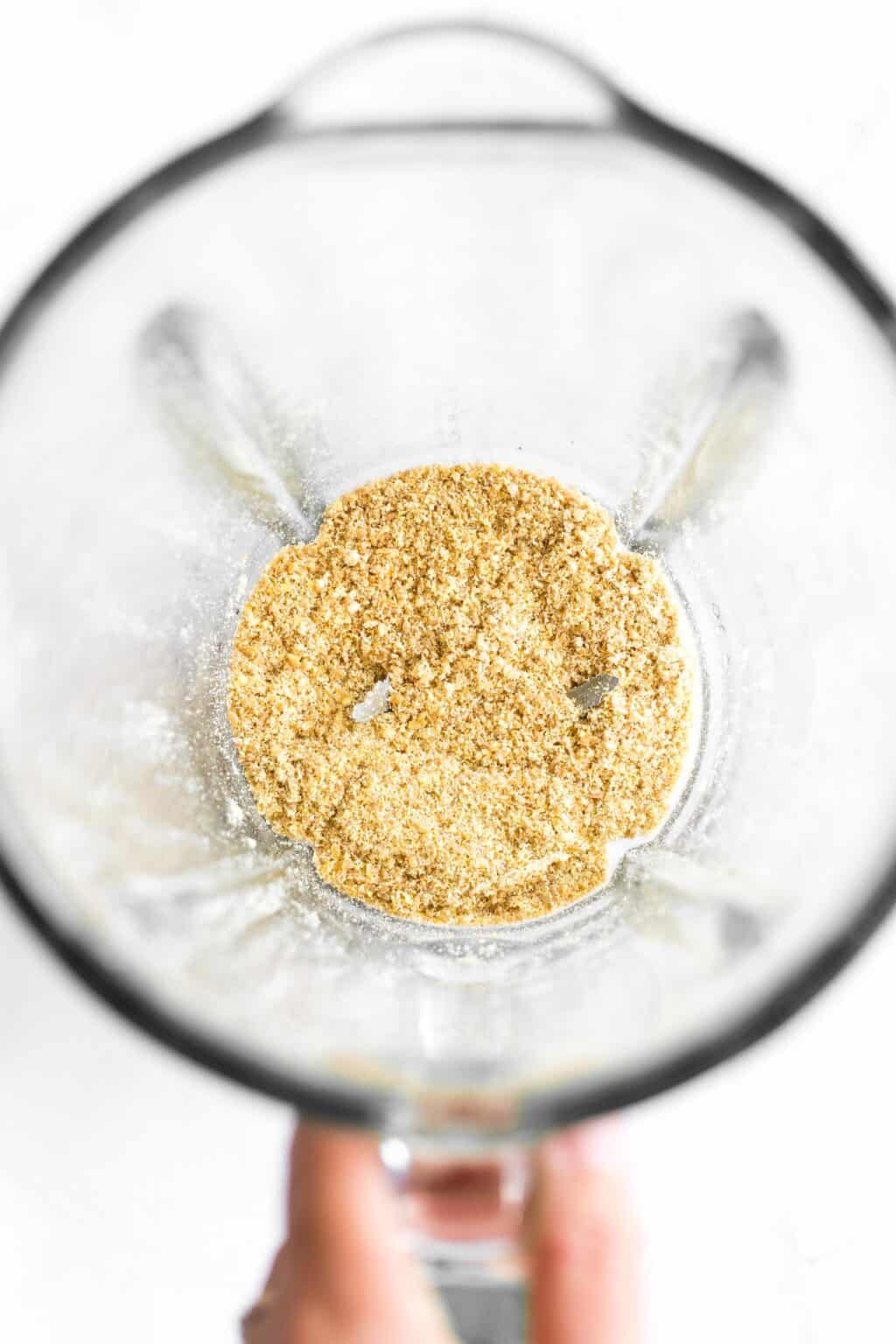
Add dry flax seeds to a clean, dry blender, pulse in short bursts, and blend until they become a fine meal.
Flax seeds are a handy pantry staple in many American kitchens. You can add them to oatmeal, smoothies, yogurt, muffins, pancakes, and homemade bread. However, whole flax seeds can pass through the digestive tract without being fully broken down. Grinding them helps make their nutrients more accessible.
You do not need a special grain mill to prepare ground flaxseed at home. A regular kitchen blender can do the job when you use the right amount of seeds and a suitable blending method. The key is to work with dry seeds, use short pulses, and avoid blending longer than needed.
This guide explains how to grind flax seeds in a blender, which blender settings to use, how much seed to process at once, and how to store the finished meal. You will also learn how to fix common problems, such as seeds sticking to the sides or turning into a thick paste.
Grinding flax seeds breaks their hard outer shells into smaller pieces. This makes it easier for your digestive system to access the nutrients inside. Whole flax seeds can remain partly intact as they move through the digestive tract.
Flax seeds contain fiber, plant-based omega-3 fat called alpha-linolenic acid (ALA), and lignans. Lignans are natural plant compounds. These nutrients are part of the reason people add flaxseed to a balanced diet.
Ground flaxseed is also easier to mix into everyday foods. You can stir it into oatmeal, blend it into a smoothie, or use it in a baking recipe without dealing with whole seeds in every bite.
You can buy ready-made flaxseed meal at many American grocery stores. However, grinding whole seeds at home lets you prepare smaller amounts when needed. It can also help you control how much you make and how long the ground seeds sit in storage.
Better access to nutrients
Breaking the seed coating helps make its internal nutrients more available for digestion.
Easy to mix
Ground flaxseed blends more easily into drinks, cereals, sauces, and baked goods.
Flexible portions
You can grind only the amount needed for a meal or recipe.
Useful for baking
A fine meal can be added to muffins, bread, pancakes, and other baked foods.
Whole Flax Seeds vs. Ground Flaxseed
Whole flax seeds have a firm outer shell that can protect the contents during digestion. Ground flaxseed has a smaller particle size, so the body can access more of what the seeds contain.
The two forms also behave differently in recipes. Whole seeds add a slight crunch, while ground seeds mix into food and create a softer texture. Ground flaxseed can also absorb water and help thicken some mixtures.
Whole seeds
Best when you want a visible seed texture or plan to grind them later.
Ground seeds
Useful for smoothies, oatmeal, baking, and recipes that need a fine seed meal.
What You Need Before Grinding Flax Seeds
You only need a few basic kitchen items to make flaxseed meal. A standard countertop blender can work, although the results depend on the blade design, jar shape, motor, and amount of seeds.
Before you begin, check your blender manual. Some models have limits for dry ingredients or small quantities. A blender designed mainly for liquids may not grind a very small batch evenly.
A dry grinding jar or small blender attachment can help when available. If you only have a standard blender, you can still try the method below. Use a batch size that allows the seeds to move toward the blades.
Source: thecoconutmama.com
Whole flax seeds
Choose fresh brown or golden flax seeds. Both types can be ground in a blender.
A clean blender
Use a dry jar with clean blades and no leftover water or food.
A dry storage container
Prepare a clean, airtight container for any ground flaxseed you do not use right away.
A measuring cup or spoon
Measure the amount you need so you do not grind more than necessary.
A spatula
Keep a clean spatula nearby to scrape dry seed meal from the sides after the blender has stopped.
Can You Use Brown or Golden Flax Seeds?
Yes. Both brown and golden flax seeds work in a regular blender. Their basic nutritional profiles are broadly similar, although exact values can vary with the seed variety and growing conditions.
Brown flaxseed has a slightly darker color and can add a more noticeable look to food. Golden flaxseed has a lighter color and may blend into pale recipes more easily. The choice mostly comes down to appearance, taste, and availability.
Check the seeds before grinding. They should smell mild and nutty. Avoid seeds with a stale, bitter, paint-like, or rancid odor.
Brown flaxseed
A common option for oatmeal, bread, smoothies, and everyday cooking.
Golden flaxseed
A useful option when you prefer a lighter color in baked goods and other foods.
Does Blender Power Matter?
Blender power can affect how quickly and evenly the seeds break down. A stronger motor may handle dry ingredients more easily, but wattage alone does not guarantee a fine result.
Blade shape, jar design, batch size, and the way the seeds move inside the container also matter. If your blender struggles with a small amount, try a slightly larger batch within the manufacturer’s recommended capacity.
Countertop blender
Can work well when the jar and blades allow dry seeds to circulate.
Personal blender
May work for small batches if the manufacturer permits dry grinding.
Dry grinding attachment
Can make it easier to process seeds because it is designed for dry ingredients.
How to Grind Flax Seeds in Blender Step by Step
The easiest method is to add dry flax seeds to a clean blender and use short pulses until they reach the texture you want. You do not need to add water or oil. In fact, adding liquid changes the result and makes it harder to produce a dry flaxseed meal.
Start with a manageable batch. If you are new to grinding flaxseed, a small amount gives you a chance to see how your blender handles the seeds. You can adjust the amount and blending time after checking the first batch.
Source: kitchenarylab.com
Step 1: Clean and dry the blender
Wash the jar and blade assembly if needed. Dry all parts fully before adding the seeds. Moisture can cause the ground seeds to clump.
Step 2: Measure the flax seeds
Start with about one-quarter to one-half cup of whole flax seeds, provided your blender can handle that amount. Follow the manufacturer’s minimum and maximum fill guidance.
Step 3: Add the seeds
Pour the seeds into the blender jar. Keep the jar within its recommended capacity. Do not add water, milk, or other liquids.
Step 4: Secure the lid
Place the lid firmly on the jar. Check that the blender is stable on a dry, level counter.
Step 5: Start with short pulses
Use the pulse setting or a low-speed setting if your blender manual permits dry grinding. Run short bursts rather than leaving the motor running continuously.
Step 6: Check the texture
Turn off the blender and wait for the blades to stop. Check whether the seeds have become a coarse or fine meal.
Step 7: Scrape the sides if needed
Unplug the blender or otherwise disconnect power according to the manual before opening and scraping the jar. Use a spatula to move dry seeds away from the walls.
Step 8: Blend again if necessary
Secure the lid and pulse again in short bursts. Stop once most of the seeds have reached a consistent meal-like texture.
Step 9: Transfer and store
Pour the ground flaxseed into a clean, dry, airtight container. Use what you need and refrigerate or freeze the rest.
How Long Should You Blend Flax Seeds?
There is no single blending time that works for every blender. Some machines can break down seeds quickly, while others need several short rounds. The best guide is the texture of the meal rather than a fixed number of seconds.
Begin with a few short pulses. Check the seeds, then repeat if they still look mostly whole. Avoid running the blender continuously for a long period because excess friction can warm the seeds and make them release oil.
If your blender manual gives a specific limit for dry grinding, follow that instruction. Allow the motor to rest as directed if it begins to heat up.
Coarse meal
Stop when the seeds are broken into small pieces. This texture can work in some bread and granola recipes.
Fine meal
Continue pulsing until the seeds resemble a loose, slightly grainy flour.
Paste-like texture
This suggests that too much oil may have been released. Stop blending rather than trying to make it smoother.
What Does Properly Ground Flaxseed Look Like?
Properly ground flaxseed looks like a loose meal or coarse flour. Its color will depend on whether you use brown or golden seeds. You should see very few whole seeds remaining.
Rub a small amount between your fingers after the blender has stopped. It should feel mostly fine with a slight grainy texture. It does not need to look exactly like wheat flour to be ready for most home recipes.
Good result
Loose, dry, evenly broken particles with no obvious wet clumps.
Needs more grinding
Many whole seeds or large pieces remain.
Overprocessed
The mixture looks oily, sticky, or pressed together.
Tips for Getting Fine and Even Flaxseed Meal
The main challenge when grinding flaxseed is getting the seeds to move evenly around the blades. If they collect along the sides or sit above the blade area, some may remain whole while others become very fine.
A few simple changes can improve the result. Pay attention to the batch size, the shape of the blender jar, and the amount of time you run the motor.
Source: dishbydish.net
Use a suitable batch size
Too few seeds may not reach the blades in a wide jar. Too many seeds can prevent even movement. Follow your blender’s guidance and adjust the quantity as needed.
Use dry ingredients
Moisture can make flaxseed meal stick together. Make sure the seeds and blender jar are fully dry.
Pulse instead of continuous blending
Short bursts let you check progress and reduce unnecessary friction and heat.
Check the sides of the jar
Seeds can collect above the blade area. Stop the blender and scrape them down before continuing.
Avoid overfilling
Leave enough room for the seeds to move. Never exceed the fill line or dry-grinding limit.
Use a clean blade assembly
Old food residue can affect the flavor and texture of the new batch.
Should You Grind Flax Seeds in Small or Large Batches?
Small batches are often easier to manage in a household blender. They let you prepare fresh meal without leaving a large amount exposed to air. However, an extremely small quantity may not reach the blades in a wide blender jar.
Large batches may save time if your blender has a suitable jar and can handle dry seeds. Still, processing too much at once can lead to uneven grinding. The upper layer may remain coarse while the seeds near the blades become finer.
For most home kitchens, it is sensible to begin with a small batch and adjust based on the machine’s performance. You can make several batches rather than overloading the blender.
Small batches
Useful for daily meals and for reducing the amount of ground seed kept in storage.
Medium batches
A practical balance when your blender can circulate the seeds properly.
Large batches
Useful only when the blender manual permits the amount and the seeds grind evenly.
Can You Sift Ground Flaxseed?
Yes. If you need a finer meal for a delicate baking recipe, you can pass the ground seeds through a fine kitchen sieve. Larger pieces will remain in the sieve while finer particles fall into a bowl.
You can return the larger pieces to the blender for another short grinding round. Do not keep blending the entire batch just to break down a few larger pieces. This can make the finer meal oily.
For smooth batters
Sifting can remove larger seed fragments that may affect the final texture.
For oatmeal and smoothies
A slightly coarse meal is usually suitable, so sifting is often unnecessary.
Common Problems When Grinding Flax Seeds
If your blender does not produce the texture you want, do not assume that the machine is broken. Flax seeds contain natural oil, and their small size can make them harder to process than some other dry ingredients.
The most useful troubleshooting step is to look at the result before changing the method. Whole seeds, uneven pieces, sticky clumps, and a warm blender can each point to a different problem.
Source: kitchenwink.com
Problem 1: Flax Seeds Are Not Grinding
If the seeds remain mostly whole, they may not be reaching the blades. This can happen when the batch is too small for a wide jar or when the blender is not designed for dry grinding.
Stop the machine before checking the contents. If the manual allows it, try a more suitable batch size or use a dry grinding attachment. Do not force the blender to run if the motor sounds strained.
Possible cause
The seeds are sitting away from the blade area or the blender is not suited to dry ingredients.
Practical fix
Adjust the batch size, use a suitable attachment, or choose a small seed grinder.
Problem 2: Ground Flaxseed Sticks to the Sides
Flaxseed meal can cling to the jar because the seeds contain oil. Very fine particles may also stick to the walls through static or light moisture.
Turn off the blender and wait for the blades to stop. Disconnect power before opening the jar or scraping its sides. Check that the jar is dry, then use short pulses to finish grinding.
Possible cause
Oil release, moisture, static, or an unsuitable batch size.
Practical fix
Use a dry jar and shorter grinding rounds. Scrape down the sides only after stopping the machine.
Problem 3: Flaxseed Becomes a Thick Paste
A thick or sticky mixture usually means the seeds have been processed too much or have become warm during grinding. As the seeds break down, their oil can coat the particles and cause them to stick together.
Stop blending once the mixture becomes oily. You may still use it in a recipe where a moist seed mixture is suitable, but it will not behave like loose flaxseed meal.
Possible cause
Too much continuous blending or excessive friction.
Practical fix
Use shorter pulses in the next batch and stop as soon as the meal reaches the desired texture.
Problem 4: The Blender Gets Hot
A blender may warm up when it works hard on dry ingredients. Grinding for too long, processing an oversized batch, or using a machine outside its intended purpose can increase the strain.
Stop the blender if the motor becomes unusually hot, smells burnt, or makes an abnormal sound. Allow it to cool according to the manufacturer’s instructions. If the problem continues, stop using it and check the manual or contact the manufacturer.
Possible cause
Excessive workload, long blending periods, or an unsuitable machine.
Practical fix
Reduce the batch size, use short pulses, allow cooling periods, and follow the appliance’s dry-grinding limits.
Problem 5: The Ground Seeds Taste Bitter
Fresh flaxseed has a mild, nutty taste. A strong bitter, stale, or paint-like flavor may indicate that the seed oils have become rancid.
Check the whole seeds and the ground meal. If either has an unpleasant rancid smell or taste, discard it. Do not try to hide the flavor with sweeteners or other ingredients.
Possible cause
Old seeds, poor storage, or prolonged exposure to heat, air, and light.
Practical fix
Start with fresh seeds and keep ground flaxseed in a sealed container in a cool place.
Can You Use a Regular Blender Instead of a Coffee Grinder?
Yes. A regular blender can grind flax seeds, but it is not always the easiest tool for very small batches. The best choice depends on how much seed you need and the equipment already in your kitchen.
A coffee grinder can be more convenient for small amounts because its grinding chamber is designed to process dry ingredients. However, it should be clean and free from coffee residue if you want a neutral flaxseed flavor.
A food processor may also break flax seeds into smaller pieces, but it can struggle to make a fine meal when the quantity is small. A dedicated seed or spice grinder is another option.
Regular blender
A useful choice when you already own one and want to grind a moderate amount of seeds.
Coffee grinder
Often convenient for small portions of dry flaxseed, provided the grinder is suitable and clean.
Food processor
Can break seeds into smaller pieces, although a fine and even result may be harder to achieve.
Mortar and pestle
Can crush a small quantity by hand, but takes more time and effort.
Manual seed grinder
A possible option if you want to grind small amounts without using an electric appliance.
Which Method Should You Choose?
Choose the blender if you already have one and plan to grind enough seeds for several servings. Choose a coffee or spice grinder if you only need a spoonful or two and your blender jar is too wide for such a small amount.
You do not need to buy another appliance just to prepare flaxseed. Try your current blender first, as long as the manufacturer allows dry grinding. If the result remains uneven, a smaller grinder may be more practical.
For everyday family cooking
A suitable countertop blender can handle convenient batches.
For one serving
A small coffee or spice grinder may be easier to manage.
For occasional use
Use the appliance you already own if it can grind the seeds safely and effectively.
How to Store Ground Flaxseed Properly
Ground flaxseed needs more careful storage than whole flax seeds because grinding exposes more of its oil to air. Oxygen, heat, and light can speed up oxidation, which affects freshness and flavor.
The best approach is to grind only what you need and keep any extra meal in a clean, airtight container. Refrigeration or freezing can help slow the loss of freshness.
Do not leave a bowl of ground flaxseed uncovered on the kitchen counter for long periods. Also avoid storing it beside a stove, oven, or other source of heat.
Use an airtight container
A tightly sealed glass or food-safe container helps limit contact with air and moisture.
Refrigerate unused meal
Keep ground flaxseed in the refrigerator to help protect its quality.
Freeze larger amounts
For longer storage, place the meal in a freezer-safe airtight container or bag.
Label the container
Write the grinding date on the container so you can track how long the meal has been stored.
Use a clean, dry spoon
Avoid introducing water or food residue into the stored meal.
How Long Does Ground Flaxseed Last?
The storage life of ground flaxseed depends on the freshness of the original seeds, the temperature, packaging, and exposure to air. There is no single guaranteed storage period for every homemade batch.
Check the smell and appearance before use. Fresh meal should have a mild, nutty aroma. A rancid, sour, bitter, or paint-like smell is a reason to discard it.
For the best flavor, make small batches that you can use regularly. Refrigerate or freeze the rest instead of keeping a large amount at room temperature.
Room temperature
Less suitable for extended storage because heat and air can affect the seed oils.
Refrigerator
A practical option for ground flaxseed you plan to use regularly.
Freezer
Useful for keeping larger quantities for later use. Protect the meal from moisture and odors.
Can You Freeze Ground Flaxseed?
Yes. Ground flaxseed can be stored in the freezer in a tightly sealed, freezer-safe container. This helps protect the meal from warm temperatures and slows changes in its natural oils.
If you freeze a large batch, consider dividing it into smaller portions. That way, you only need to take out the amount you plan to use.
Keep the container closed while the meal comes to the temperature needed for use. This helps limit moisture from condensation. Follow food storage guidance for your specific product when available.
Use small portions
Divide the meal into practical amounts before freezing.
Prevent moisture
Use airtight packaging and avoid putting wet spoons into the container.
How to Use Freshly Ground Flaxseed
Once your flax seeds are ground, you can add the meal to many foods. Its mild, nutty flavor works in both sweet and savory recipes. Start with a small amount if you are not used to eating extra fiber.
Ground flaxseed can thicken liquids and add body to mixtures. It absorbs moisture, so a recipe may need a small adjustment when you add it. The amount of liquid needed depends on the recipe and the amount of flaxseed used.
Source: dishbydish.net
Oatmeal
Stir ground flaxseed into warm oatmeal for a simple breakfast addition.
Smoothies
Blend it with fruit, milk, yogurt, or a plant-based drink.
Yogurt
Sprinkle it over plain or flavored yogurt and mix well.
Pancakes
Add some meal to pancake batter for extra fiber and a mild nutty taste.
Muffins
Mix it into muffin batter along with the other dry ingredients.
Homemade bread
Add a suitable amount to bread dough for extra texture and flavor.
Soups and sauces
Stir a small amount into a recipe where a thicker texture is welcome.
How to Make a Flax Egg
Ground flaxseed can replace eggs in some baking recipes. When mixed with water, it forms a thick, gel-like mixture. This is often called a flax egg.
To make one, combine one tablespoon of ground flaxseed with about three tablespoons of water. Stir well and let the mixture stand for several minutes until it thickens.
Use the mixture in recipes where a flax egg is suitable. It works best in foods such as muffins, pancakes, and some quick breads. It does not behave exactly like a chicken egg, so it is not a universal substitute for recipes that depend on eggs for structure, aeration, or setting.
Ground flaxseed
Use one tablespoon of finely ground flaxseed.
Water
Add about three tablespoons of water.
Resting time
Let the mixture thicken before adding it to the recipe.
Best uses
Try it in suitable pancakes, muffins, cookies, and quick breads.
Can You Add Ground Flaxseed to Hot Food?
Yes. You can stir ground flaxseed into warm oatmeal, soups, and cooked cereal. You can also use it in baked recipes.
Heat does not make flaxseed unsuitable for every cooked dish, but prolonged high heat can affect its delicate fats. If you want to limit heat exposure, add the meal after cooking when the food has cooled slightly.
For baking, follow the recipe rather than adding large amounts without changing the other ingredients. Ground flaxseed absorbs moisture and can make some foods dense or dry.
Warm oatmeal
Stir in the meal shortly before eating.
Smoothies
Add it during blending or stir it in afterward.
Baked goods
Use an amount suited to the recipe and its moisture balance.
Safety and Nutrition Tips to Keep in Mind
Flaxseed can be part of a balanced diet, but adding more is not always better. It contains fiber, so increasing your intake too quickly may cause gas, bloating, or changes in bowel habits.
Drink enough fluids when increasing fiber in your diet. If you have a digestive condition, take medication, or follow a medically prescribed diet, ask a qualified healthcare professional whether flaxseed is suitable for you.
Flaxseed also contains ALA, a plant-based omega-3 fat. ALA is not the same as the omega-3 fats EPA and DHA found in some fish and seafood. Do not assume that eating flaxseed provides the same amount or type of omega-3 as those foods.
People with a known allergy to flaxseed should avoid it. If you develop signs of an allergic reaction, stop eating it and seek appropriate medical care. Serious symptoms, such as trouble breathing or swelling of the throat, need emergency attention.
Increase fiber gradually
Start with a modest amount and increase it slowly if your body tolerates it.
Drink enough water
Adequate fluid intake helps support normal digestion when eating more fiber.
Check medication concerns
If you take prescription medicine, ask your pharmacist or healthcare professional about timing and possible interactions.
Use fresh seeds
Avoid flaxseed with a rancid smell or unpleasant taste.
Keep equipment safe
Never open, scrape, or reach into a blender while its blades are moving or the appliance is powered.
Can Everyone Eat Ground Flaxseed?
Many people can enjoy flaxseed as part of a varied diet. However, individual needs differ. People with certain digestive problems, swallowing difficulties, allergies, or medication concerns may need specific advice.
Ground flaxseed adds fiber and absorbs liquid. If you have been told to follow a low-fiber diet or have a condition that affects bowel function, check with your healthcare professional before adding it regularly.
Pregnant or breastfeeding people should also discuss concentrated or supplemental flaxseed use with a qualified healthcare professional rather than assuming that every form and amount is appropriate.
General food use
For many adults, modest amounts can fit into a balanced eating pattern.
Medical conditions
Get individual advice if you have a condition that affects digestion or swallowing.
Medication use
Ask a pharmacist or healthcare professional about any concerns related to your medicines.
Frequently Asked Questions
Q
Can I grind flax seeds in a regular blender?
Yes. A regular countertop blender can grind flax seeds into a coarse or fine meal. Use a clean, dry jar and a batch size that allows the seeds to move toward the blades. Check your blender manual first because not every model is designed for dry grinding.
Q
Do I need to soak flax seeds before grinding?
No. You should use dry flax seeds when making a loose flaxseed meal. Soaking adds moisture and makes the seeds sticky, which changes the texture and can make grinding more difficult. Add water later if you are preparing a flax egg or another recipe that needs a gel.
Q
Can I grind flax seeds without a special grinder?
Yes. A suitable kitchen blender, coffee grinder, or spice grinder can process whole flax seeds. A food processor may also break them down, although it may not produce a very fine meal. Always follow the appliance manufacturer’s instructions.
Q
Should ground flaxseed be fine like flour?
Not necessarily. A loose, slightly grainy meal is suitable for many everyday uses, including oatmeal, smoothies, and baking. Some recipes benefit from a finer texture, but blending too long can release oil and make the mixture sticky.
Q
Can I grind flax seeds with a NutriBullet-style blender?
Some personal blenders may grind flax seeds, but compatibility depends on the exact model and blade attachment. Check the manual to see whether dry grinding is allowed. Do not assume that every personal blender can process dry seeds safely.
Q
Can I grind flax seeds and chia seeds together?
You can grind dry flax and chia seeds together if your blender is suitable for dry ingredients. However, the two seeds behave differently. Chia seeds absorb water readily, so the combined meal may thicken more when added to liquids. For better control over texture, grinding them separately is often easier.
Q
Why does my ground flaxseed look oily?
Flax seeds contain natural oils. If you blend them continuously for too long, friction and heat can encourage the oil to coat the ground particles. This can make the meal look sticky or clumpy. Use short pulses and stop when the seeds reach a loose meal texture.
Q
Is homemade ground flaxseed better than store-bought flaxseed meal?
Both can be useful. Grinding at home lets you prepare smaller batches from whole seeds and control how long the meal is stored. Store-bought flaxseed meal saves time and may be more convenient. Check its packaging, freshness information, and storage instructions before buying or using it.
Q
Can I grind flax seeds in advance?
Yes. You can grind flaxseed ahead of time, but ground seeds are more exposed to air than whole seeds. Store them in an airtight container in the refrigerator or freezer. Make smaller batches when possible and check for rancid odors before use.
Q
Can I use whole flax seeds in a smoothie instead?
You can add whole flax seeds to a smoothie, but they may not break down completely in every blender. Grinding them first gives you more control over the texture and helps make the nutrients inside the seeds more accessible. If you prefer whole seeds, use a blender that can process them well.
✦ Wrapping Up
Conclusion
Grinding flax seeds in a blender is a simple way to prepare fresh flaxseed meal at home. You do not need a special appliance if your regular blender supports dry grinding. Start with clean, dry seeds, choose a suitable batch size, and use short pulses until the mixture reaches a loose, fine texture.
The most important part is knowing when to stop. Flax seeds contain natural oils, so excessive blending can turn the meal into a sticky paste. Check the texture as you work, scrape the sides only after the blades have stopped, and avoid running the motor longer than your appliance allows.
Once your flaxseed meal is ready, add it to oatmeal, smoothies, yogurt, pancakes, muffins, and other suitable recipes. Store unused portions in a tightly sealed container in the refrigerator or freezer to help protect their freshness.
For the best everyday results, grind only as much as you need and start with a small batch. This simple habit makes it easier to enjoy fresh ground flaxseed without wasting seeds or creating extra kitchen work.
💡 Key Takeaway
Measure a small amount of fresh, dry flax seeds, add them to a clean blender, and pulse until they form a loose meal. Transfer the finished flaxseed to an airtight container and refrigerate or freeze any unused portion.