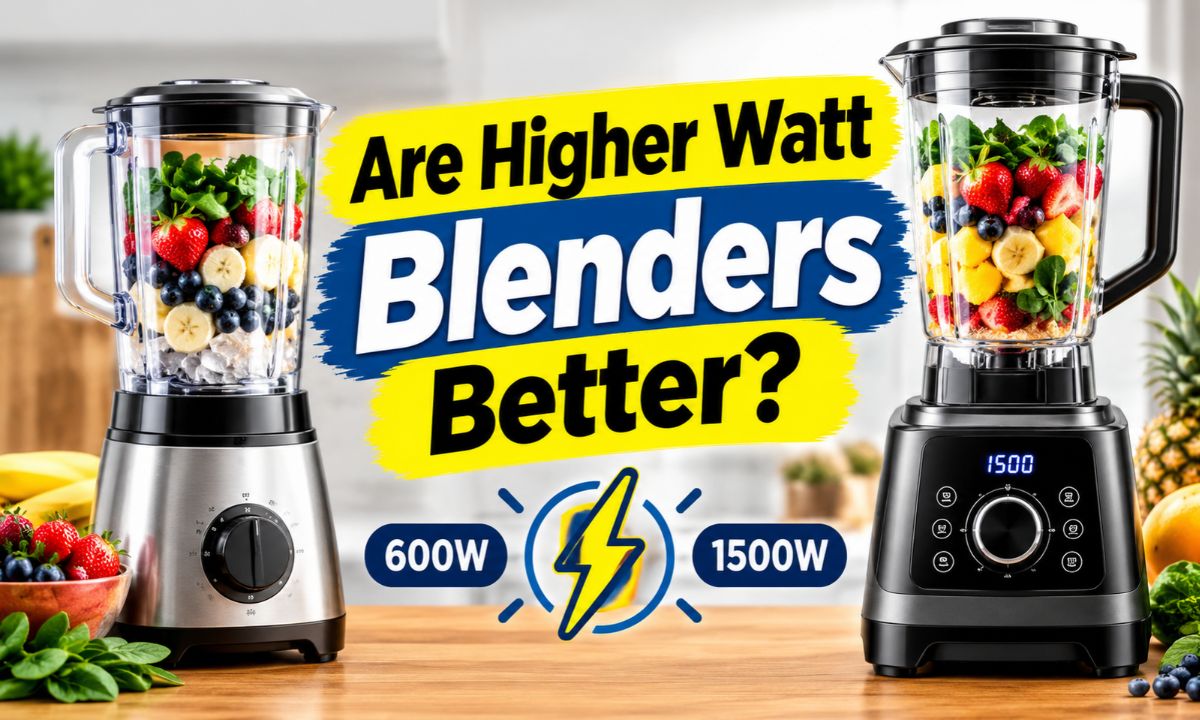
Higher watt blenders can handle tough ingredients and frequent use better, but wattage alone does not guarantee smoother results or longer life.
In American kitchens, blenders help make breakfast smoothies, frozen drinks, soups, sauces, and nut-based spreads. A busy household may use one every morning, while someone else may only blend a milkshake on the weekend. The right motor power depends on what you make, how much you blend, and how often you use the machine.
A higher-watt blender can offer more power for dense mixtures, frozen fruit, and demanding tasks. Yet blade design, jar shape, motor control, and the way ingredients move through the jar also affect results. A well-designed blender with a moderate wattage rating may work better for everyday drinks than a poorly designed model with a larger number on its label.
Blender wattage tells you how much electrical power the appliance uses or is rated to draw under specified conditions. A watt is a unit of power. In simple terms, the number helps describe the electrical demand of the motor and its drive system.
A blender labeled 300 watts and one labeled 1,200 watts have different power ratings, but that difference does not tell the whole story. The higher-rated model may have more capacity for demanding work, yet its actual blending results also depend on how efficiently it turns electrical input into useful motion and how well its blades move food.
Wattage is not the same as horsepower, blade speed, or torque. Torque describes turning force, while speed describes how fast the blades rotate. These factors work together, but manufacturers do not always publish comparable figures for every model.
Source: alibaba.com
Electrical power
Watts describe power drawn or rated by the appliance under the stated conditions. They do not directly measure the smoothness of a finished drink.
Motor performance
The motor and drive system affect how well the blender keeps the blades moving when ingredients become thick or difficult to process.
Blade and jar design
Blade shape, jar width, and the movement of ingredients can change blending quality even when two models have similar wattage.
Rated Watts Versus Peak Watts
Some blenders advertise peak wattage, while others list a rated operating figure. Peak power may describe a short-duration maximum under specified conditions rather than the power the motor sustains during ordinary blending.
Do not assume that a blender advertised with a higher peak number will outperform one with a lower published number. Check the manufacturer’s specifications and manual to understand what each figure means. Comparing similar types of ratings is more useful than comparing numbers without context.
Read the product specifications
Look for an explanation of rated power, peak power, or operating power rather than relying on a large number printed on the box.
Check the intended workload
A blender designed for single servings may not be suitable for thick mixtures or large family batches, even if its advertised wattage sounds impressive.
Are Higher Watt Blenders Better for Everyday Use?
Higher-watt blenders can be better for households that blend tough ingredients often. They may have more capacity to maintain blade movement when processing frozen fruit, thick mixtures, or dense vegetables. This can make difficult recipes easier when the rest of the design supports the workload.
For ordinary tasks, the difference may be small. Mixing protein powder with milk, blending ripe bananas, or making a thin fruit smoothie usually does not demand the same power as grinding nuts or making a thick frozen drink.
The best choice is the blender that handles your regular recipes without repeated stopping, excessive straining, or poor results. Paying for extra power makes less sense when your recipes rarely challenge the motor.
Source: blenderjunkie.com
For daily smoothies
Choose a model that blends your usual fruit, liquid, and optional greens without leaving large pieces behind. Jar design and ingredient order matter alongside wattage.
For thick mixtures
A stronger motor may help with low-liquid blends, but a suitable tamper, careful ingredient loading, and the correct speed can also make a major difference.
For occasional use
A basic model may offer better value if you blend soft ingredients only a few times a week.
When Extra Power Makes a Noticeable Difference
Extra power is most useful when a recipe creates strong resistance or requires the blades to keep moving through a dense mixture. Frozen fruit, large amounts of ice, and thick nut spreads can place more demand on the motor than watery drinks.
Even then, power is only part of the answer. A narrow jar that traps ingredients away from the blades can struggle, while a well-shaped container may guide food back toward the cutting area. Some blenders also offer preset programs or variable speeds that help manage demanding recipes.
Frequent frozen drinks
Consider a blender designed and rated for ice and frozen ingredients, with a motor and blade system suited to that task.
Nut butter and thick dips
Look for explicit support for dense mixtures, suitable jar capacity, and any required tamper or processing limits.
How Much Wattage Does a Blender Need?
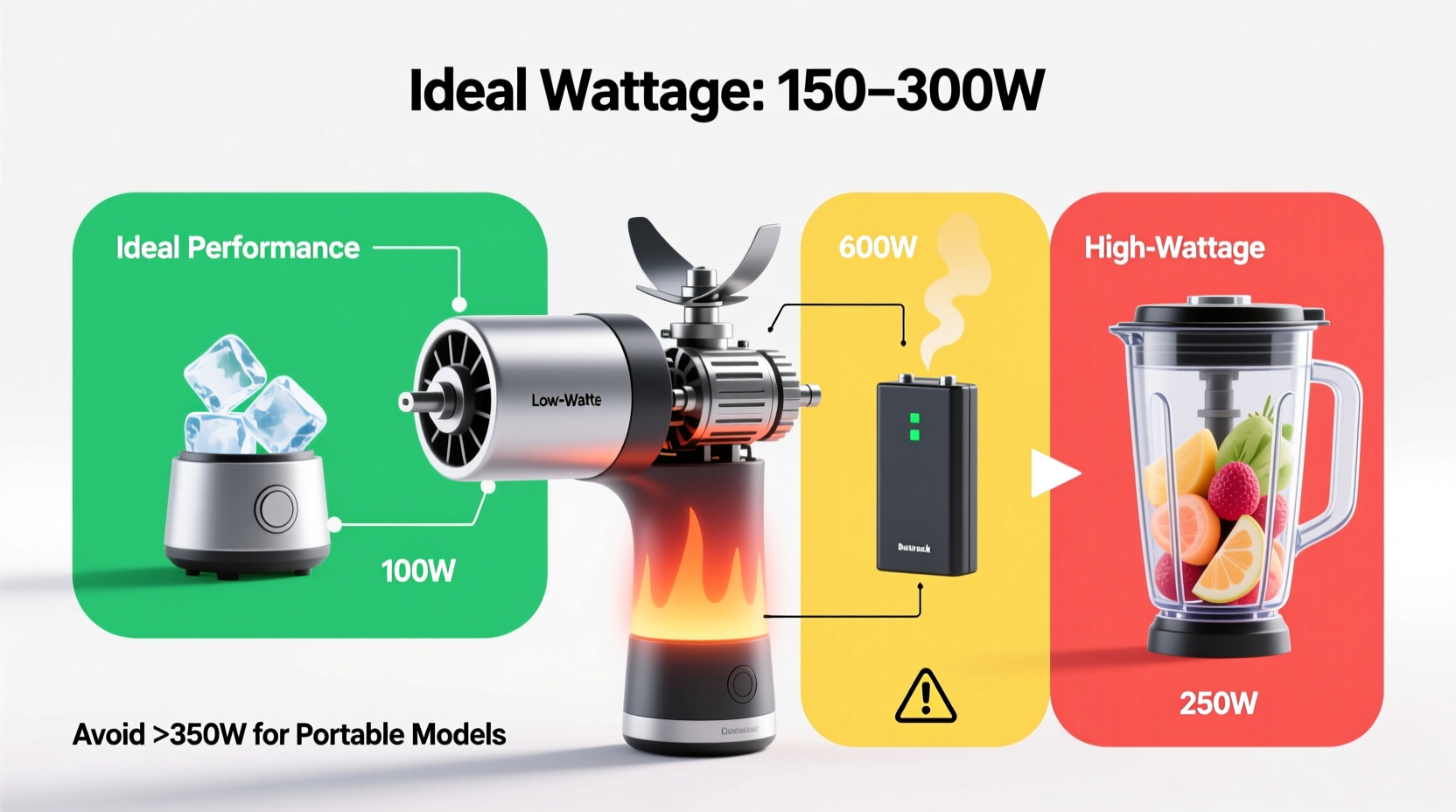
The right wattage depends on the type of food you blend, the quantity, and the demands of each recipe. There is no single number that makes every blender suitable for every kitchen. The ranges below are general shopping guides, not formal performance standards or guarantees.
Small personal blenders often use less power than full-size countertop models. High-powered countertop blenders may offer more capacity for dense recipes, but the exact performance varies by design. Always check the manufacturer’s instructions for the foods and quantities the model can handle.
Source: blenderjunkie.com
Around 200 to 400 watts
This broad range may suit some basic blending tasks, such as soft fruit drinks, protein shakes, and simple liquid mixtures. It is not a guarantee that every model in this range can handle ice.
Around 400 to 800 watts
Some blenders in this range can manage everyday smoothies, sauces, and selected frozen ingredients. Results depend on the design and the manufacturer’s stated limits.
Around 800 to 1,200 watts
This range may offer useful capacity for more frequent blending and tougher recipes. Look for suitable ice-crushing guidance and realistic batch limits.
Above 1,200 watts
Some models in this range are built for demanding household tasks, thick blends, and frequent use. Higher wattage still does not prove that a model is the best choice.
Match Power to Your Main Recipes
Before buying, list the three things you make most often. A person who prepares a thin breakfast smoothie has different needs from someone who makes frozen drinks for a family or blends thick nut butter in batches.
Next, check the blender’s manual or product documentation for those tasks. If the manufacturer does not recommend ice crushing, hot liquids, or thick spreads, do not assume that a large wattage number makes the task safe.
Shakes and soft fruit
Focus on ease of cleaning, jar size, and the ability to blend small portions well.
Greens and seeds
Check the expected texture and the model’s ability to process the specific ingredients. Wattage alone cannot promise a fully smooth result.
Ice and frozen fruit
Choose a model whose manual explicitly permits these ingredients and explains any required liquid or batch limits.
Thick spreads
Look for clear guidance on dense foods, pauses, batch sizes, and any approved tamper or accessory.
Does Higher Wattage Make Smoothies Smoother?
Higher wattage can help a blender keep working through a challenging smoothie, but it does not automatically make every drink smoother. Smoothness depends on blade action, ingredient size, liquid level, blending time, and how food circulates inside the jar.
A powerful blender may still leave chunks if the jar is overloaded or the ingredients cannot reach the blades. A lower-powered model may produce a smooth drink when the ingredients are soft, the portions are small, and enough liquid helps them move.
For a better result, cut large ingredients into manageable pieces, add liquid as directed, and place ingredients in the order recommended by the manufacturer. Start at a lower speed when appropriate, then increase it as the mixture begins to move. Stop and scrape or rearrange ingredients only after switching the appliance off and following the manual.
Source: longroadhomeproject.com
How to Get a Smooth Blend Without Buying More Power
Good loading habits can improve blending with many countertop models. Too much frozen food at once can block circulation, while too little liquid can leave ingredients stuck above the blades.
Use the jar’s fill limits and the manual’s instructions. If the blender struggles, stop it rather than forcing the motor to keep running against a jammed mixture. Add liquid only if the recipe and appliance instructions allow it.
Use manageable portions
Blend smaller batches when the jar is too full or the ingredients cannot circulate.
Prepare ingredients
Cut large fruit and firm vegetables into suitable pieces before blending.
Allow ingredients to circulate
Follow the recommended liquid ratio and use approved speed settings to help food reach the blades.
Avoid excessive run time
Follow the manual’s duty cycle and rest periods so the motor does not overheat.
Are Higher Watt Blenders Better for Crushing Ice?
A higher-powered blender may crush ice more effectively when its blades, jar, motor, and drive system are designed for the task. However, wattage alone does not tell you whether a particular model can safely process ice or how fine the result will be.
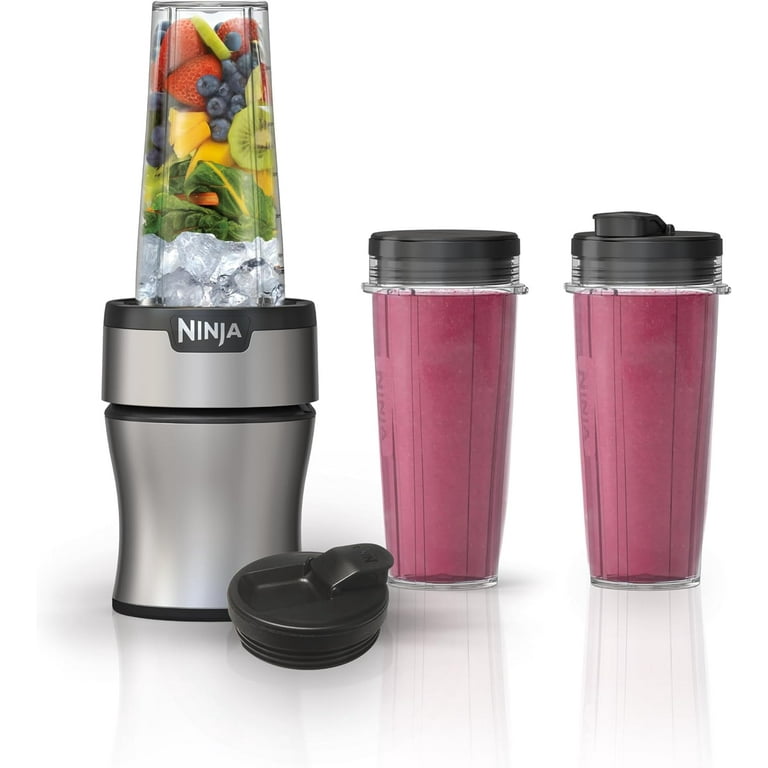
Some personal blenders are designed mainly for drinks made with soft fruit and liquids. Others can handle frozen fruit or small amounts of ice when the instructions permit it. Using ice in a model that is not rated for the task can damage parts or lead to poor results.
If you regularly make frozen cocktails, slushies, or thick fruit bowls, select a blender whose manufacturer specifically supports those uses. Follow the stated quantities and preparation steps, including any requirement for liquid or crushed rather than whole ice.
Source: blenderjunkie.com
Why Ice Can Be Hard on a Blender
Ice is hard and may move around the jar instead of staying in contact with the blades. When the pieces fail to circulate, the motor may struggle while the blades repeatedly hit the same area.
This is why the correct container shape, blade design, and approved ice quantity matter. A stronger motor cannot make an unsuitable jar or unsupported task appropriate.
Check ice instructions
Confirm that the model supports ice and follow the recommended portion size.
Use the correct liquid level
Add liquid when the recipe and manual call for it, rather than running the blender with an unsuitable dry load.
Stop if the blades stall
Turn off the blender and unplug it before checking the contents. Never place fingers or utensils inside a running blender.
Do Higher Watt Blenders Use More Electricity?
A blender with a higher power draw can use more electricity per minute when operating at that draw. But the total energy used for a recipe depends on how long the blender runs and how much power it draws during that time.
Electricity use is measured in kilowatt-hours, or kWh, on a typical US household power bill. To estimate energy use, divide watts by 1,000 and multiply by the operating time in hours. The result is an estimate, because actual power draw may vary with speed, ingredients, and motor load.
For many short blending sessions, the difference in energy cost may be small compared with appliances that heat or cool food for long periods. Still, it is useful to understand the calculation if you blend often or want to compare running costs.
Source: kitchenwink.com
A Simple Electricity Cost Example
Suppose a 1,000-watt blender draws its full rated power for two minutes. The calculation is 1,000 divided by 1,000, multiplied by two divided by 60. That equals about 0.033 kWh for the session.
Now suppose a 500-watt blender runs for four minutes at its full rated power. It also uses about 0.033 kWh. This hypothetical example shows why power and time must be considered together. It does not mean both blenders will take those exact times or draw their full ratings in actual use.
Energy formula
Energy in kWh equals power in watts divided by 1,000, multiplied by operating time in hours.
Cost formula
Multiply the estimated kWh by your electricity rate. Use the rate shown on your US utility bill for a more useful estimate.
Are Higher Watt Blenders Louder?
Higher wattage does not always mean a louder blender, but powerful countertop models can produce substantial noise, especially when crushing ice or blending hard ingredients. Noise depends on motor design, blade speed, vibration, jar shape, the countertop, and the food being processed.
A high-powered blender working against frozen ingredients may sound louder than the same blender making a thin drink. A smaller model may also sound sharp or harsh even when its rated power is lower.
If noise matters in an apartment or shared home, look for measured sound information under comparable conditions when available. Read the manual and product details for any sound enclosure or noise-control feature, but do not assume that a larger wattage rating predicts the sound level.
Source: blenderjunkie.com
Look for comparable noise data
A sound measurement is most useful when the test distance, speed, and ingredient load are known.
Reduce unnecessary vibration
Place the blender on a stable, level surface and follow the manufacturer’s instructions for setup.
Choose practical blending times
If possible, avoid running a noisy blender when other household members are sleeping or working nearby.
Does a Higher-Watt Blender Last Longer?
Higher wattage does not guarantee a longer service life. A motor with enough capacity for the work may be less likely to struggle during demanding recipes, but durability also depends on materials, cooling, bearings, seals, drive components, and how the blender is used.
A powerful blender can still wear out if it runs too long, processes unsupported ingredients, or operates with an overloaded jar. A lower-powered blender may last for years when used within its intended limits and maintained properly.
Warranty terms, replacement-part availability, repair options, and clear operating instructions are useful buying factors. A model with a suitable motor and accessible support may offer better long-term value than a more powerful appliance with limited service options.
Source: blenderjunkie.com
Signs Your Blender Is Working Too Hard
A blender that repeatedly stalls, smells hot, or shuts itself off may be facing too much resistance, poor airflow, or a fault. These signs do not prove that the motor is too weak, and they should not be ignored.
Stop the appliance if it stalls or gives off a burning smell. Switch it off, unplug it, and allow it to cool according to the manual. If the issue returns with a suitable load, contact the manufacturer or a qualified repair service rather than continuing to test the motor.
Repeated stalling
Check whether the jar is overloaded or the ingredients exceed the model’s stated limits.
Burning odor or unusual heat
Stop using the blender and unplug it. Do not restart it until the cause has been addressed and the manufacturer’s guidance has been followed.
Unusual grinding or rattling
Check the exterior assembly and jar seating only after disconnecting power. Arrange service if the noise persists.
How to Compare Two Blenders Beyond Wattage
When two blenders have different power ratings, compare the features that affect your actual recipes. A higher number may be useful, but it cannot replace clear evidence that the appliance suits your intended use.
Start with the manufacturer’s supported tasks, then review capacity, speed control, jar design, cleaning requirements, and warranty coverage. If both models meet your needs, compare their prices and practical features rather than treating wattage as the deciding factor.
Source: blenderjunkie.com
Supported ingredients
Check whether the manual permits ice, frozen fruit, nuts, seeds, hot liquids, or thick mixtures you plan to prepare.
Jar size and shape
Choose a capacity that suits your usual portion size. A large jar may be awkward for a single serving, while a small jar may not fit a family recipe.
Speed and pulse controls
Variable speeds and a pulse function can help control texture and break up ingredients when used as directed.
Cleaning and storage
Consider removable parts, cleaning instructions, the weight of the jar, and how much counter or cabinet space the blender needs.
Warranty and repair
Read the warranty conditions and check whether replacement jars, lids, seals, and other approved parts are available.
A Practical Buying Decision Table
Use this table to narrow your options by workload. The categories are general guidance rather than strict wattage standards, and the manufacturer’s specifications should decide whether a model can handle a particular recipe.
Simple shakes and soft fruit
Start with a basic or moderate-power model that blends your usual ingredients and is easy to clean.
Daily mixed-fruit smoothies
Look for reliable circulation, suitable capacity, useful speed controls, and enough power for any frozen ingredients you use.
Frequent ice crushing
Choose a model specifically rated for ice and frozen drinks, and follow its recommended loading method.
Thick nut spreads and dense mixtures
Prioritize documented support for thick recipes, motor capacity, jar design, and any required accessory.
Large family batches
Compare usable capacity, batch limits, and the ability to blend the full quantity without overfilling the jar.
Common Mistakes When Choosing Blender Wattage
The most common buying mistake is assuming that the highest number on the label guarantees the best results. This can lead to spending more on features you rarely use while overlooking jar size, cleaning, noise, and the types of ingredients the manufacturer supports.
Another mistake is assuming that a powerful motor can handle every recipe. Even a high-powered blender has operating limits, and a task that falls outside the manual’s guidance may cause damage or create a safety risk.
Source: kitchenwink.com
Comparing peak watts with rated watts
Check the meaning of each rating before comparing models. The numbers may describe different operating conditions.
Ignoring blade and jar design
A strong motor cannot guarantee good circulation or consistent cutting if the jar and blade system do not suit the recipe.
Buying more power than needed
If you make simple drinks, extra power may add cost and bulk without a clear daily benefit.
Assuming every blender can crush ice
Check the manual for approved ingredients and quantities before adding hard or frozen food.
Ignoring duty cycles
Some blenders need rest periods between runs. Follow the instructions instead of blending continuously until the motor overheats.
Treating wattage as a durability score
Review warranty terms, build details, service options, and operating limits instead of assuming a higher rating means a longer life.
What to Do if Your Current Blender Struggles
First, stop the blender if the blades stall, the motor smells hot, or the appliance makes a new grinding sound. Unplug it before checking the jar, ingredients, and removable parts. Never reach into the jar while the blades can move.
If the ingredients are too dense or the jar is overfilled, reduce the batch and follow the manual’s recommended liquid ratio. Let the motor cool for the period specified by the manufacturer. If the problem continues with an appropriate load, contact the maker or a qualified service provider.
Check the recipe and load
Confirm that the food type, portion size, and liquid level fall within the manufacturer’s instructions.
Check assembly
With the appliance unplugged, inspect the jar seating and removable parts according to the manual.
Check for a recurring fault
Persistent stalling, a burning smell, or unusual mechanical noise calls for service rather than repeated attempts to run the motor.
How Much Should You Spend on a High-Watt Blender?
The right budget depends on how often you blend and how demanding your recipes are. A higher-watt model may cost more, but the price can also reflect jar materials, controls, accessories, warranty coverage, and the manufacturer’s support options.
For simple drinks, a modest model that performs those tasks well may be the more sensible purchase. For frequent frozen drinks, dense spreads, or large batches, a higher-powered model may be worth considering if its documented features match those jobs.
Compare the total cost of ownership rather than the sticker price alone. A model that includes useful accessories or offers readily available replacement parts may be more practical than one that requires costly or hard-to-find components. These benefits should be verified for the exact model before buying.
Source: alibaba.com
A Simple Way to Set Your Budget
Write down the tasks you need the blender to perform and mark which ones are essential. Set aside models that do not support those tasks, regardless of their advertised power. Then compare the remaining choices by price, capacity, cleaning, warranty, and storage needs.
If two models meet the same requirements, avoid paying more solely for a larger wattage number. Choose the one that offers the best fit for your routine and budget based on available specifications and support terms.
Pay for tasks you will use
Extra capacity and power are most useful when they solve a real problem in your normal routine.
Check replacement costs
Look for the price and availability of compatible jars, lids, seals, and other service parts.
Review warranty limits
Read the warranty for coverage periods, exclusions, and any requirements for proper use.
Research Notes and Questions Worth Checking Before You Buy
A useful blender guide should separate general engineering principles from model-specific claims. Wattage and energy calculations can explain likely trade-offs, but they cannot establish the performance of an individual product without comparable specifications or testing.
This guide provides general buying guidance rather than a laboratory comparison of specific blenders. No hands-on tests, noise measurements, durability trials, or independent head-to-head performance results are claimed here. For a purchase decision, use the exact model’s manual and specifications to verify the features that matter to you.
Source: longroadhomeproject.com
Practical Next Questions
Before buying, confirm whether the model supports your main recipes, whether the jar is large enough, and whether its motor rating refers to peak or rated power. These are inferred next needs based on the buying task, not claims about measured search demand.
The most useful follow-up evidence is the exact product manual, clearly defined electrical specifications, warranty terms, and comparable performance testing under the same ingredient loads. If that evidence is not available, avoid treating a wattage comparison as proof of overall superiority.
Can it handle my ingredients?
Use the manufacturer’s manual to confirm supported foods, quantities, and preparation steps.
How much power does it draw in use?
Check whether the rating is a peak or operating figure. Actual consumption depends on speed, load, and run time.
Will it fit my kitchen routine?
Compare the jar size, storage needs, cleaning method, sound level information, and service support.
Frequently Asked Questions
Q
Is a 1,000-watt blender powerful enough for most home kitchens?
A 1,000-watt blender may suit many home kitchens, including those that make regular smoothies and some frozen drinks. Its suitability depends on the jar, blades, motor design, and the tasks approved by the manufacturer.
If you mainly blend soft fruit and liquids, you may not need that much power. If you regularly prepare thick nut butter or large batches of dense food, check whether the exact model is designed for those jobs.
Q
Is a 500-watt blender good for smoothies?
A 500-watt blender can be suitable for many simple smoothies made with soft fruit, liquids, and other ingredients supported by its manual. It may struggle more with large loads of frozen fruit or dense mixtures than a model designed for heavier work.
For the best results, use manageable portions, follow the recommended liquid ratio, and check the blender’s stated limits. Do not assume that every blender with the same wattage performs alike.
Q
Does higher wattage mean a blender has sharper blades?
No. Wattage and blade sharpness are different properties. Wattage describes electrical power, while blade design, material, geometry, and movement affect how ingredients are cut and circulated.
A higher-powered motor may drive a suitable blade system through tough ingredients, but the wattage rating does not tell you how sharp the blades are or how smooth the finished food will be.
Q
Can a high-watt blender replace a food processor?
Some high-powered blenders can handle tasks such as making purees, sauces, and selected thick mixtures, but they do not automatically replace a food processor. A food processor often has a wider work bowl and attachments designed for chopping, slicing, shredding, or mixing certain foods.
Check the functions of both appliances and the blender manufacturer’s instructions. Choose based on the actual tasks you perform rather than motor wattage alone.
Q
Do higher-watt blenders cost more to run?
A higher-watt blender can use more electricity per minute if it draws more power while operating. However, total energy use depends on the actual power draw and the time required for the recipe.
Estimate energy in kilowatt-hours by dividing watts by 1,000 and multiplying by run time in hours. Multiply that result by your electricity rate to estimate the cost.
Q
Should I choose the blender with the highest wattage?
Not unless its features match your needs. The highest-wattage model may be useful for frequent, demanding recipes, but it may be unnecessary for basic drinks and soft ingredients.
Compare supported tasks, jar capacity, blade design, controls, noise information, cleaning, warranty, and price. A well-designed model with enough power for your recipes is often a more practical choice than one selected by wattage alone.
✦ Wrapping Up
Conclusion
Higher-watt blenders can be better when you regularly process frozen ingredients, crush approved amounts of ice, or prepare dense mixtures. More electrical power can give a suitable motor system greater capacity for demanding work, but it does not guarantee smooth results, low noise, or a longer service life.
For most buyers, the smartest approach is to start with the recipes they make most often. Check the manufacturer’s supported uses, compare the meaning of the wattage ratings, and consider jar design, cleaning, noise, warranty, and price. These details help show whether extra power will make a real difference in your kitchen.
💡 Key Takeaway
Before buying, list your three most common blending tasks, check the exact model’s manual for those uses, and choose the lowest-cost option that meets your needs without exceeding its stated limits.