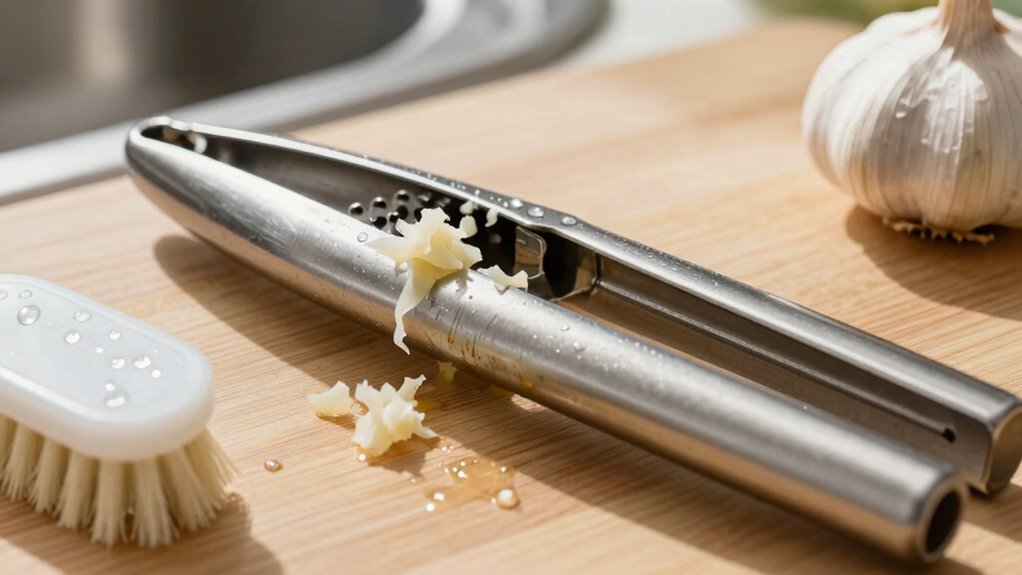
Rinse your garlic press under warm running water right after use, remove trapped garlic with a small brush or cleaning pick, wash with dish soap, rinse again, and dry it fully.
Garlic presses are handy tools in American kitchens. They make it easy to add fresh garlic to pasta sauce, soups, burgers, roasted vegetables, and weeknight meals. However, the tiny holes in a garlic press can trap sticky garlic pieces, turning a simple cooking job into an annoying cleanup task.
The easiest way to avoid this problem is to clean the press before the leftover garlic dries. Fresh garlic pulp comes away much more easily than old, hardened bits. A little warm water, mild dish soap, and a small cleaning brush are usually enough to get the job done.
You do not need expensive cleaners or special kitchen products. The right cleaning order matters more than the number of supplies you use. This guide explains how to clean a garlic press quickly, remove stubborn pieces, deal with lingering odors, and keep the tool in good shape.
Why Does a Garlic Press Get So Difficult to Clean?
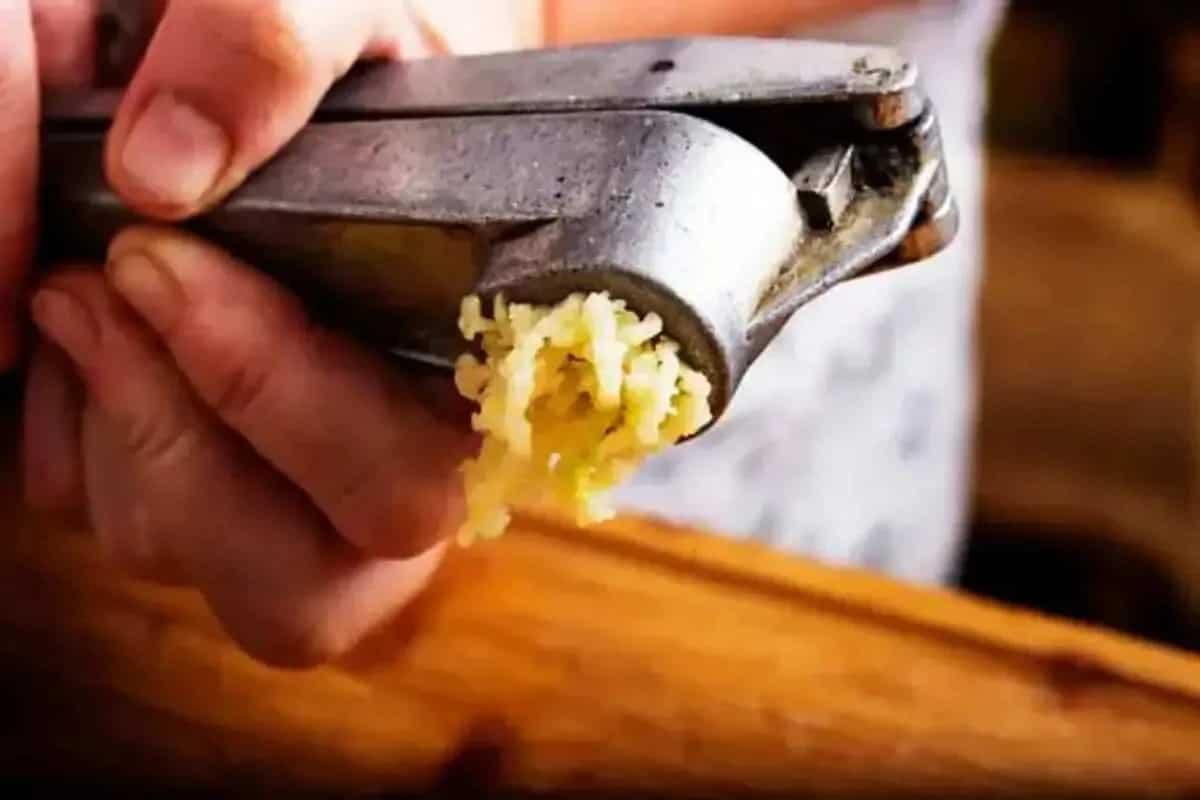
A garlic press gets dirty because it squeezes fresh cloves through a small plate filled with tiny holes. The pressure forces soft garlic pulp through these openings. Some garlic comes out, but small bits often stay inside the chamber and around the pressing plate.
Fresh garlic contains moisture and natural compounds that make its pulp sticky. When the leftover pieces sit in the open air, they can dry and become harder to remove. The longer you wait, the more effort you may need to clean each small opening.
The hinge and the edges of the pressing chamber can also collect garlic. These areas are easy to overlook during a quick rinse. If you leave food in these spots, the press may keep smelling like garlic even after its main surface looks clean.
Source: shuncy.com
Tiny holes
The pressing plate has small openings that can hold bits of crushed garlic.
Sticky pulp
Fresh garlic can cling to metal and other surfaces, especially when pressed with force.
Hidden corners
Garlic can collect around the hinge, chamber edges, and movable parts.
Dried residue
Old garlic becomes harder to remove because the moisture evaporates and the remaining pulp sticks to the tool.
Why Immediate Cleaning Makes a Difference
Cleaning your garlic press right after use saves time. A quick rinse can remove much of the loose pulp before it dries inside the holes. You may only need a short brush afterward.
If you wait until after dinner or leave the press in the sink overnight, the garlic may become much harder to remove. A few seconds of cleaning right away can prevent a longer scrubbing job later.
Less scrubbing
Fresh residue usually comes away with gentle water pressure and light brushing.
Better hygiene
Removing leftover food reduces the chance of old food particles remaining on the utensil.
What You Need to Clean a Garlic Press Quickly
You only need a few basic kitchen supplies to clean most garlic presses. These items are easy to find in an American home, and you may already have them beside your kitchen sink.
Before you start, check the press for removable parts and read its care instructions. Some presses have a built-in cleaning tool, while others have a removable basket or a special plate that makes cleanup easier.
Avoid using harsh cleaners or rough metal scrubbers unless the manufacturer specifically permits them. These can scratch finishes or damage certain materials.
Source: www.youtube.com > How To Videos And Tips
Warm running water
Helps loosen fresh garlic pulp and rinse away food particles.
Mild dish soap
Removes food residue, grease, and garlic odors from washable surfaces.
Small cleaning brush
Reaches the tiny holes and narrow corners that a regular sponge may miss.
Cleaning pick
Helps remove individual pieces stuck in the perforations. Use the supplied tool when available.
Clean drying towel
Removes excess moisture before you put the press away.
Can You Use an Old Toothbrush?
Yes. A clean, soft-bristled toothbrush can work well for removing garlic from small openings and hard-to-reach corners. It is especially useful when your garlic press does not come with a cleaning brush.
Keep a separate toothbrush for kitchen cleaning. Do not use a brush that has been used for personal care, and avoid stiff bristles that may scratch a coated surface.
Choose soft bristles
They can reach small spaces without requiring aggressive scrubbing.
Rinse after brushing
Wash the brush itself so garlic particles do not remain trapped between its bristles.
Should You Use a Special Garlic Press Cleaner?
A special cleaning comb is useful but not essential. Many garlic presses include a small tool with pegs that match the holes in the pressing plate. It can remove several trapped pieces at once.
If your press came with a cleaning tool, use it according to the manufacturer’s instructions. A soft brush is a good alternative for loose residue, while a suitable cleaning pick can handle individual clogged holes.
Built-in cleaner
Convenient for removing pulp from the pressing plate.
Separate brush
Useful for cleaning the hinge, chamber, and outside surfaces.
How to Clean a Garlic Press Quickly: Step-by-Step Method
The fastest method is to rinse, brush, wash, rinse again, and dry. This routine works well for most standard garlic presses when you clean them shortly after use.
Set your supplies beside the sink before you begin. Open the handles fully and remove any loose garlic skin or large pieces from the chamber. This makes it easier to reach the parts that need attention.
Source: sabormexicana.com
Estimated cleaning time
About one to two minutes for a lightly soiled press. Dried or heavily clogged residue may take longer.
Cleaning method
Warm water, mild dish soap, gentle brushing, and thorough drying.
Step 1: Open the Garlic Press
Open the handles as far as the design allows. If the press has a removable basket or chamber, remove it only if the manufacturer’s instructions permit this.
Look inside the chamber for leftover garlic skin and large pieces of pulp. Remove loose material before rinsing so it does not spread around the sink.
Check the hinge
Look for garlic trapped around the joint where the handles connect.
Remove loose pieces
Use your fingers or a suitable utensil to lift away large food scraps.
Step 2: Rinse Under Warm Running Water
Hold the open press under warm running water. Move it gently so water reaches the chamber, pressing plate, and hinge. Rinse both sides to remove loose garlic pulp.
Warm water helps soften fresh residue. Avoid assuming that every metal or plastic press can handle very hot water. Follow the care instructions for your specific model.
Rinse both sides
Water should reach the inside and outside of the pressing plate.
Keep the press open
An open position gives water better access to the chamber and moving parts.
Step 3: Remove Garlic From the Small Holes
Check the perforated plate for small pieces that remain after rinsing. Use the press’s cleaning comb if one is available. Place the cleaning pegs against the matching holes and follow the tool’s intended direction.
A soft brush can also help remove residue from the plate. Brush gently rather than forcing a sharp object through the openings. Aggressive scraping can scratch the surface or damage the holes.
If you use a toothpick, choose a suitable wooden one and work carefully. Avoid pushing so hard that the wood breaks or becomes lodged in the press.
Use gentle pressure
Let the cleaning tool loosen the pulp instead of forcing it through the metal.
Inspect each side
Garlic may remain around the openings even when the main chamber looks clean.
Step 4: Wash With Mild Dish Soap
Add a small amount of mild dish soap to a wet sponge or soft cleaning brush. Clean the pressing chamber, handles, hinge, and outer surfaces. Pay extra attention to places where garlic can collect.
Do not use a rough scouring pad on a coated or polished press. A soft sponge is usually enough to remove the remaining food film.
Clean the chamber
Wash the inside where the garlic clove sits before pressing.
Clean the hinge
Work the brush gently around the joint and other narrow spaces.
Wash the handles
Remove fingerprints, food residue, and soap buildup from the gripping surfaces.
Step 5: Rinse Away All Soap
Hold the press under clean running water until no soap or loose food remains. Open and close the handles gently, if the design allows, so water can reach the moving areas.
Look through the holes again. If you can still see garlic, repeat the gentle brushing step before drying.
Check for soap
No slippery detergent film should remain on the surfaces.
Check for pulp
The perforations and chamber should be free of visible garlic pieces.
Step 6: Dry the Garlic Press Completely
Shake off excess water and wipe the press with a clean, dry towel. Leave it open on a drying rack if the design allows. Give extra attention to the hinge and small spaces where water can collect.
Do not close a wet garlic press and place it in a drawer. Trapped moisture can contribute to corrosion, water marks, or unwanted odors over time.
Wipe all surfaces
Dry the handles, chamber, and pressing plate.
Air-dry open
Allow hidden areas to dry before storing the tool.
How to Remove Dried Garlic From a Garlic Press
If you forgot to clean your garlic press, do not start by scraping the dried pieces with a knife. Soften the residue first. This makes removal easier and reduces the risk of scratching the tool or hurting your fingers.
A short soak in warm, soapy water is usually a good first step for a press that is suitable for hand washing. However, check the manufacturer’s instructions before soaking models with wooden handles, glued parts, special coatings, or components that should not be immersed.
Source: kitchentoolstips.com
Start with a soak
Place the compatible press in warm water with a little mild dish soap for several minutes.
Brush gently
Use a soft brush to loosen the softened garlic from the chamber and holes.
Repeat if needed
Give stubborn residue more soaking time rather than applying excessive force.
Cleaning Garlic Stuck in Individual Holes
The tiny holes are often the hardest part of a clogged garlic press. After soaking, rinse the plate and inspect it under good light. Use the supplied cleaning comb to remove visible pieces without forcing the tool.
If a cleaning comb is unavailable, use a soft brush and work across the plate. A wooden toothpick may help with an individual stubborn piece, but use light pressure and avoid damaging the opening.
Finish by washing the plate with dish soap and rinsing it well. Never use a knife tip or sharp metal needle as a routine cleaning tool.
Do not force debris
Hard pressure can push residue deeper or damage the perforated plate.
Use proper lighting
A clear view makes it easier to spot remaining pieces.
Removing Garlic From the Hinge
The hinge can hold small bits of garlic that are difficult to see. Open the handles and rinse the joint carefully. Use a soft brush to clean around the edges without pulling or bending the moving parts.
If the hinge remains dirty, repeat the wash with mild dish soap. Rinse the area thoroughly and dry it before closing the press.
Move carefully
Open and close the handles gently to expose accessible areas.
Avoid forced disassembly
Do not remove pins or joints unless the manufacturer designed them to come apart.
How to Get Rid of Garlic Smell From a Garlic Press
A garlic press may keep smelling even after a quick rinse. This often happens because small pieces of garlic remain around the hinge, inside the chamber, or in the perforations.
The best first step is to wash the entire press again with mild dish soap and warm water. Use a soft brush to reach hidden areas, rinse thoroughly, and let the tool dry completely.
Do not rely on strong fragrances to hide the odor. Removing the remaining food is more useful than covering the smell with another scent.
Source: toolspure.com
Wash hidden areas
Check the hinge, pressing plate, chamber edges, and removable parts.
Use fresh dish soap
A new wash can remove food residue left behind by the first cleaning.
Dry fully
Avoid storing the press while water remains in its joints.
Can Baking Soda Remove Garlic Smell?
Baking soda can help with lingering odors on compatible surfaces. If ordinary washing does not remove the smell, make a mild paste with baking soda and water. Apply it gently to suitable surfaces with a soft cloth, then rinse it away completely.
Check the care instructions first, especially if your press has a nonstick coating, painted finish, or other delicate surface. Do not use abrasive scrubbing to force the baking soda into the holes.
For most routine cleaning, dish soap and water should remain your first choice. Baking soda is an optional extra step, not a required part of every wash.
Use a small amount
A light paste is enough for a gentle cleaning attempt.
Rinse well
Remove all baking soda before drying the press.
Should You Use Vinegar?
Vinegar is not usually needed to remove ordinary garlic pulp. Dish soap, warm water, and brushing are more direct ways to clean a garlic press.
Be careful with vinegar if your press is made from aluminum or has special coatings. Acidic cleaners can damage some materials. Use vinegar only when the manufacturer confirms that it is suitable for your press and the problem requires it.
Check the material
Do not assume that every metal press can tolerate an acidic soak.
Avoid unnecessary mixtures
Never mix vinegar with bleach or other household cleaning chemicals.
Can You Put a Garlic Press in the Dishwasher?
Some garlic presses are dishwasher safe, but others need hand washing. The answer depends on the material, finish, construction, and manufacturer’s care instructions.
Many stainless steel models are listed as dishwasher safe. However, do not assume that a press is safe for the dishwasher simply because its main body is metal. Plastic handles, rubber parts, coatings, and other components may have different care needs.
For example, Pampered Chef lists its aluminum garlic press with a nonstick silicone-based coating as dishwasher safe. Its care instructions also describe using the supplied cleaning tool to remove garlic from the basket. This is a model-specific instruction, not a rule for every aluminum press.
If the instructions permit dishwasher cleaning, remove loose garlic before loading the press. Open it as much as possible so water can reach the chamber and pressing plate. Follow any placement or rack instructions supplied by the manufacturer.
Source: slurrp.com
Check the manual
Look for a clear dishwasher-safe statement for your exact model.
Remove loose food
Rinse away large garlic pieces before placing the press in the dishwasher.
Open the press
Allow water to reach the chamber and other accessible surfaces.
Dry after washing
Check the hinge and other joints for trapped moisture.
Why Hand Washing Can Be Better for Quick Cleanup
Hand washing is often the fastest way to clean a garlic press after preparing one or two cloves. You can remove fresh pulp right away instead of waiting for a dishwasher cycle.
It also gives you a clear view of the small holes and hinge. You can spot trapped pieces and remove them before putting the tool away.
The dishwasher is useful for compatible models when you want to clean several utensils together. Still, it does not replace checking the perforations and drying any areas where moisture can remain.
For immediate cleaning
Hand rinsing and brushing can remove fresh garlic without waiting for a machine.
For a larger wash
Use the dishwasher if the exact press is approved for machine washing.
Common Garlic Press Cleaning Mistakes to Avoid
A few simple mistakes can make garlic press cleaning harder than it needs to be. Most problems happen when people wait too long, use the wrong tool, or overlook hidden parts.
Use gentle cleaning methods and follow the care instructions for your press. You do not need to scrub aggressively to remove normal garlic residue.
Source: YouTube > tescomavideo EN
Waiting too long
Dried garlic is harder to remove than fresh pulp. Rinse the press soon after use.
Using a sharp knife
A knife can slip, injure your hand, or scratch the pressing plate.
Ignoring the hinge
Food can remain inside the joint even when the main chamber looks clean.
Using harsh chemicals
Strong cleaners may damage coatings or react with certain materials.
Assuming every press is dishwasher safe
Different models have different materials and cleaning requirements.
Storing the press wet
Trapped moisture can cause stains, corrosion, and unwanted smells.
Do Not Use Steel Wool on a Garlic Press
Steel wool and rough metal pads can scratch polished metal and damage protective finishes. They may also leave small metal particles behind.
Use a soft sponge or brush instead. If the residue is stubborn, soak the compatible press in warm, soapy water before brushing it again.
Choose soft materials
Use a sponge, nylon brush, or cleaning tool approved for the press.
Avoid excess pressure
Let water and soap loosen the residue before scrubbing.
Do Not Force the Handles Apart
Some presses have removable baskets or movable plates, but that does not mean every part can be taken apart. Forcing a hinge or pin can loosen or damage the mechanism.
Only remove parts that the manufacturer identifies as removable. Clean around fixed joints with a soft brush instead.
Follow the design
Use the intended release method for removable components.
Stop if a part resists
Do not pull or twist a component that is not designed to come out.
How to Keep Your Garlic Press Clean Between Uses
Good maintenance starts with a simple habit: rinse your garlic press as soon as you finish using it. You do not need to wait until the end of your cooking session to remove the garlic.
If you use a garlic press often, keep a small cleaning brush near your dish soap. This makes it easier to remove food from the tiny holes before it dries.
After washing, dry the press and store it in a clean, dry place. If your model has a removable basket, follow the manufacturer’s storage instructions and make sure every part is dry before reassembly.
Source: shuncy.com
Clean after each use
Do not leave garlic pulp inside the press while you finish preparing other food.
Keep a brush nearby
A small brush makes regular cleaning quicker and easier.
Inspect the holes
Check for food particles before putting the press away.
Dry before storage
Wipe the tool and let hidden areas air-dry.
How Often Should You Deep Clean a Garlic Press?
Wash your garlic press after every use. A separate deep-cleaning routine is not always necessary if you remove all food residue each time.
Give the hinge, chamber, and pressing plate extra attention whenever you notice trapped garlic, a lingering odor, or visible buildup. The goal is to keep every food-contact surface clean, not to use strong cleaners on a fixed schedule.
After every use
Wash with dish soap and water, rinse, and dry.
When buildup appears
Use a suitable soak and gentle brush to remove stubborn residue.
How to Store a Garlic Press Properly
Store the press only after it is clean and dry. An open position can help air reach the hinge and chamber, provided the storage space allows it.
Keep the tool in a dry kitchen drawer or utensil organizer. Avoid placing it beside wet sponges or leaving it in a damp sink.
Choose a dry spot
Keep moisture away from the press during storage.
Protect the finish
Avoid tossing the press against sharp or rough utensils.
Which Garlic Presses Are Easier to Clean?
Some garlic press designs are easier to clean than others. If you are buying a new one, look for features that give you better access to the pressing plate and chamber.
A removable basket can make it easier to wash both sides of the chamber. A built-in cleaning comb can also reduce the effort needed to clear garlic from the holes.
Stainless steel models may be a practical option for regular kitchen use, but material alone does not determine how easy a press is to clean. The shape, number of small parts, surface finish, and manufacturer’s care instructions also matter.
Source: shuncy.com
Removable chamber
Makes it easier to reach areas that might otherwise stay hidden.
Built-in cleaning comb
Helps remove garlic from the perforated plate.
Accessible hinge
A simple joint is easier to inspect and clean than a complex mechanism.
Dishwasher-safe construction
Offers another cleaning option when the manufacturer approves it.
Is Stainless Steel Better for Cleaning?
Stainless steel is common in kitchen utensils because it is durable and can be washed with ordinary dish soap and water. Many stainless steel garlic presses are also listed as dishwasher safe.
However, stainless steel does not prevent garlic from sticking inside tiny holes. You still need to rinse the press promptly and use a brush or cleaning comb when necessary.
Check whether the press has other materials, such as plastic handles or coated parts. These components may have different care requirements.
Good daily care
Wash with mild dish soap and dry thoroughly.
Check the finish
Use cleaning tools that will not scratch or damage the surface.
What Features Matter More Than Appearance?
A simple design with easy access to the pressing chamber can be more practical than a complicated press with several small parts. Look for a model that allows you to see and reach the areas where garlic collects.
A removable basket, suitable cleaning comb, and clear care instructions are useful features. They help reduce the time needed for regular cleanup.
Easy access
The pressing plate and chamber should be simple to reach.
Simple construction
Fewer hidden spaces can make routine washing easier.
Quick Garlic Press Cleaning Troubleshooting Guide
If your garlic press still looks or smells dirty after washing, identify the problem before trying another cleaning method. Different symptoms often point to different areas that need attention.
The table below matches common cleaning problems with practical next steps. Always consider the press material and care instructions before soaking or using an additional cleaner.
Visible garlic in the holes
Rinse again and use the supplied cleaning comb or a soft brush.
Strong garlic odor
Wash the hinge and chamber again with mild dish soap.
Sticky surface
Clean with warm water and dish soap, then rinse away all detergent.
Water marks
Wipe the compatible metal surfaces dry with a clean towel.
Stiff hinge
Check for trapped food or damage. Do not force the joint.
What If Garlic Still Will Not Come Out?
If garlic remains stuck after brushing, soak the compatible press in warm, soapy water for a little longer. Then rinse and try the cleaning comb again.
Avoid using excessive pressure or sharp metal objects. If a piece remains trapped in a fixed area, follow the manufacturer’s cleaning guidance rather than forcing the mechanism apart.
Soften first
Give dried residue time to loosen in warm, soapy water.
Brush again
Use a suitable cleaning brush to remove the loosened material.
What If the Garlic Press Has Rust or Damage?
A rust-colored spot or damaged coating needs more attention than ordinary food residue. Stop using the press if its surface is flaking, deeply corroded, or visibly damaged in a way that could affect food contact.
Check the manufacturer’s care and repair guidance. If the material is deteriorating or the tool cannot be cleaned properly, replacing it may be the more practical option.
Inspect the surface
Look for flaking, deep pits, loose parts, or sharp damaged edges.
Do not ignore damage
Replace a press that can no longer be cleaned or used safely.
A Simple Cleaning Routine for Busy Home Cooks
You can make garlic press cleaning part of your normal cooking routine. Instead of leaving the utensil beside the sink, rinse it as soon as you finish adding garlic to your recipe.
Keep your cleaning brush close to your dish soap so you do not need to search for supplies. A quick check of the pressing plate and hinge can help you catch leftover food before it dries.
For a busy weeknight, remember this simple order: remove loose garlic, rinse, brush, wash, rinse again, and dry. It takes little effort when the residue is still fresh and helps keep your kitchen tools ready for the next meal.
During cooking
Remove loose garlic pieces and rinse the press.
After cooking
Wash the chamber, plate, hinge, and handles with dish soap.
Before storage
Inspect the holes, remove remaining residue, and dry the tool.
Frequently Asked Questions
Q
What Is the Fastest Way to Clean a Garlic Press?
The fastest method is to rinse the press under warm running water immediately after use. Open the handles, remove loose garlic, and use a small brush or cleaning comb to clear the holes. Wash with mild dish soap, rinse again, and dry completely.
Q
How Do You Clean a Garlic Press Without a Special Brush?
You can use a clean, soft-bristled toothbrush to remove garlic from the chamber, hinge, and pressing plate. A suitable wooden toothpick can help with individual stubborn pieces. Work gently and avoid sharp metal objects that could scratch the press or cause an injury.
Q
Can You Soak a Garlic Press in Soapy Water?
Yes, if the manufacturer allows soaking. Warm water with mild dish soap can soften dried garlic and make it easier to remove. Avoid soaking models with materials or parts that are not suitable for immersion, such as certain wooden handles or glued components.
Q
Can You Put a Stainless Steel Garlic Press in the Dishwasher?
Many stainless steel garlic presses are dishwasher safe, but not every model has the same construction. Check the manufacturer’s instructions before loading it. Remove loose garlic first and open the press so water can reach the chamber and pressing plate.
Q
How Do You Remove Garlic Stuck in the Holes?
Rinse the pressing plate with warm water and use the cleaning comb supplied with the press. If the garlic has dried, soak the compatible press in warm, soapy water first. Then brush the holes gently and rinse away the loosened pieces.
Q
Why Does My Garlic Press Smell After Washing?
A lingering smell often means garlic residue remains in the chamber, holes, or hinge. Wash these areas again with mild dish soap and a soft brush. Rinse thoroughly and dry the press completely before storing it.
Q
Can I Use Baking Soda to Clean a Garlic Press?
Baking soda can be used as a mild cleaning paste on compatible surfaces when an odor remains after ordinary washing. Apply it gently, avoid abrasive scrubbing, and rinse thoroughly. Check the manufacturer’s instructions before using it on coated or delicate finishes.
Q
Is It Better to Clean a Garlic Press Before or After Cooking?
Clean it as soon as you finish pressing the garlic, even if you are still cooking. A quick rinse prevents pulp from drying inside the small holes. You can complete the full wash with dish soap and dry the press before putting it away.
Q
How Do I Prevent Garlic From Sticking to My Press?
Remove garlic pulp soon after use and rinse the press before the residue dries. Some presses also have removable baskets or cleaning combs that make cleanup easier. Follow the manufacturer’s instructions about peeling cloves and using the pressing chamber.
Q
Should I Oil the Hinge of My Garlic Press?
Do not apply cooking oil or other lubricants unless the manufacturer specifically recommends them. First clean the hinge, rinse it, and dry it thoroughly. If the joint remains stiff or damaged, check the manufacturer’s maintenance instructions rather than adding an unapproved product.
✦ Wrapping Up
Conclusion
Cleaning a garlic press quickly is simple when you do not let garlic residue dry inside the holes. Rinse the tool right after use, remove trapped pulp with a suitable brush or cleaning comb, wash it with mild dish soap, and rinse away all remaining food and detergent.
For stubborn garlic, soak the compatible press in warm, soapy water before brushing again. Check the manufacturer’s instructions before using a dishwasher, vinegar, baking soda, or any special cleaning method. Always pay attention to the hinge and other small spaces where food and moisture can collect.
A clean garlic press is easier to use and ready for your next meal. With a quick rinse and a few careful cleaning steps, you can spend less time scrubbing and more time enjoying your cooking.
💡 Key Takeaway
After your next use, open the garlic press, rinse it under warm water, brush the holes and hinge, wash with mild dish soap, rinse again, and dry it fully before storage.