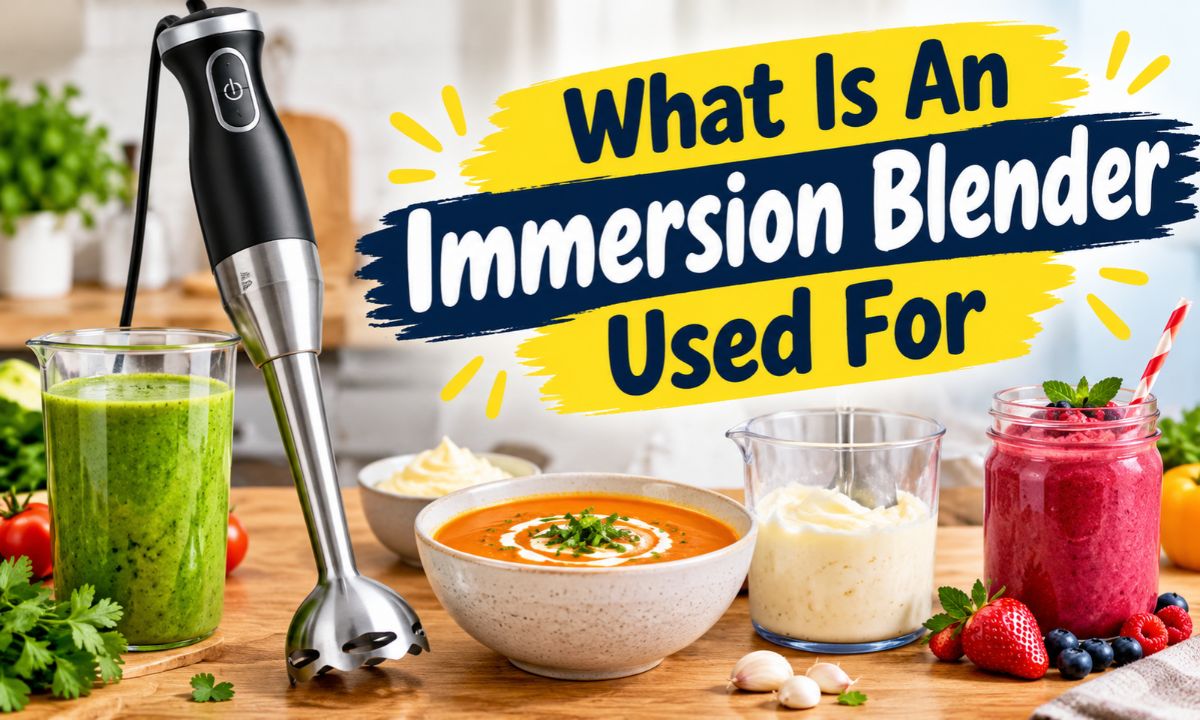
An immersion blender is used to blend, puree, mix, and emulsify foods directly inside a pot, bowl, or container.
In U.S. kitchens, an immersion blender is a practical tool for cooks who want faster food preparation without transferring ingredients into a countertop blender. This handheld appliance is commonly used for soups, sauces, smoothies, baby food, dressings, and other foods that need a smooth texture.
An immersion blender works by placing a small spinning blade at the end of a handheld shaft directly into food. The blade pulls ingredients toward it and breaks them into smaller pieces, creating blended mixtures with less cleanup than many traditional methods.
What Is An Immersion Blender And How Does It Work?
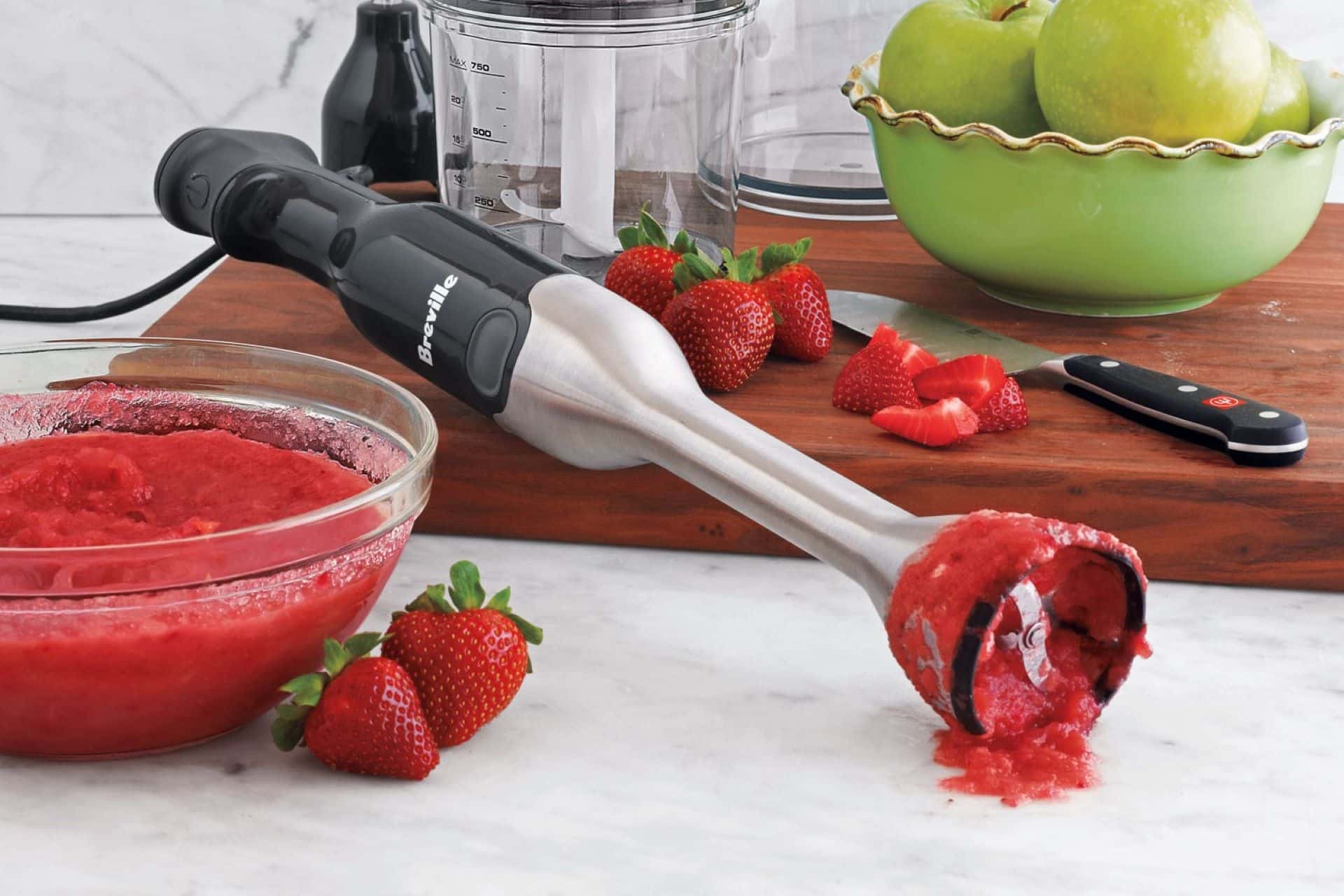
An immersion blender is a handheld electric kitchen appliance designed to blend ingredients while the user holds the tool inside a container. It is also called a stick blender or hand blender. Unlike a countertop blender, it does not require food to be moved into a separate jar.
The motor sits in the handle, while a blending shaft connects to a small blade assembly. When powered on, the blade spins quickly and creates movement that breaks down ingredients. The result depends on the food type, blending time, blade design, and amount of liquid present.
Source: learn.surlatable.com
Direct blending
The blender works inside the pot, cup, or bowl where the ingredients already are, reducing transfers and extra dishes.
Texture control
Short blending times can leave some texture, while longer blending creates smoother mixtures.
The main advantage of an immersion blender is convenience. A cook can blend a hot soup in the same pot where it was prepared instead of waiting for it to cool and moving it to another appliance.
The design is best suited for foods with enough moisture. Dry or very hard ingredients usually require different equipment because the small blade and motor are not designed for every blending task.
Best match
Soft foods, liquids, and mixtures that need smooth or creamy textures.
Poor match
Large amounts of ice, hard nuts, or dry ingredients without enough liquid.
What Foods Can You Make With An Immersion Blender?
An immersion blender is most useful for recipes where ingredients need to become smooth, creamy, or evenly mixed. It is popular because it handles many everyday kitchen tasks without requiring a large appliance.
The best uses often involve liquids or soft ingredients. The following examples show where an immersion blender can make preparation easier.
Source: www.webstaurantstore.com
Soups
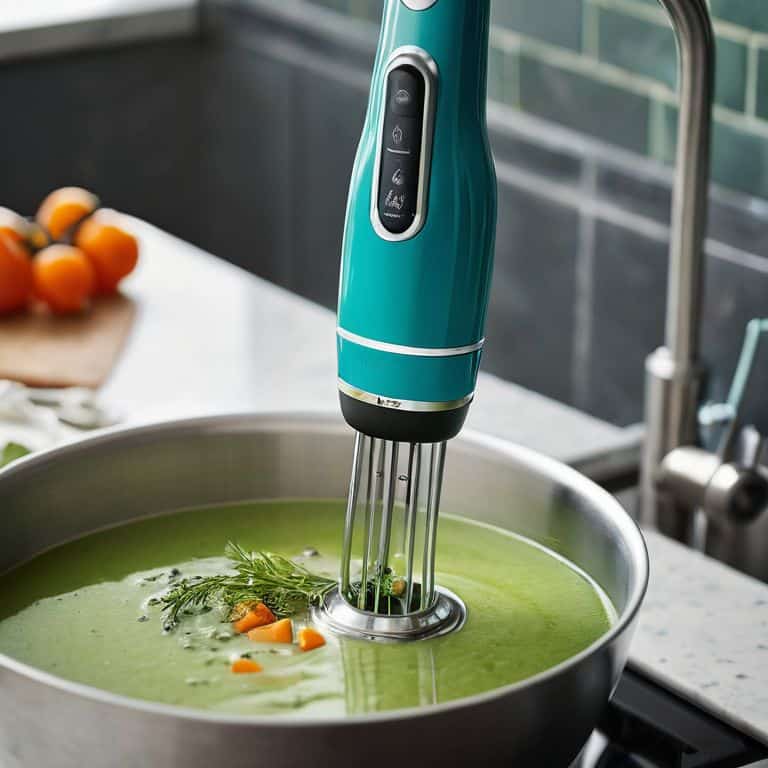
Blend cooked vegetables and broth into creamy soups while the ingredients remain in the cooking pot.
Sauces
Create smooth tomato sauces, gravy-style mixtures, and other blended sauces.
Dressings
Combine oil, vinegar, herbs, and other ingredients into a more uniform mixture.
Smoothies
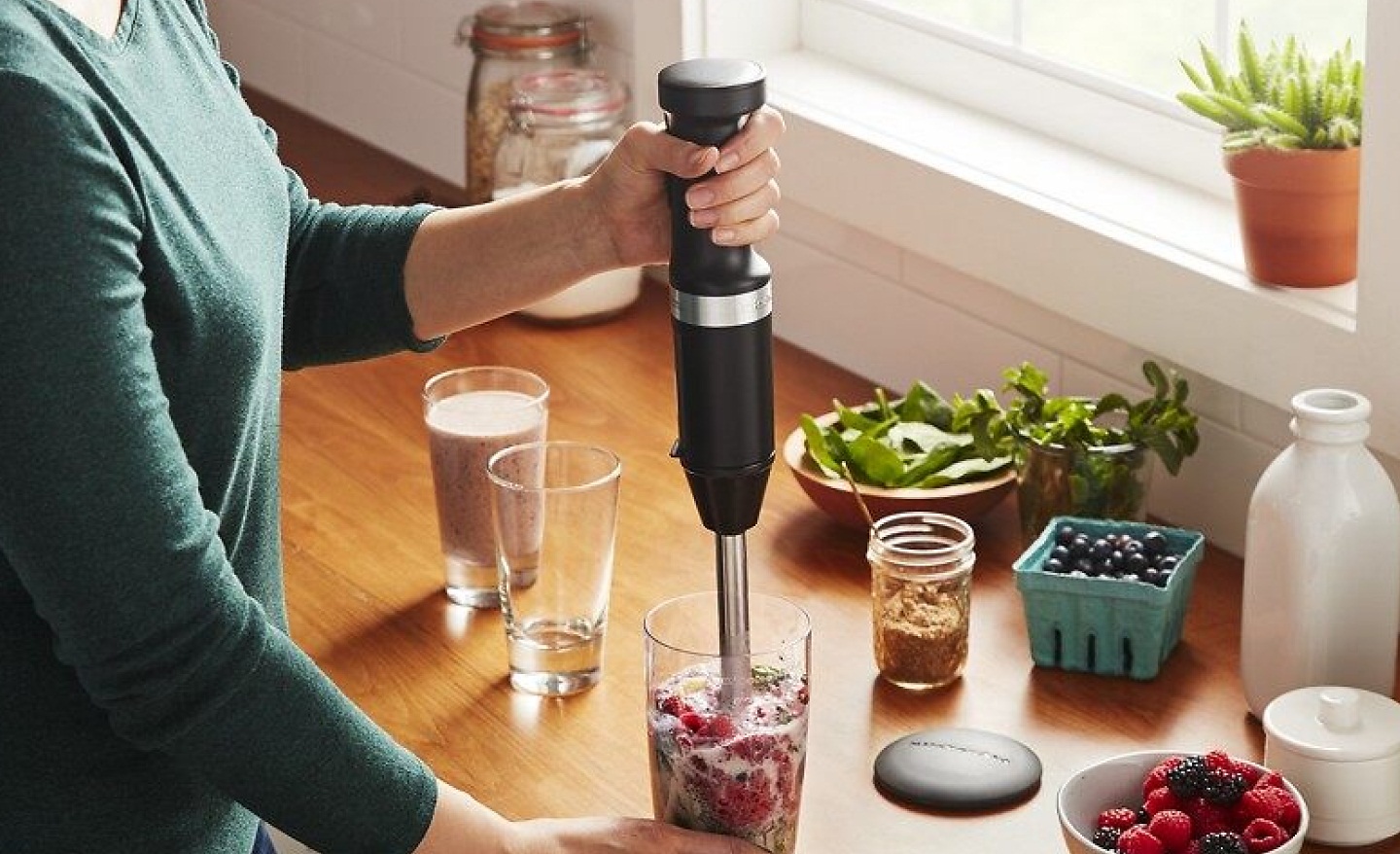
Blend soft fruits, yogurt, and liquids for smaller smoothie portions.
Purees
Prepare vegetable purees, baby food, and soft food mixtures.
Using An Immersion Blender For Soup
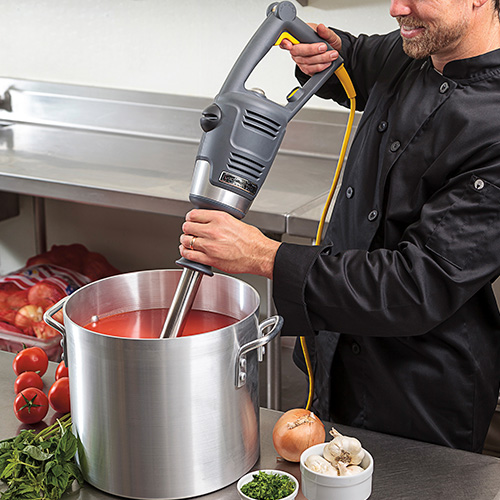
Soup is one of the most common reasons people buy an immersion blender. A cook can simmer vegetables until soft and then blend them directly in the pot. This method can save time because there is no need to transfer hot liquid between containers.
For better results, keep the blade fully covered by the soup during operation. Moving the blender slowly around the pot helps create a more even texture.
Creamy vegetable soup
Cooked carrots, potatoes, squash, or other soft vegetables can become smooth when blended with enough liquid.
How To Use An Immersion Blender Safely
Safe use starts with matching the appliance to the recipe. Immersion blenders are convenient, but the spinning blade can cause injury if handled carelessly.
Always follow the instructions provided with the specific model because designs, attachments, and power levels vary between manufacturers.
Source: storables.com
Keep the blade covered
Place the blade into the food before turning the motor on to reduce splashing.
Use suitable containers
Avoid containers that can scratch, crack, or become damaged during blending.
Avoid hot splashes
Hot liquids can splash upward, so blend carefully and keep the blade below the surface.
Steps For Better Blending Results
Start by placing the blade into the mixture. Turn the appliance on at a lower setting if available, then move the blender gently through the food. Avoid forcing the blade into ingredients that are too thick or dry.
A successful blend usually has an even texture with ingredients fully incorporated. If the mixture remains chunky, the cause may be insufficient liquid, large ingredient pieces, or a recipe that requires a different tool.
Step 1
Prepare ingredients by cutting large pieces into smaller portions when needed.
Step 2
Submerge the blade before starting the motor.
Step 3
Move slowly through the mixture until the desired texture is reached.
Immersion Blender Compared With Other Blenders
An immersion blender is not automatically better than a countertop blender. Each type works best for different kitchen needs. The right choice depends on recipe size, ingredient hardness, and desired texture.
A countertop blender often handles larger batches and tougher ingredients more effectively. An immersion blender focuses on convenience, quick cleanup, and direct blending.
Source: upstateramblings.com
Immersion blender
Best for soups, sauces, small batches, and blending directly in cookware.
Countertop blender
Better for large quantities, frozen drinks, and recipes requiring strong blending power.
Food processor
Better for chopping, slicing, shredding, and thicker food preparation tasks.
Choosing The Right Tool For The Job
If most recipes involve liquids and cooked foods, an immersion blender may cover many daily needs. If the goal is crushing ice, grinding ingredients, or making large smoothies, another appliance may be more suitable.
The biggest trade-off is convenience versus power. Immersion blenders are easy to store and use, while larger appliances often provide more strength for demanding tasks.
Small kitchen
An immersion blender can be useful when storage space is limited.
Frequent large batches
A countertop blender may be more practical for repeated high-volume recipes.
Common Immersion Blender Mistakes And Limitations
Many blending problems happen because the appliance is used for tasks outside its intended purpose. Understanding the limits can help prevent poor results and unnecessary damage.
An immersion blender can be very useful, but it is not a replacement for every kitchen machine.
Source: whatsyourcrave.com
Blending without enough liquid
Very thick mixtures may not circulate properly around the blade.
Using oversized ingredients
Large pieces can make blending slower and less even.
Ignoring cleaning needs
Food residue around the blade area should be cleaned according to manufacturer instructions.
When An Immersion Blender May Not Be Enough
Recipes involving large amounts of frozen ingredients, dry grains, or very hard foods may require a different appliance. The motor and blade design determine what each model can safely handle.
Checking the product manual is the most reliable way to confirm permitted uses for a specific immersion blender.
Check before use
Review manufacturer instructions for approved foods and attachments.
Frequently Asked Questions
Q
Can an immersion blender replace a regular blender?
An immersion blender can replace a countertop blender for many soft foods and small recipes, but it may not match the power or capacity of a full-size blender for every task.
Q
Can you use an immersion blender in a hot pot?
Many immersion blenders are designed for blending soups and sauces in cookware, but users should follow the specific appliance instructions and use caution with hot liquids.
Q
Can an immersion blender make smoothies?
Yes, an immersion blender can make smoothies, especially smaller portions with soft fruits and enough liquid. Very icy or thick smoothies may be harder to blend.
Q
What is the difference between a stick blender and an immersion blender?
Stick blender and immersion blender usually describe the same type of handheld appliance. The names are often used interchangeably.
Q
What should you not blend with an immersion blender?
Avoid ingredients that the manufacturer does not approve, such as very hard foods, dry mixtures, or large amounts of ice, because results and safety can vary by model.
✦ Wrapping Up
Conclusion
An immersion blender is used for quick blending, pureeing, and mixing tasks where convenience matters. It is especially helpful for soups, sauces, dressings, smoothies, and soft food recipes.
The best results come from using it for the jobs it handles well and understanding its limits. For many home cooks, this small appliance can simplify everyday food preparation without taking much storage space.
💡 Key Takeaway
Choose an immersion blender when you need simple, direct blending for moist foods and want less cleanup after cooking.

:max_bytes(150000):strip_icc()/Braun-Immersion-Blender-ed955c05c2da4dbcbbfcea1dfe306c8b.jpg "Hand Immersion Blender Uses")