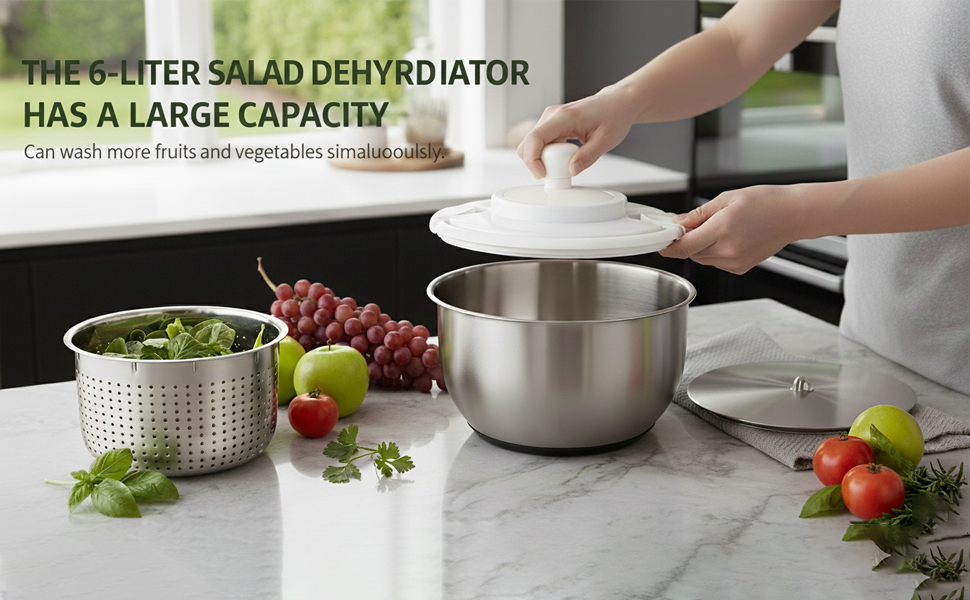
Yes, many salad spinners are dishwasher safe, but it depends on the brand and model. Some lids and spinning parts need hand washing.
In American homes, a salad spinner is a handy tool for washing lettuce before making a Caesar salad, preparing greens for a summer cookout, or packing fresh vegetables for lunch. After using one, the last thing you want is to spend extra time washing every part by hand. Putting the spinner in the dishwasher may seem like the easiest way to clean it, but there is one thing to check first: the manufacturer’s care instructions.
Some salad spinners have dishwasher-safe bowls and baskets, while others must be washed by hand. The lid often needs extra care because it may contain gears, springs, a pull cord, or a pump. High heat and strong water jets can damage these parts. The safest approach is to take the spinner apart, check each part, and wash it in the way the manufacturer recommends. This guide explains how to do that, how to clean hard-to-reach areas, and how to keep your spinner in good shape.
Yes, you can put some salad spinners in the dishwasher, but you should check the care label or user manual before doing so. The bowl and inner basket are often easier to wash in a dishwasher than the lid. Some brands allow all parts to be washed this way, while others recommend hand washing the entire spinner.
The main reason for this difference is the design. A simple spinner may have a plastic bowl, a perforated basket, and a basic lid. A more complex model may have a pull cord, spring, gear system, or push-button pump inside its lid. These moving parts can be damaged by heat, water pressure, or trapped moisture.
For example, OXO lists its Good Grips Salad Spinner as dishwasher safe and notes that its lid comes apart for easier cleaning. Cuisinart also describes its CTG-00-SAS1 salad spinner as dishwasher safe. However, Zyliss gives more specific care advice for its Easy Spin models: the bowl and basket are dishwasher safe, while the lid should be hand-washed to protect the spinning mechanism.
These examples show why a general rule does not work for every spinner. A dishwasher-safe symbol on one model does not mean that another spinner from the same product category can handle the same cleaning method. Always check the exact model rather than relying on its appearance or material.
Source: m.media-amazon.com
Check the user manual
Look for dishwasher-safe instructions and any limits for the bowl, basket, lid, and removable parts.
Look for dishwasher symbols
Check the bottom of the bowl, packaging, or product label for clear dishwasher-safe instructions.
Separate the components
Do not put the complete spinner into the dishwasher unless the manufacturer clearly approves cleaning the assembled unit.
Why Are Some Salad Spinners Not Dishwasher Safe?
A salad spinner has more than one job. Its basket rotates at high speed, and its lid holds the mechanism that makes this movement possible. Some lids have small spaces where water can collect. A dishwasher may send hot water into these areas without allowing them to drain or dry well.
Heat can also affect certain plastics. Some parts may soften, bend, lose their shape, or become cloudy after repeated exposure to high temperatures. Even when a plastic part survives one wash, repeated exposure may shorten its useful life.
Moving mechanisms
Gears, springs, and pull cords may wear out or stop working if water enters areas that should stay dry.
High temperatures
Some plastics and rubber parts may warp or lose their shape during a hot wash or heated drying cycle.
Trapped moisture
Water inside a lid can cause odors and may affect the moving parts if it does not dry fully.
Does Dishwasher-Safe Mean Every Part Is Safe?
No. A manufacturer may approve the bowl and basket but exclude the lid. Other brands may approve the entire spinner. The wording matters, so look for instructions that name the parts rather than assuming the whole product is covered.
All parts dishwasher safe
Follow the stated rack and temperature instructions for the complete product.
Bowl and basket only
Wash these approved parts in the dishwasher and clean the lid by hand.
Hand wash only
Keep all components out of the dishwasher and use mild soap and water.
Which Parts of a Salad Spinner Can Go in the Dishwasher?
The bowl and removable basket are the parts most likely to be dishwasher safe, but the exact instructions depend on the model. The lid needs the closest attention because it may contain parts that are not designed for a full wash cycle.
A removable basket is usually made with openings that let water pass through. A smooth outer bowl has fewer small spaces where water can collect. These simple parts are often easier to clean than a lid with a built-in mechanism.
The table below gives a general guide. It does not replace the care instructions for your own spinner. Use it to identify which parts need checking before you load the dishwasher.
Source: m.media-amazon.com
Outer bowl
Often dishwasher safe when the manufacturer approves it. Check for rubber feet, non-slip rings, and other attached parts.
Inner basket
Often safe for dishwasher cleaning because it has a simple design, but check the material and care label.
Spinner lid
May need hand washing because it can contain gears, springs, cords, or a pump.
Removable storage lid
May be dishwasher safe if the manufacturer approves it. Do not confuse it with the mechanical spinner lid.
Rubber and silicone parts
Follow the specific care instructions. Some removable parts are dishwasher safe, while others may be affected by heat.
Can You Put the Salad Spinner Bowl in the Dishwasher?
In many models, yes. The outer bowl has a simple shape and is often made from plastic or stainless steel. If the manufacturer says it is dishwasher safe, you can place it in the approved rack and wash it with your regular dishes.
Before loading it, check the bottom for a non-slip base or rubber ring. Some bases have materials that may need special care. If the instructions say to remove a ring before washing, follow that direction.
Plastic bowls
Use the recommended rack and avoid a heated drying setting if the manufacturer advises against high heat.
Stainless steel bowls
Check the care instructions for the exact finish and any attached plastic or rubber components.
Can You Put the Salad Spinner Basket in the Dishwasher?
The inner basket is often dishwasher safe because it has no complicated moving mechanism. Its holes allow water to pass through and help remove small food scraps during cleaning. Still, some manufacturers recommend hand washing to protect the basket or extend its useful life.
Place an approved basket so it cannot turn over or trap dirty water. If small food pieces remain in the holes, rinse them out before loading it.
Remove trapped food
Rinse away lettuce pieces, herbs, and other scraps before washing.
Keep it stable
Position the basket securely so it does not move during the wash cycle.
Can You Put the Salad Spinner Lid in the Dishwasher?
Do not put the lid in the dishwasher unless the manufacturer clearly says it is safe. A lid with a pull cord, pump, gear, or spring can have small internal spaces that are hard to dry. A normal wash cycle may send water into these spaces.
For many mechanical lids, hand cleaning is the better choice. Use a damp cloth and mild dish soap if the manual advises against soaking the lid. Some models have lids that come apart, so you may be able to clean removable sections separately.
Pull-cord lids
Keep the cord mechanism dry unless the manual gives specific washing instructions.
Pump-action lids
Check whether the pump section can be removed or must be wiped clean.
Simple flat lids
These may be dishwasher safe, but only when the manufacturer confirms it.
How to Put a Dishwasher-Safe Salad Spinner in the Dishwasher
If your salad spinner is approved for dishwasher cleaning, a few simple steps can help you clean it without damaging its parts. The key is to take it apart, remove loose food, and place each component in the correct position.
Do not rush to load the complete spinner after using it. A quick rinse first can stop bits of lettuce, spinach, and other produce from getting stuck in the dishwasher filter. It also makes it easier to check the parts for cracks or damage.
Source: m.media-amazon.com
Step 1: Read the care instructions
Confirm that the exact parts you plan to wash are dishwasher safe. Check whether the manufacturer requires the top rack.
Step 2: Take the spinner apart
Remove the inner basket, bowl, and any approved removable lids. Keep mechanical parts separate.
Step 3: Rinse away food
Use running water to remove loose leaves, seeds, and dirt from the bowl and basket.
Step 4: Load the approved parts
Place plastic parts on the top rack when instructed. Position the basket so water can reach its openings.
Step 5: Choose the correct cycle
Use the wash and drying settings allowed by the manufacturer. Avoid high heat if the instructions warn against it.
Step 6: Remove and dry
Take the parts out after the cycle and let them dry fully before reassembling the spinner.
Why Is the Top Rack Usually Recommended?
The top rack is often preferred for plastic kitchen tools because it is generally farther from the dishwasher’s heating element. This can reduce direct heat exposure compared with the bottom rack in many dishwasher designs.
However, the top rack does not make an unapproved item dishwasher safe. It is only a placement instruction for parts that the manufacturer has already approved for dishwasher cleaning. If the manual says hand wash only, keep the part out of the machine.
Less direct heat
The top rack may offer more distance from the heating element, depending on the dishwasher design.
Better placement
Small baskets and approved lids can be arranged so they do not block the spray arms.
Lower risk of movement
A secure position helps prevent lightweight plastic parts from shifting during washing.
Should You Use Heated Dry?
Check the spinner’s care instructions before using heated dry. Some plastic parts can handle normal dishwasher washing but may be less suited to extra heat during drying.
If the manual does not give a clear answer, air drying is a cautious option. Remove the clean parts and let them dry on a clean dish rack. This also gives you a chance to check for trapped water.
Follow the manual
Use heated drying only if the manufacturer permits it.
Choose air drying when unsure
Let the parts dry naturally instead of adding unnecessary heat.
How Do You Know the Spinner Is Clean?
A clean salad spinner should have no visible food scraps, greasy film, or unpleasant odor. The basket holes should be clear, and the bowl should feel clean rather than slippery.
Check the lid separately. If it has a removable cover or cleaning parts, make sure there is no leftover food or water in the gaps. Do not force the mechanism or pull at parts that are not designed to come apart.
Check the basket
Look for small pieces of lettuce or herbs stuck in the holes.
Check the bowl
Look for dirt, soap residue, and cloudy food film.
Check the lid
Make sure the moving parts are dry and work as intended.
How to Clean a Salad Spinner That Is Not Dishwasher Safe
You can clean a salad spinner by hand with warm water, mild dish soap, and a soft cloth. This method works well for models with delicate lids or mechanisms that should not go through a dishwasher cycle.
Clean the spinner soon after use. Wet lettuce and small food scraps can stick to the basket and lid. If they sit for a long time, they may become harder to remove and can leave an unpleasant smell.
You do not need strong chemicals or rough scrubbers for normal cleaning. A gentle wash is usually enough to remove soil and food residue from the bowl and basket.
Source: cysalad.com
Step 1: Separate the parts
Remove the inner basket and any parts that the manufacturer allows you to remove.
Step 2: Prepare soapy water
Fill a clean sink or basin with warm water and add a small amount of mild dish soap.
Step 3: Wash the bowl
Use a soft sponge or cloth to clean the inside and outside of the bowl.
Step 4: Clean the basket
Wash around the holes and edges to remove trapped leaves and dirt.
Step 5: Wipe the lid
Use a damp, soapy cloth if the lid contains a mechanism that should not be soaked.
Step 6: Rinse and dry
Rinse washable parts well and let everything dry completely before putting the spinner away.
How to Clean a Salad Spinner Lid Without Damaging It
The lid needs a gentle approach because it may contain the most delicate parts of the spinner. If the manufacturer says not to submerge it, do not place it in a sink full of water.
Instead, dampen a soft cloth with warm water and mild dish soap. Wipe the outside, underside, and areas around the handle. Use a soft brush or cotton swab to remove food from small spaces, but do not push water into openings or force the mechanism apart.
If the lid can be disassembled, follow the manual to remove only the approved sections. Wash those pieces separately when the manufacturer permits it.
Use a soft cloth
Avoid rough pads that may scratch plastic or damage a smooth finish.
Clean around the handle
Remove food residue without forcing water into the gear system.
Dry the lid carefully
Wipe away moisture and allow it to air dry before storage.
How to Remove Stuck Food and Bad Smells
Food trapped in the basket or bowl can cause odors if the spinner is stored before it dries. Start by rinsing the affected area with warm water. Use a soft brush to loosen pieces caught in narrow openings.
For a stubborn food film, wash the affected washable part again with mild dish soap. Rinse it well and let it air dry. Avoid bleach, harsh cleaners, and abrasive powders unless the manufacturer specifically approves them.
If an odor remains inside a mechanical lid, do not pour vinegar or cleaning liquid into the mechanism. Wipe the outside and contact the manufacturer if the smell appears to come from an area that cannot be cleaned safely.
For stuck lettuce
Use a soft brush to remove leaves from the basket openings.
For greasy residue
Wash the affected part again with mild dish soap and warm water.
For persistent odors
Check for trapped moisture and food before deciding whether the part needs replacement.
What Happens If You Put a Non-Dishwasher-Safe Salad Spinner in the Dishwasher?
Putting an unapproved salad spinner in the dishwasher can damage its shape, finish, or spinning mechanism. The result depends on the material, the design, the wash temperature, and how often the item goes through the cycle.
One wash does not always cause visible damage. However, that does not mean the item is safe for repeated dishwasher use. Some damage may appear over time, such as a loose handle, a warped lid, or a basket that no longer fits smoothly inside the bowl.
If you accidentally wash a spinner that should be hand-washed, remove it after the cycle and inspect every part. Do not use it if the lid is cracked, the mechanism is loose, or the plastic has sharp edges.
Source: lunaskitchentips.com
Warped plastic
Heat may change the shape of some plastic components and prevent them from fitting together.
Damaged gears
Water entering a protected mechanism may affect its movement or cause it to stop working properly.
Loose or damaged seals
Heat and repeated washing may affect rubber or silicone components that are not approved for dishwasher use.
Cloudy or scratched surfaces
Some plastics may lose their clear appearance or develop surface marks.
What Should You Do After an Accidental Dishwasher Wash?
First, let the spinner cool if it is still warm. Remove all the parts and check whether they have changed shape. Compare the lid, basket, and bowl to see whether they still fit together properly.
Next, test the spinner without food. Turn the handle or press the pump gently, depending on its design. The mechanism should move as intended without grinding, sticking, or making unusual sounds.
If the spinner has visible cracks, sharp edges, a loose mechanism, or a lid that no longer locks securely, stop using it. Contact the manufacturer for advice about replacement parts or a new unit.
Inspect the plastic
Look for cracks, bending, rough edges, and changes in shape.
Check the spinning action
Make sure the handle, cord, or pump moves smoothly.
Check the fit
Confirm that the lid, bowl, and basket still fit together correctly.
Can You Keep Using a Spinner With a Damaged Lid?
It depends on the type of damage. A small cosmetic mark on the outside may not affect use, but a crack near the locking area or a loose moving part can create a problem.
Do not use a spinner if the lid cannot stay securely in place. A loose lid may come off while the basket is turning. Replace the damaged part if the manufacturer offers a compatible replacement.
Cosmetic damage
Check whether the mark affects cleaning, food contact, or normal operation.
Structural damage
Stop using cracked, sharp, or badly warped parts.
Mechanism damage
Do not force a jammed or broken spinning system.
How to Keep Your Salad Spinner Clean and Make It Last Longer
Regular care can help your salad spinner stay clean and work as intended. You do not need a complicated cleaning routine. A quick rinse after use, a proper wash, and complete drying can prevent many common problems.
The most useful habit is to avoid storing the spinner while it is still wet. Moisture can remain between the bowl and basket or inside small areas of the lid. Leaving the parts separated until they are dry can help reduce odors and unwanted buildup.
It is also helpful to check the spinner from time to time. Look at the basket openings, the bowl, the lid, and the spinning mechanism. Small problems are easier to spot before they affect normal use.
Source: cdn.shopify.com
Clean after every use
Rinse away food scraps and wash the parts according to the care instructions.
Dry before storage
Let the bowl, basket, and approved lid parts dry fully.
Avoid harsh cleaners
Use mild dish soap instead of abrasive products that may damage the surface.
Store the parts separately when needed
Allow air to move between the components rather than trapping moisture inside.
Can You Use Vinegar to Clean a Salad Spinner?
You may be able to use diluted vinegar on some washable parts, but it is not necessary for everyday cleaning. Mild dish soap and warm water are usually enough to remove normal food residue.
Before using vinegar, check the manufacturer’s instructions. Acidic cleaners may not suit every plastic, metal finish, rubber part, or coating. Never pour vinegar into a pull-cord or pump mechanism unless the manufacturer specifically approves it.
Use mild soap first
It is the simplest option for routine washing.
Check material compatibility
Make sure the cleaner is safe for the exact part you want to wash.
How Often Should You Clean a Salad Spinner?
Wash the bowl and basket after every use, especially when they have held unwashed produce. This removes soil, plant matter, and leftover water before they dry onto the surfaces.
Clean the lid after each use as well, following its care instructions. If it has a complicated mechanism, wipe it as directed and inspect it for trapped food or moisture. A deeper clean may be needed when you notice a smell or visible buildup.
After every use
Wash the bowl and basket and clean the lid according to its care instructions.
When odors appear
Inspect hidden spaces and remove trapped food or moisture.
During regular checks
Look for cracks, loose parts, stains, and signs of wear.
What Are the Most Common Salad Spinner Cleaning Mistakes?
The most common mistake is assuming that every part can go in the dishwasher. Another is putting the spinner away while it is still wet. Both habits can cause problems that are easy to avoid with a few simple checks.
Do not use a knife or other sharp object to remove food from the basket. This may scratch or damage the plastic. A soft brush is a better choice for narrow openings.
Ignoring the care label
Always check the instructions for the exact model.
Washing the lid without checking
Protect gears, cords, and pump parts from unwanted water and heat.
Using very hot water without approval
Follow the temperature limits set by the manufacturer.
Putting wet parts away
Allow the spinner to dry before storage.
Using rough scrubbers
Choose soft cleaning tools to avoid scratches and surface damage.
What Do Salad Spinner Manufacturers Say About Dishwasher Cleaning?
Manufacturer instructions show that dishwasher safety varies by model. We reviewed several product care pages and manuals to compare how different brands handle the bowl, basket, and lid. The main finding is that there is no single cleaning rule for every salad spinner.
OXO identifies its Good Grips Salad Spinner as dishwasher safe and notes that the lid comes apart for easier cleaning. Its product page also lists a 6.22-quart bowl and a 4.95-quart basket.
Cuisinart lists its CTG-00-SAS1 model as dishwasher safe. Its product information describes a spinner with a clear bowl, a removable basket, a handle, and a brake button.
Zyliss provides a useful distinction for its Easy Spin range. Its care information says that the bowl and basket are dishwasher safe, while its FAQ advises hand washing the lid to protect the spinning mechanism.
Salter provides an example of the opposite approach. Its 5-liter salad spinner manual says that the product is not dishwasher safe and directs users to hand-wash all components with warm, soapy water and a soft cloth.
These instructions are more useful than guessing from the material alone. A plastic bowl may be dishwasher safe in one model but not in another. The design, parts, and manufacturer’s tested care instructions all matter.
Source: cdn.shopify.com
OXO Good Grips
The product page identifies the spinner as dishwasher safe and says the lid comes apart for easier cleaning.
Cuisinart CTG-00-SAS1
The official product page describes the salad spinner as dishwasher safe.
Zyliss Easy Spin
The bowl and basket are dishwasher safe, but the lid should be hand-washed.
Salter 5L Salad Spinner
The manual says the spinner is not dishwasher safe and recommends hand washing all components.
Why Should You Check the Exact Model Number?
A brand may sell several salad spinners with different designs and care requirements. One model may have a removable lid and simple basket, while another may use a more complex pull-cord system.
The model number helps you find the correct manual. Look for it on the product label, packaging, purchase record, or manufacturer’s support page. If you cannot find the instructions, contact customer service before using the dishwasher.
Find the model number
Check the bottom of the bowl, the packaging, or the product information.
Read the cleaning section
Look for instructions that name each part and explain rack placement.
Ask the manufacturer
Get clarification if the instructions do not clearly explain whether the lid is safe.
Research Notes and Next-Question Gap Map
The main reader task is to decide whether a salad spinner can be cleaned in a dishwasher without damaging it. The most useful improvement over a simple yes-or-no answer is a part-by-part cleaning guide that separates the bowl, basket, lid, and mechanical parts.
The research reviewed five relevant manufacturer and product sources on November 28, 2026. These included official product information from OXO, Cuisinart, Zyliss, and Freshware, along with a Salter user manual. The sources were selected to compare different care instructions rather than to suggest that one brand’s rules apply to all models.
The comparison also showed why readers need model-specific advice. Some product pages use the broad phrase dishwasher safe, while others explain which parts are approved. A manual that clearly says hand wash only should take priority over assumptions based on material or appearance.
The following gap map separates questions supported by the reviewed pages from useful next needs inferred from the cleaning task. It does not claim to measure search demand or represent every page available online.
Source: zulaykitchen.com
OBSERVED QUESTION: Is a salad spinner dishwasher safe?
Reader stage: before cleaning. Evidence basis: the inspected manufacturer product pages directly address dishwasher safety. Competitor coverage: answered. Improvement: explain why the answer varies by model.
OBSERVED QUESTION: Can the lid go in the dishwasher?
Reader stage: before loading. Evidence basis: Zyliss distinguishes the lid from the bowl and basket. Competitor coverage: answered or shallow depending on the page. Improvement: explain the risks of water entering a mechanical lid.
INFERRED NEXT NEED: Where should the basket go?
Reader stage: during cleaning. Basis: once dishwasher safety is confirmed, the reader needs placement guidance. Competitor coverage: not checked consistently. Improvement: explain top-rack placement only when approved by the manufacturer.
INFERRED NEXT NEED: What if the spinner was washed by mistake?
Reader stage: after cleaning. Basis: accidental dishwasher use is a practical consequence of unclear instructions. Competitor coverage: not checked across all reviewed pages. Improvement: provide a safe inspection sequence.
INFERRED NEXT NEED: How should the spinner dry before storage?
Reader stage: after washing. Basis: moisture can remain between removable parts. Competitor coverage: shallow. Improvement: explain drying and storage practices.
Evidence Limits and Editorial Scope
The reviewed manufacturer pages document the care instructions for named products. They do not establish that every salad spinner made from the same material has identical dishwasher limits. No independent laboratory testing or hands-on dishwasher testing was performed for this article.
The image list supplied for this article also contains several files that do not meet the required image rules, including WebP images and URLs with query strings. The article uses the five supplied direct JPG assets that meet the stated extension and URL restrictions, with two repeated placements to fill the seven image positions. No outside image URLs have been added.
DOCUMENTED
Named manufacturers’ published care instructions and product specifications.
ANALYSIS
The practical recommendation to separate mechanical lids from approved dishwasher-safe parts.
NOT ESTABLISHED
Universal dishwasher safety for all plastic salad spinners or long-term damage rates from a single wash.
Frequently Asked Questions
Q
Can I put an OXO salad spinner in the dishwasher?
Yes. OXO identifies its Good Grips Salad Spinner as dishwasher safe on its official product page. The lid also comes apart for easier cleaning. Follow the care instructions for your exact model and separate the parts as directed before washing.
Q
Can I put a plastic salad spinner in the dishwasher?
Some plastic salad spinners are dishwasher safe, but plastic alone does not guarantee that a product can handle dishwasher heat. Check the manufacturer’s instructions for the bowl, basket, and lid. If the product is approved for dishwasher use, follow its rack and temperature guidance.
Q
Can I put a salad spinner in the dishwasher on the bottom rack?
Only do this if the manufacturer allows it. Many plastic salad spinner parts are recommended for the top rack because it is generally farther from the heating element. The top rack is not a substitute for checking dishwasher safety, though. Keep parts out of the machine if the manual says to hand-wash them.
Q
Can I wash a salad spinner lid with soap and water?
Yes, when the manufacturer permits it. For a lid with a pull cord, gear, or pump, a damp cloth and mild dish soap may be the safer option. Avoid soaking or submerging the lid if its instructions say to keep the mechanism dry.
Q
How do I clean a salad spinner without a dishwasher?
Take apart the spinner and wash the bowl and basket in warm water with mild dish soap. Use a soft sponge or brush to remove food from the basket holes. Wipe the lid according to its care instructions, rinse approved washable parts, and allow everything to dry fully.
Q
Can I put a stainless steel salad spinner in the dishwasher?
Some stainless steel salad spinners have dishwasher-safe bowls and baskets, but the lid may still require hand washing. Check the manufacturer’s instructions for the metal bowl, plastic basket, and mechanical lid separately. Stainless steel construction does not automatically make every component dishwasher safe.
Q
Can a dishwasher ruin a salad spinner?
It can if the product or the parts are not approved for dishwasher cleaning. High heat may affect plastic, while water entering a protected spinning mechanism may cause problems. Check for warping, cracks, loose parts, and changes in the spinning action after an accidental wash.
Q
Should I dry my salad spinner before storing it?
Yes. Let the bowl, basket, and approved washable parts dry fully before storage. Keep the parts separated while they air dry so moisture does not become trapped. This simple habit can help reduce odors and unwanted buildup.
✦ Wrapping Up
Conclusion
So, can you put a salad spinner in the dishwasher? Yes, if the manufacturer says your particular model or its individual parts are dishwasher safe. Many bowls and removable baskets can go in the dishwasher, but some lids need hand washing because they contain delicate gears, cords, or pump systems.
The safest cleaning method is simple. Take the spinner apart, check the care instructions, rinse away loose food, and load only the approved components. Use the recommended rack and drying settings, then let every part dry fully before putting it away.
If your spinner is not dishwasher safe, do not worry. Warm water, mild dish soap, and a soft cloth can clean it well without exposing its moving parts to unnecessary heat or water. A few minutes of gentle care can help keep your spinner ready for fresh lettuce, spinach, and other produce.
💡 Key Takeaway
Before your next wash, check the model’s care instructions. If the bowl and basket are dishwasher safe, place them on the recommended rack. Hand-wash the lid whenever its mechanism is not approved for dishwasher cleaning, and dry all parts fully before storage.