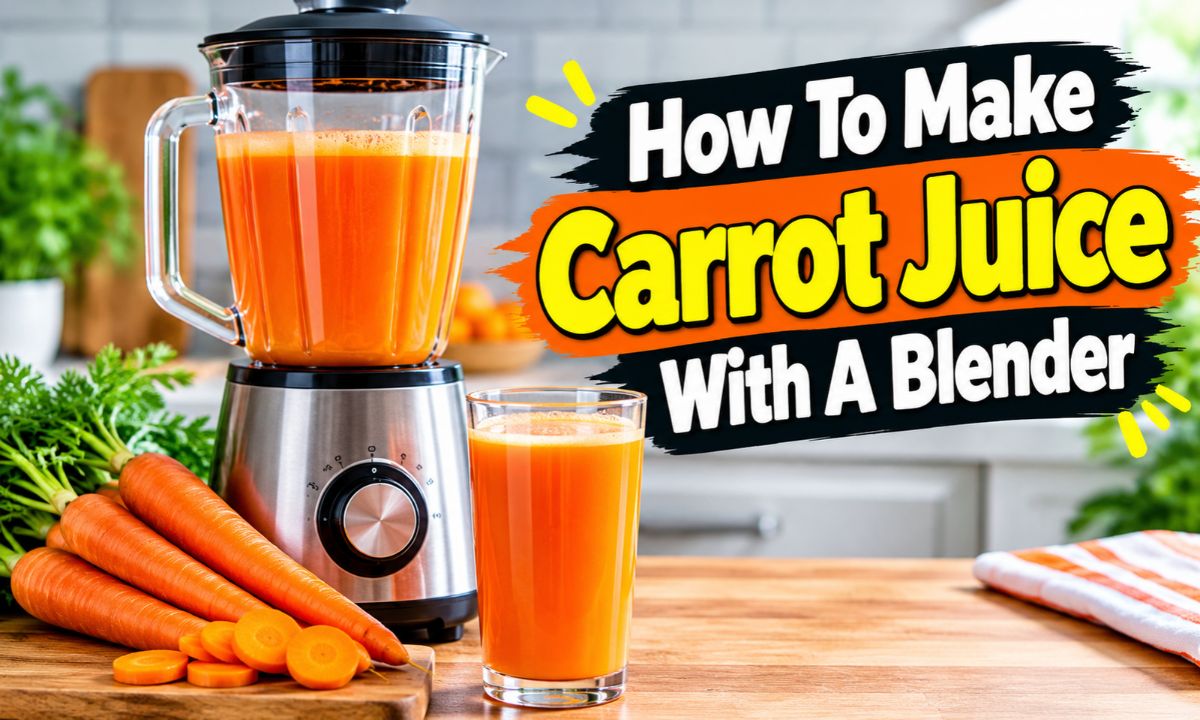
To make carrot juice with a blender, blend chopped carrots with cold water, then strain the mixture through a fine-mesh sieve or clean nut milk bag.
In American kitchens, fresh carrot juice can be an easy addition to breakfast, a weekend brunch, or an afternoon snack. You do not need a special juicer to make it at home. A standard kitchen blender, fresh carrots, drinking water, and a way to strain the pulp are enough to get started.
The key is to cut the carrots into small pieces and blend them with enough water to help the blades move freely. You can then strain the mixture for a thinner drink or leave some pulp in it for more texture. This guide explains the process, how to adjust the taste, how to fix common problems, and how to keep homemade juice fresh.
You can make carrot juice with basic kitchen tools. A standard countertop blender works well when the carrots are cut into small pieces and enough liquid is added to help the blades circulate the mixture. A high-powered blender may process the mixture more quickly, but a special model is not essential.
For a simple batch, use fresh carrots and cold drinking water. The amount of water depends on the size of the carrots, the strength of the blender, and how thick you want the finished drink to be. You can adjust the mixture after blending, so there is no need to get the ratio perfect on the first try.
Fresh carrots
Use about 4 medium carrots for a small batch. Choose firm carrots without slimy areas, deep mold, or a sour smell.
Cold drinking water
Begin with about 1 cup of water. Add more in small amounts if the mixture is too thick or the blades struggle to move.
A kitchen blender
Use a blender with a securely fitted lid and a jar large enough for the ingredients. Follow the appliance manual for filling limits.
A fine-mesh sieve or nut milk bag
Use either tool to separate much of the carrot pulp from the liquid. A clean cheesecloth can also work.
A cutting board, knife, and glass
Cut the carrots safely and collect the finished juice in a clean container.
Can You Use Any Blender?
Most standard kitchen blenders can process chopped carrots when you add enough liquid. A compact blender may need smaller batches, while a larger model may handle the ingredients with less effort. If your blender is designed mainly for soft foods, check its instructions before processing hard raw vegetables.
Do not force the blades to run when the mixture is stuck. Stop the blender, unplug it if you need to inspect the contents, and add a little more water before trying again. Never put a spoon, knife, or hand into a running blender.
For a small blender
Work in batches and keep the carrot pieces small.
For a powerful blender
You may get a finer mixture, but you still need to strain it if you want a pulp-free drink.
How To Make Carrot Juice With A Blender Step by Step
The simplest method is to blend chopped raw carrots with water, then strain the mixture. This approach does not require a juicer, cooking, or special ingredients. Allow a little extra time for chopping and straining because raw carrots are firm and produce a thick mixture.
The steps below make a small batch for immediate use. If you want to prepare more, work in batches rather than filling the blender above its recommended capacity.
Step 1: Wash the carrots
Rinse the carrots under running water and scrub their surfaces with a clean vegetable brush. Remove dirt from the ends and creases. Peel them if you prefer, although peeling is not always necessary when the carrots are scrubbed well.
Step 2: Trim and chop
Cut off the stem ends and any damaged areas. Chop the carrots into small chunks, roughly 1/2 inch to 1 inch long, so the blender can process them more easily.
Step 3: Add water
Put the chopped carrots into the blender jar and add about 1 cup of cold drinking water. Keep the total amount below the blender’s maximum fill line.
Step 4: Blend until finely broken down
Secure the lid and start at a low speed. Increase the speed as the carrots break down. Blend until the mixture looks evenly chopped and pulpy, stopping the motor if the ingredients stop circulating.
Step 5: Adjust the texture
If the mixture is too thick to move, stop the blender and add water a little at a time. Blend again until the carrots are finely processed.
Step 6: Strain the mixture
Place a fine-mesh sieve over a clean bowl or jug. Pour the mixture through it and let the liquid drain. Press the pulp gently with a clean spoon if needed, or squeeze it through a clean nut milk bag.
Step 7: Taste and serve
Taste the juice before adding anything else. Add a splash of water if it is too strong, or mix in a little lemon juice or another fruit if you want a different flavor. Serve promptly, preferably cold.
How Do You Know When the Juice Is Ready?
The juice is ready when the carrots have broken down into a fine pulp and the liquid drains through the strainer without large pieces. The drink should have an even orange color, although its exact shade depends on the carrots and the amount of water you use.
A little cloudiness or fine sediment is normal in homemade carrot juice. If you want a clearer drink, strain it again through a clean, finer filter. Extra straining takes more time and leaves more of the carrot solids behind.
For smooth juice
Use a fine-mesh sieve or nut milk bag and strain slowly.
For a thicker drink
Leave some pulp in the liquid or blend the juice again with a small amount of the pulp.
The Best Carrot-to-Water Ratio for Blender Juice
There is no single correct carrot-to-water ratio because carrots vary in size and blenders vary in power. A useful starting point is about 4 medium carrots with 1 cup of water. You can add more water during blending or after straining to get the consistency you like.
More water makes a lighter, less intense drink and may help a small blender work more easily. Less water creates a stronger mixture, but the blades may have trouble moving the carrot pieces. Add liquid gradually instead of pouring in a large amount at once.
How to Adjust the Taste of Homemade Carrot Juice
Carrots have a naturally sweet, earthy flavor. Some batches taste mild, while others have a stronger root-vegetable taste. You can change the flavor with small amounts of fruit, citrus, or spice without needing a complicated recipe.
Blend any firm additions into the carrot mixture before straining, or stir a liquid ingredient into the finished juice. Start with a small amount and taste as you go. This makes it easier to keep the carrot flavor while finding a mix you enjoy.
Lemon juice
Add 1 to 2 teaspoons for a bright, tart flavor. Increase the amount only if you enjoy a sharper taste.
Fresh ginger
Add a thin slice of peeled ginger for a warm, spicy note. Use less at first because ginger can quickly become the main flavor.
Apple
Blend in a small, cored apple for added sweetness and a fruity taste. Wash the apple before cutting it.
Orange
Add peeled orange segments or a little orange juice for a citrus flavor. Remove seeds and avoid adding peel unless the recipe specifically calls for it.
Cucumber
Use a few pieces of cucumber for a mild, fresh taste. It also adds water, so you may need less extra liquid.
Pineapple
Add a few chunks of fresh or thawed pineapple for a sweet and tart blend. Drain excess liquid if using thawed fruit.
Should You Add Sugar or Honey?
Usually, you can skip added sweeteners because carrots and fruit already provide sweetness. Taste the drink first, especially if you have added apple or orange. If it still tastes too earthy, a small amount of fruit may balance it without extra sugar.
Honey, table sugar, and syrups add free or added sugars, depending on the ingredient and how it is used. If you are watching your sugar intake, keep sweeteners low and consider eating whole carrots more often because whole vegetables provide more intact fiber than strained juice.
For a naturally sweet drink
Try apple or orange before adding a sweetener.
For a sharper taste
Use lemon juice or a small amount of ginger.
Should You Strain Carrot Juice or Leave the Pulp In?
Straining is optional, but it changes the texture and the amount of fiber in the drink. A blender breaks carrots into small pieces rather than separating their liquid from the solids. A sieve or nut milk bag removes much of that solid material and produces a thinner juice.
If you prefer a thicker drink, leave the mixture unstrained and add water until it is easy to sip. This version is closer to a carrot smoothie than a clear juice, but it can be a practical choice when you want to use the whole blended carrot.
Strained carrot juice
Best for people who want a thinner, smoother drink. The discarded pulp contains fiber and some remaining liquid.
Unstrained carrot drink
Best for people who prefer a thicker texture and want to retain more of the carrot’s solid material.
Partly strained juice
A middle option that removes large pieces while leaving some fine pulp in the drink.
What Can You Do With the Leftover Carrot Pulp?
Do not feel that the pulp must go straight into the trash. If it was handled with clean utensils, you can add it to vegetable soup, a cooked pasta sauce, or a batch of muffins or quick bread. Its moisture can affect the texture of a recipe, so add it gradually rather than treating it as a dry ingredient.
The pulp may contain some liquid, so refrigerate it promptly if you plan to use it later. If you do not have a suitable use for it, discard it rather than leaving it at room temperature for an extended period.
Soup
Stir a small amount into soup that will be cooked thoroughly.
Baked goods
Add it to carrot muffins or quick bread while adjusting the other wet ingredients as needed.
Compost
Add the pulp to a suitable home compost system if you have one.
Is Homemade Carrot Juice Healthy?
Carrots contain beta-carotene, which the body can convert into vitamin A. Vitamin A supports normal vision, immune function, and other essential body processes. Carrots also supply other nutrients, although the amount in a glass of homemade juice depends on the carrots used and how much pulp remains.
Juice is not nutritionally identical to a whole carrot. When you strain the mixture, much of the fiber-rich pulp stays behind, while the liquid retains water and some dissolved nutrients. For this reason, carrot juice can fit into a varied diet, but it should not automatically replace whole vegetables.
Beta-carotene
Carrots contain this orange pigment, which the body can convert into vitamin A as needed.
Hydration
The water in carrot juice contributes to fluid intake, though plain water remains a simple everyday drink.
Fiber
Unstrained carrot drinks retain more of the blended plant material than strained juice.
Natural sugars
Carrots contain natural sugars, and juice can be easier to consume quickly than whole carrots. Consider portion size if you monitor carbohydrate intake.
Can You Drink Carrot Juice Every Day?
Many adults can include a modest serving of carrot juice in a varied diet, but the right amount depends on personal needs, the rest of the diet, and any health conditions. Drinking a large quantity does not provide benefits in proportion to the amount consumed, and it can crowd out other foods.
Very high, sustained beta-carotene intake can cause carotenemia, a harmless yellow-orange tint to the skin in many cases. This is different from the yellowing of the whites of the eyes that can occur with jaundice. If your skin or eyes change color unexpectedly, seek medical advice rather than assuming food is the cause.
Keep servings reasonable
Start with a small glass and consider the sugars and calories from any fruit you add.
Keep eating whole vegetables
Whole carrots provide fiber and chewing texture that strained juice does not.
Follow individual medical advice
If you have diabetes, kidney disease, or another condition that affects your diet, ask a qualified health professional how juice fits your needs.
Common Carrot Juice Problems and How to Fix Them
If your first batch is too thick, too gritty, or difficult to strain, you can usually fix it without starting over. Most problems come from carrot pieces that are too large, too little liquid, an unsuitable blender setting, or a strainer that is too coarse.
Stop the blender before adjusting the ingredients. If the motor smells burnt, becomes unusually hot, or makes a new grinding noise, switch it off and follow the appliance manual instead of repeatedly restarting it.
The blender will not move the mixture
The mixture may be too thick, or the carrot pieces may be too large. Stop the blender, add a small amount of water, and try again. Chop the remaining pieces smaller if needed.
The juice tastes watery
Too much water may have diluted the flavor. Add a little more blended carrot mixture or reduce the water in the next batch.
The juice is gritty
Blend the mixture more thoroughly if the appliance can handle it, then strain through a finer sieve or clean nut milk bag.
The juice tastes bitter or unpleasant
Check the carrots for spoilage and remove any damaged parts before blending. Some carrots naturally taste stronger than others. If the drink smells sour or the carrots are slimy or moldy, discard them.
The mixture separates after standing
Natural settling is common in homemade drinks. Stir or shake the juice gently before serving if it has been stored safely.
The juice is too pulpy
Let it drain through a fine-mesh sieve, or strain it a second time. Avoid pressing so hard that large amounts of pulp pass through.
Why Does Homemade Carrot Juice Look Different From Store-Bought Juice?
Homemade carrot juice may look thicker, cloudier, or less uniform than a packaged product. Commercial juice can be processed with equipment that separates solids more efficiently, and some products receive additional processing to create a consistent appearance. A home blender does not perform the same separation step as a dedicated juicer.
Color also varies with carrot type, ripeness, and the amount of water added. A slightly cloudy appearance alone does not mean the juice has spoiled. Use freshness, smell, handling, and storage time together when deciding whether to drink it.
For a thinner texture
Strain the mixture and add water gradually.
For a more consistent appearance
Stir before pouring and serve soon after preparation.
How to Store Fresh Carrot Juice Safely
Fresh carrot juice is perishable because it has not received the commercial processing that may extend the shelf life of packaged juice. Pour it into a clean, covered container and refrigerate it promptly at 40°F or below. A clean glass jar or food-safe bottle works well if it closes securely.
For the best flavor and quality, drink the juice soon after making it. If you need to save some, keep it refrigerated and use it as soon as practical rather than assuming it will stay fresh for several days. Do not leave fresh juice sitting on the kitchen counter while you eat breakfast or run errands.
Use a clean container
Wash the container and lid with hot, soapy water and rinse them well before filling.
Refrigerate promptly
Keep the juice at 40°F or below. Perishable food should not remain at room temperature for more than 2 hours, or more than 1 hour when the surrounding temperature is above 90°F.
Keep it covered
A tight lid helps reduce contamination and limits exposure to odors from other foods.
Discard questionable juice
Throw it away if it develops an unusual smell, visible mold, unexpected bubbling, or other signs of spoilage. Do not taste it to check whether it is safe.
Can You Freeze Carrot Juice?
You can freeze carrot juice if you want to keep it longer, although its texture and flavor may change after thawing. Leave some space in a freezer-safe container because liquids expand as they freeze. Small portions can be useful if you want to thaw only what you plan to drink.
Thaw frozen juice in the refrigerator rather than on the counter, then stir it well before serving. Freezing does not make juice safe if it was already spoiled or contaminated before freezing, so start with freshly prepared juice and clean equipment.
Freeze in small portions
Use freezer-safe containers and leave room for expansion.
Thaw safely
Move the portion to the refrigerator and keep it cold during thawing.
Expect some separation
Stir or shake the thawed juice gently because the liquid and solids may separate.
How to Clean Your Blender After Making Carrot Juice
Clean the blender soon after use because carrot pulp can dry around the blades, lid, and jar. Rinse away loose pulp, wash the removable parts according to the manufacturer’s instructions, and allow them to dry fully before putting them away.
Take extra care around the blades. They are sharp even when the blender is switched off, so use a brush or sponge rather than reaching into the blade assembly with your fingers. Never immerse a motor base in water.
Rinse the jar
Remove leftover juice and pulp with warm water.
Wash removable parts
Use dish soap and follow the manual to check which parts are dishwasher-safe.
Clean the lid and seal
Carrot residue can collect around the lid, gasket, and pouring spout.
Dry before storage
Let all washed parts dry fully to reduce lingering moisture and odors.
Blender Carrot Juice vs. Juicer Carrot Juice
A blender and a juicer can both help you make carrot drinks, but they work in different ways. A blender chops and mixes the carrots with liquid, while a juicer extracts liquid and separates much of the pulp during processing. The better method depends on your kitchen equipment, preferred texture, and willingness to strain the mixture.
A blender is useful if you already own one and want to avoid buying another appliance. A juicer may be more convenient if you often make large amounts of fresh juice and want to reduce manual straining. Neither method makes whole carrots unnecessary in a balanced diet.
Blender
Uses chopped carrots and added water. You usually need to strain the mixture if you want a thin drink.
Juicer
Separates juice from much of the pulp during extraction. The exact yield and texture depend on the juicer type and the carrots.
Whole carrots
Require no juicing equipment and retain their natural structure and fiber.
Which Method Should You Choose?
Choose a blender if you want a simple, flexible method using equipment you may already have. It also lets you leave some pulp in the drink or use the leftover solids in another recipe. The trade-off is that chopping and straining can take more effort.
Choose a juicer if you make juice often and prefer a thinner drink without manually filtering a blended mixture. If you only want carrot juice occasionally, start with the blender method before spending money on another appliance.
Best for occasional use
A blender is often practical when you already own one.
Best for frequent juicing
A dedicated juicer may save straining effort, depending on its design.
Frequently Asked Questions
Q
Can I make carrot juice in a blender without a strainer?
Yes. Blend the chopped carrots with water until the mixture is as fine as your blender can make it, then drink it without straining. The result will be thicker and more like a smoothie than a clear juice, but it retains more of the carrot solids.
If you do not like the texture, use a fine-mesh sieve, a clean nut milk bag, or clean cheesecloth to separate the pulp.
Q
Do I need to boil carrots before blending them?
No. You can make carrot juice with raw carrots that have been washed and scrubbed well. Raw carrots are firm, so cut them into small pieces and add enough water to help your blender process them.
Cooking carrots first makes them softer, but it changes the flavor and produces a different drink. If you choose to cook them, let them cool before blending and use a method suitable for the texture you want.
Q
How many carrots do I need for one glass of juice?
Start with about 4 medium carrots and 1 cup of water for a small batch. The amount of finished juice varies because carrots differ in size, the strainer holds back some liquid, and extra water changes the yield.
If you want one small serving, make a modest batch and adjust the quantities the next time. Measuring the finished drink is more reliable than assuming every carrot produces the same amount of juice.
Q
Can I make carrot juice without adding water?
A standard blender usually needs liquid to help the blades circulate and process hard raw carrots. Without water or another liquid, the pieces may remain stuck or the motor may struggle.
If you want a concentrated carrot drink, use the least amount of water that lets your blender work safely, then strain the mixture. Do not run the blender dry or force it to process a thick mass.
Q
Can I drink carrot juice on an empty stomach?
Many people can drink carrot juice before breakfast if it suits them, but there is no general need to drink it on an empty stomach. Its effect depends on your overall diet, portion size, and personal tolerance.
If juice causes discomfort or you need to manage blood glucose or another health condition, try a smaller serving with food and ask a qualified health professional for advice suited to your needs.
Q
Why does my carrot juice separate after blending?
Separation is common because the liquid and fine carrot particles do not remain evenly mixed forever. It does not automatically mean the juice has spoiled.
Stir or shake safely stored juice before drinking it. If the juice has been left unrefrigerated too long or shows signs of spoilage, discard it instead of trying to fix the appearance.
Q
Can I make carrot juice the night before?
You can prepare it ahead of time, but fresh carrot juice is best made close to when you plan to drink it. If you make it the night before, put it in a clean, covered container and refrigerate it promptly at 40°F or below.
Drink it as soon as practical and do not rely on appearance alone to judge safety. Discard it if you suspect it was stored improperly or has spoiled.
✦ Wrapping Up
Conclusion
Making carrot juice with a blender is a simple way to enjoy fresh carrots without buying a juicer. Wash and chop the carrots, blend them with cold water, and strain the mixture if you prefer a thinner drink. Adjust the flavor with small amounts of lemon, apple, orange, or ginger until you find a combination you enjoy.
The best method is the one that fits your kitchen, your preferred texture, and your routine. Keep the juice cold, clean the blender after use, and remember that whole carrots provide fiber that strained juice lacks. A small, fresh batch is an easy place to start.
💡 Key Takeaway
Wash 4 medium carrots, chop them into small pieces, blend with about 1 cup of cold water, strain if desired, adjust the taste, and refrigerate any leftover juice promptly.